Edward Lee - Succubi
Здесь есть возможность читать онлайн «Edward Lee - Succubi» весь текст электронной книги совершенно бесплатно (целиком полную версию без сокращений). В некоторых случаях можно слушать аудио, скачать через торрент в формате fb2 и присутствует краткое содержание. Жанр: Старинная литература, на английском языке. Описание произведения, (предисловие) а так же отзывы посетителей доступны на портале библиотеки ЛибКат.
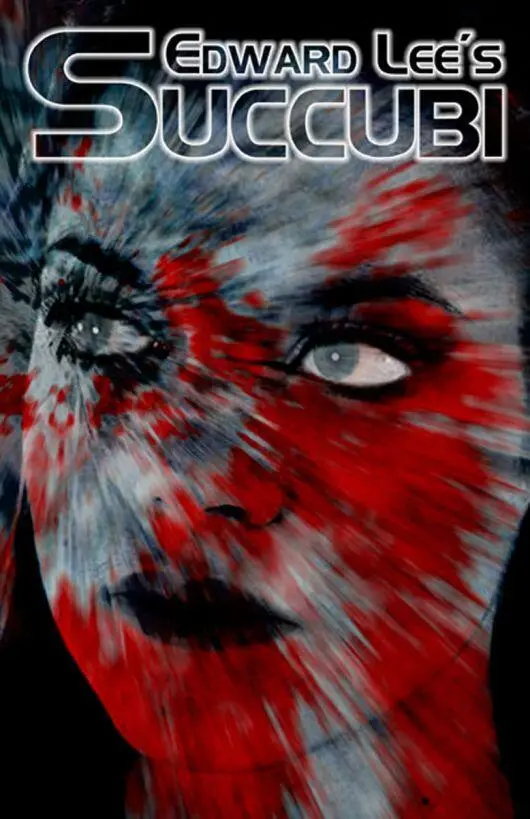
- Название:Succubi
- Автор:
- Жанр:
- Год:неизвестен
- ISBN:нет данных
- Рейтинг книги:3 / 5. Голосов: 1
-
Избранное:Добавить в избранное
- Отзывы:
-
Ваша оценка:
Succubi: краткое содержание, описание и аннотация
Предлагаем к чтению аннотацию, описание, краткое содержание или предисловие (зависит от того, что написал сам автор книги «Succubi»). Если вы не нашли необходимую информацию о книге — напишите в комментариях, мы постараемся отыскать её.
Long, sleek legs, siren-like faces, flawless naked bodies glazed in moonlight and sweat...DEMONS OF DESIRENo prayer can save you, no force of will can resist their unholy caress. Through midnight's veil, they will lead you from your wildest dreams into a nightmare of passion, pain and death...
DAUGHTERS OF HELL
Their beauty beckons. Their flesh seduces. And they're coming now -- for you.
Welcome to Lockwood, a sedate, cozy kind of town...until night falls and the succubi come out to play. Hardcore sex, hardcore violence, and a harrowing ancient prophecy about to come true in spades-finally a supernatural horror novel that militant feminists will love! Sexy attorney Ann Slavik returns to her quiet hometown hoping to find her roots...but what does she find instead: murder.
Succubi — читать онлайн бесплатно полную книгу (весь текст) целиком
Ниже представлен текст книги, разбитый по страницам. Система сохранения места последней прочитанной страницы, позволяет с удобством читать онлайн бесплатно книгу «Succubi», без необходимости каждый раз заново искать на чём Вы остановились. Поставьте закладку, и сможете в любой момент перейти на страницу, на которой закончили чтение.
Интервал:
Закладка:
Most phobias and hallucinotic fugue-themes had some basis in truth, something the patient had heard or read, seen on TV. Objectify, Dr. Harold thought now, staring at the pads. Rituals. Sacrifices. Cults. He wondered. The sketches seemed almost mythological; they possessed a tone, a hint of something ancient, clandestine. Semicircles of figures in the woods, beneath the moon, naked, bowing. Worshipping something, he finished. Like the Druids or the Aztecs.
It wasn’t much to go on, but he could think of no other avenue by which to proceed. He flipped through the phone book, to the department listings at the university.
I don’t know anything about this kind of stuff, Dr. Harold reckoned. So I’ll find someone who does.
«« — »»
By midafternoon, Ann was bored. She felt useless, uninvolved. Melanie was with her friends, Martin was off writing. Everyone but Ann was busy with something. She lingered about the house and yard. She still hadn’t seen her mother around—another involvement—but that probably worked out for the best. Ann wished she had something useful to do, like help out with her father or something, pull weeds, paint the shutters, anything. She called her associate at the firm to find out how everything was going, and she was disappointed when he said, “Fine, Ann. Everything’s fine. Depositions are out, we’re firing back ’rogs a mile a minute, and JAX Avionics wants to settle before trial. Don’t worry about a thing.” She hung up, depressed.
She went for a walk through town. Maybe she’d run into Melanie and meet some of these friends of hers. But the streets stood idle as usual. A lot of cars were parked around the town hall; Ann’s mother, no doubt, was conducting another of her endless council meetings. It infuriated Ann how easily her mother went on with the moving parts of her life while Ann’s father lay dying. Perhaps that was just part of being realistic. Around the corner she saw several little girls playing near the woods. It reminded her how few children there seemed to be in Lockwood. She caught herself staring, and the little girls stared back. Then they broke and ran away, giggling. Next thing she knew, Ann was walking into the general store.
“Hi, Ann,” Maedeen looked up from behind the counter and smiled. “How are you today?”
“Fine,” Ann said. But why had she come in here? To begin with, Maedeen was not exactly her favorite person. “I’m just sort of wandering around. Where is everyone?”
“Town Hall. Today’s the monthly advisory council meeting. How’s your dad?”
“The same.” Saying that was a more refined way of saying the truth. He’s still dying. She browsed around the knickknacks, and sundries: quilts, handmade candles, porcelain dolls. Did people buy enough of this stuff to support the store? Behind the counter, Maedeen was typing. Further back, Ann noticed a room full of tall file cabinets. “I’ll be with you in a minute,” Maedeen said, concentrating on her task. Then she zipped the page out of the old manual machine. “I’m also the town clerk,” she informed Ann. “Whenever there’s a meeting I have to prepare the minutes from the previous month, and I’m late.”
“Town clerk?” Ann queried.
“Yeah, aside from running the store, I keep all the town records on file.” She pointed to the little room full of cabinets. “In there.”
Now it made more sense. The store was just a local formality. Maedeen supported herself as a clerk.
“I have to run these over to your mother. Would you like to come?”
“Oh, no thanks.”
“Could you keep an eye on things for me? I’ll only be a few minutes.”
“Sure,” Ann said. Maedeen left with the sheaf of papers, the cowbell jangling after her. Alone now, Ann’s faint jealousy resurfaced. What could Martin see in her anyway, if he saw anything at all? I’m better looking than her, Ann childishly affirmed to herself. Maedeen was short and rather tomboyish, or tom-womanish, in this case. She always wore faded jeans and plain blouses, flip-flops. Melanie had told her that Maedeen’s husband had died. Ann wondered when, and why. She casually scanned the big glass bowls of candy along the counter, when she noticed the small framed picture amid Maedeen’s typewriter clutter. She knew she shouldn’t but she did anyway. She walked around the counter. She glanced out the front window; Maedeen was still heading briskly for the town square. Ann then went to the typewriter desk and picked up the picture. The snapshot showed Maedeen, a decade younger, sitting on a couch with a little girl—Wendlyn, her daughter. But in her arms, Maedeen held a naked baby. The baby was a boy.
Just like Milly. A baby boy.
This was very weird. Like Milly, Maedeen had only mentioned a daughter when they’d met. She’d said nothing about having a boy too. Why?
Don’t, she thought. It’s none of your business. Yet the lawyer in her couldn’t resist. She’d said she kept the town records here, hadn’t she? Ann glanced again out the window, to make sure it was safe. Then she went into the file room.
It didn’t take her long. BIRTH RECORDS, one drawer was clearly marked. She opened the drawer and began to rummage. What if someone comes in and sees me? But she ignored the suggestion. Her curiosity burned her. The files were alphabetical. FOST, MAEDEEN. Ann opened it and found a certificate of birth. But just one. FOST, WENDLYN. It was dated seventeen years ago. The signature of the delivering doctor was Ashby Heyd. There was no record of a boy being born. When Ann dug out Milly’s file, she found the same thing. Only Rena’s birth certificate.
So who were the baby boys? Were they relatives’ children?
Before Ann closed the drawer, she noticed a different colored folder in the very back. It possessed no heading. Ann picked it up, opened it.
Stared.
Several sheets of old paper. A typed list. MALE BIRTHS, the top of the sheet read.
She thumbed down the list of chronological dates.
FOST, MAEDEEN, MC 1-12-80, relinquished for adoption 1-23-80.
MC? Ann thought. Male child? It had to be.
She put the boy up for adoption, she realized. Why?
But that was not all. She found Milly’s name. GODWIN, MILLICENT, MC 6-15-82, relinquished for adoption 6-22-82.
My God, Ann thought.
The list went back fifteen years, women she’d never known or heard of. Each had an MC typed behind the name, a date of birth, and a date of adoption.
No wonder I haven’t seen any boys in town, Ann came to the bizarre conclusion. Their mothers put them all up for adoption.
—
Chapter 24
Scierors tied the figures down, laying open abdomens in single swipes. The helots still twitched as their organs were systematically removed. Heads were lopped off with great machetelike blades which whirred in the firelight. Genitals were sliced off groins. Some were thrown onto the fire whole, others were filleted first, the choice meats added to the boiling chettles of blood. Females, fattened for weeks on corn mash, were hauled screaming from the pens. Wreccans expertly flensed them alive as they thrashed, peeling off sheets of skin…
Erik shivered in the dark. These weren’t just visions, they were memories. They were the feks he’d watched in his past. And he’d seen it all again, in his mind, the instant he’d stepped back into the cirice.
He’d been lucky. Zack’s pickax had nailed his hand to the door. He’d reached the shotgun in time; fortunately, there’d been a round in the chamber. Zack’s knife had flashed. Just as it would’ve sunk hilt-deep into his solar plexus, Erik had squeezed the trigger. The 12-gauge blast knocked a hole into Zack’s chest, blowing him six feet across the room.
Читать дальшеИнтервал:
Закладка:
Похожие книги на «Succubi»
Представляем Вашему вниманию похожие книги на «Succubi» списком для выбора. Мы отобрали схожую по названию и смыслу литературу в надежде предоставить читателям больше вариантов отыскать новые, интересные, ещё непрочитанные произведения.





Обсуждение, отзывы о книге «Succubi» и просто собственные мнения читателей. Оставьте ваши комментарии, напишите, что Вы думаете о произведении, его смысле или главных героях. Укажите что конкретно понравилось, а что нет, и почему Вы так считаете.