Clive Cussler - Dragon
Здесь есть возможность читать онлайн «Clive Cussler - Dragon» весь текст электронной книги совершенно бесплатно (целиком полную версию без сокращений). В некоторых случаях можно слушать аудио, скачать через торрент в формате fb2 и присутствует краткое содержание. Жанр: Старинная литература, на английском языке. Описание произведения, (предисловие) а так же отзывы посетителей доступны на портале библиотеки ЛибКат.
- Название:Dragon
- Автор:
- Жанр:
- Год:неизвестен
- ISBN:нет данных
- Рейтинг книги:4 / 5. Голосов: 1
-
Избранное:Добавить в избранное
- Отзывы:
-
Ваша оценка:
Dragon: краткое содержание, описание и аннотация
Предлагаем к чтению аннотацию, описание, краткое содержание или предисловие (зависит от того, что написал сам автор книги «Dragon»). Если вы не нашли необходимую информацию о книге — напишите в комментариях, мы постараемся отыскать её.
A Japanese cargo ship bound for the United States is instantly, thunderously vaporized by Japanese fanatics with a chilling plan to devastate and destroy the Western powers. While Washington bureaucrats scramble, a brutal industrialist commands his blackmail scheme from a secret island control center. But from the ocean depths, NUMA agent DIRK PITT® is igniting a daring counterattack. Battling death-dealing robots and a human-hunting descendant of samurai warriors, Pitt alone controls the West’s secret ace in the hole: a tidal wave of destruction waiting to be triggered on the ocean floor!
Dragon — читать онлайн бесплатно полную книгу (весь текст) целиком
Ниже представлен текст книги, разбитый по страницам. Система сохранения места последней прочитанной страницы, позволяет с удобством читать онлайн бесплатно книгу «Dragon», без необходимости каждый раз заново искать на чём Вы остановились. Поставьте закладку, и сможете в любой момент перейти на страницу, на которой закончили чтение.
Интервал:
Закладка:
Tsuboi’s image swiftly dissolved and vanished.
The President looked up at a clock on one wall. Nine o’clock. Only six hours remained. The same time sequence Jordan projected for Pitt to set off the old atomic bomb and launch the submarine quake and tsunami.
“Oh, God,” he whispered to the empty room. “What if it all goes wrong?”
69
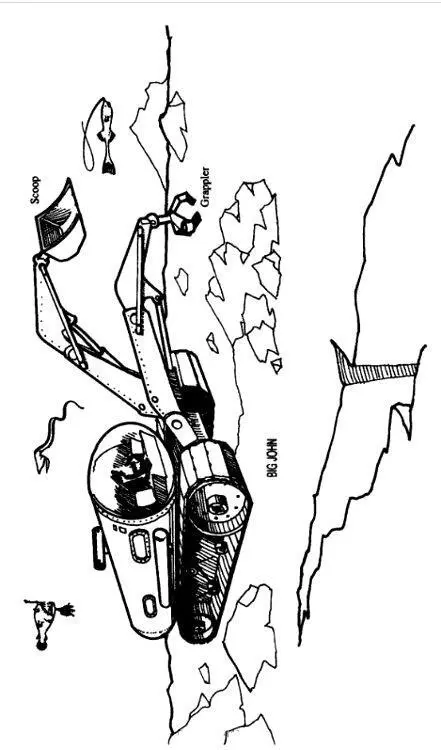
BIG BEN MOVED across the vast seascape at fifteen kilometers an hour, almost lightning speed for an immense vehicle traveling underwater through the abyssal mud. A great cloud of fine silt swirled in its wake, blossoming into the yawning blackness before dissipating and slowly settling back to the bottom.
Pitt studied a viewing screen connected to a laser-sonar unit that probed the seafloor ahead and enhanced it into three dimensions. The submarine desert held few surprises, and except for a detour around a narrow but deep rift, he was able to make good time.
Precisely forty-seven minutes after he detached the parachutes and set Big Ben in motion, the hard outline of the B-29 appeared and grew until it filled the monitor. The coordinates from the Pyramider satellite that were programmed into the DSMV’s navigation computer had put him right on the target.
Pitt was close enough now to see wreckage creeping under the far edges of the exterior lights. He slowed Big Ben and circled the bleak and broken aircraft. It looked like a cast-off toy on the bottom of a backyard pond. Pitt stared at it with the rapture experienced by divers the first time they approach a manmade object in the sea. To be the first to see or touch a sunken automobile, a missing plane, or a lost shipwreck is a fearful yet melancholy experience, only shared by those who daringly walk through a haunted house after midnight.
Dennings’ Demons had sunk a little over a meter in the silt. One engine was missing and the starboard wing was twisted backward and up like a grotesque arm reaching for the surface. The blades of the remaining three propellers had folded back from the impact with the water like drooping petals on a dying flower.
The three-story-high tail section showed the effects of shell fire. It had broken away and lay several meters behind the main fuselage and slightly off to one side. The tail gunner’s section was shattered and riddled, the rusting barrels of the 20-millimeter cannons dipped into the mud.
The aluminum surfaces of the 30-meter-long tubular fuselage were covered with slime and encrustations, but the framed glass windows encircling the bow were still clear. And the little demon painted under the pilot’s side window was surprisingly clean and free of scale and growth. Pitt could have sworn the beady little eyes stared back at him and the lips pulled back in a satanic grin.
He knew better than to let his imagination run wild and envision skeletons of the crew still at their stations, skulls with jaws dropped in deathly silence, eye sockets empty and unseeing. Pitt had spent enough time under the sea swimming through sunken vessels to know the soft organic substances of the human body were the first to go, quickly consumed by bottom-dwelling sea creatures. Then the bones, eventually dissolving in the icy cold of saltwater. Strange as it seems, clothing would be the last to disintegrate, especially leather flight jackets and boots. In time, even those would disappear, as well as the entire aircraft.
“I have visual on the target,” he announced to Sandecker in the C-5, flying overhead in the night.
“What is the condition?” Sandecker’s disembodied voice came back quickly.
“One wing is heavily damaged. The tail is broken off, but the main fuselage is intact.”
“The bomb is in the forward bomb bay. You’ll have to position Big Ben at an angle where the leading edge of the wing joins the fuselage. Then make your cut across the aircraft’s roof.”
“Luck was a lady tonight,” said Pitt. “The starboard wing is torn back, offering easy access. I can move into perfect position to slice through the bulkheads from the side.”
Pitt maneuvered the DSMV until its manipulator arms reached over the forward bomb bay of the aircraft. He inserted his hand into a glovelike actuator that electronically controlled the mechanical arms and selected a multidirectional metal-cutting wheel from one of three tools coupled to the wrist of the left manipulator. Operating the system as if it was an extension of his hand and arm, he laid out and measured the cut on a monitor that projected interior cutaway views of the aircraft’s structural components. He could perform the difficult operation by observing it on video from several close-up angles instead of relying on direct sight through the transparent bow. He positioned the wheel against the aluminum skin of the plane and programmed the dimensions and the depth of the cut into the computer. Then he switched on the tool and watched it attack the body of Dennings’ Demons as precisely as a surgeon’s scalpel.
The fine teeth of the whirling disk sliced through the aged aluminum of the airframe with the ease of a razor blade through a balsa-wood model glider. There were no sparks, no heated glow from friction. The metal was too soft and the water too icy. Support struts and bundled wiring cables were also efficiently severed. When the cut was finally completed fifty minutes later, Pitt extended the opposite manipulator. The wrist on this one was fitted with a large gripper assembly sprouting pincerlike fingers.
The gripper bit through the aluminum skin and into a structural bulkhead, the pincers closed, and the arm slowly raised up and back, ripping away a great piece of the aircraft’s side and roof. Pitt carefully swung the manipulator on a ninety-degree angle and very slowly lowered the torn wreckage into the silt without raising a blinding cloud of silt.
Now he had an opening measuring three by four meters. The Fat Man-type bomb, code-named Mother’s Breath, was clearly visible from the side, hanging securely and eerily from a large shackle and adjustable sway braces.
Pitt still had to carve his way through sections of the crawl tunnel that traveled above the bomb bay, connecting the cockpit with the waist-gunner compartment. Part of it had already been partially removed, as were the bomb-bay catwalks, so the immense bomb could be squeezed inside the bowels of the plane. He also had to cut away the guide rails that were installed to insure the bomb’s fins didn’t snag during the drop.
Again the operation went smoothly. The remaining barriers were soon dropped in a pile on top of the wreckage already sliced away. The next part of the bomb’s removal was the trickiest.
Mother’s Breath seemed festered with death and destruction. Nine feet in length and five feet in diameter, the dimensions given when it was built, it looked like a big fat ugly egg dyed in rust with boxed fins on one end and a zipper around its middle.
“Okay, I’m going for the bomb,” Pitt reported to Sandecker.
“You’ll have to use both manipulators to remove and transport it,” said Sandecker. “She weighed close to five tons by the old weight measurement.”
“I need one arm to cut away the shackle and sway braces.”
“The stress is too great for one manipulator. It can’t support the bomb without damage.”
“I’m aware of that, but I have to wait until after I sever the shackle cable before I can replace the cutting disk with a gripper. Only then do I dare attempt the lift.”
“Hold on,” Sandecker ordered. “I’ll check, and be right back to you.”
While he waited, Pitt put the cutting tool in place and clamped the gripper on the lifting eye beneath the shackle.
“Dirk?”
“Come in, Admiral.”
“Let the bomb drop.”
“Say again.”
Читать дальшеИнтервал:
Закладка:
Похожие книги на «Dragon»
Представляем Вашему вниманию похожие книги на «Dragon» списком для выбора. Мы отобрали схожую по названию и смыслу литературу в надежде предоставить читателям больше вариантов отыскать новые, интересные, ещё непрочитанные произведения.






Обсуждение, отзывы о книге «Dragon» и просто собственные мнения читателей. Оставьте ваши комментарии, напишите, что Вы думаете о произведении, его смысле или главных героях. Укажите что конкретно понравилось, а что нет, и почему Вы так считаете.