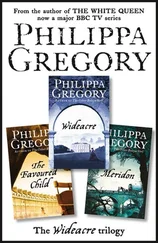
Philippa Gregory - Wideacre
Здесь есть возможность читать онлайн «Philippa Gregory - Wideacre» — ознакомительный отрывок электронной книги совершенно бесплатно, а после прочтения отрывка купить полную версию. В некоторых случаях можно слушать аудио, скачать через торрент в формате fb2 и присутствует краткое содержание. Жанр: Старинная литература, на английском языке. Описание произведения, (предисловие) а так же отзывы посетителей доступны на портале библиотеки ЛибКат.

- Название:Wideacre
- Автор:
- Жанр:
- Год:неизвестен
- ISBN:нет данных
- Рейтинг книги:3 / 5. Голосов: 1
-
Избранное:Добавить в избранное
- Отзывы:
-
Ваша оценка:
Wideacre: краткое содержание, описание и аннотация
Предлагаем к чтению аннотацию, описание, краткое содержание или предисловие (зависит от того, что написал сам автор книги «Wideacre»). Если вы не нашли необходимую информацию о книге — напишите в комментариях, мы постараемся отыскать её.
From Publishers Weekly
Gregory's full-blown first novel is a marvelously assured period piece, an English gothic with narrative verve. Beatrice Lacey loves nothing more than the family estate, Wideacrenot her bluff, hearty father, her weak brother, Harry, or her mother, who can't quite believe mounting evidence that damns her passionate daughter. Foiled in her hunger to own the estate by the 18th century laws of entail, Beatrice plots her father's death, knowing she can twist Harry in any direction she chooses, for her brother harbors a dark, perverted secret. Their incestuous tangle is not broken even by Harry's marriage. And while a bounteous harvest multiplies, no one gainsays the young squire and his sister, the true master of Wideacre. Beatrice marries also, managing to hide the paternity of two children sired by Harry until her increasing greed squeezes the land and its people dry, and the seeds of destruction she has sown come to their awful fruition. Gregory effortlessly breathes color and life into a tale of obsession built around a ruthless, fascinating woman.
Wideacre — читать онлайн ознакомительный отрывок
Ниже представлен текст книги, разбитый по страницам. Система сохранения места последней прочитанной страницы, позволяет с удобством читать онлайн бесплатно книгу «Wideacre», без необходимости каждый раз заново искать на чём Вы остановились. Поставьте закладку, и сможете в любой момент перейти на страницу, на которой закончили чтение.
Интервал:
Закладка:
Wideacre might think that his fatigue and drunkenness had killed my mama, but that tale would be swiftly replaced with the story of how, when my child was in danger, I had driven like a devil to reach him. How I had run up the drive with my son in my arms. How I had asked for ‘Doctor’ MacAndrew, not ‘Mister’. And how John’s quick, nerveless skill had saved the life of my son.
The carriage stopped at the front steps of the Hall and Stride opened the door and checked as he saw me inside and not Celia.
‘Lady Lacey is coming later in my gig,’ I said. But it was an effort to speak at all. ‘There has been an accident. Please send coffee to my room. I do not wish to be disturbed.’
Stride nodded, as impassive as ever, and handed me down into the hall. I went wearily through the door to the west wing, not even waiting to see Richard’s nurse inside. She would know to put him into his cradle at once. She would know to watch over him while he slept. He did not need my care. And now there was a barrier between him and me. I had known and I had said aloud, that my son, my lovely son, was most important to me as the heir to Wideacre.
I might love the shadow of his eyelashes on his cheeks, or his curly hair, or the sweet, sweet smell of him. But when I thought he was dying it was Wideacre I had thought of first.
Wideacre. There were times when I thought the land had driven me quite mad. I shut my bedroom door and leaned my back against it, and sighed. I was too tired to stop and think. Too tired to consider what I was doing. Too tired even to wonder what had become of me if I cared for Wideacre first and foremost, even before the life of my darling son.
John had left a bottle of laudanum by my bed. I looked at it dull-eyed. I felt neither threat nor fear. I measured out two drops into a glass of water and I drank them slowly, savouring them like a sweet liqueur. Then I lay back on my bed and slept. I did not fear dreams. The reality of my life seemed worse than anything I might meet in sleep. I would rather dream than wake.
In the morning I wished I had not woken. There was a grey mist over everything. I could not see the hills from my window; I could not see the woods; I could not even see the start of the rose garden. The whole world seemed muffled and hushed. Lucy bringing my cup of chocolate found the door locked and called out, ‘Miss Beatrice? Are you all right?’ and I had to get out of bed on to a cold wooden floor and shiver across to open the door for her.
Her eyes were bright with curiosity but there was no sympathy in them as she watched me jump back into bed and huddle the covers up to my chin.
‘Send for the kitchenmaid to light my fire,’ I said snappishly. ‘I forgot when I locked the door that she would not be able to get in this morning. It’s freezing in here.’
‘She’s not here,’ said Lucy without apology. ‘She’s away down to Acre. There’s no one to light your fire. There’s only the upper servants left in the house. Everyone else has gone to Acre.’
The mist seemed to have penetrated my very room, it was so damp and cold. I reached out for the hot chocolate and drank it greedily, but it made me no warmer.
‘Gone?’ I asked. ‘Gone to Acre? What on earth for?’
‘It’s the funeral,’ said Lucy. She went to the tall wardrobe and took out my black silk dress for morning wear, and a sheaf of clean fresh-pressed linen.
‘Whose funeral?’ I asked. ‘You are talking in riddles, Lucy. Put those things down and tell me at once what is going on. Why have the servants taken a morning off without leave? Why did no one ask me?’
‘They’d hardly be likely to ask you,’ she said. She put my gown on the foot of the bed and spread the linen on the clothes-horse before the cold grate.
‘What on earth do you mean?’ I said. ‘Why not?’
‘Because it’s Beatrice Fosdyke’s funeral,’ said Lucy. Her hands were free and she put them on her hips. Arms akimbo she looked challengingly at me. Not at all respectful. I sat in my bed more like a cold child than the Mistress of a great estate.
‘Bea Fosdyke isn’t dead,’ I contradicted her. ‘She ran off to Portsmouth.’
‘Nay,’ Lucy said with a gleam of superior knowledge in her eyes. ‘She ran off to Portsmouth all right. But she ran off to shame. She thought she’d get a job as a milliner or a shop girl. But she had no references and no training and she could not get work. She lived off the money she had been saving for her dowry for the first week. But her lodgings were expensive and she had no friends to give her a meal. Soon all that was gone. Then she gathered pure for a week or two.’
‘What’s “pure”?’ I asked. I was listening to this tale as a fairy story. But some coldness, the mist, just the mist, seemed to be drifting down my spine. I drew the blankets a little more closely, but I felt a finger of dread, like a draught down my neck.
‘Don’t you know that?’ Lucy’s look at me was almost a sneer. ‘Pure is the filth of dogs and the human filth that they throw out in the streets and into the gutters. The pure collectors pick it up and sell it.’
I put my cup down. I could feel the rise of nausea at the thought. I made a pout of disgust at Lucy. ‘Really, Lucy! What a thing to talk about at this time in the morning,’ I said. ‘What on earth is it bought for?’
‘For cleaning booksellers’ leather,’ Lucy said sweetly. She stroked the calf-bound volume I had by my bedside. ‘Didn’t you know, Miss Beatrice, that they make the leather smooth and soft so you love to touch it, by rubbing it and scrubbing it with human and dog filth?’
I looked at the book with distaste and back at Lucy.
‘So Beatrice Fosdyke became a pure collector,’ I said. ‘She was a fool not to come home. There’s little enough work here but the parish money would be better than that. She was a fool not to come home.’
‘She didn’t keep that work,’ said Lucy. ‘While she was walking the streets with her little bag, a gentleman saw her and offered her a shilling to go with him.’
I nodded, my eyes a little wider. But I said nothing. I was still cold. The room was somehow damp too. The fog outside made ghostly shapes. It loomed up against the window.
‘She went with him,’ said Lucy simply. ‘And the next gentleman, and the next. Then her father went down to Portsmouth seeking her. He found her waiting down by the stagecoach inn, waiting for men to sell herself to. He smashed her face, in the open street, and he got back on to the coach and came straight home.’
I nodded again. The mist was like a grey animal rubbing against the window. Its cold breath was icy in the room. I could not get warm. I did not want to hear about this other Beatrice.
‘She went back to her lodging house and borrowed a penny off the woman to buy a pennyworth of rope, to tie up her box, she said. She said her pa had come to rescue her. That she was going home. That she would never leave her home again.’
Bright in my mind against the grey window was the picture of Giles, his corpse bent like a bow, because he would not go on the parish.
‘She hanged herself?’ I asked, to get the story over and to break the spell of Lucy’s malicious sing-song voice.
‘She hanged herself,’ Lucy repeated. ‘They cut her down and they’ve brought her body home. But she cannot lie in the churchyard. She will have to be buried outside. Next to Giles.’
‘She was a fool,’ I repeated stoutly. ‘She could have come home. No one gathers filth on Wideacre. No one sells themselves for a shilling to strangers. She should have come home.’
‘Ah, but she would not,’ Lucy said. I felt again that prickle of dread at the rising inflexion of Lucy’s voice. ‘She would not come home to Wideacre because she would not tread the same earth which you tread, Miss Beatrice. She said she would not breathe the same air as you. She said she would rather die than live on your land.’
Читать дальшеИнтервал:
Закладка:
Похожие книги на «Wideacre»
Представляем Вашему вниманию похожие книги на «Wideacre» списком для выбора. Мы отобрали схожую по названию и смыслу литературу в надежде предоставить читателям больше вариантов отыскать новые, интересные, ещё непрочитанные произведения.
Обсуждение, отзывы о книге «Wideacre» и просто собственные мнения читателей. Оставьте ваши комментарии, напишите, что Вы думаете о произведении, его смысле или главных героях. Укажите что конкретно понравилось, а что нет, и почему Вы так считаете.