Philippa Gregory - Wideacre
Здесь есть возможность читать онлайн «Philippa Gregory - Wideacre» — ознакомительный отрывок электронной книги совершенно бесплатно, а после прочтения отрывка купить полную версию. В некоторых случаях можно слушать аудио, скачать через торрент в формате fb2 и присутствует краткое содержание. Жанр: Старинная литература, на английском языке. Описание произведения, (предисловие) а так же отзывы посетителей доступны на портале библиотеки ЛибКат.

- Название:Wideacre
- Автор:
- Жанр:
- Год:неизвестен
- ISBN:нет данных
- Рейтинг книги:3 / 5. Голосов: 1
-
Избранное:Добавить в избранное
- Отзывы:
-
Ваша оценка:
Wideacre: краткое содержание, описание и аннотация
Предлагаем к чтению аннотацию, описание, краткое содержание или предисловие (зависит от того, что написал сам автор книги «Wideacre»). Если вы не нашли необходимую информацию о книге — напишите в комментариях, мы постараемся отыскать её.
From Publishers Weekly
Gregory's full-blown first novel is a marvelously assured period piece, an English gothic with narrative verve. Beatrice Lacey loves nothing more than the family estate, Wideacrenot her bluff, hearty father, her weak brother, Harry, or her mother, who can't quite believe mounting evidence that damns her passionate daughter. Foiled in her hunger to own the estate by the 18th century laws of entail, Beatrice plots her father's death, knowing she can twist Harry in any direction she chooses, for her brother harbors a dark, perverted secret. Their incestuous tangle is not broken even by Harry's marriage. And while a bounteous harvest multiplies, no one gainsays the young squire and his sister, the true master of Wideacre. Beatrice marries also, managing to hide the paternity of two children sired by Harry until her increasing greed squeezes the land and its people dry, and the seeds of destruction she has sown come to their awful fruition. Gregory effortlessly breathes color and life into a tale of obsession built around a ruthless, fascinating woman.
Wideacre — читать онлайн ознакомительный отрывок
Ниже представлен текст книги, разбитый по страницам. Система сохранения места последней прочитанной страницы, позволяет с удобством читать онлайн бесплатно книгу «Wideacre», без необходимости каждый раз заново искать на чём Вы остановились. Поставьте закладку, и сможете в любой момент перейти на страницу, на которой закончили чтение.
Интервал:
Закладка:
But they gave me no credit. Just as that year with Ralph the greening of the shoots and the warming of the land had seemed all part of my magic, all part of my good blessings on the land, now everything that went wrong was laid at my door. The Sowers’ cow died and that had to be my fault, for she had not been able to graze on the good green shoots of the common. One of the Hills’ children fell sick, and that was my fault for my husband doctor was far away and they could afford no other. Mrs Hunter sat by a blackened grate and wept without ceasing for the shame that had taken her son from her. And because he had died calling for her and she could not go to him. That was my fault, they said. That was my fault.
And I knew that it was.
When I had to drive through the village I kept my head high and my eyes blazed with defiance. There was still no one who could meet my gaze then, and they looked away with surly faces. But when I saw Mrs Hunter through her cottage window, sitting motionless beside the black grate, and noted her chimney with no little swirl of smoke, I did not feel defiant. I did not feel ready to brazen out the disaster on my land. I just felt afraid, and comfortless and cold. I pulled up at the cobbler’s one chilly afternoon and called out, ‘Mrs Merry!’ to the group of gossiping women. Their faces turned on me were sulky and closed, and I remembered in disbelief the time when they would have called out ‘Good day’ and smiled, and crowded around the gig to tell me the village gossip. Now they stood in a circle like a gang of hanging judges and looked at me with cold eyes. They parted to let Mrs Merry come to the carriage and it struck me she came towards me dragging her feet. She did not smile to see me, and her face was guarded.
‘What is wrong with Mrs Hunter?’ I asked, gathering reins into one hand and fitting my whip into the stock.
‘No physical ill,’ said Mrs Merry, her eyes on my face.
‘What ails her then?’ I asked impatiently. ‘Her fire is out. I have driven past the cottage three days running and she is always sitting by the empty fireplace beside a cold grate. What ails her? Why don’t her friends go in and light the fire for her?’
‘She does not wish it lit,’ said Mrs Merry. ‘She does not want food. She does not want to speak with her friends. She has sat like that since last week when they sent her Sam Frosterly’s letter that Ned was dead. I read it to her, for she cannot read. She reached to the bucket and poured it over the fire and sat by the wet ashes till I left her. When I returned in the morning it was the same.’
My face stayed hard, but my eyes were despairing.
‘She will recover,’ I said. ‘It is just a shock for her to lose a son. Her a widow, and him her only child.’
‘Aye,’ said Mrs Merry.
A cold hard monosyllable from the woman who had delivered my child, who had been with me during that crisis of effort and pain, who had promised me she would not gossip, and who had kept that promise. The woman who had told me I was just like my papa in my care for Wideacre people.
‘It is not my fault, Mrs Merry,’ I said with sudden passion. ‘I did not mean it to happen like this, I did not plan this. I only had to increase the wheatfields; I did not dream the lads would pull the fences down. I meant them to have a fright with the soldiers and cease teasing me. I did not think they would be caught. I did not think Gaffer would go. I did not think he would be hanged, and Ned die, and Sam be sent far away. I did not mean this.’
Mrs Merry’s eyes had no pity.
‘You’re the plough that does not mean to slice the toad then,’ she said dourly. ‘You’re the scythe that does not mean to maim the hare. You go your own sharp way and do not mean to cut those who stand before you. So no one can blame you, can they, Miss Beatrice?’
I put out a hand towards Mrs Merry, the wise woman.
‘I did not mean it,’ I said. ‘Now they blame me for everything. But my son will set it to rights. Tell Mrs Hunter I will see that her lad is brought home to be properly buried in the churchyard.’
Mrs Merry shook her head.
‘Nay, Miss Beatrice,’ she said with finality. ‘I’ll carry no message from you to Mrs Hunter. It would be to insult her.’
I gasped at that, and dropped my hands on the reins. Sorrel started forward and I snatched the whip from the stock to flick him into a canter. As I pulled away from the women I heard the clatter of something against the side of the gig.
Someone had thrown a stone.
Someone had thrown a stone at me.
So I cared neither to drive in the woods, nor to walk in the fields, nor to go down the lane to Acre that spring. Harry came and went as he pleased. Celia continued her visits, and it was Celia who made the arrangements to bring Ned Hunter’s body home from the hulks at Portsmouth. And it was Celia who paid for his funeral and for the little cross over his grave. Celia and Harry were still met with a bob or a pulled forelock when they went into Acre. But I did not go to the village. Only on a Sunday morning during that warm wet spring did I go past the cottages with the staring windows. Past the smokeless chimney of Mrs Hunter’s little home. Past the fresh graves in the churchyard of Gaffer Tyacke, of Ned Hunter. And walked the long slow walk up the aisle of the church past the rows of pews where my people looked at me with eyes as hard as flints.
My work lay indoors that spring. John Brien did the riding and the ordering for me. Daily he came to my office and I told him what work needed doing, and he went off to supervise it. So the land that had never had a bailiff, that had always felt the print of a Master’s boot, was watched over and worked by a man who was not a Lacey, who was not even a farmer, but a town-bred manager; who was not even Wideacre born.
With the gang he ordered he had the common cleared and the fields planted with wheat. There was no more trouble from the village. He ploughed up the half-dozen meadows where the children played and the plough cut through the surviving marks of the village’s common plot. We planted wheat everywhere a plough could run. And still we were not making enough money.
I was reserving John’s fortune to buy off our cousin and I did not want to touch that for the lawyers’ fees. But as they dragged on and on, their bills steadily mounted. We had borrowed from Mr Llewellyn to cover the first three months’ bills, but then we also had the problem of meeting the repayments on the loans, and no extra money coming in until the wheat crop was sold, the wheat crop that had not yet shown green shoots.
Nothing was coming to my hands fast enough. I had consulted with Harry at the start of the plan, but now I dared not show him the real figures. We were paying out more on the repayment of the loans, and on the lawyers’ fees, and John’s medical bills, and on the new labour gangs and equipment and seed, than we were earning. We were drawing on our reserves of capital. We were drawing so heavily that I could start calculating how long it would be before the fortune my papa had so slowly and carefully amassed would be exhausted. Then we would have to sell land.
Enough there to keep me indoors, even when the swallows came and swooped low over the Fenny in the morning. Enough there to keep me waiting for the postman every morning in a frenzy of anxiety that today might be the day when Dr Rose would write one of his gentle, but increasingly confident letters saying, ‘I am so pleased to tell you that your husband has made a complete recovery. As I write he is packing his bags to come home!’
Every day I expected a letter announcing John’s return. Every day I prayed for the letter to tell me that our cousin had accepted the compensation and John’s fortune could be paid to him, and the legal work to change the entail could begin in earnest. Every morning I awoke with those two converging processes racing closer and closer together. And every day the postbag was brought to me in my office I opened it with dread, waiting to see if I had won or lost Wideacre for my son.
Читать дальшеИнтервал:
Закладка:
Похожие книги на «Wideacre»
Представляем Вашему вниманию похожие книги на «Wideacre» списком для выбора. Мы отобрали схожую по названию и смыслу литературу в надежде предоставить читателям больше вариантов отыскать новые, интересные, ещё непрочитанные произведения.

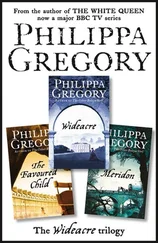
Обсуждение, отзывы о книге «Wideacre» и просто собственные мнения читателей. Оставьте ваши комментарии, напишите, что Вы думаете о произведении, его смысле или главных героях. Укажите что конкретно понравилось, а что нет, и почему Вы так считаете.