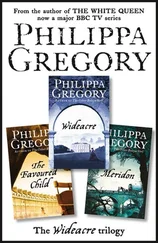
Philippa Gregory - Wideacre
Здесь есть возможность читать онлайн «Philippa Gregory - Wideacre» — ознакомительный отрывок электронной книги совершенно бесплатно, а после прочтения отрывка купить полную версию. В некоторых случаях можно слушать аудио, скачать через торрент в формате fb2 и присутствует краткое содержание. Жанр: Старинная литература, на английском языке. Описание произведения, (предисловие) а так же отзывы посетителей доступны на портале библиотеки ЛибКат.

- Название:Wideacre
- Автор:
- Жанр:
- Год:неизвестен
- ISBN:нет данных
- Рейтинг книги:3 / 5. Голосов: 1
-
Избранное:Добавить в избранное
- Отзывы:
-
Ваша оценка:
Wideacre: краткое содержание, описание и аннотация
Предлагаем к чтению аннотацию, описание, краткое содержание или предисловие (зависит от того, что написал сам автор книги «Wideacre»). Если вы не нашли необходимую информацию о книге — напишите в комментариях, мы постараемся отыскать её.
From Publishers Weekly
Gregory's full-blown first novel is a marvelously assured period piece, an English gothic with narrative verve. Beatrice Lacey loves nothing more than the family estate, Wideacrenot her bluff, hearty father, her weak brother, Harry, or her mother, who can't quite believe mounting evidence that damns her passionate daughter. Foiled in her hunger to own the estate by the 18th century laws of entail, Beatrice plots her father's death, knowing she can twist Harry in any direction she chooses, for her brother harbors a dark, perverted secret. Their incestuous tangle is not broken even by Harry's marriage. And while a bounteous harvest multiplies, no one gainsays the young squire and his sister, the true master of Wideacre. Beatrice marries also, managing to hide the paternity of two children sired by Harry until her increasing greed squeezes the land and its people dry, and the seeds of destruction she has sown come to their awful fruition. Gregory effortlessly breathes color and life into a tale of obsession built around a ruthless, fascinating woman.
Wideacre — читать онлайн ознакомительный отрывок
Ниже представлен текст книги, разбитый по страницам. Система сохранения места последней прочитанной страницы, позволяет с удобством читать онлайн бесплатно книгу «Wideacre», без необходимости каждый раз заново искать на чём Вы остановились. Поставьте закладку, и сможете в любой момент перейти на страницу, на которой закончили чтение.
Интервал:
Закладка:
Mr Llewellyn nodded at me, his shrewd blue eyes crinkling in a smile. He had seen that I had silenced Harry.
‘You’ll miss your hay crop,’ he said. ‘How much will it cost you to buy in the extra hay you will need for winter feed?’
I pulled a sheet of paper towards me, for I had done the calculations, not Harry.
‘Between eight hundred and a thousand pounds, depending on the going rate,’ I said. ‘But we will be feeding the sheep on root crops, and on this new silage made from clover. Both the roots and the clover grow in the cornfields when they are being rested for a season.’
‘And hay for the horses?’ Mr Llewellyn asked Harry. But again I answered.
‘The horses will continue to eat their heads off,’ I said. ‘But we will keep enough hayfields to feed them.’
Mr Llewellyn nodded and scanned the figures I handed to him.
‘Let’s see the lie of the land,’ he said, putting his coffee cup down.
‘My brother Harry will show you around,’ I said, gesturing to my black silk gown. ‘I am still in mourning and I can only drive.’
‘Drive me then!’ he said genially, and I found myself smiling back at him.
‘I should be happy to,’ I said politely. ‘But I must tell the stables, then go and change. Excuse me for one minute.’
I slipped from the room and called from the west-wing door to a stable lad to harness Sorrel to the new gig. I took only minutes to change into my black velvet riding habit, and then I threw a thick black broadcloth cape on top, for this December weather was bitter.
‘You would rather drive than ride?’ I asked Mr Llewellyn as he tucked a rug across our knees and we bowled down the drive, Sorrel’s hoofs noisy on the frozen gravel and the iron-hard mud.
‘I would rather see the land with the farmer,’ said Mr Llewellyn with a sly sideways twinkle at me. ‘I think it is your footprint on the fields, Mrs MacAndrew.’
I smiled my assent, but stayed silent.
‘These are handsome woods,’ he said, looking around at the beech trees silvered on the east side with last night’s snow.
‘They are,’ I said. ‘But we would never mortgage these. The woods I would like you to consider are higher up, mostly firs and pines, on the north slopes of the downs.’
We took the bridle-track opposite the drive, and Sorrel leaned forward against the collar and blew clouds of steam with the weight of the gig.
The strips of the common plots where the villagers had planted their own crops for the past seven hundred years were white with frost. The little boundary walls and fences were already pulled down, and in the spring we would be ploughing up the vegetable rows that had been tended with so much care for so long.
We gained about twenty acres taking the land back from the villagers. Their land, where they could grow vegetables for the pot, and seed for the fowls: a shield against a poor season, no work, and the spectre of hunger. Their right to their little strip of land was nowhere stated in writing; they had no contract. It was just the tradition that these few acres should always be for the villagers’ use. And when I drove into the village and told half-a-dozen of the oldest men that we were ploughing up the land for corn next spring there was nothing they could do to stop me.
I had not discussed the matter; I had not even got down from the gig. I had met them under the chestnut tree on the green and, as I had told them, it started to snow. They had to have their grumble beside their own fireplaces, not at me. And, in any case, the potatoes had already been lifted, the green vegetables cut. They would not feel the loss of the common strips until next winter.
Even then, Acre villagers might count themselves lucky, for almost every cottage had a little garden. The gardens were filled with flowers, often the pride and joy of the house. They would have to go, and the little grass patches where children played would be dug over for vegetables, and planted in straight rows. All this, so that the Wideacre estate might be increased by twenty acres. But all this so that my son Richard would be a week closer to the Master’s chair with the extra small profit.
I pulled Sorrel up, and tied her to a fence post and then led the way on a little path along the brow of the downs until we reached the new plantation with the sheep-proof withy fence protecting the young trees.
‘How old is it?’ asked Mr Llewellyn, the smile gone from his eyes and a hard shrewd look ranging over the tall trees, now standing twenty, thirty feet.
‘I planted it with my papa,’ I said, smiling at the memory. ‘I was five. These woods are fourteen years old. He promised I should have a stool from these trees when I was an old lady.’ I shrugged away my sadness.
‘Times change,’ said Mr Llewellyn, his quick mind following my grief. ‘No one can predict the way things change these days. All we can do is to try to follow our consciences — and to chase profit with a care to others!’ He gave me a rueful smile and turned back to the trees.
‘Growing well,’ he commented approvingly. ‘How many trees?’
‘About five hundred,’ I said. I opened the little gate in the fence for him, and he strode down the straight rows looking carefully at the needles for signs of disease, pulling at the branches to see their healthy spring back into place. Then he walked in a carefully paced square, his lips moving as he counted how many trees to a ten yard square.
‘Good,’ he said finally. ‘I’ll certainly lend money on this plantation. I have a contract you may look at in my chaise. Was there some common land as well?’
‘Yes,’ I said. ‘But it’s in the opposite direction. We’ll drive there.’
We walked back to the gig and with clever courtesy he did not offer to help me as I took Sorrel’s reins at the bit and backed him up the narrow path to turn the gig. Only when I had Sorrel facing downhill with the brake on, did he swing into the gig and smile at me.
We drove downhill and then along the lane towards Acre. Before we reached the village we turned left into the park woodland again, along the little track that leads to the new mill. Mrs Green was feeding hens from her front door and I waved at her as we went past and saw her eyes scanning Mr Llewellyn, wondering who he was. She would know soon enough. There are no secrets on Wideacre. I never expect to keep my business quiet.
The track wound through the woods, thickly silent under the grip of the frost, and then broke out into clearer ground as we neared the common. Softly on the air I heard the creaky sound of strong wings and above our heads was a V of geese flying westwards, looking for melted water and feed.
‘This is the land,’ I said, nodding at the common. ‘I showed you the area on the map. It is all as you see here. A little hilly, mainly bracken and heather, a few trees which will have to be felled and two little streams.’
I kept my voice even, but my love for the common, gold and brass under this cold winter light, crept into my tone despite myself. One of the streams was near by and we could hear the trickle of its clear waters as it dripped off icicle waterfalls on its way to the Fenny.
The bracken still glowed bronze under a silvering of white frost. The few trees I would have to fell were my beloved silver birches, their trunks paper-white and their twigs a deep purple-brown in a shape as graceful as a Sèvres vase. The heather still held pale grey flowers under the coating of hoar frost, so every plant masqueraded as lucky white heather. The ground beneath the wheels of the gig was hard as a rock where the wet peat had frozen, but in the little valleys the white sand was as crunchy as sugar and looked as pale and as sweet.
‘You can enclose this?’ Mr Llewellyn looked at me, his face quizzical.
Читать дальшеИнтервал:
Закладка:
Похожие книги на «Wideacre»
Представляем Вашему вниманию похожие книги на «Wideacre» списком для выбора. Мы отобрали схожую по названию и смыслу литературу в надежде предоставить читателям больше вариантов отыскать новые, интересные, ещё непрочитанные произведения.
Обсуждение, отзывы о книге «Wideacre» и просто собственные мнения читателей. Оставьте ваши комментарии, напишите, что Вы думаете о произведении, его смысле или главных героях. Укажите что конкретно понравилось, а что нет, и почему Вы так считаете.