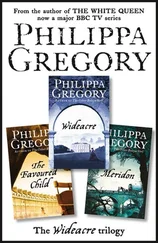
Philippa Gregory - Meridon
Здесь есть возможность читать онлайн «Philippa Gregory - Meridon» — ознакомительный отрывок электронной книги совершенно бесплатно, а после прочтения отрывка купить полную версию. В некоторых случаях можно слушать аудио, скачать через торрент в формате fb2 и присутствует краткое содержание. Жанр: Старинная литература, на английском языке. Описание произведения, (предисловие) а так же отзывы посетителей доступны на портале библиотеки ЛибКат.
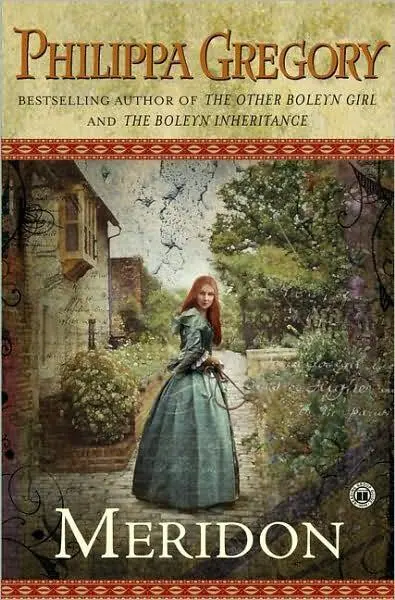
- Название:Meridon
- Автор:
- Жанр:
- Год:неизвестен
- ISBN:нет данных
- Рейтинг книги:4 / 5. Голосов: 1
-
Избранное:Добавить в избранное
- Отзывы:
-
Ваша оценка:
Meridon: краткое содержание, описание и аннотация
Предлагаем к чтению аннотацию, описание, краткое содержание или предисловие (зависит от того, что написал сам автор книги «Meridon»). Если вы не нашли необходимую информацию о книге — напишите в комментариях, мы постараемся отыскать её.
From Publishers Weekly
With this elaborate tapestry of a young woman's life, the Lacey family trilogy ( Wideacre and The Favored Child ) comes to a satisfying conclusion. Meridon is the lost child whose legacy is the estate of Wideacre. She and her very different sister, Dandy, were abandoned as infants and raised in a gypsy encampment, learning horsetrading and other tricks of survival. They are indentured to a circus master whose traveling show is made successful by Meridon's equestrian flair and Dandy's seductive beauty on the trapeze. Meridon's escape from this world is fueled by pregnant Dandy's murder and her own obsessive dream of her ancestral home. After claiming Wideacre, Meridon succumbs for a while to the temptation of the "quality" social scene, but eventually she comes to her senses, and, in a tricky card game near the end of the saga, triumphs fully. The hard-won homecoming in this historical novel is richly developed and impassioned.
Meridon — читать онлайн ознакомительный отрывок
Ниже представлен текст книги, разбитый по страницам. Система сохранения места последней прочитанной страницы, позволяет с удобством читать онлайн бесплатно книгу «Meridon», без необходимости каждый раз заново искать на чём Вы остановились. Поставьте закладку, и сможете в любой момент перейти на страницу, на которой закончили чтение.
Интервал:
Закладка:
‘Come in out of the sun, Sarah!’ she said. Her voice was low but it carried clearly to me in the stable yard, the Quality voice which does not have to be raised to give orders and be obeyed. ‘You will get as tanned as a field labourer standing there!’
I moved in unthinking obedience towards her, then I turned back to Will.
‘I’m sorry,’ I said. ‘You can see I have to go, I’ll ride with you tomorrow.’
His face was as black as thunder. He turned back to his horse and swung himself up high on his back.
‘No,’ he said curtly. ‘Tomorrow I am busy. You may go up to the Downs barn on Thursday if you want to see some shearing. They will start at seven.’
‘Will?’ I called him, but he rode past me without another word. He went so close that Beau’s flicking tail stung me in the face.
‘Will?’ I said again, hardly crediting that the warm smile had gone from his face as quickly as a summer storm blows up, just because I had turned to do Lady Clara’s bidding.
He did not hear me or he chose not to hear me. He hunched low over Beau’s neck and he set him to a canter as soon as he was past the terrace. He went past Lady Clara without a nod or salute. As soon as Beau’s hooves touched the earth of the track towards Wideacre he gave him his head and they went as if all the fiends in hell were after them.
I turned slowly, and went up the terrace steps to Lady Clara. She smiled at me as if she had seen something which had amused her very much and then she drew me into the parlour where there was a jug of iced lemonade waiting with two chilled sugar-rimmed glasses.
26
I saw Will Tyacke hardly at all for the rest of the summer. He held to his promise to James to teach me about the land, but that was the last ride we took when he teased me and harangued me and quarrelled with me and let me ride away and then caught up with me so that we were the best of friends after all.
From that day onwards it was much more like work. He would make me known to the leaders of the haymaking gang or tell me the name of the shepherd and leave me with them, riding off as if always there was something more important to be done elsewhere. I thought the people changed towards me too. They no longer smiled slyly when they saw Will and me riding close. Somehow they knew we were no longer easy friends, and they were more businesslike with me. They would tell me what they were doing clear enough, well enough, but they did not smile and wave at me when I rode past a field.
I went down to the haymaking and watched them scything the crop under a pale warm sky, and tossing the sweet-smelling green grass to dry in the summer wind. The girls with the rakes smiled and called, ‘Good day,’ to Will with a note of affection, but to me they nodded and said nothing.
I knew what was happening and I did not blame Will for blabbing about our breach. I did not think he was the tattling sort and I did not think he would take every village slut into his confidence. But they knew that I was staying with the Haverings to learn to become a young lady. They knew that I was riding with Will to learn all I could about my land to strengthen my hand against them when the time came for me to make changes. They knew that although I had come home I was not at ease on the land, I was still rootless, hopeless in my heart. And so they wasted neither love nor words on me. They knew I did not belong. They knew I did not want to belong. I wanted to own the land. I did not care about loving it.
Every day that I rode with Will he became more like a clerk, or a bailiff or some middling sort of servant. He stopped calling me Sarah and speaking directly to me. Then one day he called me Miss Lacey and I knew myself to be set at a distance indeed. I could have summoned him back. I could have recalled the affection which had been growing between us. But…but I was damned if I would. When I saw his stiff back and his proudly held head trotting away from me I could have sworn and slung a flint under his horse’s hooves for being a stubborn fool. But I was learning to be a lady; and ladies do not swear and throw things.
I thought he was foolish and proud and I decided to ignore him. So I made no effort either to challenge or reconcile with him. Instead I was as haughty and as ill-tempered as he through all the hot summer days when the birds called for their mates and the swallows dipped and dived in the lingering lonely twilights. When I was alone at the top of the Downs, with Sea cropping the grass around me, I knew that I was missing my friends – not just her, but James Fortescue whom I had sent away, Will whom I had put at a distance, and all the people of Acre who had welcomed me with smiles and bright curious faces, and who had then learned that I would not live at Wideacre Hall, that I would not stay with them, that I was hard set on changing things, on changing everything.
I knew myself then to be bereft, but I had been so lonely and so hungry for so long that I did not jump up on Sea and ride down to Acre to seek Will out and make things clear with him. Instead I hunched up my shoulders and hugged my knees and watched the sun set redly in the sky, and huddled my feelings of loneliness and sadness within me, as a familiar longing.
In Will’s absence I rode with Perry, and sometimes Lady Clara took me around her own fields, or ordered her bailiff to drive out with me in her pale-blue lined-landau. He was a sharp hard-faced man; I could not like him. But I could recognize his ability to price a crop while it showed just inches above the soil, or to adjust a rent in his mind during the walk from the gate to the back door.
Will was right about the hardship on the Havering land. I saw it on every drive. Havering village was more like a campsite than a village. The houses were ready to tumble down and half were down already with their tenants sheltering in the lee of a wall with a half-thatched roof over their heads. The slops were thrown out in the village street, the stink under the hot summer sun was enough to turn your stomach. The people worked from dawn to dusk for wages which were as low as Lady Clara and Mr Briggs could keep them. More and more work was being done by the wretches brought in by a jolting wagon daily from Midhurst poorhouse. ‘It’s a service to the community to save them from idleness,’ Mr Briggs explained to me, smiling.
They planned to clear the village of Havering altogether. Lady Clara was sick of the dirt of it and the continual complaints which not all of Mr Briggs’s smiling threats could keep from her ears. The villagers who lived in the dirt and the squalor believed that if she really knew of their poverty she would pity them, she would do something.
‘All I’m likely to do is to set the soldiers on them and burn them out,’ she said grimly. ‘It’s disgusting how they live! They must lack all sense of shame!’
I said nothing. Will’s angry denunciations of the Quality were echoing in my head: ‘You leave them ignorant and then you complain they know nothing,’ he had said. I kept my eyes blank and I said nothing when Lady Clara threatened to clear the village.
I had thought she was threatening idly something that would never take place. But one day I came down to the parlour in my riding habit pulling on my gloves and she looked at me very hard and bright, and said: ‘Don’t go to Havering village today, Sarah, it’s being cleared.’
‘Cleared?’ I asked.
She nodded grimly. ‘I’ve had enough of them,’ she said. ‘Their complaints, their needs, their dirt and their diseases. There’s a case of the typhus fever been reported down there as well. I won’t have sickly people on my land.’
‘What will they do?’ I asked.
She shrugged. She was wearing a peach silk morning gown and that elegant movement of her shoulders made the pattern of the gown shimmer.
Читать дальшеИнтервал:
Закладка:
Похожие книги на «Meridon»
Представляем Вашему вниманию похожие книги на «Meridon» списком для выбора. Мы отобрали схожую по названию и смыслу литературу в надежде предоставить читателям больше вариантов отыскать новые, интересные, ещё непрочитанные произведения.
Обсуждение, отзывы о книге «Meridon» и просто собственные мнения читателей. Оставьте ваши комментарии, напишите, что Вы думаете о произведении, его смысле или главных героях. Укажите что конкретно понравилось, а что нет, и почему Вы так считаете.