Philippa Gregory - The Constant Princess
Здесь есть возможность читать онлайн «Philippa Gregory - The Constant Princess» — ознакомительный отрывок электронной книги совершенно бесплатно, а после прочтения отрывка купить полную версию. В некоторых случаях можно слушать аудио, скачать через торрент в формате fb2 и присутствует краткое содержание. Жанр: Старинная литература, на английском языке. Описание произведения, (предисловие) а так же отзывы посетителей доступны на портале библиотеки ЛибКат.
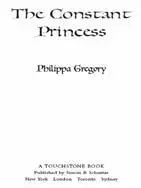
- Название:The Constant Princess
- Автор:
- Жанр:
- Год:неизвестен
- ISBN:нет данных
- Рейтинг книги:4 / 5. Голосов: 1
-
Избранное:Добавить в избранное
- Отзывы:
-
Ваша оценка:
The Constant Princess: краткое содержание, описание и аннотация
Предлагаем к чтению аннотацию, описание, краткое содержание или предисловие (зависит от того, что написал сам автор книги «The Constant Princess»). Если вы не нашли необходимую информацию о книге — напишите в комментариях, мы постараемся отыскать её.
Thus, bestselling author Philippa Gregory introduces one of her most unforgettable heroines: Katherine of Aragon. Known to history as the Queen who was pushed off her throne by Anne Boleyn, here is a Katherine the world has forgotten: the enchanting princess that all England loved. First married to Henry VIII's older brother, Arthur, Katherine's passion turns their arranged marriage into a love match; but when Arthur dies, the merciless English court and her ambitious parents -- the crusading King and Queen of Spain -- have to find a new role for the widow. Ultimately, it is Katherine herself who takes control of her own life by telling the most audacious lie in English history, leading her to the very pinnacle of power in England.
Set in the rich beauty of Moorish Spain and the glamour of the Tudor court, The Constant Princess presents a woman whose constancy helps her endure betrayal, poverty, and despair, until the inevitable moment when she steps into the role she has prepared for all her life: Henry VIII's Queen, Regent, and commander of the English army in their greatest victory against Scotland.
From Publishers Weekly
As youngest daughter to the Spanish monarchs and crusaders King Ferdinand and Queen Isabella, Catalina, princess of Wales and of Spain, was promised to the English Prince Arthur when she was three. She leaves Spain at 15 to fulfill her destiny as queen of England, where she finds true love with Arthur (after some initial sourness) as they plot the future of their kingdom together. Arthur dies young, however, leaving Catalina a widow and ineligible for the throne. Before his death, he extracts a promise from his wife to marry his younger brother Henry in order to become queen anyway, have children and rule as they had planned, a situation that can only be if Catalina denies that Arthur was ever her lover. Gregory's latest (after Earthly Joys) compellingly dramatizes how Catalina uses her faith, her cunning and her utter belief in destiny to reclaim her rightful title. By alternating tight third-person narration with Catalina's unguarded thoughts and gripping dialogue, the author presents a thorough, sympathetic portrait of her heroine and her transformation into Queen Katherine. Gregory's skill for creating suspense pulls the reader along despite the historical novel's foregone conclusion.
The Constant Princess — читать онлайн ознакомительный отрывок
Ниже представлен текст книги, разбитый по страницам. Система сохранения места последней прочитанной страницы, позволяет с удобством читать онлайн бесплатно книгу «The Constant Princess», без необходимости каждый раз заново искать на чём Вы остановились. Поставьте закладку, и сможете в любой момент перейти на страницу, на которой закончили чтение.
Интервал:
Закладка:
“Very well. Drink water that has been boiled, eat as much fruit and fresh vegetables as you can get. Do you have salad vegetables here?”
For a moment I am back in the garden at Ludlow with his bright eyes on me.
“Acetaria?”
“Yes, salad.”
“What is it, exactly?”
He saw the queen’s face glow. “What are you thinking of?”
“Of my first husband. He told me that I could send for gardeners to grow salad vegetables, but I never did.”
“I have seeds,” the Moor said surprisingly. “I can give you some seeds and you can grow the vegetables you will need.”
“You have?”
“Yes.”
“You would give me…you would sell them to me?”
“Yes. I would give them to you.”
For a moment she was silenced by his generosity. “You are very kind,” she said.
He smiled. “We are both Spanish and a long way from our homes. Doesn’t that matter more than the fact that I am black and you are white? That I worship my God facing Mecca and you worship yours facing west?”
“I am a child of the true religion and you are an infidel,” she said, but with less conviction than she had ever felt before.
“We are both people of faith,” he said quietly. “Our enemies should be the people who have no faith, neither in their God, nor in others, nor in themselves. The people who should face our crusade should be those who bring cruelty into the world for no reason but their own power. There is enough sin and wickedness to fight, without taking up arms against people who believe in a forgiving God and who try to lead a good life.”
Katherine found that she could not reply. On the one hand was her mother’s teaching, on the other was the simple goodness that radiated from this man. “I don’t know,” she said finally, and it was as if the very words set her free. “I don’t know. I would have to take the question to God. I would have to pray for guidance. I don’t pretend to know.”
“Now, that is the very beginning of wisdom,” he said gently. “I am sure of that, at least. Knowing that you do not know is to ask humbly, instead of tell arrogantly. That is the beginning of wisdom. Now, more important, I will go home and write you a list of things that you must not eat, and I will send you some medicine to strengthen your humors. Don’t let them cup you, don’t let them put leeches on you, and don’t let them persuade you to take any poisons or potions. You are a young woman with a young husband. A baby will come.”
It was like a blessing. “You are sure?” she said.
“I am sure,” he replied. “And very soon.”
Greenwich Palace,
May 1510
I SEND FOR HENRY, he should hear it first from me. He comes unwillingly. He has been filled with a terror of women’s secrets and women’s doings and he does not like to come into a room which had been prepared for a confinement. Also, there is something else: a lack of warmth. I see it in his face, turned away from me. The way he does not meet my eyes. But I cannot challenge him about coolness towards me when I first have to tell him such hard news. Lady Margaret leaves us alone, closing the door behind her. I know she will ensure no one outside eavesdrops. They will all know soon enough.
“Husband, I am sorry, I have sad news for us,” I say.
The face he turns to me is sulky. “I knew it could not be good when Lady Margaret came for me.”
There is no point in my feeling a flash of irritation. I shall have to manage us both. “I am not with child,” I say, plunging in. “The doctor must have made a mistake. There was only one child and I lost it. This confinement has been a mistake. I shall return to court tomorrow.”
“How can he have mistaken such a thing?”
I give a little shrug of the shoulders. I want to say: because he is a pompous fool and your man, and you surround yourself with people who only ever tell you the good news and are afraid to tell you bad. But instead I say neutrally: “He must have been mistaken.”
“I shall look a fool!” he bursts out. “You have been away for nearly three months and nothing to show for it.”
I say nothing for a moment. Pointless to wish that I were married to a man who might think beyond his appearance. Pointless to wish that I were married to a man whose first thought might be of me.
“No one will think anything at all,” I say firmly. “If anything, they will say that it is I who am a fool to not know whether I am with child or no. But at least we had a baby and that means we can have another.”
“It does?” he asks, immediately hopeful. “But why should we lose her? Is God displeased with us? Have we committed some sin? Is it a sign of God’s displeasure?”
I nip my lower lip to stop the Moor’s question: is God so vindictive that He would kill an innocent child to punish the parents for a sin so venial that they do not even know that they have committed it?
“My conscience is clear,” I say firmly.
“Mine too,” he says quickly, too quickly.
But my conscience is not clear. That night I go on my knees to the image of the crucified Lord and for once I truly pray, I do not dream of Arthur, or consult my memory of my mother. I close my eyes and I pray.
“Lord, it was a deathbed promise,” I say slowly. “He demanded it of me. It was for the good of England. It was to guide the kingdom and the new king in the paths of the church. It was to protect England from the Moor and from sin. I know that it has brought me wealth, and the throne, but I did not do it for gain. If it is sin, Lord, then show me now. If I should not be his wife, then tell me now. Because I believe that I did the right thing, and that I am doing the right thing. And I believe that You would not take my son from me in order to punish me for this. I believe that You are a merciful God. And I believe that I did the right thing for Arthur, for Henry, for England, and for me.”
I sit back on my heels and wait for a long time, for an hour, perhaps more, in case my God, the God of my mother, chooses to speak to me in His anger.
He does not.
So I will go on assuming that I am in the right. Arthur was right to call on my promise, I was right to tell the lie, my mother was right to call it God’s will that I should be Queen of England, and that whatever happens—nothing will change that.
Lady Margaret Pole comes to sit with me this evening, my last evening in confinement, and she takes the stool on the opposite side of the fire, close enough so that we cannot easily be overheard. “I have something to tell you,” she says.
I look at her face; she is so calm that I know at once that something bad has happened.
“Tell me,” I say instantly.
She makes a little moue of distaste. “I am sorry to bring you the tittle-tattle of the court.”
“Very well. Tell me.”
“It is the Duke of Buckingham’s sister.”
“Elizabeth?” I ask, thinking of the pretty young woman who had come to me the moment she knew I would be queen and asked if she could be my lady-in-waiting.
“No, Anne.”
I nod. This is Elizabeth’s younger sister, a dark-eyed girl with a roguish twinkle and a love of male company. She is popular at court among the young men but—at least as long as I am present—she behaves with all the demure grace of a young matron of the highest family in the land, in service to the queen.
“What of her?”
“She has been seeing William Compton, without telling anyone. They have had assignations. Her brother is very upset. He has told her husband, and he is furious at her risking her reputation and his good name in a flirtation with the king’s friend.”
Читать дальшеИнтервал:
Закладка:
Похожие книги на «The Constant Princess»
Представляем Вашему вниманию похожие книги на «The Constant Princess» списком для выбора. Мы отобрали схожую по названию и смыслу литературу в надежде предоставить читателям больше вариантов отыскать новые, интересные, ещё непрочитанные произведения.



Обсуждение, отзывы о книге «The Constant Princess» и просто собственные мнения читателей. Оставьте ваши комментарии, напишите, что Вы думаете о произведении, его смысле или главных героях. Укажите что конкретно понравилось, а что нет, и почему Вы так считаете.