W.E.B. Griffin - Retreat, Hell!
Здесь есть возможность читать онлайн «W.E.B. Griffin - Retreat, Hell!» весь текст электронной книги совершенно бесплатно (целиком полную версию без сокращений). В некоторых случаях можно слушать аудио, скачать через торрент в формате fb2 и присутствует краткое содержание. Год выпуска: 0101, Жанр: Старинная литература, на английском языке. Описание произведения, (предисловие) а так же отзывы посетителей доступны на портале библиотеки ЛибКат.
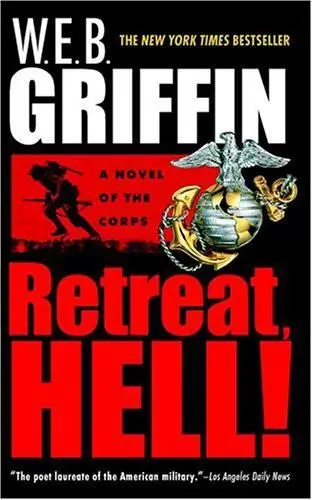
- Название:Retreat, Hell!
- Автор:
- Жанр:
- Год:0101
- ISBN:нет данных
- Рейтинг книги:3 / 5. Голосов: 1
-
Избранное:Добавить в избранное
- Отзывы:
-
Ваша оценка:
Retreat, Hell!: краткое содержание, описание и аннотация
Предлагаем к чтению аннотацию, описание, краткое содержание или предисловие (зависит от того, что написал сам автор книги «Retreat, Hell!»). Если вы не нашли необходимую информацию о книге — напишите в комментариях, мы постараемся отыскать её.
Megaseller Griffin (Honor Bound; Brotherhood of War; Men at War) musters another solid entry in his series chronicling the history of the U.S. Marines, now engaged in the Korean War. Gen. Douglas MacArthur, nicknamed El Supremo by his subordinates, is taken by surprise when the North Korean Army surges south across the 38th parallel. After early losses, he rallies his troops and stems the tide, but not for long. Intertwining stories of literally an army of characters reveal how MacArthur and his sycophantic staff overlook the entire Red Chinese Army, which is massed behind the Yalu River and about to enter the war. Brig. Gen. Fleming Pickering attempts to mediate the ongoing battles between feisty, give-'em-hell Harry Truman and the haughty MacArthur, while worrying about his pilot son, Malcolm "Pick" Pickering, who has been shot down behind enemy lines. The introduction of the Sikorsky H-19A helicopter into the war by Maj. Kenneth "Killer" McCoy and sidekick Master Gunner Ernie Zimmerman details the invention of tactics that will become commonplace in Vietnam. Readers looking for guts and glory military action will be disappointed, as barely a shot is fired in anger, but fans of Griffin's work understand that the pleasures are in the construction of a complex, big-picture history of war down to its smallest details: "There were two men in the rear seat, both of them wearing fur-collared zippered leather jackets officially known as Jacket, Flyers, Intermediate Type G-1." Veterans of the series will enjoy finding old comrades caught up in fresh adventures, while new-guy readers can easily enter here and pick up the ongoing story.
Retreat, Hell! — читать онлайн бесплатно полную книгу (весь текст) целиком
Ниже представлен текст книги, разбитый по страницам. Система сохранения места последней прочитанной страницы, позволяет с удобством читать онлайн бесплатно книгу «Retreat, Hell!», без необходимости каждый раз заново искать на чём Вы остановились. Поставьте закладку, и сможете в любой момент перейти на страницу, на которой закончили чтение.
Интервал:
Закладка:
"The captain has the conn!" the officer of the deck announced.
"Bring us alongside the Badoeng Strait," Matthews ordered the helmsman, describing with his finger how he wanted the Mansfield to move and where.
He turned to the officer of the deck and nodded.
The officer of the deck went to the control panel, depressed the announce lever, and said, "Attention all hands. Make all preparations for underway personnel transfer."
[THREE]
USS Badoeng Strait (CVE 116)
37.54 Degrees North Latitude
13O.O5 Degrees East Longitude
The Sea of Japan
1515 16 October 195O
Lieutenant Bruce D. Patterson, MC, USNR, wearing foul-weather gear and an inflated life jacket, was sitting in a bosun's chair. The chair—an item of Navy gear evolved from a sort of canvas seat that hauled sailors aloft to work on masts and sails, and thus was probably as old as the anchor—was suspended under a cable that had been rigged between one of the higher decks of the USS Mansfield and an interior strong point in the USS Badoeng Strait that was accessible through a square port in her side.
"All things considered, Major Pickering," Lieutenant Patterson said, "I very much regret ever having met you."
Major Malcolm S. Pickering, USMCR, who was also wearing foul-weather gear and an inflated life jacket, and was strapped into a second bosun's chair, smiled, shrugged, held out both hands in front of him, and said, "Jeez, Doc, I thought you liked me."
There was laughter from the dozen Marine aviators who were on hand to watch Good Ol' Pick get transferred to the destroyer.
Another Marine aviator in a flight suit walked up to them.
"I don't suppose it occurred to any of you guys that you might be in the way down here," Lieutenant Colonel William C. Dunn, USMC, said.
Lieutenant Colonel Dunn was not in a very good mood. He had just finished what he considered the most unpleasant duty laid upon a commanding officer.
And it was still painfully fresh in his mind:
USS BADOENG STRAIT (CVE-116)
MARINE AIR GROUP 33
AT SEA
16 OCTOBER 1950
MRS. BARBARA C. MITCHELL
APARTMENT 12-D, "OCEANVIEW"
1005 OCEAN DRIVE
SAN DIEGO, CALIFORNIA
DEAR BABS:
BY NOW, I'M SURE THAT YOU HAVE BEEN OFFICIALLY NOTIFIED OF DICK'S DEATH.
I THOUGHT THAT YOU WOULD BE INTERESTED IN WHAT I CAN TELL YOU OF WHAT HAPPENED.
WE WERE IN A SIX-CORSAIR FLIGHT OVER NORTH KOREA, NEAR HUNGNAM, ON THE EAST COAST OF THE KOREAN PENINSULA. OUR MISSION WAS IN SUPPORT OF THE I REPUBLIC OF KOREA CORPS, WHICH IS IN PURSUIT OF RETREATING NORTH KOREAN ARMY FORCES.
WHAT WE WERE CHARGED WITH DOING WAS INTERDICTING NORTH KOREA TROOPS TO BOTH SLOW THEIR RETREAT AND HIT THEM AS HARD AS WE CAN. WHEN THE SOUTH KOREANS DID NOT HAVE A TARGET FOR US, WE MADE SWEEPS OVER THE AREA, LOOKING FOR SUITABLE TARGETS OURSELVES.
ON THE AFTERNOON OF 14 OCTOBER, I DIVIDED THE FLIGHT INTO THREE TWO-CORSAIR ELEMENTS, WITH MYSELF AND MY WINGMAN, LIEUTENANT STAN SUPROWSKI, IN THE LEAD AND FIVE HUNDRED FEET ABOVE THE SECOND ELEMENT, WHICH WAS CAPTAIN JACK DERWINSKI, WHOM I KNOW YOU KNOW, AND WHO WAS A CLOSE FRIEND OF DICK'S. LIEUTENANT SAM WILLIAMS WAS FLYING AS JACK'S WINGMAN. THEY WERE FIVE HUNDRED FEET ABOVE THE THIRD ELEMENT, WHICH WAS DICK, WITH CAPTAIN LESTER STEPPES FLYING ON HIS WING.
A LITTLE AFTER TWO-THIRTY, FROM MY GREATER ALTITUDE, I WAS ABLE TO SEE A COLUMN OF TROOPS MIXED WITH SOME TRUCKS AND OTHER VEHICLES. TO MAKE SURE THEY WERE NOT FRIENDLY FORCES, I PASSED THE WORD THAT I WOULD MAKE A PASS OVER THEM, AND THAT IF THEY WERE INDEED THE ENEMY, THE OTHERS WERE TO ATTACK, STARTING WITH SUPROWSKI, WHO WAS NOW A THOUSAND FEET BEHIND ME, AND THEN THE OTHER TWO ELEMENTS.
I MADE THE PASS, AND RECEIVED SOME SMALL-CALIBER FIRE, WHEREUPON I GAVE THE ORDER FOR THE OTHERS TO ATTACK.
I THEN PULLED UP, MADE A 180-DEGREE TURN, AND SHORTLY THEREAFTER WAS FLYING A THOUSAND FEET OR SO BEHIND DICK AND CAPTAIN STEPPES AT NO MORE THAN TWO HUNDRED FEET OFF THE DECK. I COULD SEE DICK AND LESTER'S TRACER AMMUNITION STRIKING THE ENEMY COLUMN.
AND THEN, TO MY HORROR, I SAW DICK GO IN. ACTUALLY, IT HAPPENED SO QUICKLY THAT THE FIRST SIGN OF TROUBLE I SAW WAS THE FIREBALL OF DICK'S AIRCRAFT.
THERE IS NO QUESTION WHATEVER IN MY MIND THAT HE DIED INSTANTLY, AND IT IS ENTIRELY LIKELY THAT DICK WAS STRUCK AND KILLED BY ANTIAIRCRAFT MACHINE-GUN FIRE BEFORE HIS CORSAIR CRASHED.
ON MY FIRST PASS OVER THE CRASH SITE—SECONDS LATER— THERE WAS NOTHING TO BE SEEN BUT THE FIREBALL. ON SUBSEQUENT PASSES, AFTER THE FIRE HAD BURNED ITSELF OUT, I WAS FORCED TO CONCLUDE THAT NO ONE COULD HAVE SURVIVED THE CRASH.
ON RETURNING TO THE BADOENG STRAIT, I WAS ABLE TO MAKE CONTACT WITH A MARINE UNIT ON SHORE WHICH HAS ACCESS TO AN H-19 HELICOPTER, AND THEY ARE AS THIS IS WRITTEN IN THE PROCESS OF GETTING DICK'S REMAINS. I KNOW THEY WILL DO THEIR VERY BEST, NOT ONLY AS FELLOW MARINES, BUT BECAUSE AMONG THEM IS A MASTER GUNNER WHO KNEW DICK IN NORTH CAROLINA, AND HELD HIM IN BOTH HIGH ESTEEM AND AFFECTION.
AS SOON AS I LEARN ANYTHING ABOUT THIS, I WILL IMMEDIATELY LET YOU KNOW.
I DON'T THINK I HAVE TO TELL YOU HOW ALL THE. MARINES IN MAG33 FELT ABOUT DICK. HE WAS A SUPERB PILOT, AND A FINE MARINE OFFICER, AND WE SHALL ALL MISS HIM VERY MUCH.
THIS WILL PROBABLY OFFER LITTLE IN THE WAY OF CONSOLATION, BUT I HAVE JUST BEEN NOTIFIED THAT MY RECOMMENDATION FOR THE AWARD OF THE DISTINGUISHED FLYING CROSS HAS BEEN APPROVED. THAT WILL BE HIS THIRD AWARD OF THE DFC.
IF THERE IS ANYTHING I CAN DO TO BE OF SERVICE AT ANY TIME, PLEASE LET ME KNOW.
SINCERELY,
William C. Dunn
WILLIAM C. DUNN
LIEUTENANT COLONEL, USMC
COMMANDING
Dunn walked up to Pickering.
"Jesus, Billy," Pickering said. "How about cutting a little slack? The guys just came to see me off."
Dunn didn't respond directly. He thrust a large oilskin envelope at Pickering. "Can I rely on you to get this in the mail as soon as you get to Japan?" he asked.
"Depends on what's in it," Pick said.
"My condolence letter to Babs Mitchell."
Pick's smile faded. "Sure," he said, and took the envelope and stuffed it inside the foul-weather gear.
Dunn walked to the open door and peered out.
He saw that while weather conditions could not—yet—be accurately described as a storm, there were strong winds, five- to eight-foot swells, and it was raining, sometimes in gusts.
He saw that as the Mansfield and Badoeng Strait moved through the sea, with an intended space of fifty feet between them, they did not move up and down in unison. Only when the Mansfield, moving upward, for example, was exactly on a level with the Badoeng Strait, moving downward, was the cable stretched between them fairly level.
At all other times, it formed a loop, with one of the vessels at the top of the loop and the other at the bottom.
In addition, if the seas caused one vessel to lean to port and the other to starboard, the cable would be subject to a stress capable of snapping it as they moved apart unless additional cable was released from the winch. Conversely, if the vessels leaned toward each other, the lower part of the loop tended to go into the water, unless the cable was quickly winched in.
Dunn pulled his head in and looked at Chief Petty Officer Felix J. Orlovski, who had been in the Navy longer than many of his sailors were old.
"How are we doing with this, Chief?"
"We're about to make a test run, sir," the chief said, and pointed upward to the cable. A third bosun's chair was hooked to it.
"What's that strapped inside?" Dunn asked.
Читать дальшеИнтервал:
Закладка:
Похожие книги на «Retreat, Hell!»
Представляем Вашему вниманию похожие книги на «Retreat, Hell!» списком для выбора. Мы отобрали схожую по названию и смыслу литературу в надежде предоставить читателям больше вариантов отыскать новые, интересные, ещё непрочитанные произведения.









Обсуждение, отзывы о книге «Retreat, Hell!» и просто собственные мнения читателей. Оставьте ваши комментарии, напишите, что Вы думаете о произведении, его смысле или главных героях. Укажите что конкретно понравилось, а что нет, и почему Вы так считаете.