Antonio Garrido - The Corpse Reader
Здесь есть возможность читать онлайн «Antonio Garrido - The Corpse Reader» весь текст электронной книги совершенно бесплатно (целиком полную версию без сокращений). В некоторых случаях можно слушать аудио, скачать через торрент в формате fb2 и присутствует краткое содержание. Год выпуска: 2013, ISBN: 2013, Издательство: Amazon Pub, Жанр: Старинная литература, на английском языке. Описание произведения, (предисловие) а так же отзывы посетителей доступны на портале библиотеки ЛибКат.

- Название:The Corpse Reader
- Автор:
- Издательство:Amazon Pub
- Жанр:
- Год:2013
- ISBN:9781612184364
- Рейтинг книги:5 / 5. Голосов: 1
-
Избранное:Добавить в избранное
- Отзывы:
-
Ваша оценка:
The Corpse Reader: краткое содержание, описание и аннотация
Предлагаем к чтению аннотацию, описание, краткое содержание или предисловие (зависит от того, что написал сам автор книги «The Corpse Reader»). Если вы не нашли необходимую информацию о книге — напишите в комментариях, мы постараемся отыскать её.
The Corpse Reader — читать онлайн бесплатно полную книгу (весь текст) целиком
Ниже представлен текст книги, разбитый по страницам. Система сохранения места последней прочитанной страницы, позволяет с удобством читать онлайн бесплатно книгу «The Corpse Reader», без необходимости каждый раз заново искать на чём Вы остановились. Поставьте закладку, и сможете в любой момент перейти на страницу, на которой закончили чтение.
Интервал:
Закладка:
“Oh, I had a whole cow for breakfast,” he said, letting out a burp.
“Liar!” she said, laughing.
“I did. When you were still asleep, lazybones.”
Her laughter turned into a coughing fit. Clearly, her cough was getting worse, and the thought of her dying like his other sisters terrified him. He patted her back, and gradually the coughing subsided some, but he could see how much it hurt.
“We’ll get you better. Hang in there.”
He rummaged around in the bag for the dried roots that were her medicine—there were barely a few sprigs left. She chewed and swallowed them, and soon after, the coughing stopped.
“That’s what you get for eating too quickly,” he said, trying to make a joke.
“Sorry,” she said seriously.
Cí’s heart sank.

Racking his brain for a place they could go, he took a street toward Phoenix Hill, a residential area in the south of the city, where they’d lived before. They obviously wouldn’t be able to go back, as the houses were all assigned to current government officials, but he remembered Grandfather Yin, an old friend of his father’s. Cí thought perhaps he would take them in for a few days.
Gradually the five-story buildings of the Imperial Avenue area gave way to detached mansions with curved roofs and ornate gardens; the racket and odors of the crowded area near the gate were replaced with a breeze through trees and the sweet, clean smell of jasmine. Cí briefly savored the feeling of being back in a world where he might dare to belong.
By the time they knocked on Grandfather Yin’s door, it was sunset. Grandfather Yin’s second wife, a haughty, unfriendly woman, opened the door. As soon as she saw them she screwed up her face.
“What are you doing here? Do you want to ruin us?”
Cí was dumbstruck; it had been more than a year since they’d seen each other, but it was as though the woman had been expecting them. Before she could slam the door in their faces, Cí asked after Grandfather Yin.
“He isn’t here! He won’t see you!”
“Please. My sister is unwell.”
She looked at the girl in disgust.
“All the more reason for you to go away.”
“Who’s there?” Cí recognized Grandfather Yin’s voice coming from inside the house.
“Some beggar! He’s going already,” she shouted, stepping outside and leading Third by her arm to the street so that Cí had to follow. “This is a decent house, get it? We don’t need thieves like you coming around and muddying our name!”
“But—”
“Don’t play dumb! Sheriff Kao went through the neighborhood earlier today, and he had an enormous dog with him. He snooped around the whole house and told us what you did in the village, get it? He said you’d probably try here. I don’t know what possessed you to flee with that money, but if it weren’t for the memory of your father, I’d march you straight to the police and report you myself.” She let go of Third’s arm and pushed her toward Cí. “Make sure you don’t come back. If I catch you anywhere near the house, I swear I’ll make every single gong in the city ring out, and then there’ll be nowhere for you to hide.”
Cí took his sister’s hand and backed away, stumbling with worry and doubt. Clearly the magistrate had followed through on his threat to implicate Cí in Shang’s murder—or the Rice Man had reported him for stealing the 300,000 qián the magistrate had appropriated. Sheriff Kao was the man they’d sent to get him.
The sheriff had probably warned the rest of the neighbors in the vicinity, so they walked near the walls to avoid being seen. Cí considered staying in one of the inns near the gate. It obviously wasn’t the most suitable area, but the rooms would be cheap, and no one would come looking for them there.
They came upon a dilapidated building with a sign advertising inexpensive rooms. Its uneven walls abutted a restaurant that stank of rot. Cí parted the threadbare drape at the entrance and went over to the manager, a brute of a man, half-asleep and reeking of alcohol. The manager didn’t even look at Cí; he just extended a palm and said it was fifty qián up front. This was all Cí had. He tried to barter, but the drunkard spat—he couldn’t have cared less. Cí was wondering if they had any other options when Third began coughing again. This ill, she couldn’t sleep on the streets, but if he accepted the price, there would be nothing left to buy her medicine.
At least until I find some work.
He wanted to think he’d be able to find some work. He paid and asked whether there was a key.
“Ha! You think the people who stay here have anything valuable enough that they’d need a key? The room is at the back, third floor. And one thing: I don’t care if you’re having sex with that child, but if she dies, you’d better get her out of here. We don’t want problems with the law.”
Neither did Cí, so he squelched the impulse to give the man the punch he deserved.
They walked along the hallway, where voices and laughter filtered through the drapes covering the doorways of the rooms, and went up some rickety stairs. The rancid smell of sweat and urine made Cí retch. There was hardly any light, though their room faced the river, which could be seen through cracks between the bamboo reeds that had been used to patch a wall. There was a stained mat on the floor—the last thing someone would want to sleep on. He kicked it aside and took a blanket out of his bag. And again, Third started coughing.
I must get medicine now.
The ceiling was so low he could barely stand up straight. How could that swindler charge so much for such a tiny space, filled only with trash and the bits of broken bamboo left over from the wall repairs? He took some of these pieces and stacked them up, making an arch and covering it with the mat to form a shelter. Then he wiped some of the floor dirt on Third’s face in the hope that this would camouflage her in the dark.
“Listen, this is really important.” Third’s wide eyes were like lights embedded in her grimy face. “I have to go out, and I’ll be back really soon, but while I’m gone…do you remember how you hid the day the house burned? Well, I want you to do that again now. Don’t make a peep until I get back, OK? If you do a good job, maybe I’ll bring you some of that candy the fortune-teller had.”
Third nodded. Even if Cí didn’t entirely believe she’d do as he said, what choice did he have?
As they were covering her up, Cí said a prayer for his parents to watch over her. Then he rummaged through his bag for anything he might be able to sell. He’d get nothing for the four cloths and the knife he’d brought from the village. The only thing he had of any value was the Songxingtong , his father’s copy of the penal code. But he’d need to find someone interested in buying something so specialized.
He had to go to the book market stalls around the Summer Pavilion at the Orange Gardens. The network of canals was the quickest way to get around the mazelike city, so to save time, he hopped on a barge along the Imperial Canal.
He arrived at the market at the best time of day, when the students left class to drink tea and browse the recent arrivals from the printers in Hionha. Cí recognized himself among these aspiring government officials, who were dressed neatly in loose-fitting black shirts and hungry for knowledge—at least he recognized the person he’d been a year ago. He was envious of the conversations he overheard about the importance of knowledge, the invasions in the North, the most recent thinking on neo-Confucian trends. He had to remind himself what he was there for at that moment.
Читать дальшеИнтервал:
Закладка:
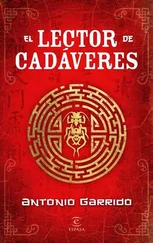
Похожие книги на «The Corpse Reader»
Представляем Вашему вниманию похожие книги на «The Corpse Reader» списком для выбора. Мы отобрали схожую по названию и смыслу литературу в надежде предоставить читателям больше вариантов отыскать новые, интересные, ещё непрочитанные произведения.










Обсуждение, отзывы о книге «The Corpse Reader» и просто собственные мнения читателей. Оставьте ваши комментарии, напишите, что Вы думаете о произведении, его смысле или главных героях. Укажите что конкретно понравилось, а что нет, и почему Вы так считаете.