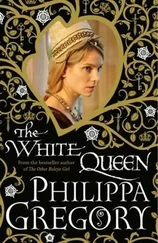
Philippa Gregory - The White Princess
Здесь есть возможность читать онлайн «Philippa Gregory - The White Princess» весь текст электронной книги совершенно бесплатно (целиком полную версию без сокращений). В некоторых случаях можно слушать аудио, скачать через торрент в формате fb2 и присутствует краткое содержание. Жанр: Старинная литература, на английском языке. Описание произведения, (предисловие) а так же отзывы посетителей доступны на портале библиотеки ЛибКат.

- Название:The White Princess
- Автор:
- Жанр:
- Год:неизвестен
- ISBN:нет данных
- Рейтинг книги:5 / 5. Голосов: 1
-
Избранное:Добавить в избранное
- Отзывы:
-
Ваша оценка:
The White Princess: краткое содержание, описание и аннотация
Предлагаем к чтению аннотацию, описание, краткое содержание или предисловие (зависит от того, что написал сам автор книги «The White Princess»). Если вы не нашли необходимую информацию о книге — напишите в комментариях, мы постараемся отыскать её.
The White Princess — читать онлайн бесплатно полную книгу (весь текст) целиком
Ниже представлен текст книги, разбитый по страницам. Система сохранения места последней прочитанной страницы, позволяет с удобством читать онлайн бесплатно книгу «The White Princess», без необходимости каждый раз заново искать на чём Вы остановились. Поставьте закладку, и сможете в любой момент перейти на страницу, на которой закончили чтение.
Интервал:
Закладка:
“I know that you can trust no one. I know that you are in a lonely hell of your own making.”
NORTHAMPTON, AUTUMN 1493

We move to Northampton and Henry receives the courtiers that he had sent to negotiate with my aunt, the dowager duchess. All trade is to be banned between England and Flanders, nobody can come and go, and Flanders shall have no English wool while the boy, the one boy, holds his little court, and the determined woman who claims he is her nephew writes urgently to other kings and queens, pressing his claims.
Henry’s representatives gleefully report that they have insulted my aunt. At her very court, in her presence, they suggested that she scrapes the countryside of bastard boys to send against Henry Tudor. They made a scurrilous joke suggesting that the boy is her love child. They say she is like many older women: mad for sex, or maddened by sex, or simply mad because she is a woman and everyone knows that women’s grasp of reason is a weak one. They say that she is a mad woman from a mad family and so my grandmother Cecily Duchess of York, nearly eighty years old, and my dead mother and I, and all my sisters and my cousin Margaret are insulted too. Henry lets all these things be said by his ambassadors, and repeated in my hearing, as if he does not care what filth is thrown at York, as long as something sticks which besmirches the boy.
I hear this gossip flinty-faced, I don’t demean myself to complain. Henry is stooping very low, he has lost all judgment. To insult the boy, to insult my aunt, he will say anything. I see his mother watching me, bright-eyed with her own delirious fears, and I turn my head away as if I do not want to see her, nor hear the abuse her son commands.
But the ambassador William Warham did not waste his time in Flanders in slandering my aunt; he had his clerks and his men search the country for families who are missing a boy. Hundreds of people responded, people who now say that twenty years ago they lost a newborn from the cradle; could this be the boy? People who say that their child wandered off and never returned; did the duchess steal him? People whose beloved child fell into the river and was swept downstream and the body never found—is he alive and pretending to be Richard Duke of York? One applicant after another comes forwards to tell their sad stories of missing children; but there is nothing to link even one of them to the boy who behaves so courteously in his little palace, who speaks so warmly of his father, and who visits his aunt Margaret so comfortably.
“You don’t know who he is,” I say flatly to Henry. “You have spent a small fortune and had Sir William pay half the mourning mothers in Christendom for their stories, and you still don’t know who he is. You have no idea who he is.”
“I will have his history,” he says simply. “I will have his history even if I have to write it myself. I can tell you some of it already. He turns up somewhere, into some family somewhere, ten years ago. He’s with them for something like four years. Then Sir Edward Brampton happens by, and takes him to Portugal—Sir Edward admits that himself. In Portugal they call the boy Richard Duke of York, and he’s known in the Portuguese court as the missing prince. Then, he’s dismissed by Sir Edward, it doesn’t matter why, and the boy travels with Pregent Meno—Meno admits that too, I have it in writing. Meno takes him to Ireland, the Irish rise up for him, they call him Richard Duke of York—I have their confessions—and he escapes to France. King Charles of France accepts him as the York prince, but just when he is to be handed over to me, he escapes to your aunt.”
“You have all this written down?” I ask.
“I have signed reports from witnesses. I can trace him every moment of every day from Portugal,” Henry says.
“But nothing before then. Nothing to show that he is born and bred into the family somewhere,” I point out. “You say yourself that he turns up there. He himself will say that he turns up there from England, rescued from the Tower. Everything that you have written down, sworn to for certain, does nothing to disprove his claim. Everything you have collected as evidence only confirms him as a son of York.”
He crosses the room in one swift stride and snatches up my hand, holding it so tightly that the bones are crushed together. I flinch but I won’t cry out.
“That’s all I have for now,” he says through gritted teeth. “As I said. What I don’t have I will write myself. I will write this boy’s parentage into his story, I will create it: common people, nasty people. The father a bit of a drunk, the mother a bit of a fool, the boy a bit of a runaway, a wastrel, a good-for-nothing. D’you think I can’t write this and get someone—a drunk married to a fool—to swear to it? Do you think I can’t set up as historian? As storyteller? D’you think I can’t write a history which years from now, everyone will believe as the truth? I am the king. Who shall write the record of my reign if not me?”
“You can say anything you like,” I say levelly. “Of course you can. You’re the King of England. But it doesn’t make it true.”

A few days later Maggie, my cousin, comes to me. Her husband has been made Arthur’s Lord Chamberlain, but they cannot take up residence in Wales while the west is threatened by a rival prince. “My husband, Sir Richard, tells me that the king has found a name for the boy.”
“Found a name? What do you mean, found a name?”
She makes a little face, acknowledging the oddness of the phrase. “I should have said, that the king now says he knows who the boy is.”
“And?”
“The king says he is to be called Perkin Warbeck, the son of a boatman. From Tournai, in Picardy.”
“Does he say that the boatman is a drunk, married to a fool?”
She does not understand me. She shakes her head. “He has nothing else but this name. He says nothing else.”
“And is he sending the boatman and his wife to Duchess Margaret? So that the boy can be faced by his parents and forced to confess? Is he taking the boatman and his wife to the kings and queens of Christendom so that they can show who he truly is, and claim their son back from these royal courts which have kept him for so long?”
Margaret looks puzzled. “Sir Richard didn’t say.”
“It’s what I’d do.”
“It’s what anyone would do,” she agrees. “So why is the king not doing it?”
Our eyes meet, and we say nothing more.
WESTMINSTER PALACE, LONDON, WINTER 1493
The Holy Roman Emperor has died and Henry sends ambassadors to pay the respects of England at his funeral. But when they get there, they find that they are not the only noblemen representing their country. For the Holy Roman Emperor’s son and heir, Maximilian, goes everywhere arm in arm with his new and dearest friend: Richard, son of Edward, King of England.
“They said what?” Henry demands. He has ordered me into his presence chamber to hear this report from the returning ambassadors, but he does not greet me nor set a chair for me. I doubt he even sees me: he is blinded with rage. I sink down into my seat as he strides about, shaking with anger. The ambassadors throw a quick glance at me to see if I am going to intervene. I sit like a cold statue. I am going to say nothing.
“The heralds called him ‘Richard, son of Edward, King of England,’ ” the man repeats.
Henry rounds on me. “Do you hear this? Do you hear this?”
Читать дальшеИнтервал:
Закладка:
Похожие книги на «The White Princess»
Представляем Вашему вниманию похожие книги на «The White Princess» списком для выбора. Мы отобрали схожую по названию и смыслу литературу в надежде предоставить читателям больше вариантов отыскать новые, интересные, ещё непрочитанные произведения.

Обсуждение, отзывы о книге «The White Princess» и просто собственные мнения читателей. Оставьте ваши комментарии, напишите, что Вы думаете о произведении, его смысле или главных героях. Укажите что конкретно понравилось, а что нет, и почему Вы так считаете.