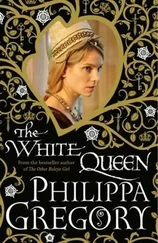
Philippa Gregory - The White Princess
Здесь есть возможность читать онлайн «Philippa Gregory - The White Princess» весь текст электронной книги совершенно бесплатно (целиком полную версию без сокращений). В некоторых случаях можно слушать аудио, скачать через торрент в формате fb2 и присутствует краткое содержание. Жанр: Старинная литература, на английском языке. Описание произведения, (предисловие) а так же отзывы посетителей доступны на портале библиотеки ЛибКат.

- Название:The White Princess
- Автор:
- Жанр:
- Год:неизвестен
- ISBN:нет данных
- Рейтинг книги:5 / 5. Голосов: 1
-
Избранное:Добавить в избранное
- Отзывы:
-
Ваша оценка:
The White Princess: краткое содержание, описание и аннотация
Предлагаем к чтению аннотацию, описание, краткое содержание или предисловие (зависит от того, что написал сам автор книги «The White Princess»). Если вы не нашли необходимую информацию о книге — напишите в комментариях, мы постараемся отыскать её.
The White Princess — читать онлайн бесплатно полную книгу (весь текст) целиком
Ниже представлен текст книги, разбитый по страницам. Система сохранения места последней прочитанной страницы, позволяет с удобством читать онлайн бесплатно книгу «The White Princess», без необходимости каждый раз заново искать на чём Вы остановились. Поставьте закладку, и сможете в любой момент перейти на страницу, на которой закончили чтение.
Интервал:
Закладка:

Lady Margaret, the King’s Mother, comes in state to visit her new grandchild and finds her in my lap, rosy from washing, warm in a towel, unswaddled and beautifully naked.
“She looks well,” she says, her pride in another Tudor baby overcoming her belief that the child should be strapped down on her board to ensure that her legs and arms grow straight.
“She is a beauty,” I say. “A real beauty.”
The baby looks at me with the unswerving questioning gaze of the newborn, as if she is trying to learn the nature of the world, and what it will be like for her. “I think she is the most beautiful baby we have ever had.”
It is true, her hair is silver gilt, a white gold like my mother’s, and her eyes are a dark blue, almost indigo, like a deep sea. “Look at her coloring!”
“That’ll change,” Lady Margaret says.
“Perhaps she’ll be copper-brown like her father. She’ll be exquisite,” I say.
“For a name, I thought we would call her—”
“Elizabeth,” I say, interrupting rudely.
“No, I had thought—”
“She’s going to be Elizabeth,” I say again.
My Lady the King’s Mother hesitates at my determination. “For St. Elizabeth?” she confirms. “It’s an odd choice for a second girl but—”
“For my mother,” I say. “She would have come to me if she could, she would have blessed this baby as she blessed all the others. I had a hard confinement without her here and I expect to miss her for the rest of my life. This baby came into the world just as my mother left it, and so I am naming her for my mother. And I can tell you this—I am absolutely sure that a Tudor Elizabeth is going to be one of the greatest monarchs that England has ever seen.”
She smiles at my certainty. “Princess Elizabeth? A girl as a great monarch?”
“I know it,” I say flatly. “A copper-headed girl is going to be the greatest Tudor we ever make: our Elizabeth.”
GREENWICH PALACE, LONDON, SUMMER 1492

I come out of confinement to find that the court is filled with news of the boy who wears my mother’s silk shirts. The boy has written a beautiful letter to all the crowned heads of Christendom, explaining that he is my brother Richard, rescued from the Tower and kept in hiding for many years.
I myself, at the age of about nine, was also delivered up to a certain lord to be killed. It pleased divine clemency that this lord, pitying my innocence, should preserve me alive and unharmed. However, he forced me first to swear upon the sacred body of Our Lord that I would not reveal name, lineage, or family to anyone at all until a certain number of years. Then he sent me abroad.
“What d’you think?” Henry says grimly, dropping this smooth account into my lap as I sit in the nursery, admiring the new baby, who is feeding greedily from the sleepy wet nurse, one little hand patting the plump blue-veined breast, one little foot waving with pleasure.
I read the letter. “Did he write this to you?” I put my hand on the cradle, as if I would protect her. “He didn’t write to me?”
“He didn’t write this to me. But God knows, he’s written to everyone but us.”
I can feel my heart thud. “He hasn’t written to us?”
“No,” Henry says, suddenly eager. “That counts against him, doesn’t it? He should have written to you? To your mother? Wouldn’t a lost son, wanting to come home, have written to his mother?”
I shake my head. “I don’t know.”
Carefully neither of us remark that this boy almost certainly wrote to her, and she certainly replied.
“Will anyone have told him that his—” I break off “—that my mother is dead?”
“For sure,” Henry says grimly. “I don’t doubt he has many faithful correspondents from our court.”
“Many?”
He nods. I cannot tell if he is speaking from his darkest fears or from terrible knowledge of traitors who live with us and daily curtsey or bow and yet secretly write to the boy. In any case, the boy should know that my mother is dead, and I am glad that someone has told him.
“No, this is his letter to the Spanish king and queen, Ferdinand and Isabella,” Henry goes on. “My men picked it up on the way to them and copied it and sent it on.”
“You didn’t destroy it? To prevent them seeing it?”
He grimaces. “He has sent out so many letters that destroying just one would make no difference. He tells a sad tale. He spins a good yarn. People seem to believe it.”
“People?”
“Charles VIII of France. He’s a boy himself, and all but a madman. But he believes this shadow, this ghost. He’s taken the boy in.”
“In where?”
“Into his court, into France, into his protection.” Henry bites off his answer and looks angrily at me. I gesture to the wet nurse, commanding her to take the baby from the room, as I don’t want our little Princess Elizabeth to hear of danger, I don’t want her to hear the fear in our voices when she should be feeding peacefully.
“I thought you had ships off Ireland to prevent him leaving?”
“I had Pregent Meno offer him a safe voyage. I had ships off Ireland to capture him if he took another vessel. But he saw through the trap of Pregent Meno, and the French sent ships of their own and they smuggled him out.”
“To where?”
“Honfleur—does it make any difference?”
“No,” I say. But it makes a difference to my imagining. It is as if I can see the dark sea, dark as my Elizabeth’s eyes, the swirling mist, the failing light, and the little boats slipping into an unknown Irish port and then the boy—the handsome young boy in his fine clothes—stepping lightly on the gangplank, turning his face into the wind, heading for France with his hopes high. In my imagining, I see his golden hair lift off his young forehead and I see his bright smile: my mother’s indomitable smile.
GREENWICH PALACE, LONDON, SUMMER–AUTUMN 1492
England is arming for war. The men are mustering at Greenwich in the fields around the palace, all of the lords are calling up their men, finding pikes and axes, clothing them in the livery of their house. Every day brings ships from the weapon-masters of London with loads of pikes, lances, and spears. When the wind blows from the west I can smell the hot arid scent of the forges at work, hammering blades, casting cannonballs. Ships laden with the carcasses of slaughtered beasts come downstream from Smithfield market, to be packed into salt or smoked, and the brewery at the palace and every alehouse within a radius of twenty miles is hard at work every day, and the warm powdery scent of yeast is heavy in the evening air.
Brittany—the little independent dukedom that housed and hid Henry during his years when he was a penniless pretender to the throne—is at war with its mighty neighbor of France and has called on Henry for help. I cannot help but smile to see my husband in this quandary. He wants to be a great warrior king as my father was—but he has a great disinclination to go to war. He owes a debt of honor to Brittany—but war is the most costly undertaking and he cannot bear to waste money. He would be glad to defeat France in a battle—but Henry would hate to lose such a battle, and he cannot tolerate risk. I do not blame him for his caution. I saw our family destroyed by the outcome of a battle, I have seen England at war for most of my childhood. Henry is wise to be cautious; he knows that there is no glory on the battlefield.
Читать дальшеИнтервал:
Закладка:
Похожие книги на «The White Princess»
Представляем Вашему вниманию похожие книги на «The White Princess» списком для выбора. Мы отобрали схожую по названию и смыслу литературу в надежде предоставить читателям больше вариантов отыскать новые, интересные, ещё непрочитанные произведения.

Обсуждение, отзывы о книге «The White Princess» и просто собственные мнения читателей. Оставьте ваши комментарии, напишите, что Вы думаете о произведении, его смысле или главных героях. Укажите что конкретно понравилось, а что нет, и почему Вы так считаете.