Upton Sinclair - Love's pilgrimage
Здесь есть возможность читать онлайн «Upton Sinclair - Love's pilgrimage» весь текст электронной книги совершенно бесплатно (целиком полную версию без сокращений). В некоторых случаях можно слушать аудио, скачать через торрент в формате fb2 и присутствует краткое содержание. Год выпуска: 1911, Издательство: New York : M. Kennerley, Жанр: Старинная литература, на английском языке. Описание произведения, (предисловие) а так же отзывы посетителей доступны на портале библиотеки ЛибКат.
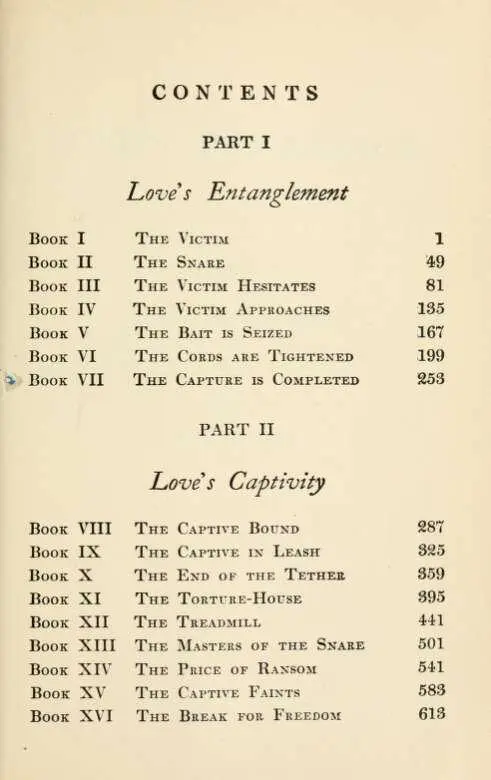
- Название:Love's pilgrimage
- Автор:
- Издательство:New York : M. Kennerley
- Жанр:
- Год:1911
- ISBN:нет данных
- Рейтинг книги:4 / 5. Голосов: 1
-
Избранное:Добавить в избранное
- Отзывы:
-
Ваша оценка:
Love's pilgrimage: краткое содержание, описание и аннотация
Предлагаем к чтению аннотацию, описание, краткое содержание или предисловие (зависит от того, что написал сам автор книги «Love's pilgrimage»). Если вы не нашли необходимую информацию о книге — напишите в комментариях, мы постараемся отыскать её.
Love's pilgrimage — читать онлайн бесплатно полную книгу (весь текст) целиком
Ниже представлен текст книги, разбитый по страницам. Система сохранения места последней прочитанной страницы, позволяет с удобством читать онлайн бесплатно книгу «Love's pilgrimage», без необходимости каждый раз заново искать на чём Вы остановились. Поставьте закладку, и сможете в любой момент перейти на страницу, на которой закончили чтение.
Интервал:
Закладка:
Thyrsis was dazed at all this waste, and at the uproar in the place, where dozens of other parties were squandering money in the same blind fashion, and all laughing, chatting, joining in the choruses with the performers on the stage. Now and then he would catch a little of his host's conversation, which was of all the capitals of Europe, and of art-worlds, the very existence of which was unknown to him. And then, on his left hand, there was Mile. Armand, deftly picking off the leaves of an artichoke and dipping them into mayonnaise, and saying in her little bird's voice, "They tell me, Monsieur, that you have du genie. Oh, you should go to Paree to live—it is not here that one appreciates du genie!" And, then while Thyrsis was working out
an explanation of his failure to visit Paris, some one in the cafe caught sight of Scarpi, and there was a general call for him; and according to the genial custom of the "Boheme" he stood up, amid tumultuous applause, and sang one of his own rollicking songs.
So the revelry went forward, while Thyrsis marvelled, and tried to hide his pain. There could be no question of any enjoyment for him—when he knew that the cost of this affair would have paid all his expenses for a winter! Doubtless what Barry Creston spent for his cigars would have saved Thyrsis and his family from misery all their lives; and he wondered if the man would have cared had he known. Barry was one of the princes of the new dispensation; and sometimes princes were compassionate, Thyrsis reflected. Apparently this one was all urbanity and charm, having no thought in life save to play the perfect host to brilliant artists and demi-mondaines, and to skim the cream off the top of civilization.
But then suddenly the conversation took a new turn, and Thyrsis got another view of the young prince. There had been trouble out in the Western mines; and some one mentioned it—when in a flash Thyrsis saw the set jaw and the clenched fist and the steel grey eye of old "Dan" Creston. (Thyrsis had read somewhere a sketch of this senator, whose fortune was estimated at fifty millions, and who ran the governments of three states.) Barry, it seemed, had had charge of the mines for three years—that was how he had won his spurs. In those days, he said, there had been no unions—he told with a quiet smile how he had broken them. Now again "agitators" had crept in, so that in some of the camps the men were being moved out bodily, and replaced by foreigners, who knew a good job when they
had it. To make this change had taken the militia; but it would be done thoroughly, and afterwards there would be no more trouble.
The supper-party broke up about two o'clock, and Miss Raymond, the lady of the flamingo hat, was the only one who showed any effects from all the wine that had been consumed. Thyrsis, to his great surprise, discovered that his host had taken a fancy to him, and had asked Miss Lewis to bring him out to luncheon at the Creston place in the country. And so came the wonderful experience which brought to him the vision of "The Utopians."
§ 9. THEY went, one Saturday morning, in Miss Lewis' automobile—out to Riverside Drive, and up the valley of the Hudson. This was in itself a Utopian experience for Thyrsis, who had never before taken a trip in one of these magic chariots. It leaped over the frozen roads like a thing of life, and he lay back in the cushioned seats and closed his eyes and listened to the hum of the machinery, imagining what life might be for him, if he could rest like this when he was worn from overwork. It was like some great adventure in music, like a minstrel's chanting of heroic deeds; it was Nature with all her pageantry unrolled in a panorama before his eyes. And meantime Miss Lewis was chattering on about the play and its prospects; and about other plays and their prospects; and about the people at the supper-party and their various loves and hates.
So they came to the great stone castle of the Cres-tons, set upon a mountain-top overlooking the valley of this "American Rhine." Thyrsis gasped when he saw it, and he gasped many times again while Barry was showing them about. For this place was a triumph of
a hundred arts and sciences; into its perfections had gone all the skill of the architects and designers, the weavers and carpenters, the painters and sculptors of a score of centuries and climes. The very dairies, the stables, the dog-kennels were things to be wondered at and studied; and in the vast halls were single pictures over which Thyrsis would fain have lingered for hours. Then, best of all, the great portico, with its stone pillars, and its view of the noble river, and of the snow-clad hills, dazzling in the sunlight!
They had luncheon; after which Barry played upon the organ, and Miss Lewis sat beside him and left Thyrsis to wander at will. He made his way out to the portico, and paced back and forth there; and while the organ rolled and thundered to him, the majesty of the scene swept over him, and in towering splendors his soul arose. He thought of the wretched room in which he was pent, he thought of his starved and struggling life; and all the rage of his defeated genius awoke in him. In the name of that genius he. uttered his defiance, and by the title of it he took possession of this castle, and of all things it contained. Yes—for he was the true lord and master of it—he was the prince disinherited ! And the meaning of it, its excuse for being, was this brief hour! For this its glories had been assembled ; for this the architects and designers, the weavers and carpenters, the painters and sculptors had labored in a score of centuries and climes; for this the great organ had been built, and for this the great musician had composed—that he might behold, in one hour of transfiguration, what the life of man would be in that glad time when all the arts of civilization were turned to the fostering of the soul! When he who carried in the womb of his spirit the new life of the ages,
would be loved instead of being hated, would be cherished instead of being neglected, would be reverenced instead of being mocked! When palaces would be built for him, and beauty and joy would be gathered for him, and the paths would be made clear before his feet! So out of boundless love and rapture would he speak to men, and bring to them those gifts that were beyond price, the treasures of his unfolding inspiration.
So it was that the Utopians came to Thyrsis; those men of the future, worshippers of joy! They came to him, alive and in the flesh, beautiful and noble, gracious and free-hearted—as some day they will come, if so the earth endure; as they will stand upon that portico, and listen to that music, and gaze upon the valley of that American Rhine! And will they remember the long-dead dreamer, and how they walked with him there and spoke with him; how they put their arms about him, and gave him of their love and understanding? Will they remember what shuddering rapture their touch conveyed to him; how the tears ran down his cheeks, and he pledged his soul to yet more years of torment, so only their glory might come to be upon earth? Will they read the blazin'g words in which he pictured them, the trumpet-blast he sounded to the dead souls of his time?
Thyrsis knew that this was the greatest hour of his life, and he fought like mad to hold it. But that might not be—the music ceased, and he heard the voices of his host and Miss Lewis. They came to the door; and then Thyrsis' thoughts came back quickly to earth. For he saw that Barry Creston's arm was about the woman, and she was leaning upon him; nor did they separate when they saw him, but stood there, smiling; so that at last Thyrsis had solved for him the problem
of their relationship. It was not so that the Utopians loved, he thought, as he watched them; and found himself wondering if young Creston was as imperious with his women as he was with the slaves in his Western mines.
Читать дальшеИнтервал:
Закладка:
Похожие книги на «Love's pilgrimage»
Представляем Вашему вниманию похожие книги на «Love's pilgrimage» списком для выбора. Мы отобрали схожую по названию и смыслу литературу в надежде предоставить читателям больше вариантов отыскать новые, интересные, ещё непрочитанные произведения.








Обсуждение, отзывы о книге «Love's pilgrimage» и просто собственные мнения читателей. Оставьте ваши комментарии, напишите, что Вы думаете о произведении, его смысле или главных героях. Укажите что конкретно понравилось, а что нет, и почему Вы так считаете.