Edward Aubyn - A Clue to the Exit
Здесь есть возможность читать онлайн «Edward Aubyn - A Clue to the Exit» весь текст электронной книги совершенно бесплатно (целиком полную версию без сокращений). В некоторых случаях можно слушать аудио, скачать через торрент в формате fb2 и присутствует краткое содержание. Год выпуска: 2015, Издательство: Picador, Жанр: Современная проза, на английском языке. Описание произведения, (предисловие) а так же отзывы посетителей доступны на портале библиотеки ЛибКат.
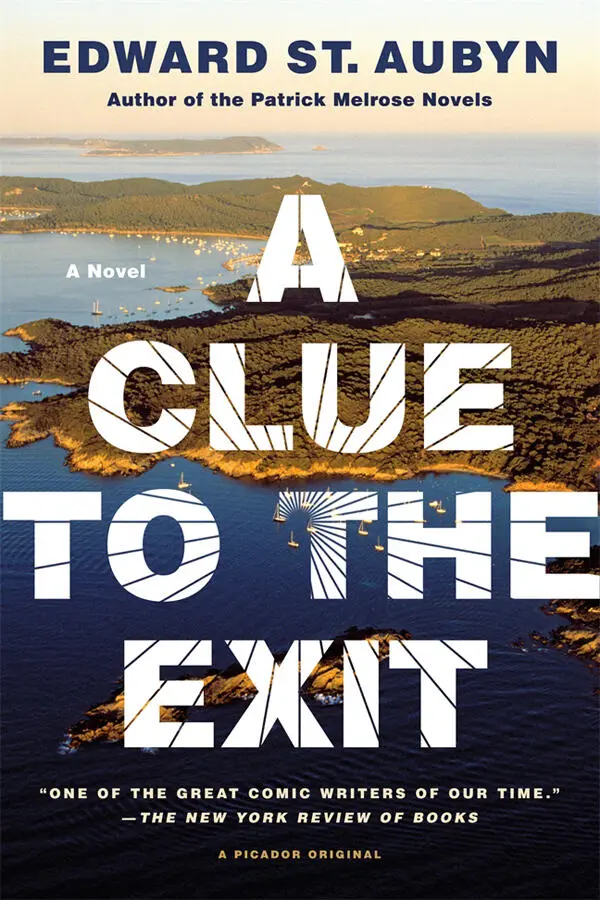
- Название:A Clue to the Exit
- Автор:
- Издательство:Picador
- Жанр:
- Год:2015
- ISBN:нет данных
- Рейтинг книги:3 / 5. Голосов: 1
-
Избранное:Добавить в избранное
- Отзывы:
-
Ваша оценка:
A Clue to the Exit: краткое содержание, описание и аннотация
Предлагаем к чтению аннотацию, описание, краткое содержание или предисловие (зависит от того, что написал сам автор книги «A Clue to the Exit»). Если вы не нашли необходимую информацию о книге — напишите в комментариях, мы постараемся отыскать её.
His novel is set on a train and involves a group of characters (familiar to readers of St. Aubyn's earlier work) who are locked in a debate about the nature of consciousness. As this train gets stuck at Didcot, and Charlie gets more passionately entangled with the dangerous Angelique,
comes to its startling climax. Exquisitely crafted, witty, and thoughtful, Edward St. Aubyn's dazzling novel probes the very heart of being.
A Clue to the Exit — читать онлайн бесплатно полную книгу (весь текст) целиком
Ниже представлен текст книги, разбитый по страницам. Система сохранения места последней прочитанной страницы, позволяет с удобством читать онлайн бесплатно книгу «A Clue to the Exit», без необходимости каждый раз заново искать на чём Вы остановились. Поставьте закладку, и сможете в любой момент перейти на страницу, на которой закончили чтение.
Интервал:
Закладка:
Stacks of cashmere sweaters, as tightly packed and finely graded as a box of crayons, filled the teak cupboards of Jean-Marc’s virile wardrobe. Hanging opposite were rows of identical off-white cotton trousers, pressed as crisply as folded paper, and, above them, rows of identical softly corrugated corduroy trousers. On brass rails at the foot of the cupboard was a tilted display of tasselled loafers and blue canvas shoes.
‘Great selection,’ I said, wondering if I could slip through a porthole and back into the freezing water. I thought of my three-day-old clothes heaped on the beach, the balls of dirty socks stuffed into the rotting shoes, and the huge coffee stain next to the hole in my blue sweater, gone at the elbows. ‘If you don’t mind, I’d love to…’
‘Anything you like,’ said Jean-Marc, sliding open a few drawers on his way out. ‘We’ll have lunch when you’re ready, but there’s no hurry. It’s really just a picnic.’
I washed the goose pimples from my skin under a steaming shower and, feeling like the boy in The Go-Between who is bought a green velvet suit by the rich family he spends the summer with, returned to the deck wearing some of Jean-Marc’s maddeningly soft clothes. His South Sea Island cotton might as well have been drenched in Nessus’ blood.
The table was loaded with lobsters and glistening bowls of mayonnaise and yellow-necked bottles of white wine, punctuated by silver bread baskets and silver pepper mills. Everyone was in the mood for a picnic.
‘ Ah, enfin ,’ said Marie-Louise. ‘So, we can eat.’ She angled her cheeks expertly for the quickest kiss. ‘I’m sure you remember Angelique,’ she said confidently, ‘but I don’t think you’ve met Dmitri.’
I nodded to the pointlessly good-looking man in the charcoal suit, and then said hello to Angelique, hoping to make her share the alarming nostalgia which was flooding my body like an injection. She answered me with cheerful shallowness. I could tell that she was not just protecting herself, but already protected enough by genuine unconcern.
I sank into my chair and listened to the cracking of lobster shells, like distant gunfire. I felt closer to the lobsters than the people who were eating them. Even the eggs which had gone into the mayonnaise seemed to have been unfairly sacrificed. Why, if it came to that, had the bright olive and the swelling grape been crushed, if it was only to prolong the lives of these vile mannequins?
‘Aren’t you having one?’ said Pamela, dragging a lobster tail through a half-demolished hillock of mayonnaise. ‘You’re making a terrible mistake.’
‘Have you noticed,’ said Alessandro, ‘that Jean-Marc’s lobsters always taste better than anyone else’s?’
‘Hmm-mm,’ everyone agreed, their mouths too full to form a whole word.
‘We must know your secret!’ Alessandro demanded, his swashbuckling finger dispatching all opposition.
‘I think that Charlie needs a bowl of hot soup after his ordeal,’ said Jean-Marc.
‘The ordeal has only just begun,’ I said.
‘ Ah, non ,’ said Jean-Marc, ‘you’re not going to swim back. Nobody swims at this time of year; the water is an atrocious temperature. Jean-Pierre, amenez Monsieur une petite soupe bien chaude ,’ he instructed the swarthy butler who stood behind his chair. ‘Your timing couldn’t be more perfect,’ he went on. ‘Lola Richardson, who I know is an old friend of yours, is joining us after lunch, and we’re having a screening of Flat . I have a very, very small projection room on board, but as long as it’s you there’s room for one more.’
I suppose what I did next must have seemed odd to the others, but the thought of seeing the Maestro’s swan song in the company of my self-appointed literary conscience was more than I could bear. I couldn’t plausibly claim to have urgent business, and so I simply got up and walked back to the steps which led down to the water. I peeled off Jean-Marc’s luxurious clothes like a man on fire.
‘He seems to be the most fanatical swimmer,’ said Pamela.
‘He certainly has an extraordinary idea of good manners,’ said Marie-Louise.
‘It’s typi-cally English,’ said Alessandro, delighted as usual. ‘So eccentric! Perhaps he is going to fetch more lobsters for us.’
‘More lobsters!’ said Xavier, wheezing from the effort of laughing so much.
I had left my swimming trunks to dry in the bathroom, and so I was naked by the time the butler arrived with a bowl of soup.
I explained that my appetite had deserted me.
Just before I jumped into the shatteringly cold water, Angelique came up to the guard rail and whispered, ‘You bastard, why didn’t you call me?’
Back home I was dismembered by exhaustion and hunger. I made the bowl of soup I had refused on board Les Enfants du Paradis . The heat pulsed through my body in widening rings like the broadcast of an important victory. The scattered jigsaw puzzle of my attention reassembled into a single image. The sea and the sky didn’t seem so far apart after all; ‘the incense of the sea’ drifts up and falls again in a gentle rain. I felt myself tumbling into sleep, but I knew already that it was time to leave. The beauty of the South of France has been embalmed on this little island. It can be visited like an inspiring tomb, helping people to imagine a time when the whole coast was wild, before land became property, and property became lots, and the lots became little. In the absence of nature and of land, there is natureland, a theme park of biodiversity, crammed with educational material and environmental projects, financed by a partnership between a regional council, a national park and an oil company. Infuriated by its lack of development, the air force roars overhead all day long, and the envious mainland disgorges boatloads of tourists hourly onto its fragile shores. Silence and darkness, which people used to be able to get by stepping outside their houses, are finished in Europe. There is always the hum of a road, the whine of a jet, the screech of a train, the glow of lights over the hill, and, in really remote areas, army exercises. I thought I might find some silence and darkness in Porquerolles, and although the lighthouse beam cornered me in the creek, there was a little silence, until the dawn patrol ripped open the sky.
It is time to go into a deeper solitude and find somewhere really empty for the final phase of my life.
23
The blue smoke of paraffin. The din of scooters. Narrow shops with stepladders to reach their high-rise stock, coarse sacks outside filled with grains and beans. The spattered colonnade, greasy smoke from the charcoal grills, little food stalls with vividly dirty shutters. The smell of the ground drenched in motor oil outside a mechanic’s shop, wheels and fan belts dangling from the ceiling. Everywhere men hanging out. Some are slumped all day at a cafe table, sipping a bottle of Coca-Cola, stories of violence and passion blaring from the television. Some stare into space, their eyes emptied of all curiosity. They look perfectly prepared for death. I envy their sense of stylistic continuity. Staring blankly while their hearts beat, staring blankly when they stop beating. How agitated and self-concerned I seem by comparison. I must emulate their obedience. I am heading south until the will to live is baked out of me.
24
On the road, a mud wall enclosing a scrappy garden. Pointless gateways separating one expanse of broken stone from another. The increasingly beautiful absence of people. Big cloud shadows drifting across the brown plain, and then over a pinkish hill shot with a seam of darker rose. The eye meets no obstruction and the mind relaxes into infinity.
Читать дальшеИнтервал:
Закладка:
Похожие книги на «A Clue to the Exit»
Представляем Вашему вниманию похожие книги на «A Clue to the Exit» списком для выбора. Мы отобрали схожую по названию и смыслу литературу в надежде предоставить читателям больше вариантов отыскать новые, интересные, ещё непрочитанные произведения.









Обсуждение, отзывы о книге «A Clue to the Exit» и просто собственные мнения читателей. Оставьте ваши комментарии, напишите, что Вы думаете о произведении, его смысле или главных героях. Укажите что конкретно понравилось, а что нет, и почему Вы так считаете.