Edward Aubyn - A Clue to the Exit
Здесь есть возможность читать онлайн «Edward Aubyn - A Clue to the Exit» весь текст электронной книги совершенно бесплатно (целиком полную версию без сокращений). В некоторых случаях можно слушать аудио, скачать через торрент в формате fb2 и присутствует краткое содержание. Год выпуска: 2015, Издательство: Picador, Жанр: Современная проза, на английском языке. Описание произведения, (предисловие) а так же отзывы посетителей доступны на портале библиотеки ЛибКат.
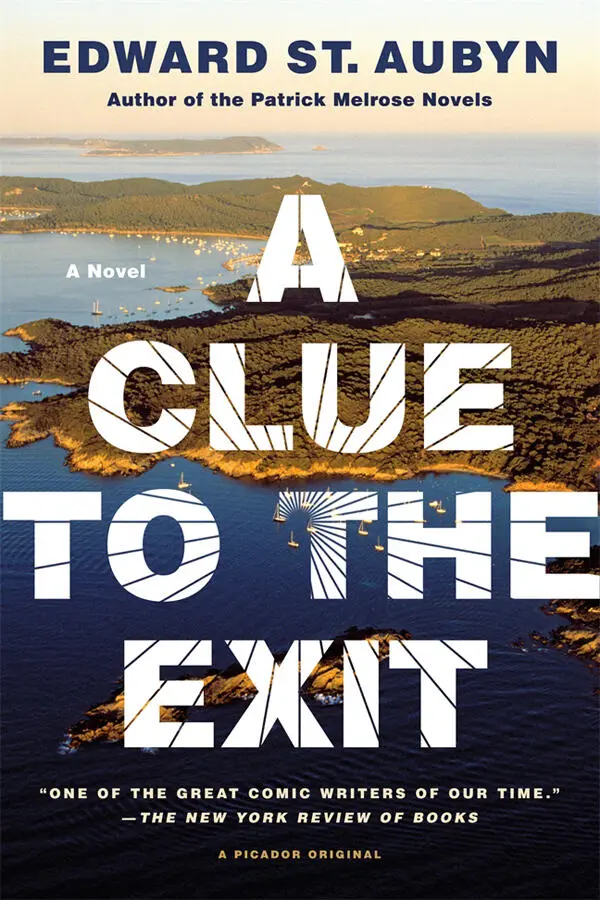
- Название:A Clue to the Exit
- Автор:
- Издательство:Picador
- Жанр:
- Год:2015
- ISBN:нет данных
- Рейтинг книги:3 / 5. Голосов: 1
-
Избранное:Добавить в избранное
- Отзывы:
-
Ваша оценка:
A Clue to the Exit: краткое содержание, описание и аннотация
Предлагаем к чтению аннотацию, описание, краткое содержание или предисловие (зависит от того, что написал сам автор книги «A Clue to the Exit»). Если вы не нашли необходимую информацию о книге — напишите в комментариях, мы постараемся отыскать её.
His novel is set on a train and involves a group of characters (familiar to readers of St. Aubyn's earlier work) who are locked in a debate about the nature of consciousness. As this train gets stuck at Didcot, and Charlie gets more passionately entangled with the dangerous Angelique,
comes to its startling climax. Exquisitely crafted, witty, and thoughtful, Edward St. Aubyn's dazzling novel probes the very heart of being.
A Clue to the Exit — читать онлайн бесплатно полную книгу (весь текст) целиком
Ниже представлен текст книги, разбитый по страницам. Система сохранения места последней прочитанной страницы, позволяет с удобством читать онлайн бесплатно книгу «A Clue to the Exit», без необходимости каждый раз заново искать на чём Вы остановились. Поставьте закладку, и сможете в любой момент перейти на страницу, на которой закончили чтение.
Интервал:
Закладка:
And yet, over the last two months I’d been miraculously, almost disturbingly, free of symptoms. In fact I was growing more vital every day. Until we started arguing, love and work seemed to enable me to transcend my physical limitations, but then all the symptoms pounced at once, like wild animals when the camp fires die out in the middle of the night.
I had to retire to bed. I had a spear in my side and a trowel digging under my shoulder blade; hatpins of brief agony shot through my body unpredictably. My vision blurred and my jaundiced eyeballs and coated tongue spoke of imminent catastrophe. I started to forget the names of my characters and lost any sense of their respective personalities. Angelique, moving around in the neighbouring rooms, trampled on my aching body. Breathing in, reputedly an instinct, became a negotiated settlement.
And still I handed the haughty and faintly disgusted Angelique her daily gambling money, the high price of my suicide-inducing bed and breakfast. Each time she came in and held out her impatient hand, close enough to reach the counters but too far for me to catch her wrist and pull her over to my side, I thought of le père Goriot, bedridden in his filthy garret but only wishing he could be further exploited by his marble-hearted daughters.
Yesterday Angelique came into the bedroom holding my thin manuscript. She moved towards the open window and I surged up from the pillows shouting, ‘Don’t!’
‘Oh, don’t worry,’ she said, ‘I’m not going to throw it out of the window — that would be doing you a favour.’
‘You don’t like it?’
‘It’s wooden and dry and boring. I can’t believe this is what you want to do with your last days. Why don’t you write about how wonderful the figs taste when you know you may never taste one again?’
‘Because they don’t,’ I said, ‘they taste like ash.’
‘Why don’t you tell us how we must live every moment to the full because life is so precious?’
‘Because if it’s dying that makes you realize that, you’re already too anxious to do anything about it. I wanted to do something serious…’
‘You are doing something serious: you’re dying,’ she said, laughing.
‘Something impersonal.’
‘But that’s exactly the problem: you must make it more personal, more human, more dramatic. You should write from your own experience, write about us .’ She put the manuscript on the table by the window. ‘I’m only trying to help,’ she said. ‘I think the real problem is that you don’t know how to make abstract ideas exciting. You should read Alain. We used to read him in the Lycée. He’s wonderful. After a page of Alain, you see Spinoza everywhere.’
‘I’ll check him out,’ I said feebly.
She left the room and, paralysed by failure and confusion, I watched the breeze scatter the pages across the floor.
On my third day in bed Angelique let me know, with some reluctance, that we’d been invited to lunch by a friend of Alessandro’s who had a fabulous house in the hills above Cap d’Ail. Where was that largesse I’d felt at Jimmy’s? Gone. I loathed the idea of the lunch party, but I couldn’t bear Angelique to drift further from me, to make the reanimation of our perfect love yet more impossible, and so I excavated myself from the bed and, assembling the fragments of a social identity, set off with her in the back of one of Alessandro’s cars, obsessively fingering my aching new breasts, like a thirteen-year-old girl.
Our convoy of limousines glided down the long drive, past deeply shaded lawns, and arrived at a seventeenth-century chateau the colour of lavender honey, with pale-grey shutters. We parked beside a gurgling trout pond, its reflected light trembling steadily on the jasmine-crowded walls of an old tower. Angelique, for whom the house represented rather less than a month’s gambling in an inconveniently solid form, was less impressed than I was. I found it the perfect setting for the war between dignity and self-pity which was raging inside me. Heaving myself out of the car, I imagined the soundtrack that might accompany the long shots of a dying man walking along those gravel paths. A close-up of an intelligent and passionate face. The scream of a peacock counterpointing its own visual charm and piercing through the aesthetic consolations of the place. Yes, a peacock, the symbol of immortality, turned into the messenger of death. I thought of the Maestro and the balance he would have kept between the wit of the treatment and the savagery of the subject.
And then one of those extraordinary things happened. Our host came out of the house and before he even greeted us he cried out, ‘The Maestro is dead. It’s a tragedy for the cinema.’
‘But I was just thinking about him,’ I stammered stupidly.
Pamela, the white-haired Englishwoman, leant over to me confidentially and said, ‘John can’t stand his films; says they’re “pretentious twaddle”.’
I looked at her with hatred, but she was too pleased with her quotation to notice.
‘He died behind the camera,’ said Jean-Marc, pausing on the steps of his house.
‘Ah, bravissimo !’ said Alessandro.
‘I’m sure it’s how he would have wanted to go,’ said Pamela. ‘Captain going down with his ship and all that.’
‘He was working on a film called Flat ,’ said Jean-Marc.
‘Only the Maestro…’ murmured Alessandro admiringly.
‘Alas, it was incomplete when he died, but there will be a screening in Cannes this May. I happen to be on the festival committee,’ Jean-Marc hurried past the glamour of his connections, ‘and I thought we should form a party.’
There was a babble of approval.
‘I’ll be dead by May,’ I said quietly.
‘Oh, no, not you as well,’ said Pamela. ‘What a morbid lunch.’
‘But surely you wouldn’t want to miss it,’ said Jean-Marc, placing his hand lightly on my back as he guided me into the hall. ‘Alessandro tells me you’re in the cinema yourself.’
‘We’re all in the cinema,’ I said, influenced, perhaps, by Pamela’s mention of ‘pretentious twaddle’.
‘Ah, yes,’ said Jean-Marc.
‘What does it mean, “we’re all in the cinema”?’ said the chic Frenchwoman indignantly. ‘I never go to the cinema. For me it is absolute-lay a nightmare to be locked in the dark with all the ordinary people.’
‘Of course I don’t want to miss it…’ I went on.
‘Well, then, it’s decided,’ said Jean-Marc, resuming control after a crisis of defection: ‘we can count on you to come.’
Two greyhounds with red leather collars sat beneath their own portrait in a hall that smelt of wood smoke and lilies.
‘My cook is furious with me,’ Jean-Marc confessed, ‘because, as a homage to the Maestro, I asked her to prepare a lunch based on the famous scene in Pompeii where they feast on oysters and suckling pig. The shellfish were not a problem, but she had to hunt high and low to find the suckling pig.’
Everyone agreed that only Jean-Marc would have gone to such trouble.
In the drawing room Jean-Marc’s wife, dressed in cream linen edged with black velvet, stood beside the fireplace like a funeral invitation. Her eyelids drooped almost to closure and her long pale body did its best to resemble the lilies which overflowed from every vase. She greeted us with unaffected indifference. The house had belonged to Marie-Louise’s father, Jean-François de Hauteville, as she was inclined to remind her husband and other visitors. Everything that Marie-Louise touched or refused to touch was in the very best taste. She looked over my shoulder as if admiring a landscape which had just been painted for her by Poussin and in which I was not included. Even the burglars who had robbed the chateau earlier that year had been ‘real professionals’ with ‘very good taste’. Had they been ordinary thugs, without degrees in art history, they could never have been admitted to Marie-Louise’s circle.
Читать дальшеИнтервал:
Закладка:
Похожие книги на «A Clue to the Exit»
Представляем Вашему вниманию похожие книги на «A Clue to the Exit» списком для выбора. Мы отобрали схожую по названию и смыслу литературу в надежде предоставить читателям больше вариантов отыскать новые, интересные, ещё непрочитанные произведения.




Обсуждение, отзывы о книге «A Clue to the Exit» и просто собственные мнения читателей. Оставьте ваши комментарии, напишите, что Вы думаете о произведении, его смысле или главных героях. Укажите что конкретно понравилось, а что нет, и почему Вы так считаете.