Rupert Thomson - Katherine Carlyle
Здесь есть возможность читать онлайн «Rupert Thomson - Katherine Carlyle» весь текст электронной книги совершенно бесплатно (целиком полную версию без сокращений). В некоторых случаях можно слушать аудио, скачать через торрент в формате fb2 и присутствует краткое содержание. Год выпуска: 2015, ISBN: 2015, Издательство: Other Press, Жанр: Современная проза, на английском языке. Описание произведения, (предисловие) а так же отзывы посетителей доступны на портале библиотеки ЛибКат.
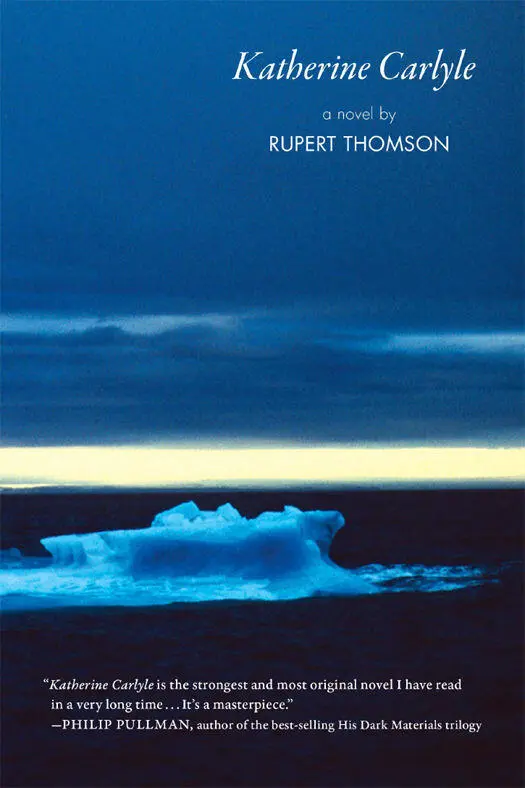
- Название:Katherine Carlyle
- Автор:
- Издательство:Other Press
- Жанр:
- Год:2015
- ISBN:9781590517390
- Рейтинг книги:5 / 5. Голосов: 1
-
Избранное:Добавить в избранное
- Отзывы:
-
Ваша оценка:
Katherine Carlyle: краткое содержание, описание и аннотация
Предлагаем к чтению аннотацию, описание, краткое содержание или предисловие (зависит от того, что написал сам автор книги «Katherine Carlyle»). Если вы не нашли необходимую информацию о книге — напишите в комментариях, мы постараемся отыскать её.
“[T]his road trip through a snow dome of mesmeric hallucinations is Thomson at his best.” —Richard Flanagan, author of The Narrow Road to the Deep North, winner of the 2015 Man Booker Prize
Katherine Carlyle is Rupert Thomson’s breakthrough novel. Written in the beautifully spare, lucid, and cinematic prose Thomson is known for, and powered by his natural gift for storytelling, it uses the modern techniques of IVF to throw new light on the myth of origins. It is a profound and moving novel about identity, the search for personal meaning, and how we are loved.
Unmoored by her mother’s death and feeling her father to be an increasingly distant figure, Katherine Carlyle abandons the set course of her life and starts out on a mysterious journey to the ends of the world. Instead of going to college, she disappears, telling no one where she has gone. What begins as an attempt to punish her father for his absence gradually becomes a testing ground of his love for her, a coming-to-terms with the death of her mother, and finally the mise-en-scène for a courageous leap to true empowerment.
Katherine Carlyle — читать онлайн бесплатно полную книгу (весь текст) целиком
Ниже представлен текст книги, разбитый по страницам. Система сохранения места последней прочитанной страницы, позволяет с удобством читать онлайн бесплатно книгу «Katherine Carlyle», без необходимости каждый раз заново искать на чём Вы остановились. Поставьте закладку, и сможете в любой момент перейти на страницу, на которой закончили чтение.
Интервал:
Закладка:
Will anything be that good again?
A light clicks on in the apartment opposite, and a shadowy figure crosses behind a white translucent blind. Someone else who can’t sleep. I climb back into bed and lie down on my stomach with my head turned sideways on the pillow and my legs out straight.
When I wake, the window is open and there’s a puddle on the floor. It must have rained during the night. I mop up the water, using tissues from beside the bed. I’m about to go and shower when Klaus knocks on the door and asks if I’d like coffee.
/
I sit at the breakfast bar in a fluffy white bathrobe, finishing the café-au-lait Klaus made for me before he left for work. On the breadboard is a paper bag of croissants but I’m not hungry yet. When the hum of the fridge cuts out I can hear the murmur of traffic. Otherwise it’s quiet. I put on another pot of coffee, then I read yesterday’s paper and the latest edition of Der Spiegel . Later, I walk to the window and stare out over the pale-yellow gables of the houses opposite. On the roof of an office block a huge Mercedes sign revolves. It’s strange how distant Rome seems, and how irrelevant; I thought I would miss it more. I picture the apartment on Via Giulia — the shelves of books on war and politics, the golden sofa with its lilac and burnt-orange cushions, the autumn sunlight spilling across the parquet floor … What will my father think when he returns? Will he put his bags down in the hall and call my name? Will the atmosphere strike him as unusual? Will the rooms look warm and lived in, or abandoned, bereft, forlorn? First my mother left. Now me.
I turn back to the breakfast bar and pick up the scrap of paper Oswald gave me. I scrutinize his handwriting, which isn’t spidery, as I imagined it would be, but forthright, bold. I study the creases in the paper, the perforated edges. I’m so used to looking for signs and clues; there’s nothing that can’t tell me something . When I hold the piece of paper to my nose I smell cured meat. I fetch Klaus’s phone and call the number.
Oswald answers almost immediately. I tell him it’s the girl who took the package to the station.
“I know,” he says. “I recognize your voice.”
I don’t say anything.
“I wasn’t expecting you to call,” he goes on. “I thought you’d lose my number.” He pauses. “How did the negotiations go?”
I smile. “Really well.”
“I’m glad.”
“What are you doing?”
“Right now? I’m walking the dog. It’s my day off.”
“You have a dog?”
He laughs. “Is that so strange?”
I smell the piece of paper again. Perhaps it isn’t meat after all. Perhaps it’s dog.
“You wanted to show me something,” I say.
“That’s right.”
Since he is working long hours for the next three days he suggests we meet on Tuesday, in the evening, at a fast-food place on the Ku’damm.
“You can’t miss it,” he says. “There’s a neon sign. Three red sausages with white flames underneath.”
I imagine Oswald walking in a drab windswept park, his eyes glistening like olives in brine, his black shirt flattened against his raw pale body. He throws a stick, which cartwheels through the sky. His dog runs off in the opposite direction.
That afternoon I visit Schloss Charlottenburg. The gardens are shrouded in a clammy mist. Statues stare at me with blurred blank faces, and tree-lined avenues end in nothingness. Though I don’t see any other people I have the feeling someone is following me, or about to make contact. Why now, though? I have only been gone a few days, and I’m not due in Oxford until the first week of October. So who am I expecting? Massimo? He would be hopeless in Berlin. I can almost hear the piteous voice he puts on when he thinks he’s coming down with something. Mi sento fiaco. Pienso di avere un po’ di febbre . I don’t feel good. I think I might be a bit feverish. What about Daniela? I see her in skinny jeans and a parka with a fur-trimmed hood. When we hug each other, her body begins to tremble and I realize she’s crying. Sometimes you frighten me . I hold her tight. It’s all right, Dani. It’s fine. Everything’s fine . But Dani isn’t likely to appear. She’s still at her parents’ house in Puglia. Is there anyone who might be able to track me down? The airline database will show that I boarded a flight to Berlin on September 8, but after that? What are the chances of somebody tracing the taxi driver who took me to the blue hotel? Slender, to say the least — and anyway, I checked out after just four nights. And nothing connects me to Klaus Frings, nothing at all. My disappearance is like a crime without a motive, and they’re notoriously difficult to solve, aren’t they?
/
I have been staying at Walter-Benjamin-Platz for no more than a couple of days when Klaus asks if I would like to go to a concert with him. Two symphonies are being performed, he says. Tchaikovsky and Prokofiev. I know nothing about classical music, I tell him. I’m worried the ticket might be wasted on me. He seems fascinated and appalled by this gap in my education. She knows nothing about classical music , I hear him murmur as he moves across the kitchen, shaking his big head.
On Saturday night we take a taxi to the Konzerthaus in the Gendarmenmarkt. Under my coat I’m wearing a clingy black shirt with mother-of-pearl buttons, a denim miniskirt, black tights, and black ankle boots with heels. Earlier in the evening, when I emerged from my room, I asked Klaus if I was appropriately dressed. He smiled, then looked away, ruffling his hair. At the time I wasn’t sure how to interpret his response, but as we mingle in the lobby with other concertgoers — tuxedoes, jewels, furs — I understand that I do in fact look inappropriate, and that it pleases him. I’m flouting convention and since he’s escorting me this means that he too is flouting convention but in the only way he can — at one remove.
Upstairs in the bar Klaus introduces me to a man with slicked-back hair and a damp handshake. His eyes are damp too. When he looks at me they seem to leave a deposit, as snails do, and I have to resist the urge to reach up and wipe my face. His name is Horst Breitner. Klaus, Horst — German names are truncated, harsh, almost greedy, like bites taken out of something crisp. For a split second I glimpse the apple on the bed in the hotel on Via Palermo.
When Klaus goes off to buy a program, Horst insinuates himself into the space in front of me, blocking my view of the ornate, high-ceilinged room. He holds his champagne flute below his chin and speaks over the rim, in English. “You have known Klaus long?”
“I met him a few days ago.”
“Ah, so this is — how do you say? — fresh .”
Horst has an air of urgency, as if he is required to extract certain information from me before Klaus returns. As if he has specific goals or targets. The effect is flattering, but vaguely repellent. I could pretend not to notice, of course. Frustrate him. For some reason, though, I decide to lead him on.
“We met in a café,” I tell him.
“Really?”
“He was sitting at the next table. I asked for the sugar —”
Horst lets out a brief breathy laugh of disbelief.
“We started talking,” I say.
“In a café.” Horst’s eyebrows lift and he turns through ninety degrees. Standing sideways-on to me, he looks away across the bar. He raises his glass to his lips, then tilts it quickly, swallowing a mouthful that is economical, precise. “And now you live with him, in his apartment …”
“Yes.”
“I’m surprised,” he says. “Really.”
I shrug, then I too look away, scanning the people to see if they have anything to impart. That’s what life is like now. I hold myself in a constant state of readiness. Every occasion — every moment — trembles with a sense of opportunity. I have no idea where the next communication will come from, but I know that one will come — perhaps even from the unwholesome, insidious man who is still standing beside me.
Читать дальшеИнтервал:
Закладка:
Похожие книги на «Katherine Carlyle»
Представляем Вашему вниманию похожие книги на «Katherine Carlyle» списком для выбора. Мы отобрали схожую по названию и смыслу литературу в надежде предоставить читателям больше вариантов отыскать новые, интересные, ещё непрочитанные произведения.









Обсуждение, отзывы о книге «Katherine Carlyle» и просто собственные мнения читателей. Оставьте ваши комментарии, напишите, что Вы думаете о произведении, его смысле или главных героях. Укажите что конкретно понравилось, а что нет, и почему Вы так считаете.