Adrian Pearson - Cow Country
Здесь есть возможность читать онлайн «Adrian Pearson - Cow Country» весь текст электронной книги совершенно бесплатно (целиком полную версию без сокращений). В некоторых случаях можно слушать аудио, скачать через торрент в формате fb2 и присутствует краткое содержание. Год выпуска: 2015, Издательство: Cow Eye Press, Жанр: Современная проза, на английском языке. Описание произведения, (предисловие) а так же отзывы посетителей доступны на портале библиотеки ЛибКат.
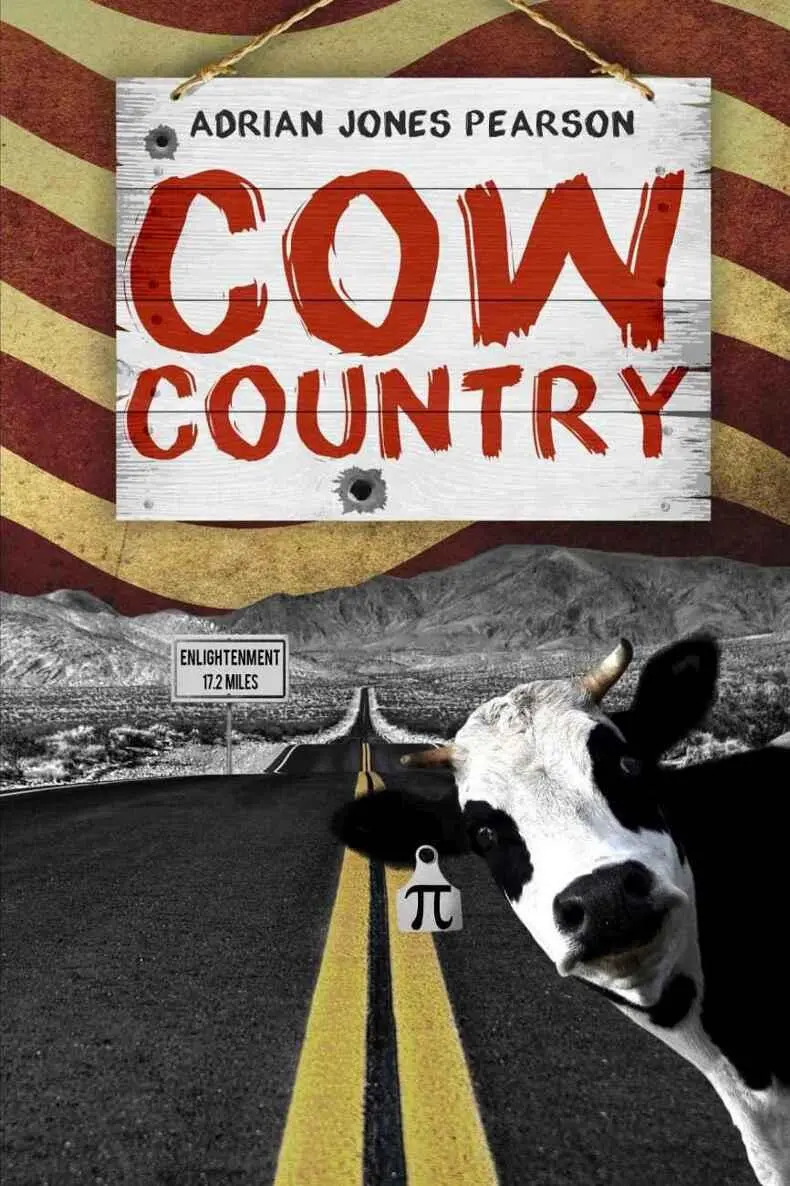
- Название:Cow Country
- Автор:
- Издательство:Cow Eye Press
- Жанр:
- Год:2015
- ISBN:нет данных
- Рейтинг книги:4 / 5. Голосов: 2
-
Избранное:Добавить в избранное
- Отзывы:
-
Ваша оценка:
Cow Country: краткое содержание, описание и аннотация
Предлагаем к чтению аннотацию, описание, краткое содержание или предисловие (зависит от того, что написал сам автор книги «Cow Country»). Если вы не нашли необходимую информацию о книге — напишите в комментариях, мы постараемся отыскать её.
Cow Country — читать онлайн бесплатно полную книгу (весь текст) целиком
Ниже представлен текст книги, разбитый по страницам. Система сохранения места последней прочитанной страницы, позволяет с удобством читать онлайн бесплатно книгу «Cow Country», без необходимости каждый раз заново искать на чём Вы остановились. Поставьте закладку, и сможете в любой момент перейти на страницу, на которой закончили чтение.
Интервал:
Закладка:
Dr. Felch was waiting with his beer, not drinking.
“I hear you, Mr. Felch,” I told him. “Believe me, it’s something I’m trying to get better at. Appreciating people while they are still around to understand my appreciation….”
“Just remember, Charlie, it's easy to love the beautiful things in this world. But if you’re going to make it here at Cow Eye you’re going to need to love the other kind of things. You’re going to have to love the things that are unloved .”
“Unloved?”
“Yes. The subtler things. The things that defy easy admiration.”
“I’ll do my best, sir,” I said. “I’ll do my best to love the things that are unloved.”
And here we drank.
After a few moments of background noise — a bantering cigarette commercial over the television, the sound of a vinyl record skipping in the juke box, then the sound of another can of beer being popped open at the bar — Dr. Felch turned somber. For the first time since I’d met him his voice fell to almost nothing:
“But there’s one thing I just don’t understand. And maybe you can help me figure it out, Charlie….” I leaned in to hear his words over the ambient noise. “….Maybe you can explain how it is that a person can leave the place that’s been their home and never come back? How do you just give up your culture for someone else’s? Charlie, maybe you can help me understand how a person with so much history can just… leave ?”
I started to construct an answer but couldn’t finish it. My experience was a different one, I knew, and wouldn’t make much sense to him. And so the best I could do at that moment was to shrug my shoulders. Dr. Felch looked at me for a few moments, then shook his head and swallowed the last of his beer. Then he collected all of the rings from the ashtray and dumped them into his shirt pocket — for his granddaughter’s collection, he explained. In the corner of the bar another roar went up around the television after a touchdown by the “home” team — which I recognized as a four-year college more than a thousand miles away. When I had finished my beer Dr. Felch slapped me on the shoulder.
“Alright, Charlie, it’s about time we got you to campus. Plan on being in my office first thing Monday morning for convocation. There won’t be any students around next week — only faculty and staff — so it’ll be a good chance for you to meet your peers and get acclimated to the personalities. And like I said, Bessie will be helping you get up and running….”
Dr. Felch picked up the tab, and as we left we gave a nod to the three men at the bar and they shouted back from their darts:
“Take care, Charlie!” they said and: “Good luck!”
I thanked them and we headed out into the light of day.
*
Back in the car, Dr. Felch drove the rest of the way amid a mixture of small talk and slightly inebriated silence.
“We’re almost at the campus,” he said when we’d driven for another ten minutes past dried-up trees and old houses with busted-out windows and yet another irrigation canal that had no water flowing through it. “The entrance is over there on the other side of the railroad tracks.” We hopped over the tracks and made our way along the dusty road. Just as it had been since I’d arrived, the scenery around me was dry and desolate, bleak and unapologetic. Dr. Felch took a left onto a small road and then another left and drove straight ahead in the direction of a sign in the distance that said “WELCOME TO COW EYE COMMUNITY COLLEGE” and underneath it, in smaller letters: “ Where Minds Meet .” A guard shack was set up in front of the campus and a wooden arm stretched across the road to bar our entrance.
“Good afternoon, Mr. Felch,” the guard said, stepping out of his booth.
“Hey there, Timmy.”
The guard handed Dr. Felch a clipboard with some forms to sign; he signed them without reading and then pointed back at me. “This is Charlie,” he said. “He’s going to be our new Special Projects Coordinator.”
I leaned over to introduce myself.
“Nice to meet you,” I said through the open trapezoid of Dr. Felch’s window.
“Likewise, Charlie!” he said. “Welcome to Cow Eye!”
Dr. Felch had started to light an eighth cigarette with his seventh — or was it a ninth with his eighth? — but then reconsidered. Instead he stubbed it out in the dashboard ashtray.
“I almost forgot. New policy….we’re a non-smoking campus starting this year.” Dr. Felch shook his head and sighed. “Dammit….”
And with that the arm lifted and our truck made its way through the gate and onto the campus of Cow Eye Community College.
* * *
THE OPPOSITE SIDE OF THE GATE
Leading from the darkness of ignorance
To the light of higher learning,
There is a simple gate that stands
Old with age and somewhat heavy.
And I, the educational administrator,
Am its faithful gatekeeper,
Whose trained yet trembling hands
Must somehow dispel the latch.
To say the campus of Cow Eye Community College differed from the town surrounding it and from which it got its name is to note that a daughter is often unrecognizable from the mother whose house she shares and whose surname she can no longer return to — or that an island tends to differ in color and content from the moister things around it. As I stared in wonder at the scene unfolding before me, Dr. Felch drove through the gate separating the college from the dusty world outside — and into an emerald oasis of vast lawns and rich green grass where every blade was brilliant and sprinklers sputtered and hissed. The distinct metaphorical threshold that one crosses when entering a campus of even the most humble institution of higher education — the sudden break in scenery meant to reinforce the divide between the barren world of ignorance on the other side of the gate and the realm of manicured enlightenment on this side — seemed more pronounced here at Cow Eye than at any other college I’d been to. And as Dr. Felch turned onto the main road bisecting the campus, I gawked at this inviting world of fresh grass and green hope and well-trimmed optimism. Tall pine trees rose up from a series of lakes and manmade lagoons where swans paddled and fish splashed and pelicans loafed on the banks. Hedges of rose and lavender grew along the paths to buildings, flowers of every imaginable type and color sprang up in carefully ordained patterns, and it seemed that all of it — every last petunia and tulip and daffodil, every orchid and dandelion — was in full and fragrant bloom. Everything as far as the eye could see was redolent and lush and the sudden emergence of this much verdure and color and freshness out of the cracked heat and glare of my long bus ride to Cow Eye Junction — out of the choking dust of the slow road through town — was so abrupt and unexpected that I literally and audibly gasped at the sight of it. In place of the stagnant heat of the last few hours a cool breeze was now blowing from what seemed like both ends of the campus. Birds were chirping and singing. Ducks quacked. Jasmine bloomed under the late-afternoon sun. Surely there could be no finer portrait of college life where undergraduates in school colors lounge on opened textbooks while laughing gaily at the irrepressibility of their own futures. Even the air of the place seemed cooler and more autumnal — more collegiate — than it had just minutes before. Taking it all in, I felt my lungs filling up with the chill pregnant air that was so much more alive than the heat and exhaust we had just left behind at the gate, as if all the life and fertility that had been sucked out of the town of Cow Eye Junction and the surrounding Diahwa valley basin had been concentrated here in this fertile cradle of learning and productivity and fulfillment.
Читать дальшеИнтервал:
Закладка:
Похожие книги на «Cow Country»
Представляем Вашему вниманию похожие книги на «Cow Country» списком для выбора. Мы отобрали схожую по названию и смыслу литературу в надежде предоставить читателям больше вариантов отыскать новые, интересные, ещё непрочитанные произведения.






Обсуждение, отзывы о книге «Cow Country» и просто собственные мнения читателей. Оставьте ваши комментарии, напишите, что Вы думаете о произведении, его смысле или главных героях. Укажите что конкретно понравилось, а что нет, и почему Вы так считаете.