Paul Beatty - Tuff
Здесь есть возможность читать онлайн «Paul Beatty - Tuff» весь текст электронной книги совершенно бесплатно (целиком полную версию без сокращений). В некоторых случаях можно слушать аудио, скачать через торрент в формате fb2 и присутствует краткое содержание. Жанр: Современная проза, на английском языке. Описание произведения, (предисловие) а так же отзывы посетителей доступны на портале библиотеки ЛибКат.
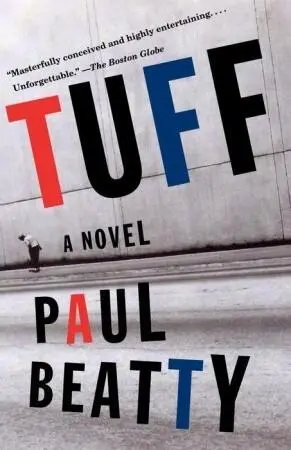
- Название:Tuff
- Автор:
- Жанр:
- Год:неизвестен
- ISBN:нет данных
- Рейтинг книги:5 / 5. Голосов: 1
-
Избранное:Добавить в избранное
- Отзывы:
-
Ваша оценка:
Tuff: краткое содержание, описание и аннотация
Предлагаем к чтению аннотацию, описание, краткое содержание или предисловие (зависит от того, что написал сам автор книги «Tuff»). Если вы не нашли необходимую информацию о книге — напишите в комментариях, мы постараемся отыскать её.
shows off all of the amazing skill that Paul Beatty showed off in his first novel,
.
Weighing in at 320 pounds, Winston “Tuffy” Foshay, is an East Harlem denizen who breaks jaws and shoots dogs and dreams of millions from his idea
, starring Danny DeVito. His best friend is a disabled Muslim who wants to rob banks, his guiding light is an ex-hippie Asian woman who worked for Malcolm X, and his wife, Yolanda, he married from jail over the phone. Shrewdly comical as this dazzling novel is, it turns acerbically sublime when the frustrated Tuffy agrees to run for City Council. Smartly irreverent and edgily fierce,
is a bona fide original.
Tuff — читать онлайн бесплатно полную книгу (весь текст) целиком
Ниже представлен текст книги, разбитый по страницам. Система сохранения места последней прочитанной страницы, позволяет с удобством читать онлайн бесплатно книгу «Tuff», без необходимости каждый раз заново искать на чём Вы остановились. Поставьте закладку, и сможете в любой момент перейти на страницу, на которой закончили чтение.
Интервал:
Закладка:
Rachel affected a southern drawl and asked Winston, “You ain’t raped any white women, have you, boy?”
Winston played along. “No, ma’am. Least not nones that’s lived to tell the tale.”
“Winston, did you shoot the dog?”
“Yes, but he tried to bite my son.”
“I’ll talk to the DA.”
As they entered the chambers Winston had a small panic attack when he remembered that in To Kill a Mockingbird , Gregory Peck lost the case.
Judge Weinstein was presiding, barricaded against the hordes of miscreants seated in front of him by a nameplate and a tall mahogany bench. The cases heard before Winston’s moved like clockwork. Lasting no longer than forty-five seconds, each arraignment moved efficiently down the assembly line. The conveyor belt of justice moved its manufactured goods, the defendants, from their courtroom seats to the front of the judge’s bench. The assistant district attorney looked at a sheet of paper, recited the charges, and recommended that bail be set at x amount. The defense lawyer cited a mitigating circumstance, such as the defendant’s being the sole provider for a destitute family, and requested the bail be reduced by a third. The prosecution would say the substantial bond was more than fair, since the defendant was a previous offender, a danger not only to law-abiding citizens of the community but to his own physical well-being. The judge would agree; the defendant would be stamped “Made in the USA” and shipped out on a bus to Rikers Island. During the paper shuffling between hearings, Judge Weinstein stuffed a transistor-radio earplug into one fleshy ear. He was listening to the Mets’ game.
The bailiff called Winston’s docket number and motioned for Winston to approach the bench. As he walked through the swinging gate, the balding magistrate pulled the earplug from his ear and said, “The Mets are up five to three in the bottom of the seventh. Jenkins just hit a two-run homer.” There was scattered applause from the pews. Winston could see Weinstein was pleased with the progress of the baseball game and took it as a good sign. The bailiff called Winston’s name. He and Rachel approached the bench. The district attorney read the long list of charges. Judge Weinstein paused and put the earplug in his ear for about ten seconds. “Two strikes to Henderson. Mr. Foshay, do you understand these charges against you.”
“Yes.”
“Then how do you plead?”
Winston looked at Rachel. Rachel looked at her watch. “Guilty.”
“My client means guilty to the animal cruelty charge, Your Honor.”
The DA announced that the people of New York would drop the remaining charges. Before he could be sentenced Winston blurted out, “The dog was attacking my son, Your Honor, he’s a baby.”
Weinstein lifted his glasses to get a better look at Winston. Somewhere in Queens a Met hit a line drive that caromed off the shortstop’s mitt and into center field. This one looks like Mookie Wilson , the judge thought. God, I loved Mookie .
“Mr. Foshay, what breed was the dog you shot?”
“That would be a dog of the pit bull variety, Your Honor.”
Judge Weinstein nodded his head. “Good, I hate those dogs. But Mr. Foshay, I’m concerned about the possession of an unregistered firearm.”
“That charge has been dropped, Your Honor,” Rachel said, forcing a phony smile.
“I know that, Counsel. But I’m more concerned with the gun than the dead dog.”
“No smoking gun, Your Honor,” Winston said.
“And if there had been a smoking gun?”
“I took the gun from a little girl so she wouldn’t hurt herself or nobody else with it.”
“Did you hurt anybody else with it?”
“No, Your Honor. Just the dog. I ain’t never used a gun to do nothing.”
Judge Weinstein asked the bailiff to bring up Winston’s criminal record. He looked down the list for gun violations.
“Where’s the gun now?” the judge asked.
“In the East River, Your Honor,” Winston lied.
“Mr. Foshay, anyone ever tell you you look like Mookie Wilson?”
“No, Your Honor.”
“The people of the state of New York hereby sentence you to ninety hours’ community service.”
To the consternation of the drug-sweep detainees and the prosecutors, Winston pounded his breastbone. He thanked Rachel, then strode out of the courtroom, not quite a free man, but more an indentured servant. Close enough. As he exited, a court officer, his hands clasped in front of him, whispered, “You know who Mookie Wilson is?”
“No fucking idea.”
Winston shadowboxed his way out of the courthouse. Haymakers landed on the chins of Judge Weinstein, Rachel Fisher, and the assistant district attorney. With each punch he grunted and spat out a phrase of legalese. “Pro se” —jab. “Defendant”—jab, jab, right hook. “Penal code”—body blow. “The state sentences you to—” Winston fired an uppercut at the state, wondering exactly what the state looked like.
When he got back home he found the lock on his front door had been changed. After a few desperate knocks, he walked down the block, stopped outside Fariq’s building, and whistled the shrill bar that for over ten summers had called his best friend to the window. He whistled again. One more time.
Armello’s lockless front door opened with a haunted-house creak. The apartment was empty. He took a half-eaten Jamaican beef patty from the Salcedos’ refrigerator and washed it down with two gulps of ginger ale. Then it was on to Whitey’s. “Hey, Ms. O’Koren, is Whitey home?… Where he at?… Come on, they ain’t going rob no bank. Plus, they need a white lady to go in with them.… Well, as long as you only thinking about it.… Do mind if I use the phone?”
Winston couldn’t remember the last time he’d had one of these lonesome summer weekdays. He felt betrayed. How dare his friends live the portions of their lives that didn’t include him? On days like this, he used to shovel breakfast cereal into his mouth, then bolt outside to play, only to discover nine-tenths of his world missing. Downcast, he’d return home and skim his sole Hardy Boys mystery, The Missing Chums , blind to the title’s irony. After a few boring pages, he’d behead a few of his sister’s dolls, then fight her off with the knife. Then they’d share a cantaloupe half, arguing about whether it tasted better with or without salt.
Thinking of Brenda, Winston rubbed the two one-hundred-dollar bills in his pocket, went back to Armello’s apartment, and made a phone call.
14- MUSKRAT LOVE
Top down, the faded pink Mustang convertible chugged up 106th Street, serenading the block with a selection from America’s Greatest Hits . Before Spencer could bring the car to a stop, Winston leapt into the passenger seat secret-agent style. He slunk low into the tattered leather. “Man, this ride is a piece of shit.”
“Big and Little Brother out for an afternoon jaunt. How quaint.”
“Don’t push it. But thanks for coming, yo.” Winston paused, his attention on the airy-voiced singer. “ ‘Muskrat Suzy, Muskrat Sam do the jitterbug out in Muskrat Land’? What the fuck you listening to, yo? A song about animals fuckin’?”
Spencer turned up the volume even louder and asked where to.
“The Ville,” Winston said. “The Ville.”
Some niggers like hanging out in the East Village, finding its effete bohemian sensibilities, if not exciting, at least freakish. Tuffy wasn’t one of them. He hated the place. It used to be a good spot to pass off bags of oregano as weed, and glassines of toasted bread crumbs as crack, on stupid white kids from the hinterlands, but that was about it. To him the neighborhood, with its hodgepodge architecture and populace, looked like the bottom of somebody’s shoe.
Читать дальшеИнтервал:
Закладка:
Похожие книги на «Tuff»
Представляем Вашему вниманию похожие книги на «Tuff» списком для выбора. Мы отобрали схожую по названию и смыслу литературу в надежде предоставить читателям больше вариантов отыскать новые, интересные, ещё непрочитанные произведения.








Обсуждение, отзывы о книге «Tuff» и просто собственные мнения читателей. Оставьте ваши комментарии, напишите, что Вы думаете о произведении, его смысле или главных героях. Укажите что конкретно понравилось, а что нет, и почему Вы так считаете.