Leila Chudori - Home
Здесь есть возможность читать онлайн «Leila Chudori - Home» весь текст электронной книги совершенно бесплатно (целиком полную версию без сокращений). В некоторых случаях можно слушать аудио, скачать через торрент в формате fb2 и присутствует краткое содержание. Год выпуска: 2015, ISBN: 2015, Издательство: Deep Vellum Publishing, Жанр: Современная проза, на английском языке. Описание произведения, (предисловие) а так же отзывы посетителей доступны на портале библиотеки ЛибКат.
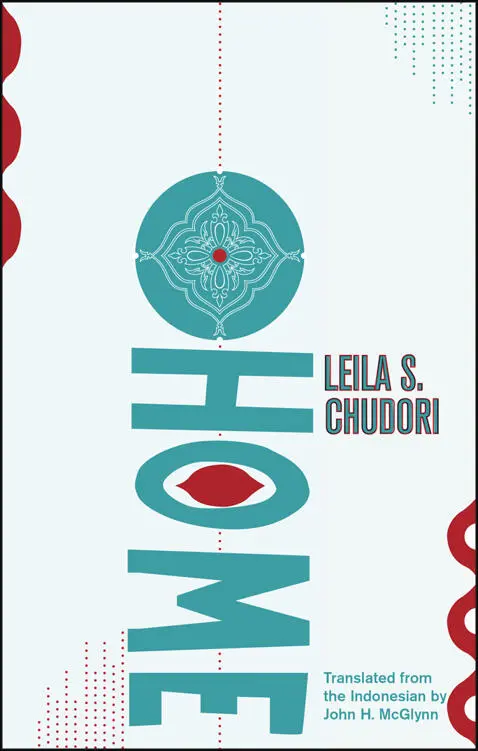
- Название:Home
- Автор:
- Издательство:Deep Vellum Publishing
- Жанр:
- Год:2015
- ISBN:9781941920114
- Рейтинг книги:4 / 5. Голосов: 1
-
Избранное:Добавить в избранное
- Отзывы:
-
Ваша оценка:
Home: краткое содержание, описание и аннотация
Предлагаем к чтению аннотацию, описание, краткое содержание или предисловие (зависит от того, что написал сам автор книги «Home»). Если вы не нашли необходимую информацию о книге — напишите в комментариях, мы постараемся отыскать её.
magazine),
combines political repression and exile with a spicy mixture of love, family, and food, alternating between Paris and Jakarta in the time between Suharto's 1965 rise to power and downfall in 1998, further illuminating Indonesia's tragic twentieth-century history popularized by the Oscar-nominated documentary
.
Home — читать онлайн бесплатно полную книгу (весь текст) целиком
Ниже представлен текст книги, разбитый по страницам. Система сохранения места последней прочитанной страницы, позволяет с удобством читать онлайн бесплатно книгу «Home», без необходимости каждый раз заново искать на чём Вы остановились. Поставьте закладку, и сможете в любой момент перейти на страницу, на которой закончили чтение.
Интервал:
Закладка:
Her father immediately opened his eyes and blinked. “Why? What for? Your final assignment?”
Lintang took a deep breath and then told her father about her discussion with Didier Dupont and how he had nixed her proposal for a documentary on Le Quartier Algérien à Paris. She spoke of her visit to the Indonesian embassy for the Kartini Day banquet and the preliminary research she had conducted at the library to try to find the historical context of Indonesia during the crisis of 1965. She also told her father about the late nights she had spent discussing her project with several senior class members at the Sorbonne and even about her conversation with Narayana’s father, who frequently traveled to Indonesia.
Dimas listened to Lintang carefully. Each question she raised seemed considered and well thought out. What had really happened in Indonesia on September 30, 1965? What was the impact of the events of 1965 on survivors and their families? What was the effect of New Order government policy on the years that followed? These were the questions of a future academician who was undertaking bibliographic research in a rational manner about the conflict in Indonesia’s military elite at that time.
“While these are questions I very much feel need to be answered, I also want to find a more human side,” Lintang said. “This is to be a documentary film, after all. I’d like to focus on the fates of people whose lives were affected by this political conflict — not just the bloodbath itself and the incredible number of deaths that occurred, but the ongoing political trauma and the extraordinary amount of indoctrination the Indonesian people have gone through in the period since 1965.”
Dimas looked at his daughter with a mixture of surprise and admiration. Five months of her not talking to him had seemed to give her the time she needed to think about things. Or maybe this was the result of her Sorbonne education? Dimas didn’t really know. And he also didn’t know quite how to react to what seemed to him to be an impulsive desire on Lintang’s part to go off to Indonesia, the homeland he had left so long ago and not set foot in since. He didn’t want to sound discouraging or as if he doubted his daughter’s abilities or intellectual acumen, but at the same time he didn’t want her to be caught up in any kind of danger because of his political status, which the Indonesian government saw as subversive. Still waiting for her father to react to what she had just told him, Lintang continued: “But I still haven’t found a clear focus. It’s only going to be a sixty-minute documentary film, after all. So I have to be very selective in my choice of topic.”
She paused, thinking her father might say something, but he said nothing. “For both practical and economic reasons, I think it would make more sense to make a documentary about the families of Indonesian political exiles who are now scattered about here in France and other countries of Europe…” Lintang glanced at her father. Still no reaction. “At the same time, I’m afraid it might be too personal, and I don’t want to make something that turns out to be overly subjective. I do want to get to know Indonesia, however, even if it’s only for a few weeks or a month. I want to find out what the country is now like, what with its blood-filled history, and whether its people…”
Dimas could only nod silently in response, his thoughts now untethered. He wanted to tell her that he had always wanted to be the one to take her and her mother to Indonesia and to introduce them to Jakarta, Bogor, Solo, Yogyakarta, Semarang, and the other cities he had known prior to 1965. He wanted to explain to her that there was something special about Indonesia, that the country held a special allure, but that even he didn’t know what it was: whether it was the smell of the red clay earth after a tropical rainstorm; the exotic fruit — mangosteens, star fruit, jack fruit, rambutan — with their odd shapes and colors; the women of Central Java, particularly Solo, who spoke so slowly and rhythmically; or the dictatorial manner of pedicab drivers who thrust their index finger in the air when wanting to cross the road, causing all the motor vehicles to stop obediently. But what in fact did he know about his homeland now? His firsthand knowledge of the country had stopped after 1965; and Jakarta and Solo in 1998 were sure to be far different from what they had been thirty-three years previously. There probably weren’t becak anymore dominating the streets of Jakarta and Solo. Elegant women who could sit silently composed for hours on end, with canting in hand, blowing through the hot wax dipper to miraculously change a stretch of plain white cotton cloth into a batik cloth of mind-boggling beauty and design, were probably a rarity. What about the fruit and the traditional cakes —kelepon, nagasari, cucur, getuk lindri , and the like — that were set out for him in the evening with a glass of strong hot tea into which he would drop chunks of rock sugar, after he and his brother Aji came home from Quranic study? Possibly gone too. But even if for most people such things had vanished with the advent of modern-day life, he was sure that he would find them somewhere, in what pockets of traditional life still remained, just to show them to Lintang. Dimas studied his daughter’s face, which was at once so Indonesian and French as well. Her nose was aquiline but didn’t dominate her small face. Her skin was fair but not the white, freckled kind. Hers was white and warm-looking, like a glass of heated milk, a mixture of his light chocolate flesh and Vivienne’s white skin. Her eyes were dark brown, like his own. Her thick wavy black hair was his as well. But overall, her posture and bearing were that of her mother — which is why she was often taken for his former wife’s young sister. Both were tall, slender, and beautiful. The only distinctive difference was Vivienne’s eyes, that amazing color of green. Dimas tried to imagine Lintang in the midst of the busy metropolis that Jakarta had become, but could not get a clear picture. Both CNN and BBC television had begun to air news clips about demonstrations taking place in several Indonesian cities. This was worrisome for him. He was sure that Lintang must have participated in student demonstrations at the Sorbonne; but students in Europe and the situation in Europe were undoubtedly very different from that of Indonesia. Yet if he expressed his fears, Lintang was sure to be offended, and they would wind up in another argument.
“Aren’t you going to say anything?” Lintang finally asked.
“Have you spoken about this with your mother?” Dimas took the safe route, hoping that Vivienne had used the “parent card” with her daughter, even though it no longer had much currency in France and especially not for Lintang, who was now twenty-three years old. She was an adult and could go wherever she wanted to go, with or without her parents’ permission. That she talked to them at all about her plans was a sign that she cared for them and respected their opinions. But she wasn’t asking for their blessing, much less their permission.
“I have, but she asked the same thing, whether I had spoken about this with you.” Lintang seemed somewhat miffed.
“OK, then let me say this: first focus on Professor Dupont’s requirements. What is it you want from your final assignment? What must you show in your documentary film? After that, given Indonesia’s history and the events and impact of 1965 on the country, you have to be very judicious and use a macro lens in choosing your subject of focus. You have to be sharp and clear. The subject of 1965, with all its confusion and characters, all its victims and impacts, and the bloodbath that was perpetrated to achieve change in the country’s power structure, is a vast one. And then, beyond that, there is the very sensitive matter that you will also have to face—”
Читать дальшеИнтервал:
Закладка:
Похожие книги на «Home»
Представляем Вашему вниманию похожие книги на «Home» списком для выбора. Мы отобрали схожую по названию и смыслу литературу в надежде предоставить читателям больше вариантов отыскать новые, интересные, ещё непрочитанные произведения.








Обсуждение, отзывы о книге «Home» и просто собственные мнения читателей. Оставьте ваши комментарии, напишите, что Вы думаете о произведении, его смысле или главных героях. Укажите что конкретно понравилось, а что нет, и почему Вы так считаете.