Xiao Bai - French Concession
Здесь есть возможность читать онлайн «Xiao Bai - French Concession» весь текст электронной книги совершенно бесплатно (целиком полную версию без сокращений). В некоторых случаях можно слушать аудио, скачать через торрент в формате fb2 и присутствует краткое содержание. Год выпуска: 2015, Издательство: HarperCollins, Жанр: Современная проза, на английском языке. Описание произведения, (предисловие) а так же отзывы посетителей доступны на портале библиотеки ЛибКат.
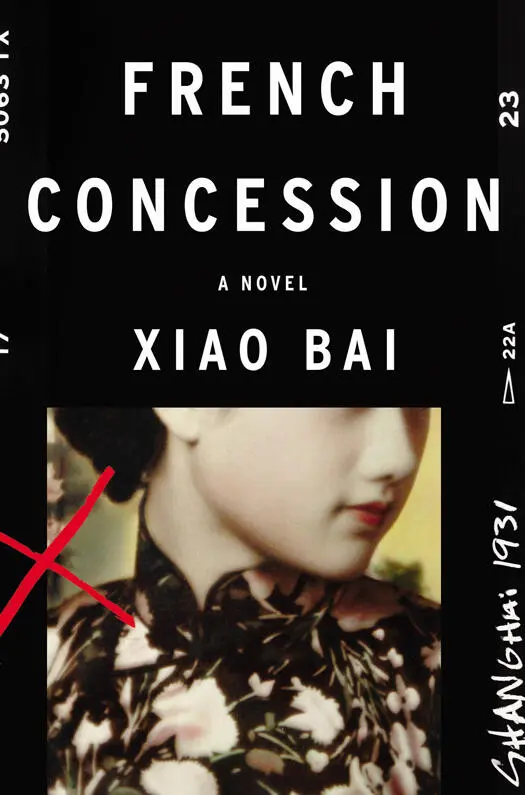
- Название:French Concession
- Автор:
- Издательство:HarperCollins
- Жанр:
- Год:2015
- ISBN:нет данных
- Рейтинг книги:3 / 5. Голосов: 1
-
Избранное:Добавить в избранное
- Отзывы:
-
Ваша оценка:
French Concession: краткое содержание, описание и аннотация
Предлагаем к чтению аннотацию, описание, краткое содержание или предисловие (зависит от того, что написал сам автор книги «French Concession»). Если вы не нашли необходимую информацию о книге — напишите в комментариях, мы постараемся отыскать её.
A boat from Hong Kong arrives in Shanghai harbor, carrying an important official in the Nationalist Party and his striking wife, Leng. Amid the raucous sound of firecrackers, gunshots ring out; an assassin has shot the official and then himself. Leng disappears in the ensuing chaos.
Hseuh, a Franco-Chinese photographer aboard the same boat, became captivated by Leng’s beauty and unconcealed misery. Now, she is missing. But Hsueh is plagued by a mystery closer to home: he suspects his White Russian lover, Therese, is unfaithful. Why else would she disappear so often on their recent vacation? When he’s arrested for mysterious reasons in the French Concession and forced to become a police collaborator, he realizes that in the seamy, devious world of Shanghai, no one is who they appear to be.
Coerced into spying for the authorities, Hseuh discovers that Therese is secretly an arms dealer, supplying Shanghai’s gangs with weapons. His investigation of Therese eventually leads him back to Leng, a loyal revolutionary with ties to a menacing new gang, led by a charismatic Communist whose acts of violence and terrorism threaten the entire country.
His aptitude for espionage draws Hseuh into a dark underworld of mobsters, smugglers, anarchists, and assassins. Torn between Therese and Leng, he vows to protect them both. As the web of intrigue tightens around him, Hsueh plays a dangerous game, hoping to stay alive.
French Concession — читать онлайн бесплатно полную книгу (весь текст) целиком
Ниже представлен текст книги, разбитый по страницам. Система сохранения места последней прочитанной страницы, позволяет с удобством читать онлайн бесплатно книгу «French Concession», без необходимости каждый раз заново искать на чём Вы остановились. Поставьте закладку, и сможете в любой момент перейти на страницу, на которой закончили чтение.
Интервал:
Закладка:
She looked at the face in the mirror. Its contours were a little too sharp and her cheekbones jutted out. She would need to find a darker blush. She did not like the color of her nipples, so she brushed some blush onto them too, making them a translucent pink. Next she tried applying some lipstick to her labia, which gave her chills. Women love exploring their own bodies, she thought. We express ourselves in color like tribal warriors.
Therese was the kind of woman who was capable of making decisions and acting on them instantly. The previous afternoon, as soon as Hsueh had left, she had phoned the Zung siblings and summoned them to her apartment to tell them that someone from Ku’s gang had contacted her to order the new weapon, and that Zung should return to Hong Kong to prepare the shipment. She didn’t look directly at him, and she let the cigarette smoke obscure her eyes. She was proud of having chosen Zung as her comprador : his surprise barely registered on his face. She could also tell that Yindee knew nothing of all this. Therese warned Zung not to get in touch with the customer again. She would take charge, so as not to confuse their counterparty.
“Get moving and buy your tickets at Kung-ho-hsiang Pier tonight,” she said.
“Are you going to deal directly with them?” Zung asked her.
“Someone here will take care of that. I want to train a couple of new people. We’ll need them as we expand,” she said gleefully.
“All right then.” He sounded a little disappointed, but resigned.
This morning she had gotten up early. It was another humid, sunless day. She had been sitting at home for almost two whole hours. It was a Friday, and by now she would usually have called the Astor to reserve a room. She stared into space for a while, and felt an urge to reopen the bundle of letters, but decided against it. She did not want to have to remove her makeup, and she decided that it was, in a way, appropriate for her friend’s funeral. Here I am again, alone and friendless, she thought. In all these years in Shanghai, Margot had been her only friend. Therese was immensely lonely, and she considered asking Hsueh to move in with her. But she eventually decided against the idea.
CHAPTER 32
JUNE 27, YEAR 20 OF THE REPUBLIC.
4:00 A.M.

For one whole day, Hsueh had almost completely forgotten about Leng. He had left her at home as if she were part of a different strand of the plot and could be put aside for now. Or rather, as if she were a character in a completely different novel, and could be left under his pillow for another day. When he got home in the early hours of the morning, and saw her tear-stained face, he felt a little guilty.
When he left Therese’s apartment in the afternoon, he had gone straight to the police headquarters on Route Stanislas Chevalier. There was one other thing he had to do that day. He’d been forced to call Lieutenant Sarly from North Gate Police Station, and now he would pay for it.
Lieutenant Sarly had been so readily helpful that day that Hsueh was a little nervous. It felt like a trap. But he intuitively felt he should talk to Sarly, which was why he was going to see him, not because he was feeling brave.
Sure enough, Sarly shouted at him.
“Tell me, what were you doing in Singapore Hotel? There were a thousand better things you could have been doing. What were you thinking, running off with some woman? Who is she anyway? What prompted the sergeant to arrest her? What did she have to do with your work? Why are there so many mysterious women? First the White Russian woman, then the woman in that apartment, and now — aren’t there any men in Shanghai?”
Sarly might be pretending to be angrier than he really was, but Hsueh couldn’t be sure.
“You’re an embarrassment to me!” Sarly raged. “The Political Section, vouch for a couple of philandering lovebirds? The police were extremely suspicious of this woman. Her identity papers were probably forged. Who on earth is she?”
“I’m afraid I can’t tell you right now.” Hsueh’s knees wouldn’t stop quivering. He stared at the teak floor, as if that would make it the floor that was quivering, and not his legs. He would tell Sarly everything if it would only make him stop shouting, never mind what would happen to Leng.
“Why can’t you tell me? Why not? Have you no shame?” Sarly was scolding like a Chinese market woman.
“Because I am in the process of cultivating this woman as a contact!” Hsueh decided to risk it. He became eloquent like one of those reporters who procrastinated all day and wrote his articles in a single burst of inspiration right before the paper had to go to press:
“This is the biggest breakthrough I’ve had so far! I’ve only just gained her trust. Lady Holly wanted me to contact someone from an illegal organization on her behalf. I knew it had to be the Communist assassination squad you’re after. The woman at the Singapore Hotel and the one who ran away from Rue Amiral Bayle are the same woman. I saw her on the ship and I’m not mistaken. But you can’t arrest her now — this is Shanghai, and you must have patience like the Shanghainese. You must do as we do here. The man hiding behind her is the man you are looking for.”
“Then why didn’t you just tell me?” Lieutenant Sarly’s voice softened, as though his anger had suddenly been deflated. His face grew paler, and his expression was indistinct, like a camera close-up fading out. He gazed at Hsueh, backlit by the sun. He seemed to be talking to himself, or perhaps confiding in Hsueh, explaining something to him, or deliberately making an ominous suggestion.
“Maybe I could have her arrested instead. I’d interrogate her and turn her over to Maron and his detectives. They know how to make people talk.”
“But then their operation would screech to a halt! And the ticking bomb would stop ticking.” Hsueh thought it was ridiculous to be speaking in elaborate metaphors at this time, but he had to let his inspiration do the talking, let his thoughts swirl between imagination and memory. “It’s the boss you want, not one of his underlings. They’re planning something big, something that will shock the whole city. I don’t know exactly what it is, but it’s going to be huge.”
He chose carefully from the words he remembered: “In fact, my guess is that they are buying a powerful new weapon.”
“A weapon? What weapon?”
“I don’t know, but I saw a diagram of it. It looked like a machine gun on a mount.”
“A machine gun? What would they do with it?”
“I don’t know yet, but when I do know I promise I’ll tell you everything. This is going to work, but you’ll have to trust me.” Hsueh decided that the situation was temporarily under control. He now had time to think about other problems, such as how to protect Leng. But there his innate optimism prevailed, and he brushed these worries off. I’ll find a way to fix that, he thought. If it ever came to it, and if Sarly really trusted him, he could ask him to release Leng and Therese. Of course, he couldn’t be responsible for all the others.
“How much of the diagram do you remember?”
It turned out that Hsueh remembered most of it. His photographer’s brain had unconsciously absorbed the shapes and lines of the object despite not knowing what it was. He made two drawings on the notepad Sarly tossed at him. But it was a precise diagram he was reproducing, and he kept drawing the mount too big, so that it looked more like a camera tripod. When he had finished sketching, he was sure it was a machine gun.
Читать дальшеИнтервал:
Закладка:
Похожие книги на «French Concession»
Представляем Вашему вниманию похожие книги на «French Concession» списком для выбора. Мы отобрали схожую по названию и смыслу литературу в надежде предоставить читателям больше вариантов отыскать новые, интересные, ещё непрочитанные произведения.











Обсуждение, отзывы о книге «French Concession» и просто собственные мнения читателей. Оставьте ваши комментарии, напишите, что Вы думаете о произведении, его смысле или главных героях. Укажите что конкретно понравилось, а что нет, и почему Вы так считаете.