Xiao Bai - French Concession
Здесь есть возможность читать онлайн «Xiao Bai - French Concession» весь текст электронной книги совершенно бесплатно (целиком полную версию без сокращений). В некоторых случаях можно слушать аудио, скачать через торрент в формате fb2 и присутствует краткое содержание. Год выпуска: 2015, Издательство: HarperCollins, Жанр: Современная проза, на английском языке. Описание произведения, (предисловие) а так же отзывы посетителей доступны на портале библиотеки ЛибКат.
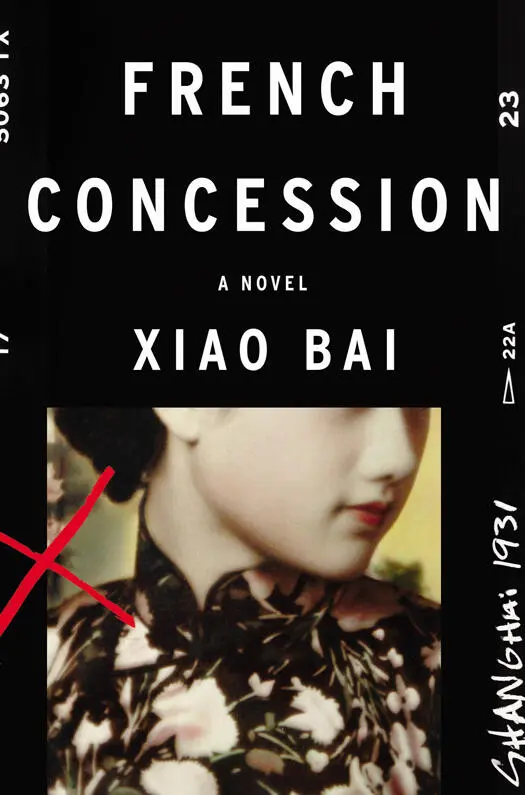
- Название:French Concession
- Автор:
- Издательство:HarperCollins
- Жанр:
- Год:2015
- ISBN:нет данных
- Рейтинг книги:3 / 5. Голосов: 1
-
Избранное:Добавить в избранное
- Отзывы:
-
Ваша оценка:
French Concession: краткое содержание, описание и аннотация
Предлагаем к чтению аннотацию, описание, краткое содержание или предисловие (зависит от того, что написал сам автор книги «French Concession»). Если вы не нашли необходимую информацию о книге — напишите в комментариях, мы постараемся отыскать её.
A boat from Hong Kong arrives in Shanghai harbor, carrying an important official in the Nationalist Party and his striking wife, Leng. Amid the raucous sound of firecrackers, gunshots ring out; an assassin has shot the official and then himself. Leng disappears in the ensuing chaos.
Hseuh, a Franco-Chinese photographer aboard the same boat, became captivated by Leng’s beauty and unconcealed misery. Now, she is missing. But Hsueh is plagued by a mystery closer to home: he suspects his White Russian lover, Therese, is unfaithful. Why else would she disappear so often on their recent vacation? When he’s arrested for mysterious reasons in the French Concession and forced to become a police collaborator, he realizes that in the seamy, devious world of Shanghai, no one is who they appear to be.
Coerced into spying for the authorities, Hseuh discovers that Therese is secretly an arms dealer, supplying Shanghai’s gangs with weapons. His investigation of Therese eventually leads him back to Leng, a loyal revolutionary with ties to a menacing new gang, led by a charismatic Communist whose acts of violence and terrorism threaten the entire country.
His aptitude for espionage draws Hseuh into a dark underworld of mobsters, smugglers, anarchists, and assassins. Torn between Therese and Leng, he vows to protect them both. As the web of intrigue tightens around him, Hsueh plays a dangerous game, hoping to stay alive.
French Concession — читать онлайн бесплатно полную книгу (весь текст) целиком
Ниже представлен текст книги, разбитый по страницам. Система сохранения места последней прочитанной страницы, позволяет с удобством читать онлайн бесплатно книгу «French Concession», без необходимости каждый раз заново искать на чём Вы остановились. Поставьте закладку, и сможете в любой момент перейти на страницу, на которой закончили чтение.
Интервал:
Закладка:
Someone said loudly that his second cousin had written to him saying London had no plans to withdraw its troops. Since 1927, every time the Nanking government had made anti-imperialist noises, London had sent a company or two to Shanghai from India. The Concession would flourish for the next hundred years! The land west of Shanghai would be worth a hundred times as much in five years, and everyone should snap it up. His listeners cheered.
Baron Pidol was drunk, while Margot occasionally swept into view among the dancers. She couldn’t resist spiking the foxtrot with a few kick steps from the Charleston, the latest dance craze to hit Shanghai, even though her long dress was ill suited to dancing it.
“I don’t like the Charleston,” Baron Pidol told Therese. “A well-bred lady shouldn’t be dancing the Charleston. Crossing her hands over her knees like a monkey from Szechuan.”
His own dance steps were a little ragged, so Therese steered him off the dance floor. Chinese servants in lemon-colored silk shirts with short sleeves made their way through the crowd. The baron reached for another glass of gin and tonic.
“I could have another twenty glasses of this. In twenty glasses’ time I’ll be sober again, twenty times soberer than when I’m sober. Soberer than that Mr. Blair.”
“You don’t look soberer than Mr. Blair right now.”
“Oh yes, Mr. Blair is sober. Sir Blair. He’s sober. He could cross his hands over his knees and he’d still be a sober gentleman. She, on the other hand, is a whore.”
“She’s your wife.”
“That’s true. She is my wife. Margot, will you take Franz to be your lawful wedded husband? That’s my wife all right, sleeping with another man.”
“That’s a lie.”
“I’m not lying. She thought I didn’t see what they were getting up to in Mo-kan-shan, but even if I hadn’t, wouldn’t it be written all over her face? She hadn’t showered, and she still smelled of him. Did she think I couldn’t tell? Did she think I couldn’t smell the sperm on her? Women have all kinds of smells, but semen only has one smell, like almond milk tea left out overnight.”
“You didn’t see a thing. You’re just guessing.”
“I saw everything. They didn’t even shut the door. They couldn’t hear me race up the stairs. I had taken my gun but forgotten my hat, and what kind of gentleman forgets his hat when he goes hunting? Anyhow I tiptoed downstairs and gave them another five minutes. Then I shouted for my hat in the yard, as though I hadn’t seen a thing, when of course I’d seen it all. She came rushing down the stairs, her face flushed, her eyes watery.”
The party was in full swing. The drunken bachelors had formed a long line, each with their hands on the shoulders of the man in front of them, hopping through the hall with their knees bent like frogs. They skipped around the pool in the lawn, came back through the hall, and hopped up to the second floor and back. More and more people joined them. Therese took the crestfallen baron out to the lawn. It was windy, and moonlight played on the servants’ silk sleeves. Baron Pidol was still pouring his heart out.
“I’m going to buy a ticket and go home. I hate this place,” he whimpered.
“Surely a gentleman wouldn’t just run away.”
“Oh, I’ll be back. I want to go home and tell the board that there’s money to be made here. Then I’ll come back with cash and buy and buy.”
Someone rang an alarm bell they had borrowed from the Board of Works’ fire department, and someone else was making an announcement in the hall. Therese could only just make out the words. “The ship has hit an iceberg and it’s about to sink,” he said. The crowd began to scream.
CHAPTER 21
JUNE 14, YEAR 20 OF THE REPUBLIC.
9:15 P.M.

Inspector Maron must have complained to Sarly that Hsueh had disappeared at the most crucial moment. The scene of the shooting was a mess, and the plan to search the apartment had to be abandoned. But when Hsueh eventually turned up, he did lead the policemen to the correct apartment. Unsurprisingly, they found no one there, but they did find some valuable evidence. The Chinese detectives discovered a forged Concession residency document under a pile of drawers, and as soon as the poet from Marseille saw the photos, he cried: “Isn’t this the woman who disappeared from the Paul Lecat ?”
They also found a Browning pistol and five rounds of ammunition. “If Hsueh had not run off on his own and we’d gone in right away, we would have nabbed that woman,” Maron told Lieutenant Sarly in front of Hsueh.
When Sarly asked just what Hsueh had been doing, he said he had been searching all the longtangs on Rue Amiral Bayle for the right apartment. And when Sarly lost his temper, Hsueh only rubbed his nose and said that he would find her again.
Sarly didn’t ask how. Which was not to say that he had perfect faith in Hsueh. But he did know that the concessions were governed by a set of rules to which the police had no access. For instance, both the French Concession and the International Settlement contained a handful of places — an alleyway, a yard surrounded by black picket fences, or a maze of old wooden huts — that were miniature fiefdoms, concessions within concessions, controlled by the gangs or the Communists, and defended by their own armed guards. All the Chinese knew where these places were, and none of the French detectives did. Unless he absolutely had to, no Chinese detective would reveal this information to his superiors. There was a wealth of information to which only the Chinese had access, and even a Shanghailander who had spent thirty years here might never figure it out. That was why Sarly was willing to invest in Hsueh. He believed that Hsueh’s Chinese face would give him access to what Sarly thought of as Shanghai street savvy, and that his French heart would prompt him to report it to Sarly.
When Hsueh later thought back to that day, he realized he had been feeling vaguely confident that he held a pretty good hand. Like any keen gambler, he prided himself on his intuition. He refused to admit that he was affected by anything like being attracted to a woman he felt as if he’d always known. He thought of the information he had as something like an inside tip that an unknown contender would be allowed to jump the gun. Now he was waiting for the odds to rise before placing a bet.
Despite knowing that Therese often lunched at that White Russian restaurant, and that the waiter knew her so well that it had almost become her second home, he took the woman there. It was either showing off or a gesture of protest — actually, he wasn’t sure which. But running into Therese there would certainly have been something.
That night, he put half a tin of Garrick cigarettes in his cigarette case, and went out to look for Li Pao-i. He took him to Moon Palace, a cheap dancing hall where one yuan bought you five dances with a girl. He wanted to ask Li about the Kin Lee Yuen incident.
Li Pao-i’s take on recent events shocked him. It wasn’t an isolated incident, said Li. The whole underground intelligence network of the Concession was chattering about this new assassination squad. No one knew where it came from, but at least three assassinations had already been linked to it.
“Didn’t your paper say they were Communists? There was that manifesto too.”
“The Communists don’t work that way,” Li said. He had smoked half of Hsueh’s cigarettes in no time at all.
Tao Lili came to their table. She loved journalists, and it was said that her stage name, Peach Girl, had been Li’s suggestion. “Why a peach?” she was said to have asked him. He drew his hand back and sniffed at it. “What do you think?” he said. Upon which she was said to have pounced on him: “Eat me out, then!” Not all the dancing girls offered extra services on the side, but Tao was well known not just for her willingness, but also for her indiscretion. All of Shanghai knew which of her clients cut it, and which didn’t. A tabloid journalist had apparently uncovered one young dandy’s embarrassing secrets by hiding in an adjacent cubicle. She looked at Hsueh, and whispered something in Li’s ear.
Читать дальшеИнтервал:
Закладка:
Похожие книги на «French Concession»
Представляем Вашему вниманию похожие книги на «French Concession» списком для выбора. Мы отобрали схожую по названию и смыслу литературу в надежде предоставить читателям больше вариантов отыскать новые, интересные, ещё непрочитанные произведения.











Обсуждение, отзывы о книге «French Concession» и просто собственные мнения читателей. Оставьте ваши комментарии, напишите, что Вы думаете о произведении, его смысле или главных героях. Укажите что конкретно понравилось, а что нет, и почему Вы так считаете.