Xiao Bai - French Concession
Здесь есть возможность читать онлайн «Xiao Bai - French Concession» весь текст электронной книги совершенно бесплатно (целиком полную версию без сокращений). В некоторых случаях можно слушать аудио, скачать через торрент в формате fb2 и присутствует краткое содержание. Год выпуска: 2015, Издательство: HarperCollins, Жанр: Современная проза, на английском языке. Описание произведения, (предисловие) а так же отзывы посетителей доступны на портале библиотеки ЛибКат.
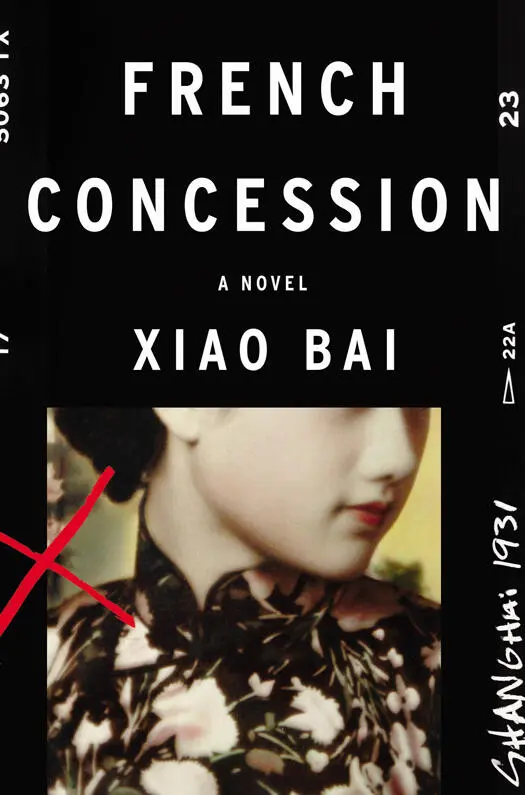
- Название:French Concession
- Автор:
- Издательство:HarperCollins
- Жанр:
- Год:2015
- ISBN:нет данных
- Рейтинг книги:3 / 5. Голосов: 1
-
Избранное:Добавить в избранное
- Отзывы:
-
Ваша оценка:
French Concession: краткое содержание, описание и аннотация
Предлагаем к чтению аннотацию, описание, краткое содержание или предисловие (зависит от того, что написал сам автор книги «French Concession»). Если вы не нашли необходимую информацию о книге — напишите в комментариях, мы постараемся отыскать её.
A boat from Hong Kong arrives in Shanghai harbor, carrying an important official in the Nationalist Party and his striking wife, Leng. Amid the raucous sound of firecrackers, gunshots ring out; an assassin has shot the official and then himself. Leng disappears in the ensuing chaos.
Hseuh, a Franco-Chinese photographer aboard the same boat, became captivated by Leng’s beauty and unconcealed misery. Now, she is missing. But Hsueh is plagued by a mystery closer to home: he suspects his White Russian lover, Therese, is unfaithful. Why else would she disappear so often on their recent vacation? When he’s arrested for mysterious reasons in the French Concession and forced to become a police collaborator, he realizes that in the seamy, devious world of Shanghai, no one is who they appear to be.
Coerced into spying for the authorities, Hseuh discovers that Therese is secretly an arms dealer, supplying Shanghai’s gangs with weapons. His investigation of Therese eventually leads him back to Leng, a loyal revolutionary with ties to a menacing new gang, led by a charismatic Communist whose acts of violence and terrorism threaten the entire country.
His aptitude for espionage draws Hseuh into a dark underworld of mobsters, smugglers, anarchists, and assassins. Torn between Therese and Leng, he vows to protect them both. As the web of intrigue tightens around him, Hsueh plays a dangerous game, hoping to stay alive.
French Concession — читать онлайн бесплатно полную книгу (весь текст) целиком
Ниже представлен текст книги, разбитый по страницам. Система сохранения места последней прочитанной страницы, позволяет с удобством читать онлайн бесплатно книгу «French Concession», без необходимости каждый раз заново искать на чём Вы остановились. Поставьте закладку, и сможете в любой момент перейти на страницу, на которой закончили чтение.
Интервал:
Закладка:
Therese’s wicked friend was interfering with everything good in his life, and yet he did not even know where and when the man would turn up next.
CHAPTER 13
JUNE 11, YEAR 20 OF THE REPUBLIC.
10:15 A.M.

Many years later, Sarly would come back to visit Shanghai. He had since become like a father to Hsueh. The Concession had been devastated by war, and because Hsueh was in contact with an assortment of people, as usual, the Nanking authorities began to investigate him. At one point, they even had him secretly imprisoned. Hsueh’s many friends stood up for him, producing evidence that Hsueh was innocent of their charges. Lieutenant Sarly even drew on old files from the French Ministry of Foreign Affairs to advocate for Mr. Weiss Hsueh’s acquittal.
When Hsueh was released from prison, Sarly organized an elaborate celebratory dinner. He pressed Hsueh to visit him in France; indeed, the French government would welcome Hsueh to relocate to Paris if he wished, in recognition of his long years of service to French colonial affairs. Hsueh could also come to the south of France, where Sarly had bought a plot of land with the money he had saved from working in Shanghai. He had been paid well for his colonial postings.
As the night wore on and the wine began to have its effect, they started reminiscing about the past. Sarly said that he wouldn’t have noticed Hsueh if it weren’t for the White Russian woman who had caught his eye. By chance, or perhaps because she was beautiful, he said self-mockingly, he had ordered an investigation into her. And then, in an intriguing turn of events — as though some higher power had planned it — the investigation had led directly to the assassination at Kin Lee Yuen Wharf.
One morning after Hsueh’s trip to Rue Amiral Bayle, Inspector Maron found Lieutenant Sarly clutching a half-eaten croissant in his left hand and a cup of coffee in his right, while attempting to open the door to the meeting room with his knee. He leaned over and pushed the door open for Sarly. Our man has found a lead! Maron said.
The detectives were waiting for them. Inspector Maron did not announce the breakthrough at morning prayers. Instead, he passed a note to Lieutenant Sarly, who glanced at it and tucked it into his file. When he left the meeting room, he asked Inspector Maron to collate all the files that had anything to do with this Hsueh character — interrogation records, the reports he had been filing, and the police department’s files on Hsueh himself — and bring them to his office.
The note Inspector Maron gave him was a tip written in nearly flawless French by this amateur photographer, and containing startling news. The man had followed a friend of the White Russian firearms dealer to a house on Rue Amiral Bayle. (Maron had penciled a note in the margins explaining that this was Zung, the middleman.) The following day, when he returned to the house, he had discovered its unlikely occupant, whom he recognized from her photograph in the papers. She was the wife of Ts’ao Chen-wu, that man who had been killed on Kin Lee Yuen Wharf, and she had disappeared right after the assassination.
When investigating that assassination, Lieutenant Sarly had been intrigued by the killers’ interest in media coverage. Police information suggested they were dealing with a rigorously organized assassination squad, which had leaked the news to reporters ahead of time, and given them a manifesto calculated to cause panic as well as an outline of events, to make sure the story remained in line with their message. Sarly was impressed that they had not only planned the assassination but also intended to shape its media coverage.
He found the killers’ approach thought provoking. At a morning prayer meeting several days after, he admitted to a few of his subordinates that there might not be a truth to be discovered about these events. Maybe the truth was a heap of documents, newspaper cuttings, and interrogation notes. Maybe it was what people whispered to each other in the alleyways, what the plainclothes investigators wrote in their daily reports. Maybe the truth existed only in their files.
Years later, Lieutenant Sarly would remember the storm clouds hanging over Shanghai that year. He didn’t just mean that metaphorically. The heavy rains had flooded neighboring provinces, and only in early April did the skies clear. Then the Political Section of the Concession Police unexpectedly became the center of attention. As Sarly remembered it, he had never been quite so popular in his life. Even the British confided in him. His counterpart, Commander Martin from the International Settlement, invited him to his country club for lunch. They ate medium-rare steak and lamb kidneys heaped on a plate. The young British diplomat who dined with them was very quiet. Whenever Commander Martin brought up something important, such as the suggestion that they should set up a system for exchanging intelligence, he grew even shyer, staring down at his wineglass and cigar. Sarly had been the best-informed man in Shanghai in his time. Years later, he still remembered that this man was eventually embroiled in a sex scandal, and forced by public opinion to slink off and leave Shanghai quietly.
Martin said he hoped they could “reach a private agreement” to cooperate since, as Sarly knew, London was being run by a bunch of thugs led by Ramsay MacDonald. The prime minister had previously been a Foreign Office man, and here Martin glanced apologetically at the young man — there were rumors from London that Soviet spies had infiltrated the Labor Party cabinet, which was simply outrageous. In any case, the British government had resumed foreign relations with the Soviet Union and was withdrawing troops from the colonies. This was evident even in Shanghai, where the British seemed to be passing the buck to the Japanese Army. So Molotov had been right, said Martin: France was the great enemy of socialism and the Soviet Union.
The steak was two inches thick, grilled over a gas stove and garnished with a cream sauce and Lea & Perrins Worcestershire sauce. Sarly had had a formidable appetite back then, but strangely, his appetite had shrunk as soon as he left Shanghai. Back then, everyone in Shanghai seemed to have a huge appetite.
“And that, Lieutenant, is why some of the more sophisticated set in London would like us to work more closely with the French Concession Police.”
Which was how it all started. Of course, Hsueh knew nothing of this. How would he? He was an idle young man who had gotten himself caught up in a firearms investigation, like an insect struggling in a spiderweb.
Earlier that year, the Ministry of Foreign Affairs had sent Sarly a message via private channels, advising him to run a couple of high-profile operations targeting Communists, to dovetail with their trade embargo policies against the Soviet Union. Unlike Martin’s lot, the Political Section of the Concession Police had previously taken the view that doing less was more. The police’s job was to protect commercial interests, collect their share of the profits, and keep everyone happy. Lieutenant Sarly was sometimes tempted to think that they should all learn to get along with the Communists. These radical groups kept the French colonies from getting too dull. Whereas the International Settlement wanted to curb the power of the gangs, and stamp out the brothels and gambling dens, the French embraced them, scoffing at the Brits. And while the International Settlement cooperated with the Nanking government in arresting Communists, the French Concession deliberately turned a blind eye. The French were slow to act, and word of their police raids always leaked ahead of time, giving the Communists time to retreat and transfer their bank accounts. As long as they did not cause too much trouble, the Concession Police would tolerate them. Crafting a colonial policy that distinguished them from the British would serve to demonstrate how liberal the French were. This had always been the French way of doing things.
Читать дальшеИнтервал:
Закладка:
Похожие книги на «French Concession»
Представляем Вашему вниманию похожие книги на «French Concession» списком для выбора. Мы отобрали схожую по названию и смыслу литературу в надежде предоставить читателям больше вариантов отыскать новые, интересные, ещё непрочитанные произведения.










Обсуждение, отзывы о книге «French Concession» и просто собственные мнения читателей. Оставьте ваши комментарии, напишите, что Вы думаете о произведении, его смысле или главных героях. Укажите что конкретно понравилось, а что нет, и почему Вы так считаете.