Ronit Matalon - The Sound of Our Steps
Здесь есть возможность читать онлайн «Ronit Matalon - The Sound of Our Steps» весь текст электронной книги совершенно бесплатно (целиком полную версию без сокращений). В некоторых случаях можно слушать аудио, скачать через торрент в формате fb2 и присутствует краткое содержание. Год выпуска: 2015, Издательство: Metropolitan Books, Жанр: Современная проза, на английском языке. Описание произведения, (предисловие) а так же отзывы посетителей доступны на портале библиотеки ЛибКат.
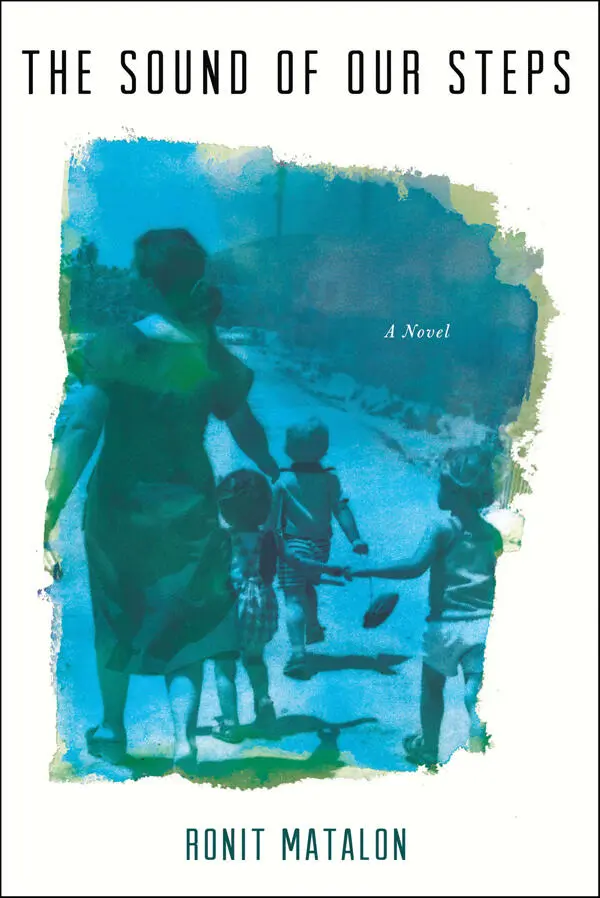
- Название:The Sound of Our Steps
- Автор:
- Издательство:Metropolitan Books
- Жанр:
- Год:2015
- ISBN:нет данных
- Рейтинг книги:5 / 5. Голосов: 1
-
Избранное:Добавить в избранное
- Отзывы:
-
Ваша оценка:
The Sound of Our Steps: краткое содержание, описание и аннотация
Предлагаем к чтению аннотацию, описание, краткое содержание или предисловие (зависит от того, что написал сам автор книги «The Sound of Our Steps»). Если вы не нашли необходимую информацию о книге — напишите в комментариях, мы постараемся отыскать её.
The Sound of Our Steps — читать онлайн бесплатно полную книгу (весь текст) целиком
Ниже представлен текст книги, разбитый по страницам. Система сохранения места последней прочитанной страницы, позволяет с удобством читать онлайн бесплатно книгу «The Sound of Our Steps», без необходимости каждый раз заново искать на чём Вы остановились. Поставьте закладку, и сможете в любой момент перейти на страницу, на которой закончили чтение.
Интервал:
Закладка:
There weren’t any others, any other family photographs, and the uniqueness of this one was the uniqueness of the so-called family, the trial moment of meeting, the trial meeting. She tried. She responded to his blandishments. She took the child whose birth he hadn’t witnessed and made the journey to his world. She made the journey to his world for the first, the one and only, time in her life. A street photographer took a picture of them in Piazza San Marco in Venice and named an exorbitant price. But Maurice didn’t care, he was lavish, extravagant. Was the mohair coat she wore in the photograph bought there? And the child’s coat? He spent on them, that’s what Corinne said, spent and spent. She listed, Corinne (greedily, admiringly, resentfully), all the things, one by one, everything the mother brought back with her: “the bottle-green mohair coat, the crystal necklace with the crystal bracelet, the pearl earrings, the suede evening bag in the shape of an envelope, the gold watch, the burgundy silk shawl, that scarf she always wore.”
A PORTRAIT OF CORINNE BY THE MOTHER
“WHEN SHE WAS born I couldn’t touch her, she was like a goat. The wet nurse we had in Cairo held her in her arms, not me. She had a kind of fur all over her body, black hair like a goat. At the age of forty days all the hair fell off her body, in bits and pieces, and she turned into a beautiful baby.”
BITS AND PIECES
THERE WERE THREE of them in the shack: the big brother, the big sister, and the child. The mother didn’t count, she was the shack; the shack didn’t have a man in it, so she became the man. She spoke to them in her different languages, each time another one, which would come to an end and make room for a new language to carry on but not to replace it. That’s the thing, there were no replacements, not real or symbolic, and the languages did not disappear, they didn’t go away, they were only hidden for a while, to reemerge in a different composition, a different guise. This was what the mother called her “character,” which was their lives — the earliest and most piercing of their lives, like two taps with a knife on a glass in the dark, one and then another one.
Corinne heard them best, the taps — she never stopped listening for them even when she was tuned in to a different station; something in her shivered. Where was she, Corinne, where was she really? The child remembered the movement of air she left behind her, coming and going, going and coming, brushing her hair in front of the oval mirror in the hall, when there was an oval mirror there, and gathering it at her nape. She remembered the expression on Corinne’s face in front of the mirror: stern, clear-eyed, infinitely aware, not preening — the mirror was work. The child looked at her looking at herself in the mirror and said to herself: this is how you look into a mirror. Corinne said to the child: “I’m the one who gave you your name. Your name is Toni, not what they say.” The child pricked up her ears, let the words linger in her mouth one by one: Corinne’s speech was an event, a sudden crack of a whip. She kept quiet, or burst out, without transitional stages, but most of the time she kept quiet, gathering evidence, collecting firewood for the next outburst. There was nothing shy, embarrassed, or inhibited about her silence; on the contrary, it was proud and aggressive, a way of asserting her superiority and keeping others guessing. As far as she was concerned, speech was a kind of surrender, bending to another’s will.
Corinne also said: “You were a bad baby. You bit and scratched. I would say, come to me, Toni, but you didn’t want to, you bit.” The two of them were on their way to Eva and her sisters, on the other side of the thorn field, to eat potato pancakes and cream. The child listened. “But why was I?” she asked Corinne. “That’s how you came out,” replied Corinne, going into Eva’s house without knocking on the door. They sat there for hours, lounging on the big bed where they all slept and that stood on the porch with the crooked asbestos blinds, the empty, greasy plate that had contained the pancakes lying between them, among the piles of rags, clean and dirty laundry, dozens of empty bottles, and a green cage with a pair of tame parrots. Eva plucked her eyebrows, polished her nails, or tightened the buckle of a belt around her plump waist, and asked Corinne: “How’s this?” Corinne didn’t answer. She shot her a brief glance and blinked a couple of times, withdrawn into herself but still with that instinctive alertness, so sharp when it came to questions of “taste,” which not only gave her more pleasure than anything else but also wounded her.
Her deep, feverish silence gave way incessantly to patterns and designs: at sixteen she cut up Sammy’s army uniform and made herself a “safari suit” with three-quarter-length pants and a belt tied in front, and showed it off in the neighborhood where people thought it had been sent to her from a fashion house in Paris. That same year she left the hairdressing school where the mother had registered her. She thought they had nothing to teach her, and she went to work as an apprentice at a number of hairdressing salons, where she swept hair off the floor, suffered, and observed. She practiced at home on Eva and her sisters, Hannaleh and Riva, on the mother and the child. She liked cutting hair standing up and “dry,” not the way they taught in the hairdressing school. This way, she argued, she could “really” see what she was doing. Tight-lipped, she held the scissors tensely, entirely given over to the desire to match what was before her to what she saw in her mind’s eye, to what “could be”: “Stand up straight”—she pinched the child on the nape of her neck—“don’t move.” The child’s wavy black hair fell in thick bits and pieces to the floor, and Corinne pushed them aside with her bare foot. Hours after she had finished cutting her hair “ à la garçonne ,” Corinne went on chasing her with the scissors in her hand “to trim something.” “You have to be careful of that one when she’s holding scissors in her hand,” said the mother, but she herself wasn’t careful; she, too, entrusted her head to Corinne, who forbade her to look in the mirror until she was finished, submitting to the categorical imperative of the beautiful, how it was to be achieved, and how exactly it was supposed to look — an imperative that she, Corinne, radiated from afar, unexplained and even full of contempt for explanations and justifications.
Once every two weeks Corinne dragged the child with her to the central bus station in Tel Aviv, to various wholesalers of hairdressing products and equipment, in order to “check things out.” They went in and out of dark holes, cellars, and dusty basement apartments, crammed with giant plastic containers of shampoo and conditioners, rollers, and hair dryers. Corinne stepped on stiletto heels like stilts, her face turning greener by the minute. She bought the child burekas and orange juice, invariably arguing with the vendor over the change, mainly because she was impatient and got mixed up counting the coins. She didn’t exchange a word with the child, and she always concluded the business survey with the purchase of three or four pairs of shoes in the cut-price shoe shops on Neve Sha’anan Street. When they returned home, getting off the bus at dusk after hours of futile wandering about, she went up to the tree next to the bus stop and vomited her heart out. The mother was sitting on the porch when they reached the shack. She hurried after them into the room, opened the boxes, and took out the bargain shoes one after the other, muttering, “She’s opening a shoe shop here.” Corinne had already taken off her clothes and was sitting at the kitchen table in her bathrobe, dunking pretzels in her coffee and soaking her swollen feet in a basin of lukewarm water. The next morning she marched off to the hairdressing salon, her feet plastered with Band-Aids and shod in one of the new pairs of shoes with the gilt buckles. “You’ll ruin your feet,” scolded the mother, “buy yourself clogs, like all the girls at the hairdresser’s wear.” “I’ll die before I put my feet into those ugly things for washing floors,” retorted Corinne, fixing the mother with her clear, pale look, full of contempt and defiance and entreaty: “You wear those clogs,” she said.
Читать дальшеИнтервал:
Закладка:
Похожие книги на «The Sound of Our Steps»
Представляем Вашему вниманию похожие книги на «The Sound of Our Steps» списком для выбора. Мы отобрали схожую по названию и смыслу литературу в надежде предоставить читателям больше вариантов отыскать новые, интересные, ещё непрочитанные произведения.







Обсуждение, отзывы о книге «The Sound of Our Steps» и просто собственные мнения читателей. Оставьте ваши комментарии, напишите, что Вы думаете о произведении, его смысле или главных героях. Укажите что конкретно понравилось, а что нет, и почему Вы так считаете.