Jeffrey Archer - Sons of Fortune
Здесь есть возможность читать онлайн «Jeffrey Archer - Sons of Fortune» весь текст электронной книги совершенно бесплатно (целиком полную версию без сокращений). В некоторых случаях можно слушать аудио, скачать через торрент в формате fb2 и присутствует краткое содержание. Город: London, Год выпуска: 2002, ISBN: 2002, Издательство: Macmillan, Жанр: Современная проза, на английском языке. Описание произведения, (предисловие) а так же отзывы посетителей доступны на портале библиотеки ЛибКат.
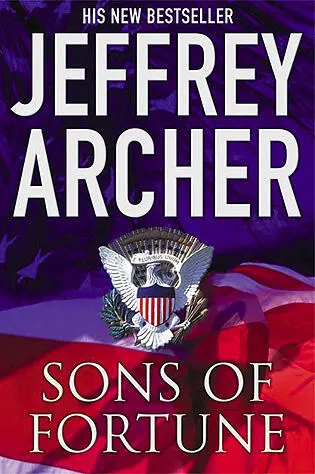
- Название:Sons of Fortune
- Автор:
- Издательство:Macmillan
- Жанр:
- Год:2002
- Город:London
- ISBN:978-1-4050-2079-4
- Рейтинг книги:4 / 5. Голосов: 1
-
Избранное:Добавить в избранное
- Отзывы:
-
Ваша оценка:
Sons of Fortune: краткое содержание, описание и аннотация
Предлагаем к чтению аннотацию, описание, краткое содержание или предисловие (зависит от того, что написал сам автор книги «Sons of Fortune»). Если вы не нашли необходимую информацию о книге — напишите в комментариях, мы постараемся отыскать её.
During the years that follow, the two brothers grow up unaware of each other’s existence. Nat leaves college at the University of Connecticut to serve in Vietnam. Returning a war hero, he finishes school and goes on to become a successful bank executive. Fletcher, meanwhile, has graduated from Yale University and distinguishes himself as a criminal defence lawyer before he is elected a senator. As their lives unfold, both men are confronted with tragedy and betrayal, loss and hardship, all the time overcoming life’s obstacles to become the men they are destined to be.
In the tradition of Jeffrey Archer’s most popular books, SONS OF FORTUNE is as much a chronicle of a nation in transition as it is the story of the making of these two men — and how, eventually, they come to find each other...
Sons of Fortune — читать онлайн бесплатно полную книгу (весь текст) целиком
Ниже представлен текст книги, разбитый по страницам. Система сохранения места последней прочитанной страницы, позволяет с удобством читать онлайн бесплатно книгу «Sons of Fortune», без необходимости каждый раз заново искать на чём Вы остановились. Поставьте закладку, и сможете в любой момент перейти на страницу, на которой закончили чтение.
Интервал:
Закладка:
‘I think I’ve made one big mistake in my life,’ he began. ‘I wasn’t born in Hartford.’ The ripple of laughter helped him, ‘But I made up for it. I fell in love with a Hartford girl when I was only fourteen.’ Laughter and applause followed. Fletcher relaxed for the first time and delivered the rest of his opening remarks with a confidence that he hoped belied his youth. When the bell for five minutes rang, he was just about to begin his peroration. He completed it with twenty seconds to spare, making the final bell redundant. The applause he received was far greater than he had been greeted with when he first approached the lectern, but then the opening statement was no more than the end of the first round.
He glanced down at Harry and Jimmy, who were seated in the second row. Their smiles suggested he had survived the opening skirmish.
‘The time has now come for the question session,’ said the moderator, ‘which will last for forty minutes. The candidates are to give brief responses. I’ll start with Charles Lockhart of the Hartford Courant.’
‘Does either candidate believe the educational grants system should be reformed?’ asked the local editor crisply.
Fletcher was well prepared for this question, as it had come up again and again at local meetings, and was regularly the subject of editorials in Mr Lockhart’s paper. He was invited to respond as Hunter had spoken first.
‘There should never be any discrimination that makes it harder for someone from a poor background to attend college. It is not enough to believe in equality, we must also insist on equality of opportunity.’ This was greeted with a sprinkling of applause and Fletcher smiled down at the audience,
‘Fine words,’ responded Mrs Hunter cutting into the applause, ‘but you out there will also expect fine deeds. I’ve sat on school boards so you don’t have to lecture me on discrimination, Mr Davenport, and if I am fortunate enough to be elected senator, I will back legislation that supports the claims of all men,’ she paused, ‘and women, to equal opportunities.’ She stood back from the lectern while her supporters began cheering. She turned her gaze on Fletcher. ‘Perhaps someone who has had the privilege of being educated at Hotchkiss and Yale might not be able to fully grasp that.’
Damn, thought Fletcher, I forgot to tell them that Annie sat on a school board, and they had just enrolled Lucy in Hartford Elementary, a local public school. When there had only been twelve in the audience, he had remembered every time.
Questions on local taxes, hospital staffing, public transportation and crime predictably followed. Fletcher recovered from the opening salvo and began to feel that the session would end in a draw, until the moderator called for the last question.
‘Do the candidates consider themselves truly independent, or will their policies be dictated by the party machine, and their vote in the Senate dependent on the views of retired politicians?’ The questioner was Jill Bernard, weekend anchor of a local radio talk show, which seemed to have Barbara Hunter on every other day.
Mrs Hunter replied immediately. ‘All of you in this hall know that I had to fight every inch of the way to win my party’s nomination, and unlike some, it wasn’t handed to me on a plate. In fact, I’ve had to fight for everything in my life, as my parents couldn’t afford silver spoons. And may I remind you that I haven’t hesitated to stand firm on issues whenever I believed my party was wrong. It didn’t always make me popular, but no one has ever doubted my independence. If elected to the senate, I wouldn’t be on the phone every day seeking advice on how I should vote. I will be making the decisions and I will stand by them.’ She finished to rapturous applause.
The knot in his stomach, the sweat in the palms of his hands, and the weakness in his legs had all returned as Fletcher tried to collect his thoughts. He looked down at the audience to see every eye boring into him.
‘I was born in Farmington, just a few miles away from this hall. My parents are long-standing active contributors to the Hartford community through their professional and voluntary work, in particular for St Patrick’s hospital.’ He looked down at his parents, who were sitting in the fifth row. His father’s head was held high, his mother’s was bowed. ‘My mother sat on so many non-profit boards, I thought I must be an orphan, but they have both come along to support me tonight. Yes, I did go to Hotchkiss, and Mrs Hunter is right. It was a privilege. Yes, I did go to Yale, a great Connecticut university. Yes, I did become president of the college council, and yes I was editor of the Law Review, which is why I was invited to join one of the most prestigious legal firms in New York. I make no apology for never being satisfied with second place. And I was equally delighted to give all that up so that I could return to Hartford and put something back into the community where I was raised. By the way, on the salary the state are offering, I won’t be able to afford many silver spoons and so far, no one’s offered me anything on a plate.’ The audience burst into spontaneous applause. He waited for the applause to die down, before he lowered his voice almost to a whisper. ‘Don’t let’s disguise what this questioner was getting at. Will I regularly be on the phone to my father-in-law, Senator Harry Gates? I expect so, I am married to his only daughter.’ More laughter followed. ‘But let me remind you of something you already know about Harry Gates. He’s served this constituency for twenty-eight years with honour and integrity, at a time when those two words seem to have lost their meaning, and frankly,’ said Fletcher turning to face his Republican rival, ‘neither of us is worthy to take his place. But if I am elected, you bet I’ll take advantage of his wisdom, his experience and his foresight; only a blinkered egotist wouldn’t. But let me also make one thing clear,’ he said, turning back to face the audience, ‘I will be the person who represents you in the Senate.’
Fletcher returned to his place with over half of the audience on their feet cheering. Mrs Hunter had made the mistake of attacking him on ground where he needed no preparation. She tried to recover in her closing remarks, but the blow had been landed.
When the moderator said, ‘I’d like to thank both candidates,’ Fletcher did something Harry had recommended at lunch the previous Sunday. He immediately walked across to his opponent, shook her by the hand, and paused to allow the Courant’ s photographer to record the moment.
The following day, the picture of the two of them dominated the front page, and achieved exactly what Harry had hoped for — the image of a six-foot-one man, towering over a five-foot-seven woman. ‘And don’t smile, look serious,’ he’d added. ‘We need them to forget how young you are.’
Fletcher read the words below the picture — nothing between them. The editorial said that he had held his own in the debate, but Barbara Hunter still led the opinion polls by two per cent with only nine days to go.
32
‘Do you mind if I smoke?’
‘No, it’s only Su Ling who doesn’t approve of the habit.’
‘I don’t think she approves of me either,’ said Julia Kirkbridge, as she flicked on her lighter.
‘You have to remember that she was brought up by a very conservative mother,’ said Tom. ‘She even disapproved of Nat to begin with, but she’ll come round, especially when I tell her...’
‘Shh,’ said Julia, ‘for now that must remain our little secret.’ She inhaled deeply, and then added, ‘I like Nat; you two obviously make a good team.’
‘We do, but I’m keen to close this deal while he’s on holiday, especially after his triumph in taking over our oldest rival.’
Читать дальшеИнтервал:
Закладка:
Похожие книги на «Sons of Fortune»
Представляем Вашему вниманию похожие книги на «Sons of Fortune» списком для выбора. Мы отобрали схожую по названию и смыслу литературу в надежде предоставить читателям больше вариантов отыскать новые, интересные, ещё непрочитанные произведения.






Обсуждение, отзывы о книге «Sons of Fortune» и просто собственные мнения читателей. Оставьте ваши комментарии, напишите, что Вы думаете о произведении, его смысле или главных героях. Укажите что конкретно понравилось, а что нет, и почему Вы так считаете.