Omar Musa - Here Come the Dogs
Здесь есть возможность читать онлайн «Omar Musa - Here Come the Dogs» весь текст электронной книги совершенно бесплатно (целиком полную версию без сокращений). В некоторых случаях можно слушать аудио, скачать через торрент в формате fb2 и присутствует краткое содержание. Год выпуска: 2016, Издательство: The New Press, Жанр: Современная проза, на английском языке. Описание произведения, (предисловие) а так же отзывы посетителей доступны на портале библиотеки ЛибКат.
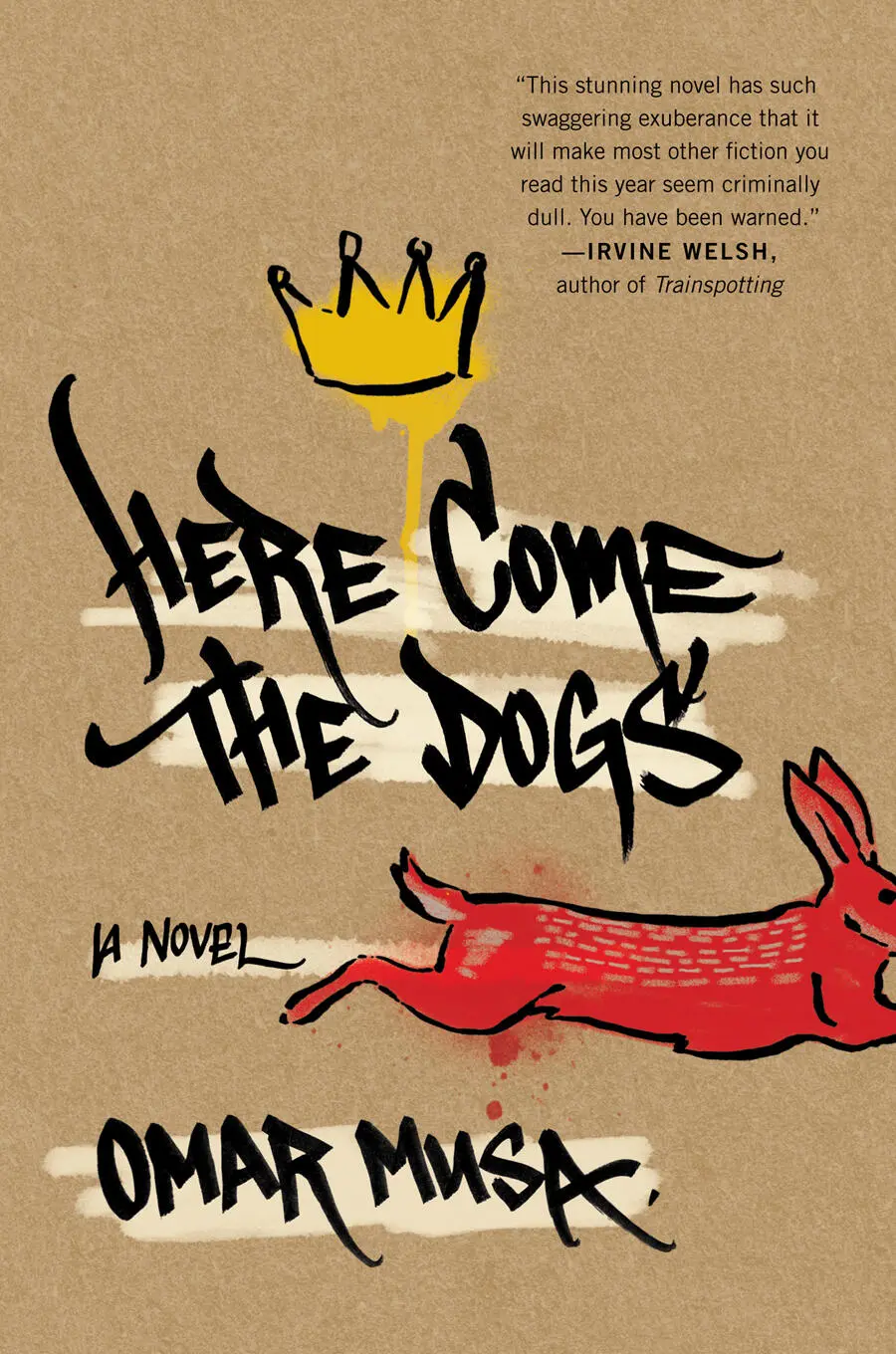
- Название:Here Come the Dogs
- Автор:
- Издательство:The New Press
- Жанр:
- Год:2016
- ISBN:нет данных
- Рейтинг книги:4 / 5. Голосов: 1
-
Избранное:Добавить в избранное
- Отзывы:
-
Ваша оценка:
Here Come the Dogs: краткое содержание, описание и аннотация
Предлагаем к чтению аннотацию, описание, краткое содержание или предисловие (зависит от того, что написал сам автор книги «Here Come the Dogs»). Если вы не нашли необходимую информацию о книге — напишите в комментариях, мы постараемся отыскать её.
Solomon, Jimmy, and Aleks are way out on the fringe of Australia, looking for a way in. Hip hop, basketball, and graffiti give them a voice. Booze, women, and violence pass the time while they wait for their chance. Under the oppressive summer sun, their town has turned tinder-dry. All it’ll take is a spark.
As the surrounding hills roar with flames, the change storms in. But it’s not what they were waiting for. It never is.
Here Come the Dogs — читать онлайн бесплатно полную книгу (весь текст) целиком
Ниже представлен текст книги, разбитый по страницам. Система сохранения места последней прочитанной страницы, позволяет с удобством читать онлайн бесплатно книгу «Here Come the Dogs», без необходимости каждый раз заново искать на чём Вы остановились. Поставьте закладку, и сможете в любой момент перейти на страницу, на которой закончили чтение.
Интервал:
Закладка:
He then sets off on the bus from the Town to the City. He walks confidently and with purpose, avoiding the travel agency. He goes to a hardware shop and buys some lengths of PVC pipe, PVC cement, a hacksaw, a hand-drill, and all manner of wood screws, hitch pins and fittings. As he walks back to the bus interchange with his precarious load, Jimmy sees a door open at the community centre where Solomon used to attend b-boy battles. Tables are laden with delicious-looking cakes and curries and he mistakes it for a market or a food fair. Jimmy hasn’t eaten anything the whole day. He leaves his load outside the door but, once inside, he realises that it’s a local Muslim community’s Friday prayers.
He starts for the door but a man gestures vigorously for him to sit down. He pours Jimmy cardamom tea and serves him a piled plate of saffron rice and curry. There are splinters of cinnamon throughout the yellow rice and it smells delicious. The man’s name, it turns out, is Amjad. He looks familiar to Jimmy somehow. He says that he is a cabbie, and begins to talk about Australia.
‘This place is biting. ah, eating me. Being away from my family. These Aussies, they talk so much, always talking. So lazy, but they get paid so much. This one bastard ask me — which boat you come on? I tell him I come on a plane. I am doctor back in Pakistan. I tell him you think I wanna be here? Driving you around? That bastard left his phone in the cab. He call me, says where is the phone? I tell him, you’ll find it on the bottom of the lake, so get some scuba. I threw it in the lake. My cousin tells me he is a cabbie in New Zealand. People are kind, money is shit. Here, the people are arseholes, but the money is good. What a choice.’
Another man sits down and begins to talk to Jimmy about God, about attending next Friday’s prayers. Jimmy makes an excuse, picks up his stuff and leaves.
He finds that buses have stopped running and has to pay sixty bucks for a cab from the City to the Town.
* * *
The next day he wakes up early remembering he has to pick up Mila at twelve. He cuts the PVC into various lengths and begins to make a baby gate so that Mercury Fire can’t get into the living room and mess up the carpet or sofa while he is out. He puts some albums in his CD player — Kings Konekted, Jehst, Fluent Form, Fraksha. He raps along to the albums as he saws, trims, glues and fits the gate, using detailed instructions he found on the internet. A few hours and several albums later, he stands back, dusting his hands off. He coaxes Mercury Fire into the hallway to see it. Mercury observes it momentarily then leaps over it in one bound.
* * *
The weather has turned strange.
Still no rain, no clouds, but the sky has been changing colours all day, from wine dark to lemon light and back every hour.
Jimmy knocks on Aleks’ door and Sonya answers. Usually she has a smile for him, but today she’s out of it, her eyes almost closed and her mouth ajar. He tells her that Aleks wants him to take Mila out and she nods, but he could swear she’s sleepwalking.
Having the hound makes hanging with an anklebiter easier. Mila does most of the talking, patting Mercury, her hands fitting between his pointed hipbones. She’s a bloody sharp one, heaps like Jana. Jimmy wonders whatever happened to Jana’s girlfriend from all those years ago, whose neck Aleks had snatched the bead from. Maybe she went back to Malaysia.
Jimmy pushes his floppy hair back and wipes his hand on his shorts. The park is strangely bare, but for a single tree that stands far off, its branches against the sky like cracks on a plate. A few youngsters in the cricket nets — what a shit sport, ay. Mila throws a tennis ball towards the tree and Mercury Fire goes bounding after it. He retrieves it and drops it at their feet, panting, pink tongue out.
‘What do you do, Uncle Jimmy?’
‘I work in an office.’
‘My dad’s never worked in an office. I don’t think, anyway.’
Jimmy smiles. ‘Nah, different strokes for different folks.’
Mila mouths the words a few times, as if making sure she will remember to use the expression later. Like father, like daughter. Aleks has a keen talent for mimicry and at times gives off the impression that he had a far greater education than he ever actually had. Much of his vocabulary he cannot spell. In a life of rupture — back and forth between living in Macedonia and Australia several times in his teens — this talent, combined with quick-wittedness, has served him well.
‘Look at Mercury, Uncle Jimmy! He found something. Does your dad work in an office, too?’
‘My dad? He was. He’s a chef.’
She seems uninterested. ‘When’s my dad coming back?’
‘Soon. He’s working. Your dad is a hard worker — everything he does, Mila, he does it for you.’
She smiles broadly then looks thoughtful. ‘Are you a hard worker, Uncle Jimmy?’
‘Yes. Yes, I am,’ he says with more force than necessary.
He looks up and can see a man sitting cross-legged in a flower garden across the road. His face is in shadow. The man is very well dressed, even wearing gloves, watching Jimmy throw the ball to Mila. A bus passes, and when Jimmy looks again, the man is no longer there.
4
There is ferocity in Solomon’s game, as if he can outplay the Reaper for his father’s life. He practises jump shot after jump shot until the hoop feels as big as a sinkhole. But during games, he never lets his fury take hold. He siphons it into his body until he becomes a blur of motion, a dervish spinning to the hoop, unfuckwithable. Yet his face remains placid, almost impassive. Teammates begin to call him ‘The Iceman’, referring to the great scorer George Gervin — supreme calm and a bone-dry shirt — but soon they rename him ‘The Mask’. The mask unnerves opponents and teammates alike. There is arrogance in his game, the crossovers and dancing feet designed to humiliate, the smouldering intensity a slow knife intended to torture the opposition throughout the game. The truth is that he put the mask on much earlier.
When Ulysses Amosa recovered from his first stroke, his obsession with church and tradition became fervent. Solomon resented going to church and didn’t understand the fa’aaloalo, respect for elders, that Ulysses constantly went on about — Solomon saw Aussie kids treating their parents as equals. Wounded, he began to speak less and less at home. Despite this, behind the mask, Solomon seethed with love for his dignified, sick father. His mother, Grace, would take Ulysses in his wheelchair to watch his prodigious son. Though he couldn’t articulate it, Ulysses loved to watch him dance on the blonde hardwood as if the ball was attached to a string. The man and the boy barely exchanged words, but Ulysses knew that Solomon was playing for him.
5
Hail bursts suddenly out of the cloudless sky.
Solomon, Scarlett and the kids seek shelter in a bus stop, watching hailstones as big as fists crack windscreens and dent letterboxes, bouncing metres high off the asphalt and racing over the street like runaways. A complete fury of white. Several minutes later, it is over and the sky is blue. The sun shines again, bright and furious. They spend ten minutes kicking hailstones into the grass, where they lie like blind eyes, melting.
Solomon gets the boys, who now number five, to tie their laces tight. ‘Okay, listen, boys. Dribbling’s bloody important, all right? Especially for you two — Toby you listening? You’re quick but not that big. If you learn to dribble, people won’t be able to take the ball off ya. You’ll be able to get anywhere on the court, get to the basket. Understand?’
‘Yeh.’
‘You need to master the ball, control it. I wanna see you pound it hard on the ground, like this. Keep your head up, too.’ All five boys are staring at Solomon, trying to imitate his every move, magnetised, as he directs them.
Читать дальшеИнтервал:
Закладка:
Похожие книги на «Here Come the Dogs»
Представляем Вашему вниманию похожие книги на «Here Come the Dogs» списком для выбора. Мы отобрали схожую по названию и смыслу литературу в надежде предоставить читателям больше вариантов отыскать новые, интересные, ещё непрочитанные произведения.







Обсуждение, отзывы о книге «Here Come the Dogs» и просто собственные мнения читателей. Оставьте ваши комментарии, напишите, что Вы думаете о произведении, его смысле или главных героях. Укажите что конкретно понравилось, а что нет, и почему Вы так считаете.