Chimamanda Adichie - Americanah
Здесь есть возможность читать онлайн «Chimamanda Adichie - Americanah» весь текст электронной книги совершенно бесплатно (целиком полную версию без сокращений). В некоторых случаях можно слушать аудио, скачать через торрент в формате fb2 и присутствует краткое содержание. Год выпуска: 2013, Издательство: Knopf, Жанр: Современная проза, на английском языке. Описание произведения, (предисловие) а так же отзывы посетителей доступны на портале библиотеки ЛибКат.
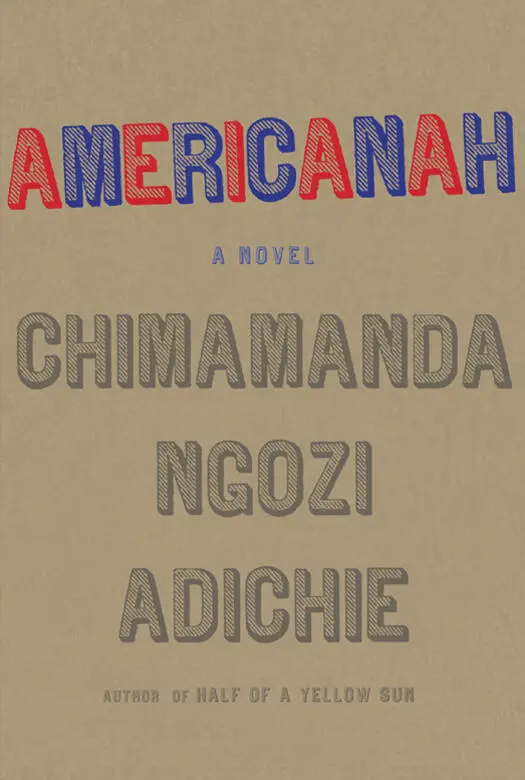
- Название:Americanah
- Автор:
- Издательство:Knopf
- Жанр:
- Год:2013
- ISBN:нет данных
- Рейтинг книги:4 / 5. Голосов: 1
-
Избранное:Добавить в избранное
- Отзывы:
-
Ваша оценка:
Americanah: краткое содержание, описание и аннотация
Предлагаем к чтению аннотацию, описание, краткое содержание или предисловие (зависит от того, что написал сам автор книги «Americanah»). Если вы не нашли необходимую информацию о книге — напишите в комментариях, мы постараемся отыскать её.
, a dazzling new novel: a story of love and race centered around a young man and woman from Nigeria who face difficult choices and challenges in the countries they come to call home.
As teenagers in a Lagos secondary school, Ifemelu and Obinze fall in love. Their Nigeria is under military dictatorship, and people are leaving the country if they can. Ifemelu — beautiful, self-assured — departs for America to study. She suffers defeats and triumphs, finds and loses relationships and friendships, all the while feeling the weight of something she never thought of back home: race. Obinze — the quiet, thoughtful son of a professor — had hoped to join her, but post-9/11 America will not let him in, and he plunges into a dangerous, undocumented life in London.
Years later, Obinze is a wealthy man in a newly democratic Nigeria, while Ifemelu has achieved success as a writer of an eye-opening blog about race in America. But when Ifemelu returns to Nigeria, and she and Obinze reignite their shared passion — for their homeland and for each other — they will face the toughest decisions of their lives.
Fearless, gripping, at once darkly funny and tender, spanning three continents and numerous lives,
is a richly told story set in today’s globalized world: Chimamanda Ngozi Adichie’s most powerful and astonishing novel yet.
Americanah — читать онлайн бесплатно полную книгу (весь текст) целиком
Ниже представлен текст книги, разбитый по страницам. Система сохранения места последней прочитанной страницы, позволяет с удобством читать онлайн бесплатно книгу «Americanah», без необходимости каждый раз заново искать на чём Вы остановились. Поставьте закладку, и сможете в любой момент перейти на страницу, на которой закончили чтение.
Интервал:
Закладка:
“Do you play soccer with the kids you babysit?” he asked.
“No,” she said, even though she played once in a while with Taylor, kicking the ball back and forth in their oversized, wooded backyard. Sometimes, when Dike asked her about the children she cared for, she indulged his childish interest, telling him about their toys and their lives, but she was careful not to make them seem important to her.
“So how was camp?”
“Good.” A pause. “My group leader, Haley? She gave sunscreen to everyone but she wouldn’t give me any. She said I didn’t need it.”
She looked at his face, which was almost expressionless, eerily so. She did not know what to say.
“She thought that because you’re dark you don’t need sunscreen. But you do. Many people don’t know that dark people also need sunscreen. I’ll get you some, don’t worry.” She was speaking too fast, not sure that she was saying the right thing, or what the right thing to say was, and worried because this had upset him enough that she had seen it on his face.
“It’s okay,” he said. “It was kind of funny. My friend Danny was laughing about it.”
“Why did your friend think it was funny?”
“Because it was!”
“You wanted her to give you the sunscreen, too, right?”
“I guess so,” he said with a shrug. “I just want to be regular.”
She hugged him. Later, she went to the store and bought him a big bottle of sunscreen, and the next time she visited, she saw it lying on his dresser, forgotten and unused.
Understanding America for the Non-American Black: American Tribalism
In America, tribalism is alive and well. There are four kinds — class, ideology, region, and race. First, class. Pretty easy. Rich folk and poor folk.
Second, ideology. Liberals and conservatives. They don’t merely disagree on political issues, each side believes the other is evil. Intermarriage is discouraged and on the rare occasion that it happens, is considered remarkable. Third, region. The North and the South. The two sides fought a civil war and tough stains from that war remain. The North looks down on the South while the South resents the North. Finally, race. There’s a ladder of racial hierarchy in America. White is always on top, specifically White Anglo-Saxon Protestant, otherwise known as WASP, and American Black is always on the bottom, and what’s in the middle depends on time and place. (Or as that marvelous rhyme goes: if you’re white, you’re all right; if you’re brown, stick around; if you’re black, get back!) Americans assume that everyone will get their tribalism. But it takes a while to figure it all out. So in undergrad, we had a visiting speaker and a classmate whispers to another, “Oh my God, he looks so Jewish,” with a shudder, an actual shudder. Like Jewish was a bad thing. I didn’t get it. As far as I could see, the man was white, not much different from the classmate herself. Jewish to me was something vague, something biblical. But I learned quickly. You see, in America’s ladder of races, Jewish is white but also some rungs below white. A bit confusing, because I knew this straw-haired, freckled girl who said she was Jewish. How can Americans tell who is Jewish? How did the classmate know the guy was Jewish? I read somewhere how American colleges used to ask applicants for their mother’s surnames, to make sure they weren’t Jewish because they wouldn’t admit Jewish people. So maybe that’s how to tell? From people’s names? The longer you are here, the more you start to get it.
CHAPTER 18
Manama’s new customer was wearing jeans shorts, the denim glued to her backside, and sneakers the same bright pink shade as her top. Large hoop earrings grazed her face. She stood in front of the mirror, describing the kind of cornrows she wanted.
“Like a zigzag with a parting at the side right here, but you don’t add the hair at the beginning, you add it when you get to the ponytail,” she said, speaking slowly, overenunciating. “You understand me?” she added, already convinced, it seemed, that Mariama did not.
“I understand,” Mariama said quietly. “You want to see a photo? I have that style in my album.”
The album was flipped through and, finally, the customer was satisfied and seated, frayed plastic hoisted around her neck, her chair height adjusted, and Mariama all the time smiling a smile full of things restrained.
“This other braider I went to the last time,” the customer said. “She was African, too, and she wanted to burn my damned hair! She brought out this lighter and I’m going, Shontay White, don’t let that woman bring that thing close to your hair. So I ask her, What’s that for? She says, I want to clean your braids, and I go, What? Then she tries to show me, she tries to run the lighter over one braid and I went all crazy on her.”
Mariama shook her head. “Oh, that’s bad. Burning is not good. We don’t do that.”
A customer came in, her hair covered in a bright yellow headwrap.
“Hi,” she said. “I’d like to get braids.”
“What kind of braids you want?” Mariama asked.
“Just regular box braids, medium size.”
“You want it long?” Mariama asked.
“Not too long, maybe shoulder length?”
“Okay. Please sit down. She will do it for you,” Mariama said, gesturing to Halima, who was sitting at the back, her eyes on the television. Halima stood up and stretched, for a little too long, as though to register her reluctance.
The woman sat down and gestured to the pile of DVDs. “You sell Nigerian films?” she asked Mariama.
“I used to but my supplier went out of business. You want to buy?”
“No. You just seem to have a lot of them.”
“Some of them are real nice,” Mariama said.
“I can’t watch that stuff. I guess I’m biased. In my country, South Africa, Nigerians are known for stealing credit cards and doing drugs and all kinds of crazy stuff. I guess the films are kind of like that too.”
“You’re from South Africa? You don’t have accent!” Mariama exclaimed.
The woman shrugged. “I’ve been here a long time. It doesn’t make much of a difference.”
“No,” Halima said, suddenly animated, standing behind the woman. “When I come here with my son they beat him in school because of African accent. In Newark. If you see my son face? Purple like onion. They beat, beat, beat him. Black boys beat him like this. Now accent go and no problems.”
“I’m sorry to hear that,” the woman said.
“Thank you.” Halima smiled, enamored of the woman because of this extraordinary feat, an American accent. “Yes, Nigeria very corrupt. Worst corrupt country in Africa. Me, I watch the film but no, I don’t go to Nigeria!” She half waved her palm in the air.
“I cannot marry a Nigerian and I won’t let anybody in my family marry a Nigerian,” Mariama said, and darted Ifemelu an apologetic glance. “Not all but many of them do bad things. Even killing for money.”
“Well, I don’t know about that,” the customer said, in a halfheartedly moderate tone.
Aisha looked on, sly and quiet. Later, she whispered to Ifemelu, her expression suspicious, “You here fifteen years, but you don’t have American accent. Why?”
Ifemelu ignored her and, once again, opened Jean Toomer’s Cane . She stared at the words and wished suddenly that she could turn back time and postpone this move back home. Perhaps she had been hasty. She should not have sold her condo. She should have accepted Letterly magazine’s offer to buy her blog and keep her on as a paid blogger. What if she got back to Lagos and realized what a mistake it was to move back? Even the thought that she could always return to America did not comfort her as much as she wished it to.
Читать дальшеИнтервал:
Закладка:
Похожие книги на «Americanah»
Представляем Вашему вниманию похожие книги на «Americanah» списком для выбора. Мы отобрали схожую по названию и смыслу литературу в надежде предоставить читателям больше вариантов отыскать новые, интересные, ещё непрочитанные произведения.







Обсуждение, отзывы о книге «Americanah» и просто собственные мнения читателей. Оставьте ваши комментарии, напишите, что Вы думаете о произведении, его смысле или главных героях. Укажите что конкретно понравилось, а что нет, и почему Вы так считаете.