Chimamanda Adichie - Americanah
Здесь есть возможность читать онлайн «Chimamanda Adichie - Americanah» весь текст электронной книги совершенно бесплатно (целиком полную версию без сокращений). В некоторых случаях можно слушать аудио, скачать через торрент в формате fb2 и присутствует краткое содержание. Год выпуска: 2013, Издательство: Knopf, Жанр: Современная проза, на английском языке. Описание произведения, (предисловие) а так же отзывы посетителей доступны на портале библиотеки ЛибКат.
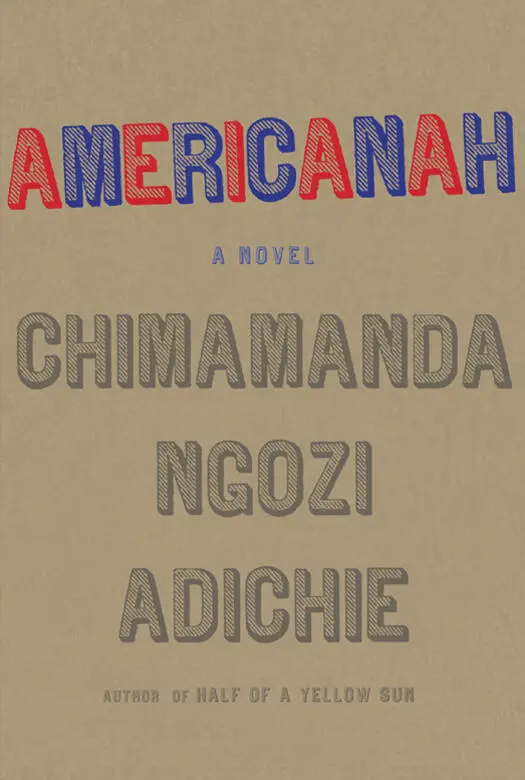
- Название:Americanah
- Автор:
- Издательство:Knopf
- Жанр:
- Год:2013
- ISBN:нет данных
- Рейтинг книги:4 / 5. Голосов: 1
-
Избранное:Добавить в избранное
- Отзывы:
-
Ваша оценка:
Americanah: краткое содержание, описание и аннотация
Предлагаем к чтению аннотацию, описание, краткое содержание или предисловие (зависит от того, что написал сам автор книги «Americanah»). Если вы не нашли необходимую информацию о книге — напишите в комментариях, мы постараемся отыскать её.
, a dazzling new novel: a story of love and race centered around a young man and woman from Nigeria who face difficult choices and challenges in the countries they come to call home.
As teenagers in a Lagos secondary school, Ifemelu and Obinze fall in love. Their Nigeria is under military dictatorship, and people are leaving the country if they can. Ifemelu — beautiful, self-assured — departs for America to study. She suffers defeats and triumphs, finds and loses relationships and friendships, all the while feeling the weight of something she never thought of back home: race. Obinze — the quiet, thoughtful son of a professor — had hoped to join her, but post-9/11 America will not let him in, and he plunges into a dangerous, undocumented life in London.
Years later, Obinze is a wealthy man in a newly democratic Nigeria, while Ifemelu has achieved success as a writer of an eye-opening blog about race in America. But when Ifemelu returns to Nigeria, and she and Obinze reignite their shared passion — for their homeland and for each other — they will face the toughest decisions of their lives.
Fearless, gripping, at once darkly funny and tender, spanning three continents and numerous lives,
is a richly told story set in today’s globalized world: Chimamanda Ngozi Adichie’s most powerful and astonishing novel yet.
Americanah — читать онлайн бесплатно полную книгу (весь текст) целиком
Ниже представлен текст книги, разбитый по страницам. Система сохранения места последней прочитанной страницы, позволяет с удобством читать онлайн бесплатно книгу «Americanah», без необходимости каждый раз заново искать на чём Вы остановились. Поставьте закладку, и сможете в любой момент перейти на страницу, на которой закончили чтение.
Интервал:
Закладка:
The General died the next week, in a military plane crash. “On the same day, the very same day, that the photographer brought the pictures from Dike’s birthday,” Aunty Uju would often say, in telling the story, as though this held some particular significance.
It was a Saturday afternoon, Obinze and Ifemelu were in the TV room, Inyang was upstairs with Dike, Aunty Uju was in the kitchen with Chikodili when the phone rang. Ifemelu picked it up. The voice on the other end, The General’s ADC, crackled through a bad connection, but was still clear enough to give her details: the crash happened a few miles outside Jos, the bodies were charred, there were already rumors that the Head of State had engineered it to get rid of officers who he feared were planning a coup. Ifemelu held the phone too tightly, stunned. Obinze went with her to the kitchen, and stood by Aunty Uju as Ifemelu repeated the ADC’s words.
“You are lying,” Aunty Uju said. “It is a lie.”
She marched towards the phone, as though to challenge it, too, and then she slid to the floor, a boneless, bereft sliding, and began to weep. Ifemelu held her, cradled her, all of them unsure of what to do, and the silence in between her sobs seemed too silent. Inyang brought Dike downstairs.
“Mama?” Dike said, looking puzzled.
“Take Dike upstairs,” Obinze told Inyang.
There was banging on the gate. Two men and three women, relatives of The General, had bullied Adamu to open the gate, and now stood at the front door, shouting. “Uju! Pack your things and get out now! Give us the car keys!” One of the women was skeletal, agitated and red-eyed, and as she shouted—“Common harlot! God forbid that you will touch our brother’s property! Prostitute! You will never live in peace in this Lagos!”—she pulled her headscarf from her head and tied it tightly around her waist, in preparation for a fight. At first, Aunty Uju said nothing, staring at them, standing still at the door. Then she asked them to leave in a voice hoarse from tears, but the relatives’ shouting intensified, and so Aunty Uju turned to go back indoors. “Okay, don’t go,” she said. “Just stay there. Stay there while I go and call my boys from the army barracks.”
Only then did they leave, telling her, “We are coming back with our own boys.” Only then did Aunty Uju begin to sob again. “I have nothing. Everything is in his name. Where will I take my son to now?”
She picked up the phone from its cradle and then stared at it, uncertain whom to call.
“Call Uche and Adesuwa,” Ifemelu said. They would know what to do.
Aunty Uju did, pressing the speaker button, and then leaned against the wall.
“You have to leave immediately. Make sure you clear the house, take everything,” Uche said. “Do it fast-fast before his people come back. Arrange a tow van and take the generator. Make sure you take the generator.”
“I don’t know where to find a van,” Aunty Uju mumbled, with a helplessness foreign to her.
“We’re going to arrange one for you, fast-fast. You have to take that generator. That is what will pay for your life until you gather yourself. You have to go somewhere for a while, so that they don’t give you trouble. Go to London or America. Do you have American visa?”
“Yes.”
Ifemelu would remember the final moments in a blur, Adamu saying there was a journalist from City People at the gate, Ifemelu and Chikodili stuffing clothes in suitcases, Obinze carrying things out to the van, Dike stumbling around and chortling. The rooms upstairs had grown unbearably hot; the air conditioners had suddenly stopped working, as though they had decided, in unison, to pay tribute to the end.
CHAPTER 7
Obinze wanted to go to the University of Ibadan because of a poem.
He read the poem to her, J. P. Clark’s “Ibadan,” and he lingered on the words “running splash of rust and gold.”
“Are you serious?” she asked him. “Because of this poem?”
“It’s so beautiful.”
Ifemelu shook her head, in mocking, exaggerated incredulity. But she, too, wanted to go to Ibadan, because Aunty Uju had gone there. They filled out their JAMB forms together, sitting at the dining table while his mother hovered around, saying, “Are you using the right pencil? Cross-check everything. I have heard of the most unlikely mistakes that you will not believe.”
Obinze said, “Mummy, we are more likely to fill it out without mistakes if you stop talking.”
“At least you should make Nsukka your second choice,” his mother said. But Obinze did not want to go to Nsukka, he wanted to escape the life he had always had, and Nsukka, to Ifemelu, seemed remote and dusty. And so they both agreed to make the University of Lagos their second choice.
The next day, Obinze’s mother collapsed in the library. A student found her spread on the floor like a rag, a small bump on her head, and Obinze told Ifemelu, “Thank God we haven’t submitted our JAMB forms.”
“What do you mean?”
“My mom is returning to Nsukka at the end of this session. I have to be near her. The doctor said this thing will keep happening.” He paused. “We can see each other during long weekends. I will come to Ibadan and you come to Nsukka.”
“You’re a joker,” she told him. “ Biko , I’m changing to Nsukka as well.”
The change pleased her father. It was heartening, he said, that she would go to university in Igboland since she had lived her whole life in the west. Her mother was downcast. Ibadan was only an hour away, but Nsukka meant a day’s journey on the bus.
“It’s not a day, Mummy, just seven hours,” Ifemelu said.
“And what is the difference between that and a day?” her mother asked.
Ifemelu was looking forward to being away from home, to the independence of owning her own time, and she felt comforted that Ranyinudo and Tochi were going to Nsukka too. So was Emenike, who asked Obinze if they could be roommates, in the boys’ quarters of Obinze’s house. Obinze said yes. Ifemelu wished he had not. “There’s just something about Emenike,” she said. “But anyway, as long as he goes away when we are busy with ceiling.”
Later, Obinze would ask, half seriously, if Ifemelu thought his mother’s fainting had been deliberate, a plot to keep him close. For a long time, he spoke wistfully of Ibadan until he visited the campus, for a table tennis tournament, and returned to tell her, sheepishly, “Ibadan reminded me of Nsukka.”

TO GO TO NSUKKA was to finally see Obinze’s home, a bungalow resting in a compound filled with flowers. Ifemelu imagined him growing up, riding his bicycle down the sloping street, returning home from primary school with his bag and water bottle. Still, Nsukka disoriented her. She thought it too slow, the dust too red, the people too satisfied with the smallness of their lives. But she would come to love it, a hesitant love at first. From the window of her hostel room, where four beds were squashed into a space for two, she could look out to the entrance of Bello Hall. Tall gmelina trees swayed in the wind, and underneath them were hawkers, guarding trays of bananas and groundnuts, and okadas all parked close to each other, the motorcyclists talking and laughing, but each of them alert to customers. She put up bright blue wallpaper in her corner and because she had heard stories of roommate squabbles — one final-year student, it was said, had poured kerosene into the drawer of the first-year student for being what was called “saucy”—she felt fortunate about her roommates. They were easygoing and soon she was sharing with them and borrowing from them the things that easily ran out, toothpaste and powdered milk and Indomie noodles and hair pomade. Most mornings, she woke up to the rumbling murmur of voices in the corridor, the Catholic students saying the rosary, and she would hurry to the bathroom, to collect water in her bucket before the tap stopped, to squat over the toilet before it became unbearably full. Sometimes, when she was too late, and the toilets already swirled with maggots, she would go to Obinze’s house, even if he was not there, and once the house help Augustina opened the front door, she would say, “Tina-Tina, how now? I came to use the toilet.”
Читать дальшеИнтервал:
Закладка:
Похожие книги на «Americanah»
Представляем Вашему вниманию похожие книги на «Americanah» списком для выбора. Мы отобрали схожую по названию и смыслу литературу в надежде предоставить читателям больше вариантов отыскать новые, интересные, ещё непрочитанные произведения.








Обсуждение, отзывы о книге «Americanah» и просто собственные мнения читателей. Оставьте ваши комментарии, напишите, что Вы думаете о произведении, его смысле или главных героях. Укажите что конкретно понравилось, а что нет, и почему Вы так считаете.