Thomas Mallon - Finale - A Novel of the Reagan Years
Здесь есть возможность читать онлайн «Thomas Mallon - Finale - A Novel of the Reagan Years» весь текст электронной книги совершенно бесплатно (целиком полную версию без сокращений). В некоторых случаях можно слушать аудио, скачать через торрент в формате fb2 и присутствует краткое содержание. Год выпуска: 2015, ISBN: 2015, Издательство: Knopf Doubleday Publishing Group, Жанр: Современная проза, на английском языке. Описание произведения, (предисловие) а так же отзывы посетителей доступны на портале библиотеки ЛибКат.
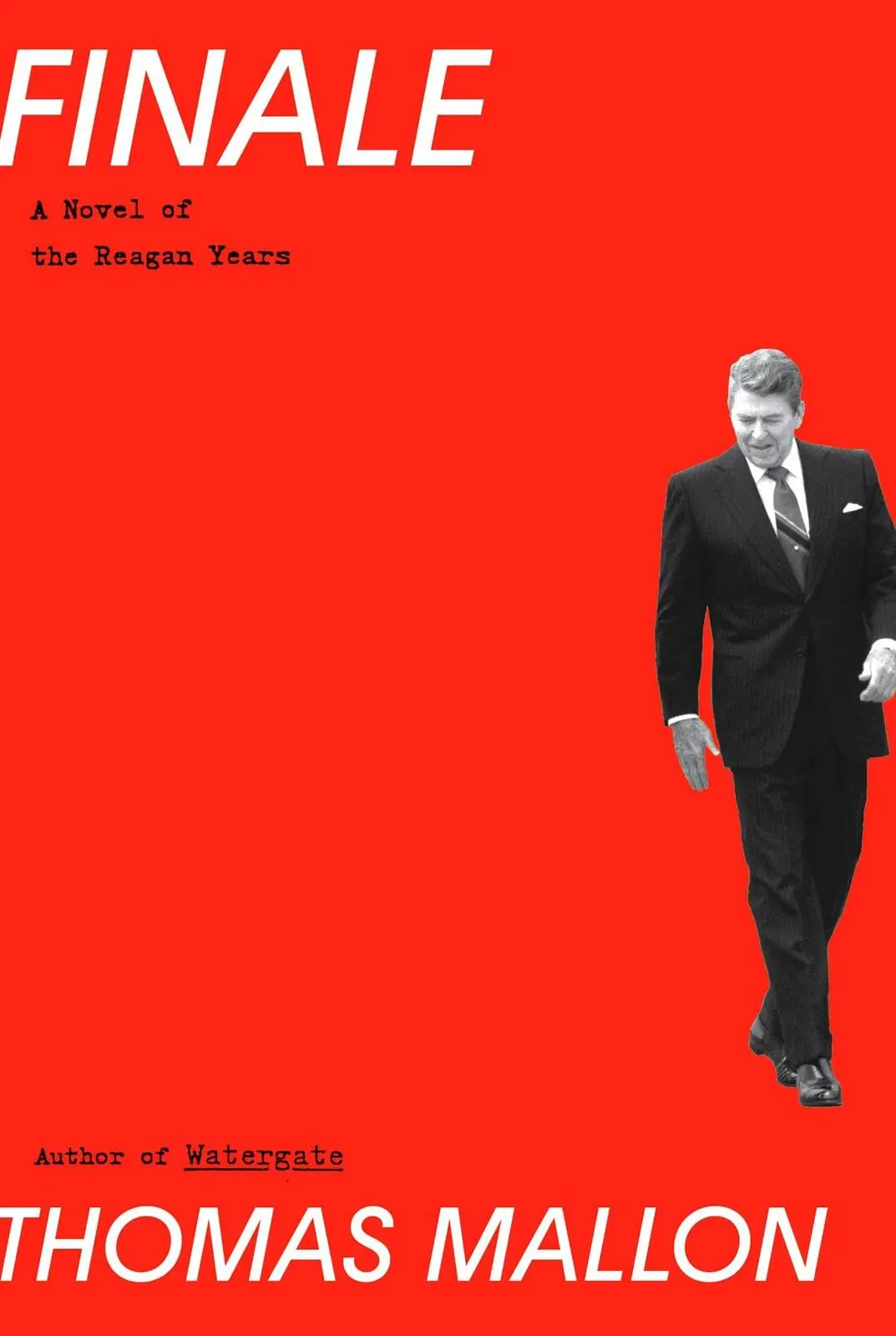
- Название:Finale: A Novel of the Reagan Years
- Автор:
- Издательство:Knopf Doubleday Publishing Group
- Жанр:
- Год:2015
- ISBN:9780307907936
- Рейтинг книги:3 / 5. Голосов: 1
-
Избранное:Добавить в избранное
- Отзывы:
-
Ваша оценка:
Finale: A Novel of the Reagan Years: краткое содержание, описание и аннотация
Предлагаем к чтению аннотацию, описание, краткое содержание или предисловие (зависит от того, что написал сам автор книги «Finale: A Novel of the Reagan Years»). Если вы не нашли необходимую информацию о книге — напишите в комментариях, мы постараемся отыскать её.
Finale captures the crusading ideologies, blunders, and glamour of the still-hotly-debated Reagan years, taking readers to the political gridiron of Washington, the wealthiest enclaves of Southern California, and the volcanic landscape of Iceland, where the president engages in two almost apocalyptic days of negotiation with Mikhail Gorbachev.
Along with Soviet dissidents, illegal-arms traders, and antinuclear activists, the novel’s memorable characters include Margaret Thatcher, Jimmy Carter, Pamela Harriman, John W. Hinckley, Jr. (Reagan’s would-be assassin), and even Bette Davis, with whom the president had long ago appeared onscreen. Several figures — including a humbled, crafty Richard Nixon; the young, brilliantly acerbic Christopher Hitchens; and an anxious, astrology-dependent Nancy Reagan (on the verge of a terrible realization) — become the eyes through which readers see the last convulsions of the Cold War, the beginning of the AIDS epidemic, and a political revolution.
At the center of it all — but forever out of reach — is Ronald Reagan himself, whose genial remoteness confounds his subordinates, his children, and the citizens who elected him.
Finale is the book that Thomas Mallon’s work has been building toward for years. It is the most entertaining and panoramic novel about American politics since Advise and Consent, more than a half century ago.
Finale: A Novel of the Reagan Years — читать онлайн бесплатно полную книгу (весь текст) целиком
Ниже представлен текст книги, разбитый по страницам. Система сохранения места последней прочитанной страницы, позволяет с удобством читать онлайн бесплатно книгу «Finale: A Novel of the Reagan Years», без необходимости каждый раз заново искать на чём Вы остановились. Поставьте закладку, и сможете в любой момент перейти на страницу, на которой закончили чтение.
Интервал:
Закладка:
“And which suits you better?” Hitchens asked.
“Oh, Washington, by far!” Mrs. Harriman exclaimed, as if her ten years with Leland Hayward, the Broadway producer, had been an accidental detour before she found her true home and calling.
Hitchens appraised her tan, which he knew she’d acquired in neither of the two cities. “The sun must have been shining in Barbados,” he observed.
“Yes, it was. I got back two nights ago.”
“I’m recently back from sunny Jerusalem. Rabbi Kahane told me during an interview that he doesn’t really want to exterminate the Arabs. He’ll settle for their decimation.”
He could see she didn’t know the precise meaning of the last term, and that she didn’t like his knowing that she didn’t.
“We’re off the record right now, you know,” she informed him.
“Until when?”
She flashed a cold, flirtatious grin. “Until I say otherwise. Come, I’ll show you our little operation.”
She marched him through two or three rooms of her great Federal house before guiding him up a curved staircase with a wooden-spooled banister. They were soon passing madame’s boudoir, he realized, or at least an anteroom to it, in which he could see a runner’s treadmill with fancy digital controls. He couldn’t imagine anyone really using such an apparatus, except perhaps the first lady of the land, his hostess’s Republican counterpart across town, who no doubt threw her skeletal form onto the moving machinery each morning, as soon as Ron finally toddled off to the big Oval downstairs.
And yet, it appeared that the courtesan now leading him down another carpeted hall might indeed, in these early weeks of her widowhood, be tautening her form in preparation for one more marital safari. She seemed, to Hitchens’s eye, more slender than she had several months ago, when he’d seen her across some hotel ballroom. Now, as she turned to give him an encouraging we’re-almost-there smile, he noted that, while the complexion had a standard English-aristo excellence, the face had yet to be lifted. Even the teeth could use a bit further Americanization.
“Here we are,” she announced, brightly. They had, he realized, actually crossed into a tinier house attached to the big one. “Kelly, say hello to Mr. Hitchens.”
The younger and blonder of two assistants greeted him as he surveyed the top of her desk. A daily-schedule card for September 4, a week from today, had just come out of the Selectric: Mrs. Harriman had a hairdressing appointment in New York, with Kenneth, at 11:45 a.m.
The lady of the house now pointed to fax machines, a postage meter, and a large computer that no one yet seemed to be using. Hitchens picked up a sheet of letterhead from Kelly’s desk: SENATE MAJORITY ’86.
“That,” Mrs. Harriman explained, “is our current project.” The outfit was better known as PamPAC. Its new assertiveness and clout, under her solo direction, were the occasion for this glossy profile he’d been assigned.
“We nearly got the Senate in ’84,” she reminded him. “Despite the landslide at the top of the ticket. But we’ll get it this time. With a lot of help from our donors.”
“A shame,” offered Hitchens, “that there can’t be public financing of these affairs.”
“Indeed,” Mrs. Harriman agreed, a bit warily.
“Although I see in this morning’s paper that the government has just made a generous contribution to the Socialist Workers Party.” The courts had awarded that handful of American comrades a quarter-million-dollar judgment, recompense for all the FBI harassment they’d endured during the sixties and seventies.
Mrs. Harriman made a visible effort not to look impatient with such triviality. She was also, her questioner noted, staring at the much-renowned Pelt of the Hitch, the upper reaches of black chest hair exposed by his open collar. He smiled, and said, “I thought we’d lunch here.”
The two assistants looked up from their desks as if to say, “The cheek!” Or, Hitchens supposed, geography being what it is, “The nerve!”
Mrs. Harriman smiled unflappably.
“Better for the mise-en-scène ,” explained Hitchens, though it was hard to forgo the still-novel privilege of being able to expense lunch — not something he could do when toiling for The Nation.
“Of course we’re not going out for lunch,” Mrs. Harriman said, ushering him from the office. “I’m in mourning, Mr. Hitchens.”
Well, that was carrying the Jackie business a bit far. Perhaps she’d don a mantilla , Hitchens thought, as they headed back to the big house and then downstairs.
“And I have Ave’s memorial service to organize. I’ve always found that if one goes out to eat lunch, lunch eats up the day. We’ll have a quick meal in the garden.”
“And then I’ll be on my way.”
“That’s right.”
Was the hair, he wondered, already a lighter shade? Had it turned, as Wilde would say, “gold from grief”? Word was that — with help from the oleaginous Missouri fixer Clark Clifford — she’d gotten nearly all of ninety-four-year-old Ave’s $100 million.
Downstairs, as they passed through the living room, she picked up a letter that lay open on a small table near the van Gogh. “From the general secretary,” she explained, with a hush. She handed it to him. He skipped to the last condoling paragraph, which, like the rest, had been thoughtfully Englished by the Soviets:
We hold in high regard Averell Harriman’s active efforts for the good of our two countries, for the sake of strengthening peace.
Sincerely,
M. Gorbachev
Hitchens smiled and handed it back. “While I was in Jerusalem, Natan Sharansky continued to hope for the arrival of his family. The Soviets were still holding them five months after he himself had been sprung.”
Mrs. Harriman looked as if he’d sneezed onto the letter with this rude reminder of the still gagged Russian citizenry. “This should be a time for bilateral progress ,” she said, pronouncing the phrase as if she’d just studied it on a flash card.
Propelling Hitchens in the direction of the garden, she kept her eyes on his lit cigarette, clearly worried that a spark from it might land on the white carpet or, God forbid, fly up toward the van Gogh. “We can have that progress,” she continued, “if we get rid of Mr. Reagan’s Senate majority. And then of course see the back of Mr. Reagan himself.”
Hitchens decided not to point out the weak spot in her logic — namely, that the kind of progress she desired appeared to be taking place, however oddly, on the watch of that selfsame wattled old fool, a man he wanted out of the White House as much as she did. He decided he’d tip her off balance by returning to the inconvenient fact he had pointed out. “Was the governor ever much bothered by the gulag?” he asked, as they sat themselves on some garden chairs beneath a green canvas awning. “During his ambassadorial days, or afterwards?”
“I should think,” she replied, with some hesitation and care, “that you could more profitably ask me about the governor’s most recent successor.”
“You mean Cuomo?”
“Yes!” she said, her smile once more reaching full size. “If we are going to put an end to Reaganism, we’re going to have to have a candidate .”
“Is he your man for ’88?” The question sounded oddly provocative, as if he were asking whether she planned to pencil in the current silver-tongued New York governor on her half-century-long dance card of assignations.
“He’s very articulate and very attractive,” Mrs. Harriman answered.
“More so than Senator Hart?”
Читать дальшеИнтервал:
Закладка:
Похожие книги на «Finale: A Novel of the Reagan Years»
Представляем Вашему вниманию похожие книги на «Finale: A Novel of the Reagan Years» списком для выбора. Мы отобрали схожую по названию и смыслу литературу в надежде предоставить читателям больше вариантов отыскать новые, интересные, ещё непрочитанные произведения.












Обсуждение, отзывы о книге «Finale: A Novel of the Reagan Years» и просто собственные мнения читателей. Оставьте ваши комментарии, напишите, что Вы думаете о произведении, его смысле или главных героях. Укажите что конкретно понравилось, а что нет, и почему Вы так считаете.