Janice Lee - The Expatriates
Здесь есть возможность читать онлайн «Janice Lee - The Expatriates» весь текст электронной книги совершенно бесплатно (целиком полную версию без сокращений). В некоторых случаях можно слушать аудио, скачать через торрент в формате fb2 и присутствует краткое содержание. Год выпуска: 2016, Издательство: Viking, Жанр: Современная проза, на английском языке. Описание произведения, (предисловие) а так же отзывы посетителей доступны на портале библиотеки ЛибКат.
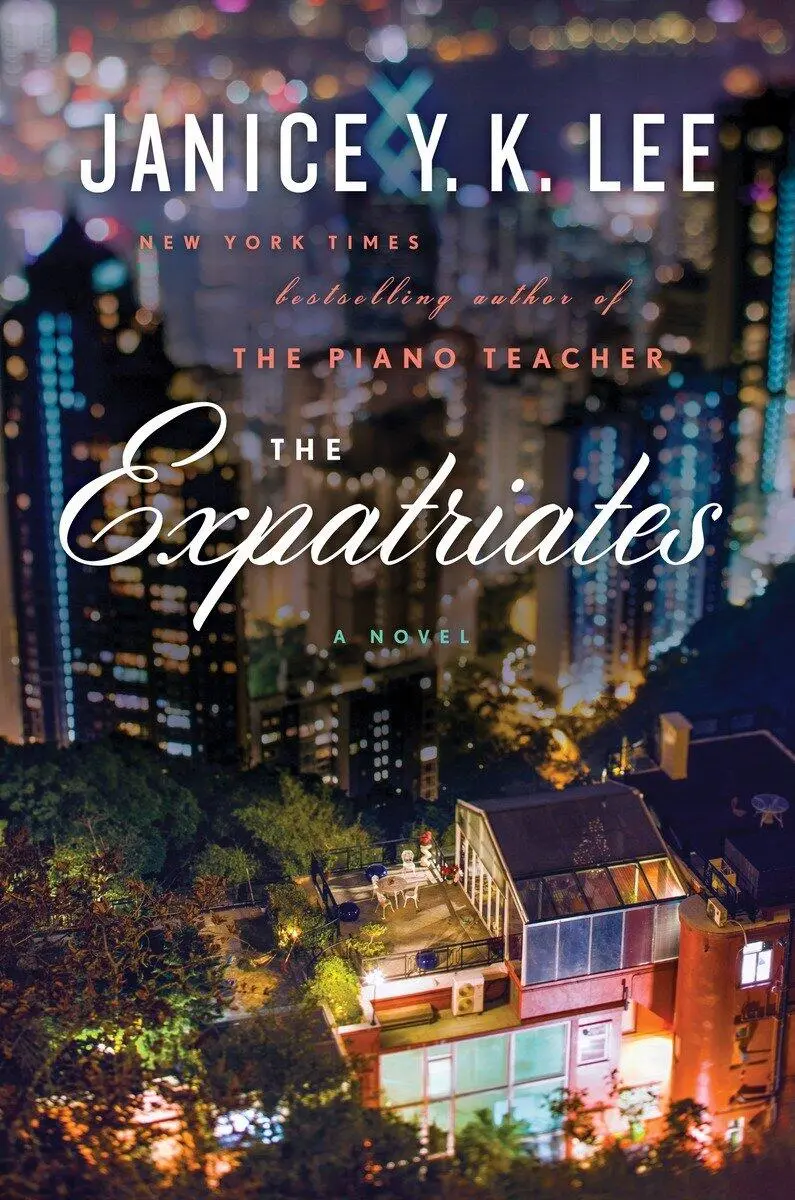
- Название:The Expatriates
- Автор:
- Издательство:Viking
- Жанр:
- Год:2016
- ISBN:нет данных
- Рейтинг книги:4 / 5. Голосов: 1
-
Избранное:Добавить в избранное
- Отзывы:
-
Ваша оценка:
The Expatriates: краткое содержание, описание и аннотация
Предлагаем к чтению аннотацию, описание, краткое содержание или предисловие (зависит от того, что написал сам автор книги «The Expatriates»). Если вы не нашли необходимую информацию о книге — напишите в комментариях, мы постараемся отыскать её.
“
meets
.” —The Skimm
Janice Y. K. Lee’s New York Times bestselling debut,
, was called “immensely satisfying” by
, “intensely readable” by
, and “a rare and exquisite story” by Elizabeth Gilbert. Now, in her long-awaited new novel, Lee explores with devastating poignancy the emotions, identities, and relationships of three very different American women living in the same small expat community in Hong Kong.
Mercy, a young Korean American and recent Columbia graduate, is adrift, undone by a terrible incident in her recent past. Hilary, a wealthy housewife, is haunted by her struggle to have a child, something she believes could save her foundering marriage. Meanwhile, Margaret, once a happily married mother of three, questions her maternal identity in the wake of a shattering loss. As each woman struggles with her own demons, their lives collide in ways that have irreversible consequences for them all. Atmospheric, moving, and utterly compelling,
confirms Lee as an exceptional talent and one of our keenest observers of women’s inner lives.
The Expatriates — читать онлайн бесплатно полную книгу (весь текст) целиком
Ниже представлен текст книги, разбитый по страницам. Система сохранения места последней прочитанной страницы, позволяет с удобством читать онлайн бесплатно книгу «The Expatriates», без необходимости каждый раз заново искать на чём Вы остановились. Поставьте закладку, и сможете в любой момент перейти на страницу, на которой закончили чтение.
Интервал:
Закладка:
Then, there, she spots a Reade. Philip, the middle child. He doesn’t see her, because he’s sitting down, playing with an iPad. She walks on. Again. There’s Daisy. She scans the room. And there’s Margaret.
Mercy retreats into a dark corner, puts the tray down and tries to calm the pounding of her heart, which threatens to beat right out of her chest. She puts her right hand on her chest to try to calm it.
Where is the other? Where is the other? Her mind repeats this phrase like an insane refrain. She is the other. She is the one who caused the injury, not the injured. She is the invisible. She’s the one not mentioned in the magazine pieces and newspaper articles. She is the unforgiven, the unforgivable.
Mercy sinks down into a crouch. She hides.
Margaret
A WOMAN WHOSE NAME she can’t remember is thanking her for not having a costume party.
“I mean, I found myself in a toga more often my first two years here than when I was in college!”
It is true that something about being an expat often means finding yourself in a cowboy suit, or a sari. Dress-up balls, or masquerade parties, are uncommonly popular here, which is usually credited to the British influence.
“If I have to buy another cheap polyester outfit in the lanes, I’ll shoot myself,” the woman says. “There’s this Arabian Nights party at the American Club next month, and my girlfriends are going all out, getting dresses made, buying fake jewelry, and I just can’t be bothered, you know?”
Margaret assents. Out of the corner of her eye, she sees Clarke stuck with someone from work she knows he doesn’t like. “Excuse me,” she says smoothly. “I just see someone….”
The woman lets her go with a nod. What was her name? Shirley? Shelly? She was a mom at TASOHK whose daughter was in Daisy’s class last year.
It’s going better than she thought. She’s had a glass of champagne and feels a little looser. No more, though, as she gets jittery after more than one. She wonders whether Clarke is having a good time. She walks over to him, places her arm on his waist.
“Hello, darling,” she says. He is standing with Jack McMillan, someone who has been a thorn in his side at work ever since he arrived. He is a man who is almost good-looking, who aspires to surfer good looks but is just one or two degrees off. His hair is an expensive golden hue, which she is certain he highlights; he booms, “Here he is!” when someone comes into the room.
“Hey, Margaret,” he drawls. He is in requisitioning or something. A Duke boy in China. Khaki pants in Guangdong.
“Hi, Jack,” she says. “How are you?”
“Not bad, not bad. Can’t believe the man here is fifty, you know?”
Jack must be forty-five.
“Age gets us all,” she says.
“Hey!” Clarke protests. “Don’t write me off. I’ve still got a few good years.”
Jack made a play for Clarke’s job when they were in Korea — a move that still leaves her breathless with wonder, that someone could be so ruthless. Still, here they are, being adult, smiling at each other. Conventions are not so easily thrown out, she’s found.
“Are you dating anyone?” she asks.
“You know,” he says. “Here and there. Actually, there.” He points to a lissome twenty-something walking toward them.
Jack is known for turning up with the latest underage models off the plane from the Ukraine or Israel, the ones who were not quite tall enough for London or New York.
“This is Svetlana,” he says when she arrives.
“Hello,” Margaret says.
Svetlana has a heavy accent that Margaret cannot decipher. “Clarke,” she says, “can you help me with something?” They escape and walk away.
“Thanks, darling,” Clarke says, kissing Margaret. “What an asshole.”
“Why do we always have to be the bigger person and invite people we hate?”
“I don’t know,” he says. “But better to be the bigger person, right?”
They are waylaid immediately by another group of people, eager to congratulate the birthday boy. Margaret stands a little apart, watching her husband talk to his friends, his business associates, wondering at him, at what a good man he is.
There is a ripple in the crowd. The children are about to do their performance.
Daisy and Philip stand in front of the crowd, shy and awkward, shifting their shoulders and looking down at the floor. From the side, Priscilla coaches them in a whisper.
“We’ve prepared a song,” Daisy says. Priscilla hits play on an iPod.
They sing a sweet song about their father, set to the tune of “It Had to Be You.” Philip’s voice, not yet changed, rises in a sweet tenor; Daisy harmonizes with him. Waiters begin to distribute glasses of champagne. Clarke finds his way over to Margaret and puts his arm around her shoulders. She puts her hand around his waist and holds on, feeling the comforting solidity of his body. Of course, she cries, tears welling and running down her face in a constant stream. She cannot stand the empty space next to her two children, the way they are standing close so their elbows are almost touching, the fact that Priscilla, a stranger, arranged this because she could not. How to cope with all the new realities of her life, which shouldn’t feel so new, so raw, still. How she feels she should be on the road to somewhere better but absolutely is not. All these emotions are drowning her, so she cries and cries, silently, hoping her children will not see.
They finish, and the audience claps enthusiastically.
“Speech, speech!” The crowd demands Clarke.
He lets her go — she can feel the warmth disappear from her when he departs — and goes to the front of the room.
Priscilla hands him a mike. He takes it and clears his throat.
“Thank you all for coming,” he says. “It means a lot to me and Margaret.” He looks at her, understanding. “Margaret and I moved here three years ago, and as we all know, Hong Kong can be a tough place to transition to, although it is a wonderful place. There are a lot of things to get used to: Work is quite different. I didn’t have to drink snake liquor back in San Francisco to get anything done, and I’ve finally learned to call my assistant by her name without apologizing.” A big laugh. “But the thing that has made our move here doable is the people.”
He pauses.
“They often say that in expat life, your friends become your family. Because you don’t have mothers and fathers and siblings nearby to count on, you grow close to the people around you. So many of you have come to our aid in so many ways. You have taken our children to birthday parties when we could not; you have brought us food when circumstances made it impossible for us to take care of ourselves; you have shown us unimaginable kindnesses. For this, Margaret and I are truly grateful. It’s impossible to think that three years ago we did not know any of you. You are our family now, and I am so grateful that you are here to celebrate with us this birthday of mine, which I gather is quite a big one. Of course, I want to say thank you to my actual family, my mom and dad, here all the way from California, my gorgeous kids and Margaret, my amazing wife.”
The crowd waits.
“And especially to my son G, wherever he is.” His voice quavers. “We love you so much, G.” He looks down, composes himself. Margaret holds her breath.
“To you, our Hong Kong family,” he says.
Priscilla hands him a glass of champagne.
They all cheer and toast one another. The band strikes up again, and the space is filled with noise and cheer again. The moment has passed as lightly as it could. Margaret doesn’t know if she’s relieved or upset about this.
Is this all it is? Human beings have figured out that to celebrate and feel happy, you need certain elements — people, music, alcohol — and that’s all it takes to create this feeling of celebration and acknowledgment of life and time passing. The rituals we make — the elaborate wedding, the twenty-first birthday — these all signal to the world outside the changes in one’s life. And the funerals, to say good-bye to someone. The one she will never be able to do.
Читать дальшеИнтервал:
Закладка:
Похожие книги на «The Expatriates»
Представляем Вашему вниманию похожие книги на «The Expatriates» списком для выбора. Мы отобрали схожую по названию и смыслу литературу в надежде предоставить читателям больше вариантов отыскать новые, интересные, ещё непрочитанные произведения.









Обсуждение, отзывы о книге «The Expatriates» и просто собственные мнения читателей. Оставьте ваши комментарии, напишите, что Вы думаете о произведении, его смысле или главных героях. Укажите что конкретно понравилось, а что нет, и почему Вы так считаете.