Janice Lee - The Expatriates
Здесь есть возможность читать онлайн «Janice Lee - The Expatriates» весь текст электронной книги совершенно бесплатно (целиком полную версию без сокращений). В некоторых случаях можно слушать аудио, скачать через торрент в формате fb2 и присутствует краткое содержание. Год выпуска: 2016, Издательство: Viking, Жанр: Современная проза, на английском языке. Описание произведения, (предисловие) а так же отзывы посетителей доступны на портале библиотеки ЛибКат.
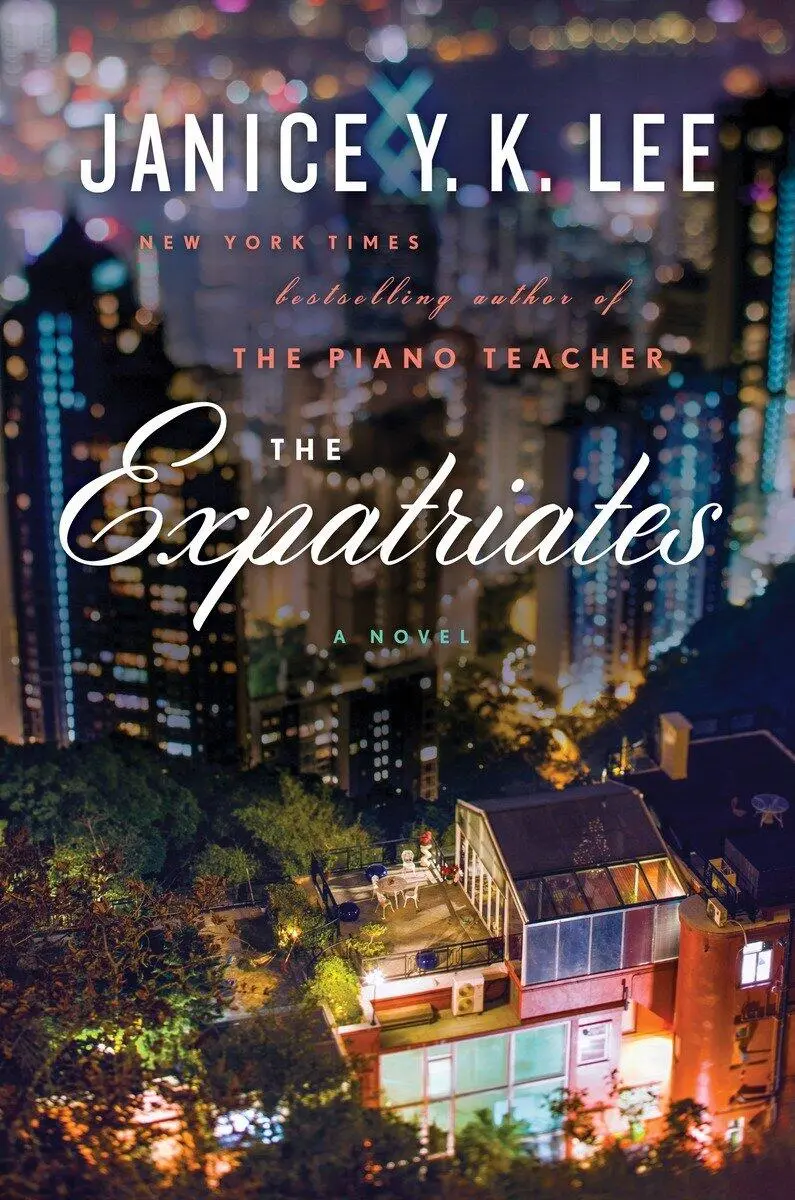
- Название:The Expatriates
- Автор:
- Издательство:Viking
- Жанр:
- Год:2016
- ISBN:нет данных
- Рейтинг книги:4 / 5. Голосов: 1
-
Избранное:Добавить в избранное
- Отзывы:
-
Ваша оценка:
The Expatriates: краткое содержание, описание и аннотация
Предлагаем к чтению аннотацию, описание, краткое содержание или предисловие (зависит от того, что написал сам автор книги «The Expatriates»). Если вы не нашли необходимую информацию о книге — напишите в комментариях, мы постараемся отыскать её.
“
meets
.” —The Skimm
Janice Y. K. Lee’s New York Times bestselling debut,
, was called “immensely satisfying” by
, “intensely readable” by
, and “a rare and exquisite story” by Elizabeth Gilbert. Now, in her long-awaited new novel, Lee explores with devastating poignancy the emotions, identities, and relationships of three very different American women living in the same small expat community in Hong Kong.
Mercy, a young Korean American and recent Columbia graduate, is adrift, undone by a terrible incident in her recent past. Hilary, a wealthy housewife, is haunted by her struggle to have a child, something she believes could save her foundering marriage. Meanwhile, Margaret, once a happily married mother of three, questions her maternal identity in the wake of a shattering loss. As each woman struggles with her own demons, their lives collide in ways that have irreversible consequences for them all. Atmospheric, moving, and utterly compelling,
confirms Lee as an exceptional talent and one of our keenest observers of women’s inner lives.
The Expatriates — читать онлайн бесплатно полную книгу (весь текст) целиком
Ниже представлен текст книги, разбитый по страницам. Система сохранения места последней прочитанной страницы, позволяет с удобством читать онлайн бесплатно книгу «The Expatriates», без необходимости каждый раз заново искать на чём Вы остановились. Поставьте закладку, и сможете в любой момент перейти на страницу, на которой закончили чтение.
Интервал:
Закладка:
Daisy takes the packages and, looking uncomfortable but relieved, hugs her mom.
“Thanks, Mom,” she says.
“Go experiment with them,” Margaret tells her.
Her daughter leaves.
Margaret remembers when she was fully engaged with everything, before everything happened. Moms talked about everything and gave one another advice on what to do, what stage was coming up for their kids. She realizes now she has no idea what is going on with sixth-grade girls, what other things are going on.
When Margaret first got her period, she remembers, her mother showed her the pads and told her to rip the outside part off, wrap it in tissue, and then flush the cotton down the toilet. She did that for a while before she realized that no one else did. These are all our little mysteries, she thinks.
Her phone buzzes on the counter. Her messages are coming in now on her new phone. There’s an e-mail from Mr. Park of the Seoul police.
“Please call,” he writes. “I need some information from you. There is new development.”
Her heart stops.
Hilary
HILARY IS LIVING her life more and more online. With the message boards, Facebook, and e-mails, she doesn’t need to go out for social interaction. And if she needs anything physical, she sends Puri and Sam out to get it, often with photos printed from the Internet of the exact kind of coffee or the brand of bread she wants, so they don’t bring back the wrong thing. She pores over adoption boards, infertility boards, expat boards; it is as if she wants to hear advice only from people she has never met and knows nothing about. Maybe she will migrate her life to a virtual world, where she will exist only as finger taps on a keyboard, a ghostly being made up of pithy comments and occasional snapshots. Anyway, she only really ever goes out to see Olivia now. Without work, without a husband, she has faded into the background. She never realized how much of her life was lived through David, through being married and being a couple. When she thinks of whom she would want to see, she cannot think of anyone, save Olivia. And apparently no one is very interested in seeing her either, as her phone remains silent and her e-mail inbox fills up only with sale notifications and reminders of club dinners.
She has heard of people being dropped after divorce or separation, but it’s still surprising to her. It’s not as if she thought she had so many friends, but it is shocking to realize that the world she thought she had constructed around her was so tenuous. Perhaps it’s because she doesn’t have children. She’s seen the close bonds that women with children form with one another, and that’s something she’s been shut out of completely. What is left? she wonders. Family. Is that it? And hers is so small. Her mother calls her dependably, in between taking care of her father, who descends ever further into dementia. And also, she’s been thinking about what a husband is. David used to be family, but now he’s the enemy. She understands now the thin line between love and hate. Casual bonds are flexible, can be attenuated without destruction. Not so the fierce close ones.
When she got on Facebook for the first time, she was struck by how these hordes of middle-aged people had taken on this medium that seemed to be for the young, and made it their own. They posted photos of their thickening, graying selves with self-deprecating comments, boasted about their work achievements, introduced babies and grandbabies, corralled people to reunions. Scrolling through her two hundred friends, she is amazed by the affection she feels for all these people who represent so many different times in her life.
Is this a sign that you’ve given up? When you spend all your time thinking of the past? She’s made the mistake of contacting people after going through their photo albums and feeling a brief, unreal intimacy. She writes inappropriately close things like “Remember in high school when we skipped science third period and went to Union Square?” and she gets back a puzzled, reserved response like “Hilary Krall, I haven’t seen you in so long. You look great.” And she deletes the entire exchange out of embarrassment, because, of course, they hadn’t spent hours remembering shared time and feeling close and they probably think… what do they think? The truth, most likely. That she’s in a bad relationship and in a bad place and looking for something, anything, that might get her out. People post pictures of their best times, but it’s not so hard to see past the smiling faces.
Funny how people really don’t change that much. She sees one woman who was always quirky and alone, even in high school. A misfit, to use an unkind high school word. This woman’s loneliness and her growing madness are so palpable it’s uncomfortable. It’s all there in her page full of unanswered questions to friends and family, reminiscences of past injustices, unfocused shots of her pet birds, her disheveled bedroom. Hilary clicks through a photo album, tries to compile an acceptable life for this woman, cannot.
How is it that life is so fragile? It’s not just life itself, and mortality; it’s more how a perfectly conventional-seeming life can collapse in a few short weeks. Several months ago, Hilary felt she was leading a normal life, and while she isn’t really mourning the loss of what was, after all, an imperfect life, there is still grief for the person she once thought she was. She feels vulnerable, a newborn trying to fashion a new life in the wake of all that has happened. She is moving toward the future but uncertainly, and without grace, she feels.
A moth blunders onto her screen.
She freezes.
“MOTHERFUCKER!” she screams, so loudly she surprises herself. It feels good. “MOTHERFUCKING MOTHERFUCKER!”
She remembers that Puri has gone out, to “market,” as she likes to say, using the word as a verb. Hilary is alone at home. She can scream as loudly and as long as she wants.
She screams it one more time, slamming down her laptop on the beastly, wormlike insect, smushing it between the screen and the keyboard. Then she puts her head down on her arms and starts to cry, big, gulping sobs that shake her body and wrench her lungs, wet the desk beneath her elbows. Has she cried before this? Of course, she hasn’t. It was a point of pride between her and her mother over Christmas break in Bangkok. Their family didn’t show feelings like that. They were stoics, proud in their impassivity.
She sobs on. Has something been taken from her? She doesn’t know. Was it a life she wanted? Did she want the husband, the child? Or was it something she had just been programmed to think?
Something showy about crying like this, alone. She starts to feel foolish, crying so loudly, and tries to stop. She succeeds, sits on her chair, feeling the stillness, feeling her body heave up and down as her breath regulates.
Julian.
She wants to see Julian. She is a better person when she’s with him. She’s thinking of others. He gets her out of herself. Julian.
She opens the computer, wipes off the remains of the moth with a tissue. Then she clicks her way back to the thread about her and Julian and begins to write. HappyGal to the defense.
Mercy
BEING WITH HER MOTHER makes her thirteen all over again. But her mother has changed too. Their relationship keeps teetering and swinging back and forth, unsteady, reshaping itself with every awkward exchange.
This is not a normal visit. Her mother has not left the United States for at least twenty years. Mercy thinks she probably had to get a passport to come here. So some planning happened.
Her mother has left her father, it seems. Something about gambling debts, and the theft of her nest egg, her gae-don , the Korean women’s tradition of lending money to one another at monthly meetings, and also something, muttered darkly, about other women.
Читать дальшеИнтервал:
Закладка:
Похожие книги на «The Expatriates»
Представляем Вашему вниманию похожие книги на «The Expatriates» списком для выбора. Мы отобрали схожую по названию и смыслу литературу в надежде предоставить читателям больше вариантов отыскать новые, интересные, ещё непрочитанные произведения.











Обсуждение, отзывы о книге «The Expatriates» и просто собственные мнения читателей. Оставьте ваши комментарии, напишите, что Вы думаете о произведении, его смысле или главных героях. Укажите что конкретно понравилось, а что нет, и почему Вы так считаете.