Janice Lee - The Expatriates
Здесь есть возможность читать онлайн «Janice Lee - The Expatriates» весь текст электронной книги совершенно бесплатно (целиком полную версию без сокращений). В некоторых случаях можно слушать аудио, скачать через торрент в формате fb2 и присутствует краткое содержание. Год выпуска: 2016, Издательство: Viking, Жанр: Современная проза, на английском языке. Описание произведения, (предисловие) а так же отзывы посетителей доступны на портале библиотеки ЛибКат.
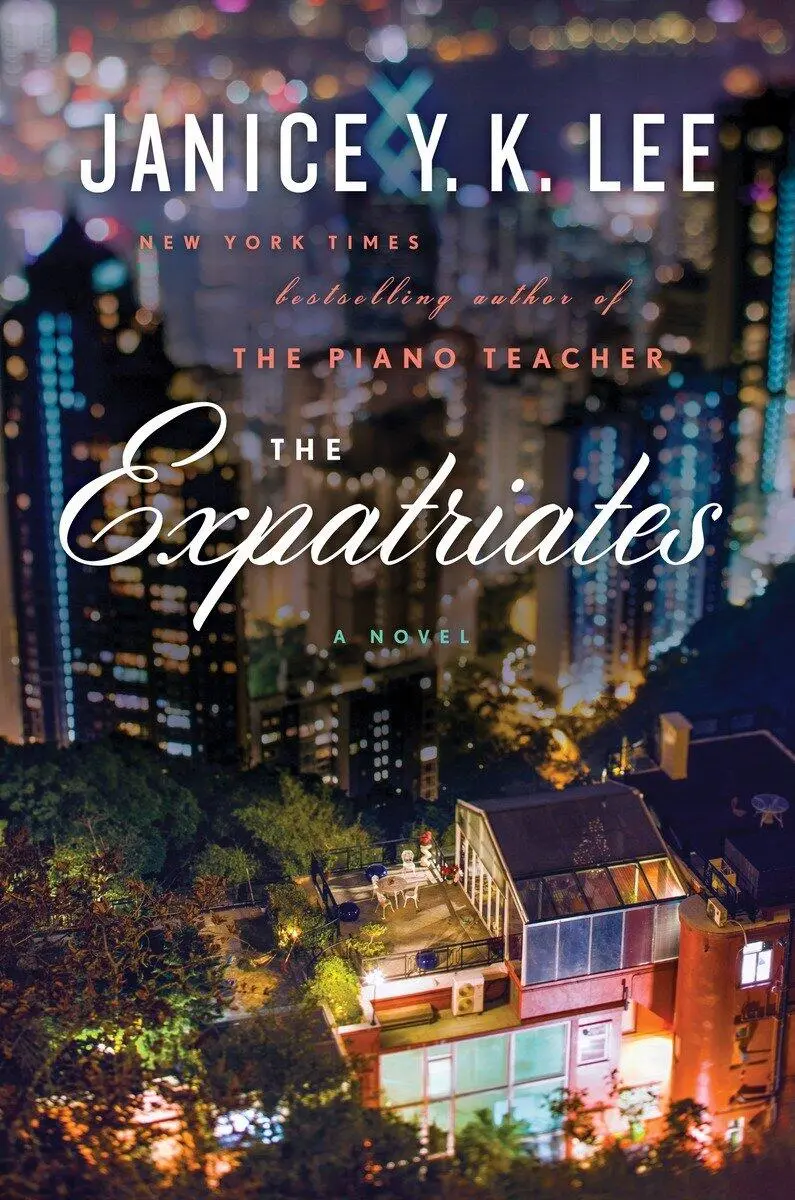
- Название:The Expatriates
- Автор:
- Издательство:Viking
- Жанр:
- Год:2016
- ISBN:нет данных
- Рейтинг книги:4 / 5. Голосов: 1
-
Избранное:Добавить в избранное
- Отзывы:
-
Ваша оценка:
The Expatriates: краткое содержание, описание и аннотация
Предлагаем к чтению аннотацию, описание, краткое содержание или предисловие (зависит от того, что написал сам автор книги «The Expatriates»). Если вы не нашли необходимую информацию о книге — напишите в комментариях, мы постараемся отыскать её.
“
meets
.” —The Skimm
Janice Y. K. Lee’s New York Times bestselling debut,
, was called “immensely satisfying” by
, “intensely readable” by
, and “a rare and exquisite story” by Elizabeth Gilbert. Now, in her long-awaited new novel, Lee explores with devastating poignancy the emotions, identities, and relationships of three very different American women living in the same small expat community in Hong Kong.
Mercy, a young Korean American and recent Columbia graduate, is adrift, undone by a terrible incident in her recent past. Hilary, a wealthy housewife, is haunted by her struggle to have a child, something she believes could save her foundering marriage. Meanwhile, Margaret, once a happily married mother of three, questions her maternal identity in the wake of a shattering loss. As each woman struggles with her own demons, their lives collide in ways that have irreversible consequences for them all. Atmospheric, moving, and utterly compelling,
confirms Lee as an exceptional talent and one of our keenest observers of women’s inner lives.
The Expatriates — читать онлайн бесплатно полную книгу (весь текст) целиком
Ниже представлен текст книги, разбитый по страницам. Система сохранения места последней прочитанной страницы, позволяет с удобством читать онлайн бесплатно книгу «The Expatriates», без необходимости каждый раз заново искать на чём Вы остановились. Поставьте закладку, и сможете в любой момент перейти на страницу, на которой закончили чтение.
Интервал:
Закладка:
When her children find her there, it is six, and dinner is on the table. An hour has gone by, and she doesn’t know how. They come and tell her that dinner is ready.
When she gets to the kitchen, she feels even more removed, as if she is visiting her own home. The food there is unrecognizable in an odd way, as if her recipes have been refracted through a wavy glass, which they have, in a way, and come out into an alternate universe. Essie is wonderful, but she is from the Philippines and not native to spinach salads and grilled salmon, so they always come out a little tweaked, with too much honey in the teriyaki or not enough dressing on the salad, so it’s dry and tasteless. She is making approximations of the dishes. If Margaret lived in the United States, she would be cooking, her dishes would be her own, and her children would know how they were supposed to taste in their own home. She picks at the salad now, discovers a stray cocktail onion, randomly added, and puts her fork down in defeat. The children eat their salmon and chatter about the news at school, how someone is having a laser tag party, how a girl was giving away candy on the bus to make friends. Essie is telling her something about the washing machine. It’s all white noise. Clarke calls, Daisy answers, and he says he’ll be home by eight and to leave him some salmon. She floats above herself and sees herself, an American woman in Hong Kong with her two children in the kitchen, eating dinner. A phantom child, missing, hovers at the edges.
Doesn’t every city contain some version of yourself that you can finally imagine? In southern California, near where she went to college, it was driving barefoot in some old station wagon through a cool, damp night, drawling surfer boy by your side, going to Ralph’s to buy beer and aluminum folding chairs for a beach bonfire. The feel of the car pedal ridged smoothly against your sand-buffed foot. In New York, where she was a young working woman, it was walking down a chilly fall sidewalk with a soft paper cup of hot coffee in your hand, multicolored scarf wound three times around your neck, on your way to work in a Midtown skyscraper with steel elevators. Paris, sitting knees-up on a windowseat with a glass of red wine, looking out at something very old and beautiful. That was the thing about this strange afterlife here in Hong Kong: She doesn’t have a version of herself without G. She doesn’t know what the image is of what she is supposed to be. She cobbles one together, enough to live out the day, but she needs a more permanent, whole version, one with a possible, all-encompassing life, a picture, so that she can begin to try living again.
Hilary
“LAVENDER,” her mother says.
“What?” Hilary says, absentmindedly scrolling through the Examiner website, looking at local San Francisco news. She is on Skype with her mom.
“Lavender is as good as cedar, and smells better.”
“Oh, for the moths?”
“Yes, apparently it’s the new thing, or maybe it’s the old thing.”
“I’ll give it a try. Nothing else is working. In an oil or dried, like potpourri?” She clicks over to expatlocat. Clicks on Message Boards. Time to see if the troll is back.
Her mother talks about lavender, and she scrolls down the headers: “Husband traveling too much?” “Looking for dog groomer,” “My baby prefers the helper to me!” All the usual travails of living in Asia. She finds the thread with her story, clicks through, sees no new posts, breathes a silent sigh of relief.
“Mom, I have to go,” she says, glancing at the clock. “I’m supposed to go on a walk with Olivia.”
She meets Olivia at the base of Tai Tam Reservoir Road, where they will perambulate through the country park. Hong Kong is full of these parks and trails, green and wooded, a surprise to newcomers. Olivia brings her two dogs, Xena and Filly, golden retrievers, unusual for Hong Kong because of their size. It is only because she has a garden at home that she can keep them. The air is crisp and sweet, a perfect March day.
They kiss on the cheek. Olivia drinks elegantly from her water bottle, face shaded by an enormous visor. “So how are you?” she asks.
“I feel beset by the world,” Hilary tells her. “I have these moths at home. It’s like a plague of locusts, and they’re constantly dying everywhere. And this thing with Julian. And David…”
“Yes, what has become of our David?” Olivia raises an eyebrow. She has never mentioned the time she almost said something over lunch at the club, but her complete lack of surprise is a mild rebuke in itself.
“Apparently he’s been seen around town with a young girl.”
“So unimaginative,” Olivia says. “Why are they always so predictable?”
“Have you seen him?” Hilary asks.
“Absolutely not! And I would freeze him out if I did!” Olivia is outraged at the suggestion.
“I know he and Sebastian are friendly, and they have the work connection.”
“I’ve told Sebastian he’s not allowed to speak to him.”
They walk on in silence. Ahead of them, the dogs sniff a bush. The road becomes steep, and they breathe a little harder.
“And this thing happened,” Hilary says. She hadn’t been sure she was going to tell anyone about it, but she wants to tell someone, to get the stone off her chest, to quiet the clanging in her head.
“A thing…”
“A text message.”
“Oh, from whom?”
“From David. But it wasn’t meant for me.”
It had dinged into her phone at a quiet moment.
“I came so hard I’m still jelly.”
David has never texted or e-mailed her, except for that one e-mail when he said he wasn’t coming to Bangkok. It had been something of a principle. He always calls. Spouses should talk, not type, he had said. She had found it old-fashioned but kind of charming.
So what kind of Freudian slip makes a man text something like that to his estranged wife, whom he never texts on principle? Does he hit the Write button and then type his wife’s name in by mistake because he has been thinking of her? Does his girlfriend’s name also start with an H? Do you try so hard to avoid doing something that you automatically do it? Does he even know what he’s done? Or is he such jelly he can’t even think straight. This, she thinks with sardonic distaste at his sudden discovery. A man, revitalized, with a new life found. Their sex had become dutiful when they realized having children was going to be a bit more difficult. He had always been game, but she had felt it hanging over them.
The text had come in on a Saturday afternoon, so she had been left to conjure up an entire day for him and this woman. Breakfast, back to bed, lunch, then maybe he went to the gym and wrote that text from there?
Olivia is suitably horror-stricken, and yet, she says with a little bit of admiration, “Jesus. I never knew David had it in him.”
“I know!” Hilary knows exactly what she means. And the fact that she can feel this makes her think that the marriage was so over that what he did was not so bad.
“Do you hate him?” Olivia asks. “ ’Cause I feel like you don’t. At least, not enough.”
Hilary hesitates, opens her water bottle, sips some water. “I don’t know,” she says. “I kind of hate him, but I’m envious of him too, in a way. If you know what I mean. It’s like the moment you decide to leap, you leave everything behind.”
“I do know what you mean,” Olivia says, adjusting her hat. “You’re too kind, though.”
They walk on, the only sound the panting of the dogs.
“And what’s happening with Julian?” Olivia asks.
“Nothing,” Hilary confesses. “But I think it’s going to happen. It’s time.”
“That’s big!” Olivia claps her hands. “Have you told the orphanage anything about David?” She pauses. “Never mind. That’s one of those things that you realize are impossible once you think them through.”
Читать дальшеИнтервал:
Закладка:
Похожие книги на «The Expatriates»
Представляем Вашему вниманию похожие книги на «The Expatriates» списком для выбора. Мы отобрали схожую по названию и смыслу литературу в надежде предоставить читателям больше вариантов отыскать новые, интересные, ещё непрочитанные произведения.









Обсуждение, отзывы о книге «The Expatriates» и просто собственные мнения читателей. Оставьте ваши комментарии, напишите, что Вы думаете о произведении, его смысле или главных героях. Укажите что конкретно понравилось, а что нет, и почему Вы так считаете.