Janice Lee - The Expatriates
Здесь есть возможность читать онлайн «Janice Lee - The Expatriates» весь текст электронной книги совершенно бесплатно (целиком полную версию без сокращений). В некоторых случаях можно слушать аудио, скачать через торрент в формате fb2 и присутствует краткое содержание. Год выпуска: 2016, Издательство: Viking, Жанр: Современная проза, на английском языке. Описание произведения, (предисловие) а так же отзывы посетителей доступны на портале библиотеки ЛибКат.

- Название:The Expatriates
- Автор:
- Издательство:Viking
- Жанр:
- Год:2016
- ISBN:нет данных
- Рейтинг книги:4 / 5. Голосов: 1
-
Избранное:Добавить в избранное
- Отзывы:
-
Ваша оценка:
The Expatriates: краткое содержание, описание и аннотация
Предлагаем к чтению аннотацию, описание, краткое содержание или предисловие (зависит от того, что написал сам автор книги «The Expatriates»). Если вы не нашли необходимую информацию о книге — напишите в комментариях, мы постараемся отыскать её.
“
meets
.” —The Skimm
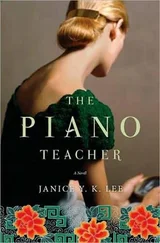
Janice Y. K. Lee’s New York Times bestselling debut,
, was called “immensely satisfying” by
, “intensely readable” by
, and “a rare and exquisite story” by Elizabeth Gilbert. Now, in her long-awaited new novel, Lee explores with devastating poignancy the emotions, identities, and relationships of three very different American women living in the same small expat community in Hong Kong.
Mercy, a young Korean American and recent Columbia graduate, is adrift, undone by a terrible incident in her recent past. Hilary, a wealthy housewife, is haunted by her struggle to have a child, something she believes could save her foundering marriage. Meanwhile, Margaret, once a happily married mother of three, questions her maternal identity in the wake of a shattering loss. As each woman struggles with her own demons, their lives collide in ways that have irreversible consequences for them all. Atmospheric, moving, and utterly compelling,
confirms Lee as an exceptional talent and one of our keenest observers of women’s inner lives.
The Expatriates — читать онлайн бесплатно полную книгу (весь текст) целиком
Ниже представлен текст книги, разбитый по страницам. Система сохранения места последней прочитанной страницы, позволяет с удобством читать онлайн бесплатно книгу «The Expatriates», без необходимости каждый раз заново искать на чём Вы остановились. Поставьте закладку, и сможете в любой момент перейти на страницу, на которой закончили чтение.
Интервал:
Закладка:
“You know,” he says, “don’t be coy. I’ve just laid out my life in front of you, and you haven’t told me anything.”
“I didn’t know we were sharing so much.”
“Come on,” he says. “Throw me a bone.”
“I’m not your escape hatch,” she says. It’s the only smart thing she’s said all morning. “Your bad behavior doesn’t mean that you get to blame it on me later.”
He looks up, startled. Maybe he’s seeing her for the first time. “I’m not doing that,” he says.
“Good,” she says. “Then we can have a conversation.”
She reaches over and covers his hand with hers. “Are you ready?”
Margaret
AT THE LUNCH BUFFET, picking up melon and prosciutto with silver tongs, Margaret hears a familiar voice. She looks up to see Frannie Peck, whose kids go to TASOHK as well. They greet each other, and Frannie asks if they want to get dinner at the seaside restaurant tonight. There is no gracious way to demur, so Margaret agrees, and they both go back to their tables.
After a few hours by the pool, Margaret goes back to their room, where Clarke has booked her a massage in their private garden. There, amid frangipani and bougainvillea, an embarrassment of tropical lushness, a quiet, dark-haired woman spends ninety minutes moving Margaret’s muscles around, in an air temperature that miraculously seems to be the same as her own body’s.
It is so indulgent and gorgeous and the masseuse so docile, so servile (she won’t even look at Margaret as she sets up the table), that Margaret spends the entire time — lying on soft terry cloth, her face looking down through the hole cut out of the table onto a thoughtfully placed bowl with a floating lotus flower — feeling absolutely awful.
Is it any wonder, she thinks, that expats become like spoiled rich children, coddled and made to feel as if their every whim should be gratified? These trips to islands where the average annual wage is the cost of a pair of expensive Italian shoes cast the Western expatriate in the role of the ruler. The locals are the feudal servants, running to obey every whim. These small empires, these carefully tended paradises of sand and palm, shelter the expatriates from the brutal realities just outside the guarded gates.
The woman softly asks her to turn over onto her back. She drapes the towel decorously over Margaret’s torso, all the while looking away. Margaret wonders where she lives, probably in some disheveled bunkroom in a hotel dorm with other staff. What must she think of the cool, stiff hotel rooms she visits for her work, with their Bose stereos and private plunge pools? They must seem a strange, alien fantasy land. Margaret saw staff quarters in another hotel once, when she went for a tour of the organic garden, and there through a fence, where the foliage had not grown quite thick enough, she saw some ramshackle buildings with laundry hanging out to dry. She asked what those buildings were and was given an abashed answer by the gardener, suddenly embarrassed after proudly showing off his work. Do you live there? she asked before she could stop herself, and he crumpled into an impoverished island native, transformed from the career horticulturist he had just been. She was ashamed, of course. What else could she have been — an apologist for the way things were and how she could not change them.
She drifts off into a light sleep and is wakened by the sound of the woman getting her things together.
“Finish,” she says softly. Margaret sits up and wraps a towel around herself, hair falling disheveled around her face. She is drowsy and disoriented.
“Thank you,” she says. “That was wonderful.”
She moves to the bed and dozes until she hears Clarke and the children at the door.
They come in with excited stories of crabs and sandcastles — they are still young, these children, these remaining children of hers. They are tentative with their happiness, as if afraid it will upset her equilibrium. It makes her sad that their emotional calibrations are so accurate and so attuned to hers. Any overt happiness immediately tips over into guilt and anger because G is not here, and what right do they have to any happiness? Still, she cannot ruin their lives as well. She smiles and listens to their stories, absently patting Philip’s head as she urges him to shower so they can get ready for dinner.
Frannie Peck is one of those small, pert blond women who get married, have two children, and, essentials accomplished, then proceed to live their lives with maximum efficiency, going to Pilates and Zumba on alternating weekdays and running bake sales and school fund-raisers with cheery aplomb. Margaret would think no more of her, except that she remembers driving past her one day going in opposite directions on Repulse Bay Road, when the traffic was slow, and seeing Frannie behind the wheel, shoulders shaking as she sobbed. She was alone. This one image gives Frannie unexpected depth for Margaret. When they meet down by the beach, she is wearing a white sundress on her compact body, freckled shoulders rosy from the sun. They send the children to the beach to play while they order dinner.
“Did you have a good day?” Frannie asks. She has one of those unexpectedly raspy voices.
“Really relaxing,” Margaret replies.
Frannie’s husband, Ned, kisses Margaret on both cheeks, a European custom that has, for some reason, been hijacked by every American expatriate in Hong Kong. Margaret is quite certain that none of these people ever did the two-cheek greeting prior to stepping on Asian shores, and it’s funny that they all adopt it without question.
Is it cynical of her to think this way? As she’s grown older, Margaret has developed the bad habit of sizing people up immediately and passing judgment. This person is a small person, she can tell from the wrinkled brow when the person asks about a mutual acquaintance, worried whether she has been one-upped without knowing. This one seeks validation and so is always rushing about doing a million things that don’t add up to anything. Another person doesn’t understand why she’s not relevant. With the exception of that one weeping moment Margaret witnessed, however, Frannie Peck remains a cipher. She seems like a wide, shallow plate, holding nothing except the reflection of others.
Frannie tells an amusing story about a previous vacation, in Sri Lanka with another family, where the villa had been so remote there was no Internet and no cell signal. The husbands all went nuts without access to their e-mail, but the wives refused to let them leave, so they compromised by hiring a driver to drive the two hours into the city with a bag full of phones they had turned on so they would pick up the e-mails when in reach of a signal.
“You should have seen these men,” Frannie says. “When the car returned, they rushed it like tweens at a Justin Bieber concert.”
So the dinner goes on, with lazy gossip and glasses of wine to soften reality. The children eat satay and pad thai, and the adults eat spicy prawns with basil and marvel that they are on a beach on the Andaman Sea doing such a thing.
The hotel has set up paper lanterns on the beach, maybe a Thai custom, maybe something they do for tourists. It doesn’t matter, because they are beautiful. A hotel staff girl is with Daisy and Philip, helping them light their wicks and puff up their lanterns. Daisy and Philip stand on the sand, backs to their watching parents. They each hold a lantern and hold it up high, as if it were an offering. Soon the lanterns float off their hands and sail toward the dark night. There are dozens of lanterns in the sky now, burning off their tiny light, drifting away until they are no longer visible.
Daisy turns around with a bright face. “I made a wish, Mama!” It’s uncharacteristic, her use of the babyish “mama,” and it makes Margaret suddenly tear up, not wanting to guess what that wish might have been. She thinks, Where is G now? His family is here, in this burnished pocket of paradise, on this sandy beach, lighting lanterns, without him. If he could see them now, would he feel betrayed? She looks at Daisy and Philip standing, watching their lanterns soar, and feels dizzy from the hole in her heart.
Читать дальшеИнтервал:
Закладка:
Похожие книги на «The Expatriates»
Представляем Вашему вниманию похожие книги на «The Expatriates» списком для выбора. Мы отобрали схожую по названию и смыслу литературу в надежде предоставить читателям больше вариантов отыскать новые, интересные, ещё непрочитанные произведения.











Обсуждение, отзывы о книге «The Expatriates» и просто собственные мнения читателей. Оставьте ваши комментарии, напишите, что Вы думаете о произведении, его смысле или главных героях. Укажите что конкретно понравилось, а что нет, и почему Вы так считаете.