Janice Lee - The Expatriates
Здесь есть возможность читать онлайн «Janice Lee - The Expatriates» весь текст электронной книги совершенно бесплатно (целиком полную версию без сокращений). В некоторых случаях можно слушать аудио, скачать через торрент в формате fb2 и присутствует краткое содержание. Год выпуска: 2016, Издательство: Viking, Жанр: Современная проза, на английском языке. Описание произведения, (предисловие) а так же отзывы посетителей доступны на портале библиотеки ЛибКат.
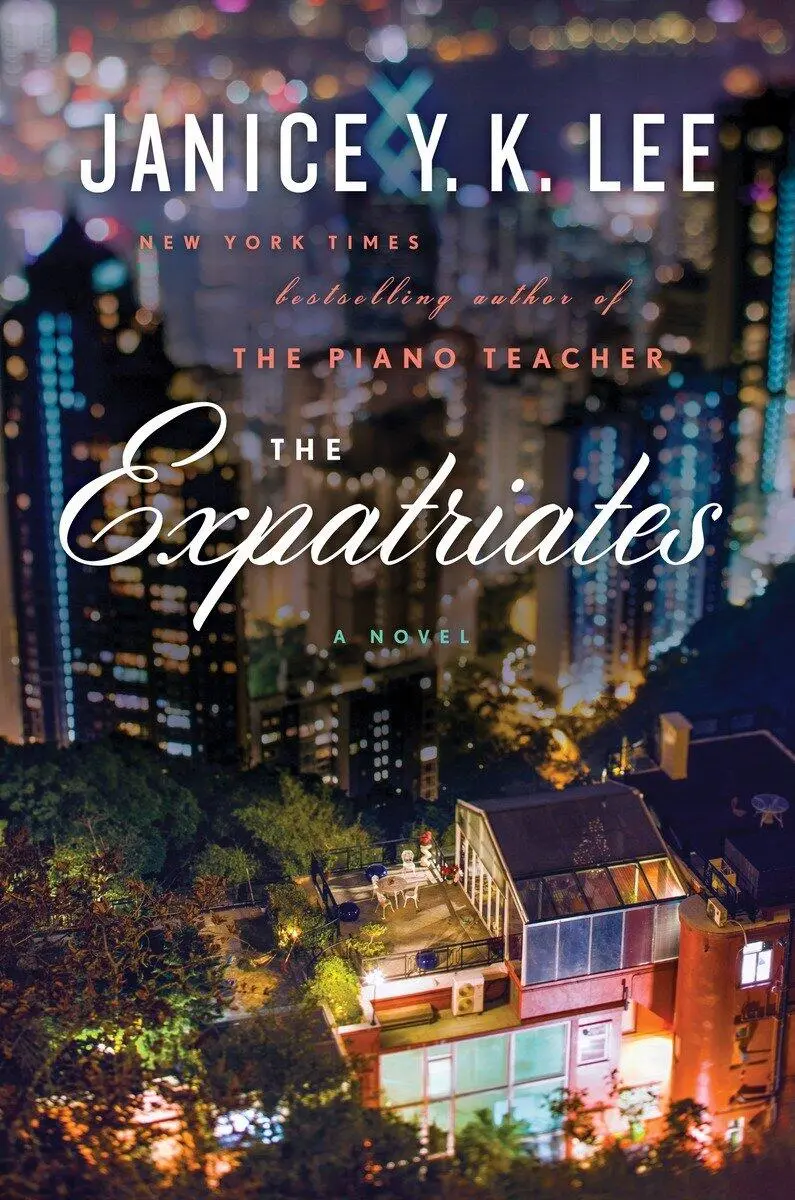
- Название:The Expatriates
- Автор:
- Издательство:Viking
- Жанр:
- Год:2016
- ISBN:нет данных
- Рейтинг книги:4 / 5. Голосов: 1
-
Избранное:Добавить в избранное
- Отзывы:
-
Ваша оценка:
The Expatriates: краткое содержание, описание и аннотация
Предлагаем к чтению аннотацию, описание, краткое содержание или предисловие (зависит от того, что написал сам автор книги «The Expatriates»). Если вы не нашли необходимую информацию о книге — напишите в комментариях, мы постараемся отыскать её.
“
meets
.” —The Skimm
Janice Y. K. Lee’s New York Times bestselling debut,
, was called “immensely satisfying” by
, “intensely readable” by
, and “a rare and exquisite story” by Elizabeth Gilbert. Now, in her long-awaited new novel, Lee explores with devastating poignancy the emotions, identities, and relationships of three very different American women living in the same small expat community in Hong Kong.
Mercy, a young Korean American and recent Columbia graduate, is adrift, undone by a terrible incident in her recent past. Hilary, a wealthy housewife, is haunted by her struggle to have a child, something she believes could save her foundering marriage. Meanwhile, Margaret, once a happily married mother of three, questions her maternal identity in the wake of a shattering loss. As each woman struggles with her own demons, their lives collide in ways that have irreversible consequences for them all. Atmospheric, moving, and utterly compelling,
confirms Lee as an exceptional talent and one of our keenest observers of women’s inner lives.
The Expatriates — читать онлайн бесплатно полную книгу (весь текст) целиком
Ниже представлен текст книги, разбитый по страницам. Система сохранения места последней прочитанной страницы, позволяет с удобством читать онлайн бесплатно книгу «The Expatriates», без необходимости каждый раз заново искать на чём Вы остановились. Поставьте закладку, и сможете в любой момент перейти на страницу, на которой закончили чтение.
Интервал:
Закладка:

It was hard, almost impossible, to know when to leave Seoul. In the beginning, they thought they would stay until they found him, because what was the alternative? And then, when days turned into weeks and weeks turned into a month, she started worrying about Daisy and Philip, how they were just sitting in a hotel room. Her mother came over, and their extended family in Seoul had been wonderful. Once they found out what happened, they came to the hotel every day with expensive melons and chocolates and offered to take Daisy and Philip out so they wouldn’t be bored, although it made her too nervous when the children were out without her. So sometimes they would just take them to their homes, but communication was difficult, and the children were frightened. But she knew she couldn’t lock them in a hotel room forever. She tried to get the international school in Seoul to let them go to classes, but although they were sympathetic, they were unwilling to admit her children for an unknown amount of time.
“It would be very disruptive to our community,” said the administrator, “and of limited use to your own children.”
In this new world, everything was so raw, so blinding. The first time she took a shower, her mother forcing her, she soaped her skin and told herself, G is gone, G is gone. She washed her greasy hair, fingers slipping over her roots, and thought, G is not here, he will not be here when I emerge from the bathroom. She put on new clothes, realizing, I don’t know where G is, and I don’t know when I’ll know. Everything looked new and meaningless. She looked out the window of her hotel room and saw a beautiful moon against the dark buildings and wondered if she would ever find any pleasure in anything ever again.
In the meantime, she started working on a comprehensive description of what G had been wearing that day. It had been unseasonably warm, and he had on warm-weather clothes. What drove her nuts was that she knew the T-shirt and the shoes but she didn’t know which exact shorts he had been wearing. He had a few pairs that were very similar. He had two pairs of elastic-waist khaki pants and a pair from Target that had a button. He liked the elastic-waist pants more, because his little fingers were not yet very dexterous. His fine motor skills were not very good, and she had been told to let him play with pens and chopsticks to strengthen his hands. She didn’t know which ones he was wearing, because she couldn’t remember which ones she had packed. She wanted to call and ask Essie what was at home, but imagining the conversation exhausted her. She knew the T-shirt. It was yellow, long-sleeved, with the faded image of a green dinosaur eating leaves off a tree with I’M A VEGETARIAN on top in green letters. He had loved it, wearing it whenever he could. The shoes were velcro Weebok sandals she had bought online, and they were no longer available. She had printed out a picture of them from the website, with the “No longer in stock” message, because she wanted an image of them. Because this is what she can do. She can write things down or print things out so she has a record. She can make lists of what is missing. She can do these things so she doesn’t have to think of what she cannot do.
She then became seized by the idea of getting a duplicate outfit, so she scoured eBay and found the T-shirt, used, for $3.99 (although it was a 5T, not a 4T). Then she paid $35 in shipping to get it to Korea. She brought it to the police station in triumph.
“This is the T-shirt he was wearing,” she told Mr. Park, the sergeant who had been appointed to be her point person. He carefully took a photo and said he would add it to the file. She asked whether it would be helpful if she found the shoes he was wearing at the time, and Mr. Park looked at her sympathetically and shook his head no. The T-shirt was enough.
She had already given them the photo of her extended family at the restaurant earlier that day, but G was on the periphery and barely visible, even when she blew up that part of the picture. She became obsessed with the fact that she hadn’t taken any photos of the kids later in the day, and her with an eight-megapixel camera on her phone! Perhaps if they had had an accurate photo of what G looked like on the day he disappeared and they had released it to the public quickly, someone might have recognized him. And then she wanted to document Daisy and Philip, but she wanted to do it without frightening them. She knew if she told Clarke, he would discourage her, so one night, before they got in the shower, she asked them if she could take photographs of them.
They submitted in a way that frightened her. They didn’t want to, but they did, because they knew it was important to her and that it would be futile to say no. They seemed a little bit like abused children. She was causing them more trauma.
But. She couldn’t help herself. So, a catalogue of moles.
She had been thinking about if she found G two or three years later and he had changed a lot. What if she was unable to know for certain if it was him? Yes, of course, DNA, but in the immediate sense, the first moment when they showed him to her. She wanted to know right away. Children change so much. How to be sure? She came up with this. A mole catalogue.
She stood Daisy and Philip in the bathroom in their underwear and took photographs of their arms, their inner thighs, anywhere they had a birthmark or irregularity or mole. And then she labeled and filed them on the computer she had had Essie send to Seoul. Daisy had a large mole on her left inner thigh, and two close to one another on her right back shoulder. Philip had a scattering of them on his right arm, above his elbow. He had a scar above his right eyebrow. She had the photos on her computer, backed up, and in hard copies.
Of course, the ones she needed, she didn’t have. She couldn’t remember the details of G’s body. He must have had moles, but who noticed those kinds of things on a third child? She pored over old photos on her computer, trying to see what spots he had on his face, things that would not change even after years and years. But everything seemed so mutable, so temporary: eyebrows, hair, even the shape of his face. He could get fat, he could be unrecognizably skinny, depending on what type of environment he was in. He might be with a family who had just wanted a child and got him off the black market and spoiled him rotten. Or he might be in some terrible place, a surly street urchin or worse. She can only bring herself to read snippets of what happens to children who disappear, glancing off the terrible surface of what might be. Her therapist tells her to stop thinking about it.
But sometimes she’ll read in the paper that in China and India, children are kidnapped and maimed so that they become more compelling and effective beggars. In other countries, kids are taken for their organs, but those are usually the older ones, older than G. There’s the sex trade, of course. This is what she has to digest. G, her one-eighth Asian child, who actually could pass for Asian. They would never have taken light-haired Daisy, who looks white. Too much trouble, a foreigner’s child, too much media attention, potential for international conflict. But Daisy and Philip look white. G looks Asian. Only G had that one recessive gene pushed to the fore, that stubborn Asian DNA strand that burst when he was made, so that while he’s recognizable as her child — only one person has ever asked her if he’s adopted — he looks quite recognizably Asian. So he has dissolved into the fifty million other Korean people on the peninsula.
After she photographed Daisy and Philip and they went to bed, quiet and submissive, she realized that she was damaging them further and they needed more normalcy. She booked a flight for them to go back to Hong Kong the next day with her mother so they could go back to school. She and Clarke stayed on.
Читать дальшеИнтервал:
Закладка:
Похожие книги на «The Expatriates»
Представляем Вашему вниманию похожие книги на «The Expatriates» списком для выбора. Мы отобрали схожую по названию и смыслу литературу в надежде предоставить читателям больше вариантов отыскать новые, интересные, ещё непрочитанные произведения.











Обсуждение, отзывы о книге «The Expatriates» и просто собственные мнения читателей. Оставьте ваши комментарии, напишите, что Вы думаете о произведении, его смысле или главных героях. Укажите что конкретно понравилось, а что нет, и почему Вы так считаете.