Jane Gardam - Old Filth
Здесь есть возможность читать онлайн «Jane Gardam - Old Filth» весь текст электронной книги совершенно бесплатно (целиком полную версию без сокращений). В некоторых случаях можно слушать аудио, скачать через торрент в формате fb2 и присутствует краткое содержание. Год выпуска: 2006, Издательство: Europa Editions, Жанр: Современная проза, на английском языке. Описание произведения, (предисловие) а так же отзывы посетителей доступны на портале библиотеки ЛибКат.
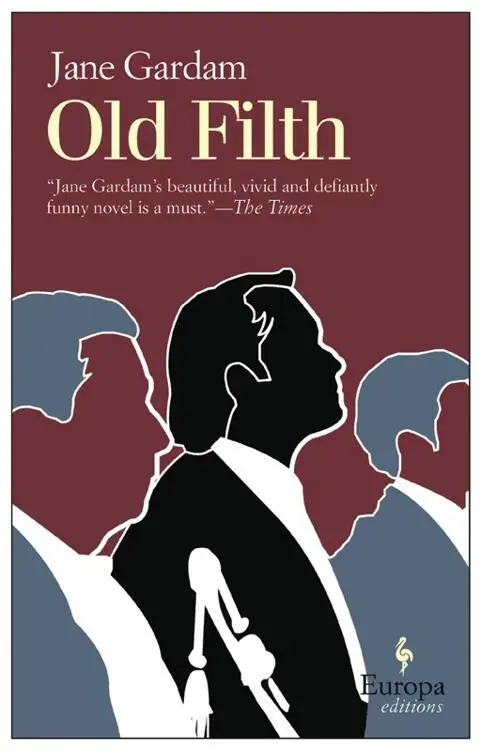
- Название:Old Filth
- Автор:
- Издательство:Europa Editions
- Жанр:
- Год:2006
- ISBN:нет данных
- Рейтинг книги:3 / 5. Голосов: 1
-
Избранное:Добавить в избранное
- Отзывы:
-
Ваша оценка:
Old Filth: краткое содержание, описание и аннотация
Предлагаем к чтению аннотацию, описание, краткое содержание или предисловие (зависит от того, что написал сам автор книги «Old Filth»). Если вы не нашли необходимую информацию о книге — напишите в комментариях, мы постараемся отыскать её.
Borrowing from biography and history, Jane Gardam has written a literary masterpiece reminiscent of Rudyard Kipling's
that retraces much of the twentieth century's torrid and momentous history. Feathers' childhood in Malaya during the British Empire's heyday, his schooling in pre-war England, his professional success in Southeast Asia and his return to England toward the end of the millennium, are vantage points from which the reader can observe the march forward of an eventful era and the steady progress of that man, Sir Edward Feathers, Old Filth himself, who embodies the century's fate.
Old Filth — читать онлайн бесплатно полную книгу (весь текст) целиком
Ниже представлен текст книги, разбитый по страницам. Система сохранения места последней прочитанной страницы, позволяет с удобством читать онлайн бесплатно книгу «Old Filth», без необходимости каждый раз заново искать на чём Вы остановились. Поставьте закладку, и сможете в любой момент перейти на страницу, на которой закончили чтение.
Интервал:
Закладка:
“Met?”
“At Liverpool? Off the old Portuguese tub?”
“Yes. Yes, I was—”
“I was forced to borrow your address book. I’m afraid it has fallen by the way. My uncles were very close to the Corps of Signals. And of course I have a phenomenal memory.”
“You should be a spy.”
“Thank you, but I am in gainful employment. It’s very good to see you, Feathers. Very nice clothes-brush. Do you want it?”
“Yes. Coleridge !”
“And by the way,” Albert Loss said at the car, the chauffeur towering above him, holding a brolly, “while I’m away in Hong Kong, do make use of the Royce.”
LAST RITES
Indigestion,” said the hotel to Claire over the telephone. “A very bad case of indigestion.”
“He said on the postcard a sprained ankle.”
“The indigestion followed. It was the prawns. Looked identical to a heart attack. He’s been in hospital. He’s back here again now recovering from the hospital. Can we get him for you? He’s out in the sun, well wrapped up. Who shall we say?”
“Will you say Claire? And that I had his postcard.”
“We were very glad of those postcards.”
“Hello,” said Filth, tottering in. “I was wondering if someone could find me a priest.”
The bar listened. The nice girl came and sat him in a chair. Dialling the number for him, handing him the phone, she said, “Sir Edward, the priest business was last week.”
“What? Hello? Claire? There are things I want to get off my chest. This episode was rather alarming. Some unfinished business. You know what I’m talking about.”
“I have no idea.”
“You and I and Babs.”
“What about us?”
“And Cumberledge?”
There was silence.
“Oh, long, long ago,” she said.
“But I need to tell someone, even so. What happened to your priest? The one in the church with all the marble babies?”
“Do you mean Father Tansy? I thought he was anathema to you.”
“Well, yes. He was. But I keep remembering him. Can you find him for me?”
“But you’re in Gloucestershire. And I hear you can’t walk and have had a suspected heart attack.”
“False alarm. Got over-excited reading the Gospels.”
“Say goodbye to her now, Sir Edward. We’ll bring you your lunch in the lounge. You still have to take care.”
“Goodbye, Claire. Thank you for ringing. I’ll ring again.”
The day wore on. He sat in remote reveries. They brought him tea.
Bloody good of them to have me back here, he thought. All thanks to Loss I can pay for it. Set me on my path. But I’ve worked for it myself, too. I’ve worked for my millions. Survived them too. Loss didn’t.
He began to doze and was woken by the nice girl and her grandmother with a bunch of asters. “You should keep off prawns,” said the grandmother. “After seventy you should keep off prawns. You never saw Queen Mary even look at a prawn.”
“It may have been the banana split,” said her granddaughter.
“I don’t eat bananas,” said Filth.
Next day came a letter from Claire in her trailing bright blue handwriting.
Dear Teddy,
It so happens that Father Tansy is coming to your part of the world to visit his Boys’ Club in Falmouth. Babs will be with him. It all seems prophetic. I have told them where you are.
As to the matter of our rotten childhood, old cousin, you should forget it. I have never let what we did trouble me, even in dreams. I had no difficulty with it at the time and I’ve never felt the need to speak about it since. Oliver, for instance, does not know, and neither did my late-lamented husband. What would now be called “The Authorities” spirited us all away so fast after the death that it didn’t get much into the papers. Now, it would have dominated the telly for a month.
D’you know that I met Cumberledge again? It was only a few years ago. As a matter of fact, it was the day you were staying with us, when Oliver took me to Cambridge for tea with some grandee from his old college, a Dean who’s still in residence. Someone who was kind to Oliver when he was up. Well, all the time we were in the old boy’s rooms I felt puzzled, as if I knew him. He seemed quite unaware of me. My surname has changed and it was three-quarters of a century on and Oliver had never mentioned that I’d been a Raj Orphan. Oliver told me his name on the way home and after you’d all gone I sat down here in High Light and wrote him a letter, hoping I wasn’t stirring up something best forgotten. We struck up a thoroughly boring correspondence.
I’m not sure whether I’m pleased or not that he never referred to the murder. Well yes, of course I’m sure. I was not pleased. I should have liked to hear what he thought we’d all been at. I often think, when I’m reading in the papers about a murder, that the murderer is the last person to be aware of the crime. Sometimes he is not aware of it for years, I’d guess. Well, you’ll know all about that. Murderers are the possessed.
I’m not saying there’s no such thing as guilt. And wickedness.
I’m saying there is confusion and derangement in the mature murderer. What is so interesting about our murder is that there was neither. No confusion. No derangement. We three — not Cumberledge — were absorbed in the process of handing over responsibility to the powers of darkness whom we had met as children, and who had met us. We were thoroughly engaged, us three. Still untamed. We were of the jungle.
Poor Babs — she’s probably the best of us — went mad. She’s maddish most of the time. But she’s still Babs. Ma Didds was cruellest of all to her. Stopped her singing. Gagged her mouth. Babs became castrated. Ugly in mind, body and estate. Grows uglier now. And yet I remember her dazzling for a while when she was in the War.
You, dear Teddy, Ma Didds feared because of your height and strength and prodigious good looks. Oh, how unfair are our looks! Didds knew she could never make you ugly. She worked on your stammer. She was afraid of your silences. You were not like a child then. You are more of a child now. Betty came and stripped the years away from you in what looked like the perfect marriage. She never asked for more than you could give. Others gave her passion. You were a saint about Veneering. You were a wall of alabaster. You saved each other. You and Betty. I’d guess, neither of you ever spoke of it.
But nobody ever loved you like I did, Teddy.
Yet I was the coldest of us. I was the harshest. I was the actress. I was the little pretty one who never did wrong. I was the one who suggested the murder.
Cumberledge never made a decision in his quiet life (I don’t know how he got so high up in the Army before he was wafted into Cambridge). He was utterly passive — all his weeping and screaming as she approached him with the whip (I am writing down what I have never before even been able to think about). But something deep in him remained untouched by her. I bet he became amiable and soppy. A man always falling in love.
You, Teddy, were horribly touched by her. You became no good at love. I don’t think you ever had many friends at school. I’m the same, if I’m honest. I can’t love. I’m all charm. Babs needs love. Needs it as her daily bread. Will try for it anywhere. But she repels, the poor old thing. Doesn’t wash now — that’s a bad sign. It won’t help her with Father Tansy. She says she once had an
affaire
with Cumberledge. All fantasy.
D’you know, the one who needed love most was Ma Didds. All the hatred was love gone wrong. What did she ever get from old Pa Didds and all that chapel?
Not that as children we could have been expected to know, but I had an inkling when she took me on her smelly old lap and crooned over me and gave me buttered bread. I knew already where my bread was buttered. I’d been sent away younger than any of you, and my parents were faceless; but I was, and am, the toughest. I’m very glad I thought of the murder. I thoroughly enjoyed it. So don’t fret. It was you who struck the blow, dear Teddy, but they can’t hang you now. Love from Claire
Читать дальшеИнтервал:
Закладка:
Похожие книги на «Old Filth»
Представляем Вашему вниманию похожие книги на «Old Filth» списком для выбора. Мы отобрали схожую по названию и смыслу литературу в надежде предоставить читателям больше вариантов отыскать новые, интересные, ещё непрочитанные произведения.





Обсуждение, отзывы о книге «Old Filth» и просто собственные мнения читателей. Оставьте ваши комментарии, напишите, что Вы думаете о произведении, его смысле или главных героях. Укажите что конкретно понравилось, а что нет, и почему Вы так считаете.