Jane Gardam - Old Filth
Здесь есть возможность читать онлайн «Jane Gardam - Old Filth» весь текст электронной книги совершенно бесплатно (целиком полную версию без сокращений). В некоторых случаях можно слушать аудио, скачать через торрент в формате fb2 и присутствует краткое содержание. Год выпуска: 2006, Издательство: Europa Editions, Жанр: Современная проза, на английском языке. Описание произведения, (предисловие) а так же отзывы посетителей доступны на портале библиотеки ЛибКат.
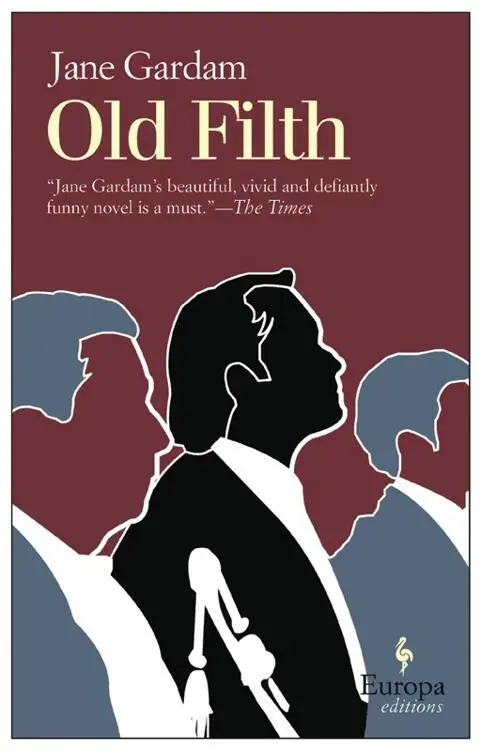
- Название:Old Filth
- Автор:
- Издательство:Europa Editions
- Жанр:
- Год:2006
- ISBN:нет данных
- Рейтинг книги:3 / 5. Голосов: 1
-
Избранное:Добавить в избранное
- Отзывы:
-
Ваша оценка:
Old Filth: краткое содержание, описание и аннотация
Предлагаем к чтению аннотацию, описание, краткое содержание или предисловие (зависит от того, что написал сам автор книги «Old Filth»). Если вы не нашли необходимую информацию о книге — напишите в комментариях, мы постараемся отыскать её.
Borrowing from biography and history, Jane Gardam has written a literary masterpiece reminiscent of Rudyard Kipling's
that retraces much of the twentieth century's torrid and momentous history. Feathers' childhood in Malaya during the British Empire's heyday, his schooling in pre-war England, his professional success in Southeast Asia and his return to England toward the end of the millennium, are vantage points from which the reader can observe the march forward of an eventful era and the steady progress of that man, Sir Edward Feathers, Old Filth himself, who embodies the century's fate.
Old Filth — читать онлайн бесплатно полную книгу (весь текст) целиком
Ниже представлен текст книги, разбитый по страницам. Система сохранения места последней прочитанной страницы, позволяет с удобством читать онлайн бесплатно книгу «Old Filth», без необходимости каждый раз заново искать на чём Вы остановились. Поставьте закладку, и сможете в любой момент перейти на страницу, на которой закончили чтение.
Интервал:
Закладка:
“Good luck, Ma’am.”
The lady-in-waiting followed her in, and Eddie and a couple of Other Ranks with rifles took up their posts.
“Hope you don’t meet Jerry, Ma’am,” said the stationmaster. “Everyone stand back from the lawns.”
“Oh, the bombing is totally over,” said Queen Mary. “I shall go to the Palace and have a look at the ruins of Marlborough House. And there is a little shopping—”
He blew the whistle and waved the flag. The Queen’s progress had cheered him up. She’d be back on the 5.15 from Paddington. She wasn’t dead yet.
“She’s got some spirit,” he told the empty platform. Even at Badminton there were no porters. “We’re better off than Poland. Or Stalingrad.”
Just before Paddington, Eddie in a different side-carriage alone, the Queen sent for him and handed him a slip of paper.
“Here are the things you ought to see. I haven’t given you too many. It is not only a first visit but you will find it confusing without signposts, and all the bomb-damage. You ought to have time for the Abbey and take a glance at St. James’s Park and No.10. And Big Ben. Here we are. It’s a pity you don’t know anyone who could show you about. Have a splendid time. Now, lunch — I really don’t know what to suggest.”
“I’ll miss lunch, Ma’am. It’s going to be a tight schedule.”
She stepped from the train. There was a bit of rather old red carpet down for her and she stood in silver grey with doves’ feathers in her toque, grey kid gloves, ebony stick. A whisper began—“It’s Queen Mary. Hey look — Queen Mary”—and a crowd gathered up like blown leaves. There were feeble hurrahs and some clapping, growing stronger, and the little crowd closed round Her Majesty and the lady-in-waiting. The two bodyguards melted away.
Eddie, all alone, made at once for the taxi-rank and the bedsit in Kensington of Isobel Ingoldby.
“I’m not sure how far it is,” he told the taxi-driver, after waiting in a long queue, tapping his leg with his military stick. His uniform helped him not at all for everyone seemed to be in uniform. “It’s Kensington. Off Church Street.”
“Twenty minutes,” he said, “unless we’re unlucky.”
“You mean an air raid?” Eddie was looking round the Paddington streets disappointedly. This was London: sandbags, shuffling people, greyness, walls hanging in space.
“Nah — air raids ain’t a trouble now. We’ve licked all that. We have him on the run, unless he starts with his secret weapon, he talks about. Not that we believe he’s got one.”
(They really do talk like the films, Eddie thought.)
“You’re here. D’you want to borrer a tin ’at?”
He was set down at the end of a narrow curving street of shabby cottages with gardens. There was no paint anywhere and grime everywhere. Nobody much about, and most windows boarded up. Isobel Ingoldby’s number must almost certainly be a mistake for it had Walt Disney lattice windows, and a shaggy evergreen plant trailing over it which would have sent Queen Mary into action before she’d even knocked at the front door. There was a squirrel made of plaster on the doorstep and a tin case full of empty milk bottles with a note saying None today. Do not ring .
It’s somebody’s who’s out. This couldn’t be hers, he thought, at the gate, as the door opened and she was standing there.
His first thought was a blankness.
She was ordinary.
She was big and ordinary and bored.
She had a cigarette in her hand and leaned back against the door saying, “Come on in then,” as if he had come to read a gas meter.
Her hair was untidy and too long. Her feet were bare and she wore a shapeless sort of dressing-gown.
“Ciao,” she said, closing the door behind him. He saw how tired she was, and sad.
And maybe disillusioned? Was she disillusioned about him, too? She’d last seen him in hospital, pale and almost dying, the centre of attention. But she had made no effort of any kind though she’d known he’d be coming. He’d written a fortnight ago. She looked as if she’d just turned out of bed. She was even yawning.
“You’re tired?” he said.
“No. Well, yes. I’m always tired. Ghastly job.”
“I thought you were some sort of egghead hush-hush type?”
“I am. Of a cryptic variety.”
“What d’you mean?”
“Secret. D’you want—?”
She vaguely gestured towards the kitchen.
“Tea or something? A wee?”
“No. I thought of taking you out to lunch. To the Savoy, or somewhere?” He’d heard of the Savoy. He looked anxiously at her night clothes.
“I was there yesterday.”
“Isobel — what is it?”
“What’s what?”
“What have I done? Have I changed or something? You said to come.”
She put out the cigarette on the hall table ashtray, caught sight of herself in the mirror and said, “Oh my God! I forgot to comb my hair.” She turned to him and grinned and it was as if the sun had come out. The sloped cat’s eyes were alive again. Her long arms went up behind her head to gather up her hair into a bundle and she pinned it there. A piece of it fell down, a lion-coloured tress. Slowly, she pinned it back again, her fingers long, and lovely, and her fingernails painted the most unflinching vermilion. The dressing-gown fell open when she dropped her hands and stretched them out to him.
“Oh Eddie. You are golden brown like a field of corn.”
Her fingertips were at his collar. When he took off his British warm, then his officer’s jacket, he saw that she had loosened and then removed his tie. She draped it over a wall-light and then was in his arms.
On the kitchen floor, naked, he thought the taxi must still be outside. He had got out of it only a minute ago. Then he forgot all that; where he had come from, where in the world he had landed, which was upon a kitchen floor, the filthy lino torn and stuck up with some sort of thick paper tape. There was an old fridge on tall legs. It was gas. Lying on the floor beside her, then above her, he could see the fridge’s blue flame. It must be the oldest fridge in the world — oh, my God, Isobel. Isobel.
Later, oh much, much later, they rolled apart.
“I don’t like this lino,” he said. “It’s disgusting.”
“You’re spoiled. Living in palaces.”
“I was not living in palaces when you last saw me.”
“You were hardly living at all.”
They had moved on to a tiny sitting-room which was in darkness. It smelled of booze and dust. They felt their way to a divan that stank of nicotine.
“Why is there no light?”
“Do we need it?”
“Oh, Isobel.”
“It’s blacked-out. Permanently. Convenient. We’ve never taken down the shutters since the Blitz.”
“ We ?”
“The other girl and I.”
“Is she likely to come in?” His head was on her stomach. His tongue licked her skin. She was warm and alive and smelled of sweat and spice and he went mad for her again.
Later, “Who is she?”
“No one you know. She’s Bletchley Park. Like me.”
“It’s a man, isn’t it?”
“No. No, certainly not. Shall we go upstairs?”
The bedroom was lighter. It had a sloping ceiling and the windows looked country as if there had once been fields outside. It had the feel of a country place; a cottage. So here’s London.
“It is a cottage,” she said. “London’s full of cottages. And of villages. This bed is a country bed. We found it here.”
The bed was high and made of loops of metal. Its springs creaked and groaned beneath them.
“Please never get rid of it. Keep it forever.”
The hours passed. Wrapped, coiled, melded together they slept. They woke. Eddie laughed, stretched out to her again.
Читать дальшеИнтервал:
Закладка:
Похожие книги на «Old Filth»
Представляем Вашему вниманию похожие книги на «Old Filth» списком для выбора. Мы отобрали схожую по названию и смыслу литературу в надежде предоставить читателям больше вариантов отыскать новые, интересные, ещё непрочитанные произведения.












Обсуждение, отзывы о книге «Old Filth» и просто собственные мнения читателей. Оставьте ваши комментарии, напишите, что Вы думаете о произведении, его смысле или главных героях. Укажите что конкретно понравилось, а что нет, и почему Вы так считаете.