Jane Gardam - Old Filth
Здесь есть возможность читать онлайн «Jane Gardam - Old Filth» весь текст электронной книги совершенно бесплатно (целиком полную версию без сокращений). В некоторых случаях можно слушать аудио, скачать через торрент в формате fb2 и присутствует краткое содержание. Год выпуска: 2006, Издательство: Europa Editions, Жанр: Современная проза, на английском языке. Описание произведения, (предисловие) а так же отзывы посетителей доступны на портале библиотеки ЛибКат.
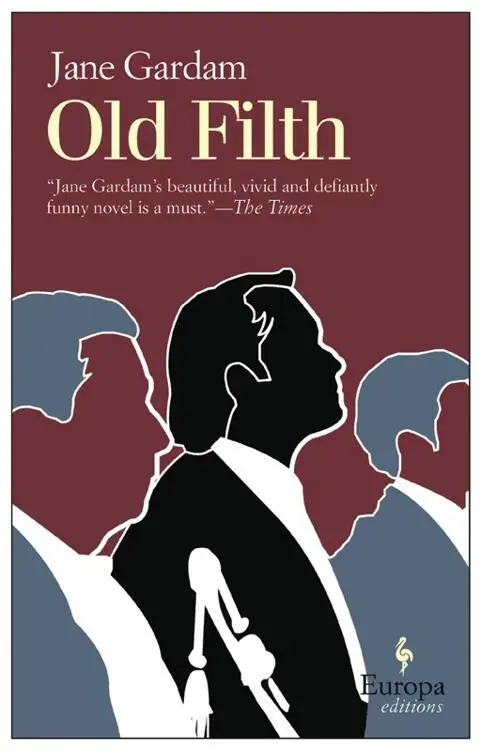
- Название:Old Filth
- Автор:
- Издательство:Europa Editions
- Жанр:
- Год:2006
- ISBN:нет данных
- Рейтинг книги:3 / 5. Голосов: 1
-
Избранное:Добавить в избранное
- Отзывы:
-
Ваша оценка:
Old Filth: краткое содержание, описание и аннотация
Предлагаем к чтению аннотацию, описание, краткое содержание или предисловие (зависит от того, что написал сам автор книги «Old Filth»). Если вы не нашли необходимую информацию о книге — напишите в комментариях, мы постараемся отыскать её.
Borrowing from biography and history, Jane Gardam has written a literary masterpiece reminiscent of Rudyard Kipling's
that retraces much of the twentieth century's torrid and momentous history. Feathers' childhood in Malaya during the British Empire's heyday, his schooling in pre-war England, his professional success in Southeast Asia and his return to England toward the end of the millennium, are vantage points from which the reader can observe the march forward of an eventful era and the steady progress of that man, Sir Edward Feathers, Old Filth himself, who embodies the century's fate.
Old Filth — читать онлайн бесплатно полную книгу (весь текст) целиком
Ниже представлен текст книги, разбитый по страницам. Система сохранения места последней прочитанной страницы, позволяет с удобством читать онлайн бесплатно книгу «Old Filth», без необходимости каждый раз заново искать на чём Вы остановились. Поставьте закладку, и сможете в любой момент перейти на страницу, на которой закончили чтение.
Интервал:
Закладка:
Regards PI
A few days after the news that Jack Ingoldby was missing came the news that he was certainly killed. It was the sort of notice the Head was giving out repeatedly at assembly that term. Hundreds, maybe thousands, of people in East Kent saw the planes from the dogfights of the Battle of Britain come spinning and flickering down to sizzle in the Channel or burst into flames in the orchards. Parachutes blossoming out would raise a cheer; but most pilots were invisible and people went on with what they were doing, like harvesters in medieval France during the Hundred Years War. Nevertheless, a certain and recorded and undeniable filmed death was a shock.
There was no further card from Pat nor response to a second letter from Eddie to High House. Half-term was coming but there was no sign that he would go as usual to the Ingoldbys. He was, it seemed, to go at last to his guardians, for a jokey invitation had been received by the Headmaster from the Bolton aunts. But still he hung about the school until the very last minute in case a call should come from Pat.
As the cab to take him to the train for Bolton was arriving, he tried once more with a thumping heart to telephone High House.
“Hullo?”
“Who’s that?”
“Is that — the Ingoldbys?”
“It’s Isobel.”
“Oh. Hullo. It’s Eddie. Teddy Feathers.”
“Oh, hullo.”
“I just rang to see. . To hear. .”
“Yes?”
“It’s half-term. Should I come over?”
“Oh no. I shouldn’t do that. Pat’s not here. He’s gone off somewhere to volunteer again.”
“How is — Mrs. Ingoldby?”
“Oh, she’s fine. Very patriotic, you know.”
“I’d love to see her.”
“I’ll tell her.”
“Actually, would you tell her that I won’t be in England much longer?”
“Joining up?”
“Not exactly. I’m too young. My father’s sent for me.”
“Whatever for?”
“Could you tell them? The Ingoldbys?”
“What?”
“Well, say goodbye. And s-s-so many many thanks. I’ll be on the other side of the world.”
“So will a lot of people.”
“Say I’ll write. I’ll always write. Thank them for. .”
“OK. Bye.”
“I’d love to hear. . ”
But she was gone.
So Eddie picked up Pat’s belongings and shook hands with Oils, and stepped into the taxi for Bolton where, even with Pat’s extras, there was not enough luggage to justify a taxi from the station, so he walked to the house, surprised that he remembered how to get there after a single visit long ago; the half-term holiday after the Didds’ business in Wales. His father had come to England for the first and only time and had taken the eight-year-old Eddie to see his sisters.
It was a sleek, boastful, purple-brick house like a giant plum standing back from the road behind a semi-circle of lawn with shaven edges and Victorian (purple) edging tiles. In a round bed stood the winter sticks of roses.
Aunt Hilda appeared, flinging wide an inner vestibule door of rich cream paint and crimson and blue glass panes, and cried out, “Muriel! He’s here. It’s the boy. Come in, come in. We should have written. You’ve arrived — well done! We’ve sorted everything out. Your passport should be here by Christmas. Excellent. Muriel .”
They were in the hall now and Aunt Muriel was coming down the stairs in tweeds and a hat. “Dear old chap — how like Alistair.”
“There’s a pretty important golf today,” said Hilda, “and we’re just off. Not a tournament nowadays of course, the links are so restricted. But still quite a highspot. So we’ll go on ahead. You settle in, then you can join us for lunch or tea? No distance. Take the bike from the garage. We must fly. Duties on the course — so few men now. The lunch won’t be at all bad. You’re very thin.”
They departed, their car’s rear window nearly covered by patriotic slogans. Careless talk costs lives , he read. He wandered through the house.
There were brass urns full of ferns and an ironwood table topped with a brass disc engraved with dancing Orientals. In a sitting-room were crowds of family photographs. Odd, he thought. He was family but they had shown no interest in him since he was eight. He wondered if photographs were substitutes for hospitality. Looking around, he saw no photographs at all of children. And nobody who could possibly have been his mother. He had no idea what she had looked like. Most of the photographs were of people a generation older than his aunts, bearded or braided, sepia, stern and sad. Beside them, were other photographs and more fern in brass containers. On a table by themselves were golfing trophies and a silver cup engraved Hole in One, Hilda Feathers . There was a magnificent fireplace of wood and tiles, with a shiny clock with icicle pointers let into the chimneypiece. Instead of coals there was a pleated fan of paper, and in the hearth a miracle of barbola work covered in thonged parchment and filled with newspaper spills to save matches.
Then he saw, on the mantelpiece, a photograph of a dazzling young man in open-necked khaki shirt and shorts, arms crossed and a cigarette burning nonchalantly in one hand, and, on the other wrist, a big, beautiful, seductive gold watch. On his head, an army beret without a badge, like a Frenchman, and eyes dark, wise, amused and most beautiful. On the silver frame was engraved Alistair, 1914, and there was a little jug of flowers arranged beside it, as if the photograph was of a dead man, or like a funeral bunch upon a grave. Flowers for the dead. But this was his father. No doubt of it. Eddie knew.
And his father was alive enough to have sent for him, to get him out of another set-piece of butchery like the one that had all but extinguished him and his country in 1914.
Eddie picked up the photograph and felt pride. He wanted it. He’d nick it. It was his. He wished Pat could see it, or the vile Isobel. Had Colonel Ingoldby really known his father? Why hadn’t he ever said anything about him? His father’s wonderful face, a poet’s face, he thought, and with an exciting hint in it of his own. It occurred to him that he must write again, after years, to his father.
And now. Write now.
He turned to the writing desk — brasses galore ( The Snake and His Boy , a row of ugly monkeys) — and searched around for writing paper, found his own fountain pen, stared at the laurels outside the window, the bald lawn, the grey street. The gate flung open. No Hawkers or Circulars nailed to it on a plaque.
Dear Father
I am at Aunt Muriel’s having left school this morning for half-term or, for all I know, for good. I only heard this week that I’m to leave school and come out to you. I
wish
you could have written to
me
about it. The Head says they’ve been discussing it with you for some time, and Aunt Hilda says my passport will be ready by Christmas. I’m seventeen and shall soon be eighteen. It is ten years since you saw me and I’ve had nothing from you of any kind except I suppose all my expenses have been paid and I’m told there is a bank-book for me sometime soon. So thank you for that.
But our last meeting was so horrible and unhappy and I wish you could have written, even once, years ago, to put that right.
Nobody had told me that you have a stammer and nobody had probably told you that I had one then (Sir cured mine) and I think [the pen began to take on a most uncharacteristic volition of its own] that I tried just to forget you. The Ingoldbys were so kind. Just now I’ve seen a photograph of you on the mantelpiece here at the aunts — first time I’ve seen them since you were here when I was eight — taken in 1914, and you don’t look all that much older than I am now. It made me very regretful. I felt you might be a father I could have talked to.
Читать дальшеИнтервал:
Закладка:
Похожие книги на «Old Filth»
Представляем Вашему вниманию похожие книги на «Old Filth» списком для выбора. Мы отобрали схожую по названию и смыслу литературу в надежде предоставить читателям больше вариантов отыскать новые, интересные, ещё непрочитанные произведения.






Обсуждение, отзывы о книге «Old Filth» и просто собственные мнения читателей. Оставьте ваши комментарии, напишите, что Вы думаете о произведении, его смысле или главных героях. Укажите что конкретно понравилось, а что нет, и почему Вы так считаете.