Maylis de Kerangal - The Heart
Здесь есть возможность читать онлайн «Maylis de Kerangal - The Heart» весь текст электронной книги совершенно бесплатно (целиком полную версию без сокращений). В некоторых случаях можно слушать аудио, скачать через торрент в формате fb2 и присутствует краткое содержание. Год выпуска: 2016, ISBN: 2016, Издательство: Farrar, Straus and Giroux, Жанр: Современная проза, на английском языке. Описание произведения, (предисловие) а так же отзывы посетителей доступны на портале библиотеки ЛибКат.
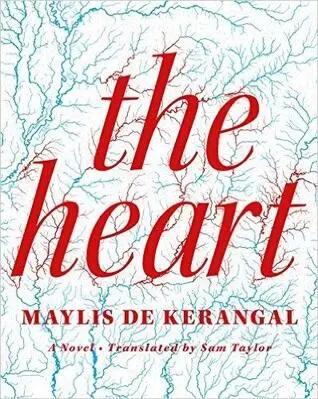
- Название:The Heart
- Автор:
- Издательство:Farrar, Straus and Giroux
- Жанр:
- Год:2016
- ISBN:9780374713287
- Рейтинг книги:5 / 5. Голосов: 1
-
Избранное:Добавить в избранное
- Отзывы:
-
Ваша оценка:
The Heart: краткое содержание, описание и аннотация
Предлагаем к чтению аннотацию, описание, краткое содержание или предисловие (зависит от того, что написал сам автор книги «The Heart»). Если вы не нашли необходимую информацию о книге — напишите в комментариях, мы постараемся отыскать её.
The Heart
The Heart
The Heart — читать онлайн бесплатно полную книгу (весь текст) целиком
Ниже представлен текст книги, разбитый по страницам. Система сохранения места последней прочитанной страницы, позволяет с удобством читать онлайн бесплатно книгу «The Heart», без необходимости каждый раз заново искать на чём Вы остановились. Поставьте закладку, и сможете в любой момент перейти на страницу, на которой закончили чтение.
Интервал:
Закладка:
19
She left the RER suburban train station La Plaine-Stade de France at dawn and walked in the opposite direction from that now being taken by the mass of people surging in a continuous flow, increasingly compact as kickoff time approaches, joined in a collective fever — pregame excitement and speculation, rehearsals of songs and insults, Delphic oracles. She turned away from the enormous, naked stadium, indifferent to its massive bulk, as absurd and indisputable as a flying saucer that had landed in the night, and sped up as she walked through the short tunnel beneath the tracks. Coming outside again, she walked up Avenue du Stade-de-France for two hundred yards, passing the headquarters of banks, insurance companies, and other organizations, passing their smooth walls — white or metallic or transparent — and arrived at number 1. There, she rummaged inside her purse for a while, then removed her gloves so she could search more easily, and finally knelt down on the freezing sidewalk and emptied the purse’s contents, watched expressionlessly by the guy on the other side of the door who was very carefully peeling back the cover from a bottle of yogurt drink, terrified that a drop might spurt onto his beautiful navy-blue suit. And then, as if by a miracle, she felt the outline of her magnetic card at the bottom of a pocket, took it out, gathered her belongings, and entered the lobby. I’m on duty, I’m a doctor at the Biomedical Agency, she told him haughtily, without looking at him, and was crossing the lobby when she noticed the pack of Marlboro Lights lying next to the digital tablet that he must have used to watch TV all night — probably soccer games or trashy movies, she thought, annoyed — and, having reached the second floor, she walked about fifty feet, then turned to her right and pushed open the door of the National Center for the Allocation of Transplants.
* * *
Marthe Carrare is a small woman in her early sixties, olive-skinned and round-faced, with auburn hair, large breasts, and a spare tire contained inside a skin-tight beige-pink cardigan, a spherical butt bulging in brown wool pants, fairly slim legs, and tiny rounded feet in flats; she feeds on cheeseburgers and nicotine chewing gum, and at this moment her right ear is red and swollen from having various telephone receivers pressed against it all day long — work cell, private cell, landline — and, if you know what’s good for you, you won’t disturb her for anything, you will make yourself invisible and silent while she asks Thomas about the situation: So, what’s happening? Thomas replies: It’s okay. She is calm: All right, send me the report of his death so I can check the file, and Thomas says I just faxed it to you, and I also filled out the donor’s Cristal file.
Marthe hangs up and walks over to the fax machine, frown lines arrowing down toward the top of her nose, thick-framed glasses attached to a chain, lipstick leaking into the little wrinkles around her mouth, a heady perfume and cold tobacco fumes trapped beneath her collar: yes, the sheet is there — the official report of Simon Limbres’s death, filed at 6:36 p.m. Now she enters the adjoining office, which contains the national organ donation refusal registry, a file so high-security that only about ten people in the country are authorized to consult it, and only then after the legally attested death of the person in question.
* * *
Back in her office, Marthe Carrare tells Thomas it’s fine, then stares at her computer screen, opens the Cristal file, clicks on the various documents that comprise it — general information sheet, a medical evaluation of each organ, scans, ultrasounds, other analyses — and examines it all, immediately noting Simon Limbres’s relatively rare blood group (B negative). The file is complete. Marthe approves it and assigns it an identification number, a code that will guarantee the donor’s anonymity: from this point on, Simon Limbres’s name will not be mentioned in any future discussions between the agency and the various hospitals with which it is in contact. Thus begins the protocol for the allocation of transplant organs. Namely, one liver, two lungs, two kidneys. And one heart.
* * *
Night falls. At the end of the avenue, the stadium is illuminated, and its outline — like an oblong ring, like a bean — traces a grayish halo in the sky through which the Sunday-evening airplanes leave their vapor trails. It is time, now, to turn our attention to those who are waiting, scattered throughout the country and sometimes even beyond its borders, people whose names are on lists, classified by organ, to be transplanted, and who, every morning, ask if their position has changed, if they have moved up the ladder, people with no conception of the future, whose lives are restricted, suspended by the condition of one particular organ in their body. People living their lives with the sword of Damocles hanging above their heads. Imagine that.
Their medical files are centralized in the computer that Marthe Carrare is consulting at this moment, while sucking a nicotine lozenge. She checks her watch and thinks that she has forgotten to cancel her dinner date, two hours from now, at her daughter and son-in-law’s apartment. She doesn’t like going there — the phrase pops into her head that very second: I don’t like going there, it’s cold in that place — but can’t be sure if it’s the apartment’s walls, plastered with an expensive white milk paint, that make her shiver, or if it’s the absence of ashtrays, of a balcony, of meat, disorder, tension, or if it’s the Malian stools and the designer fainting couch, the vegetarian soups served in Moorish bowls, the scented candles—“cut hay,” “wood fire,” “wild mint”—the domesticated satisfaction of people who go to bed early under Indian velvet bedspreads, the tender lifelessness that stretches throughout their kingdom. Or maybe it’s the couple that appalls her — the couple that, in the space of less than two years has swallowed up her only daughter, dissolving her in a safe, soothing conjugality, a balm after years of nomadic solitude: her hot-headed, polyglot daughter now grown unrecognizable.
* * *
In a specially programmed software, Marthe Carrare enters all the medical data concerning the heart, the lungs, the liver, and the kidneys of Simon Limbres, then searches her databases to find patients able to receive them — the list of matches being shorter when it comes to the liver and the kidneys. The short list of compatible recipients is then combined with the realities of geography, the location of the organs and the locations of possible recipients producing an operational cartography involving distances to be covered within a limited time frame, relating to the the viability of the organs. This leads to a logical evaluation of miles and journey times, the pinpointing of airports and highways, stations, pilots and planes, specialized vehicles and experienced drivers, so that the territorial aspect of the enterprise adds a new parameter, narrowing the list of possible patients even further.
* * *
The first compatibility issue between donor and recipient involves blood — ABO compatibility. Cardiac transplants require strict Rh compatability, and with Simon Limbres being B negative, an initial cut is made, considerably reducing the list of nearly three hundred patients waiting for a transplant. Marthe Carrare’s fingers tap more furiously at the keyboard, and her face shows the urgency of finding a recipient, perhaps some slight intoxication, the forgetting of everything else. Next, she uses the HLA system to examine tissue, which is equally essential. The human leukocyte antigen code is the patient’s biological identity card and relates to the immune system. While it is practically impossible to find a donor with an identical HLA to that of the recipient, their codes must be as close as possible in order for the organ transplant to take place under the best conditions and with the lowest risk of rejection.
Читать дальшеИнтервал:
Закладка:
Похожие книги на «The Heart»
Представляем Вашему вниманию похожие книги на «The Heart» списком для выбора. Мы отобрали схожую по названию и смыслу литературу в надежде предоставить читателям больше вариантов отыскать новые, интересные, ещё непрочитанные произведения.









Обсуждение, отзывы о книге «The Heart» и просто собственные мнения читателей. Оставьте ваши комментарии, напишите, что Вы думаете о произведении, его смысле или главных героях. Укажите что конкретно понравилось, а что нет, и почему Вы так считаете.