Maylis de Kerangal - The Heart
Здесь есть возможность читать онлайн «Maylis de Kerangal - The Heart» весь текст электронной книги совершенно бесплатно (целиком полную версию без сокращений). В некоторых случаях можно слушать аудио, скачать через торрент в формате fb2 и присутствует краткое содержание. Год выпуска: 2016, ISBN: 2016, Издательство: Farrar, Straus and Giroux, Жанр: Современная проза, на английском языке. Описание произведения, (предисловие) а так же отзывы посетителей доступны на портале библиотеки ЛибКат.
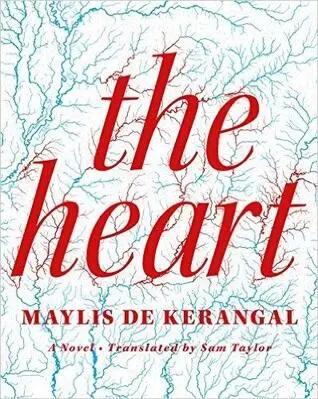
- Название:The Heart
- Автор:
- Издательство:Farrar, Straus and Giroux
- Жанр:
- Год:2016
- ISBN:9780374713287
- Рейтинг книги:5 / 5. Голосов: 1
-
Избранное:Добавить в избранное
- Отзывы:
-
Ваша оценка:
The Heart: краткое содержание, описание и аннотация
Предлагаем к чтению аннотацию, описание, краткое содержание или предисловие (зависит от того, что написал сам автор книги «The Heart»). Если вы не нашли необходимую информацию о книге — напишите в комментариях, мы постараемся отыскать её.
The Heart
The Heart
The Heart — читать онлайн бесплатно полную книгу (весь текст) целиком
Ниже представлен текст книги, разбитый по страницам. Система сохранения места последней прочитанной страницы, позволяет с удобством читать онлайн бесплатно книгу «The Heart», без необходимости каждый раз заново искать на чём Вы остановились. Поставьте закладку, и сможете в любой момент перейти на страницу, на которой закончили чтение.
Интервал:
Закладка:
The process is suspended if the attempt to discover the deceased’s wishes, carried out in tandem with his loved ones, ends in refusal.
* * *
At last, Marianne grasps Sean’s hand. Fantastic, she whispers, stroking it, that’s just what we need, then leads him over to the couch, where the two of them sit down, take deep breaths. There’s a lull. Marianne and Sean each drink a glass of water; neither is particularly thirsty, but they need to buy time, to keep moving, rediscover the right frequency so they can speak again.
At this point, Thomas thinks the whole thing is screwed. Too tough. Too complex, too emotional. The mother maybe, but the father … there’s no way back, it’s all going too fast. They’d barely had time to realize their tragedy before they had to decide about organ removal. He sits down too. Picks up the file from the coffee table. Does not insist, or seek to influence them, manipulate them, use his authority. Does not act as the agent for a silent but oppressive game of emotional blackmail, a pressure that is all the more powerful on Simon’s parents because young, healthy donors are so rare. He does not, for example, tell them in no uncertain terms that French law prescribes the principle of presumed consent in the absence of membership in the national organ donation refusal registry. Spares them the tortured question of how presumed consent can be the rule when the donor was dead and could no longer speak, could no longer consent to anything. Spares them the legal fact that, by never having said anything on the subject to his family, Simon has effectively said yes, another rephrasing of the dubious dictum silence implies consent . Yes, in the end, he keeps quiet about those texts that would so easily have undercut the meaning of this dialogue, making it a mere formality, a hypocritical convention, when the law as a whole suggested something more complex, based on reciprocity and exchange: as each person is considered a potential organ recipient, is it not logical that each person should also be considered a potential organ donor after his or her death? Once the conversation takes this turn, he will only mention the legal context to people who are neutral on the question of donation, or in order to comfort families after they have already agreed, using the law like a handrail to support them as they move forward.
He closes Simon’s file and rests it on his knees again, signaling to Sean and Marianne Limbres that they may quit this dialogue if they desire and leave the room. They’ve refused — it happens. There has to be a place for such a decision: the possibility of refusal is also the condition for donation. He should shake hands and say goodbye now. The interview has failed, and he has to accept that fact. Thomas’s principle is absolute respect for the wishes of loved ones, and he also understands the indisputable nature of that which makes the body of the deceased sacred for those who loved him. It’s his way of preventing an approach that risks becoming — supported legally and ethically by the letter of the law and the shortage of transplant organs — a steamroller. His gaze sweeps the walls of the room: from behind the window, a bird is watching them. A passerine. Seeing it, Thomas immediately wonders if Ousmane will drop by his apartment to feed Mazhar, the goldfinch, fill its trays with clean water and organic grains, those multicolored grains grown on a balcony in Bab El Oued. He closes his eyes.
* * *
Okay, what would you remove? Sean asks this, head down, eyes to the ground, and Thomas, surprised by this change of course, frowns and then instantly adjusts to this new tempo: The heart, the kidneys, the lungs, and the liver; if you agree to this, you will be kept fully informed and your son’s body will be restored. He lists the organs unwaveringly, a symptom of the urge he always feels to favor dry precision over evasive vagueness.
The heart? Marianne asks. Yes, the heart, Thomas repeats. Simon’s heart. Marianne is dazed. Simon’s heart — clusters of blood cells merge in a little sac to form the first vascular network on the seventeenth day; pumping begins on the twenty-first day (very weak contractions, but audible on highly sensitive equipment designed expressly for heart embryology); the blood flows through the growing vessels, nerves form in tissue, veins, tubes, and arteries, the four chambers develop, and by the fiftieth day everything is in place, if unfinished. Simon’s heart — a round belly rising gently at the bottom of a portable crib; the bird of night terrors flapping distraught inside a child’s chest; the staccato drumbeat syncopated with Anakin Skywalker’s destiny; the riff under the skin when the first wave rises — feel my pecs, he said to her one evening, muscles tensed, monkey face, he was fourteen years old and in his eyes she could see the new glow of a boy taking possession of his body, feel my pecs, Mom — the diastolic melt when he saw Juliette at the bus shelter on Boulevard Maritime, stripy T-shirt dress, red Doc Martens, art portfolio tucked under her arm; held breath on Christmas Eve, the surfboard unwrapped in the middle of the freezing warehouse, opened with that mixture of meticulousness and passion, the way you slice open an envelope containing a love letter. The heart.
But not his eyes — you don’t take his eyes, do you? Her scream stifled with a palm held to her own mouth. Sean shudders, instantly shouts no, never, not his eyes. His groan dies to silence and Thomas looks at the ground, I understand.
This is another area of turbulence, and he shivers, swims through it, knowing that the symbolic significance differs from organ to organ — Marianne reacted only to the idea of removing her son’s heart, as if removing his kidneys, liver, or lungs was more conceivable, and she refused the removal of the corneas, which, like the muscle tissue and the skin, are rarely the subject of the family’s consent — and understands that he must compromise, make an exception to the rule, accept their restrictions, respect this family. It’s empathy. Because Simon’s eyes were not only his nervous retinas, his taffeta irises, his pure black pupils in front of the natural lens; his eyes were his gaze, the way he looked at you. His skin was not only the mesh of his epidermis, his pores, it was his light and his touch, the living sensors of his body.
* * *
Your son’s body will be restored.
It is a promise and it is perhaps also the death knell for this dialogue — who knows? Restored. Thomas looks at his watch, makes a quick calculation — the second thirty-minute EEG will take place in two hours — would you like some time alone? Marianne and Sean share a glance, both nod. Thomas stands up and adds: If your son is a donor, it will enable other people to live, other people who are waiting for an organ. The parents pick up their coats and bags, their movements slow even though they are in a rush to leave this place now. So he wouldn’t have died for nothing, right? Sean lifts the collar of his parka and looks Thomas in the eye: We know, we know all that, transplants save lives, the death of one person can give life to another, but Simon is our son, don’t you understand? I understand. As she walks through the doorway, Marianne turns and she too looks Thomas in the eye: We’re going to get some fresh air, we’ll be back.
* * *
Left alone in the room, Thomas collapses into a chair. He rests his head in his hands, runs his fingertips through his hair, massaging his skull, and exhales a long breath. No doubt he is thinking how tough his job is; maybe he too would like to talk, to punch walls, throw things at wastepaper baskets, break glasses. Maybe it will be a yes, more likely a no. It happens — a third of interviews end with a refusal — but for Thomas Rémige, a clear-headed refusal is better than an agreement torn from confusion, extracted with forceps, and regretted two weeks later by people ravaged with remorse, people suffering with insomnia, drowning in grief. You have to think about the living, he often says, chewing the end of a matchstick, you have to think about those who are left — in his office, on the back of his door, he has stuck a photocopy of a page from Platonov , a play he has never seen, never read, but this fragment of dialogue between Serguey Voinitzev and Nicolas Triletzki, seen by chance in a magazine he’d found at the local Laundromat, had thrilled him the way a kid is thrilled when he discovers some glorious treasure: a Charizard in a packet of Pokémon cards, a golden ticket in a chocolate-bar wrapper. What shall we do, Nicolas? Bury the dead and mend the living.
Читать дальшеИнтервал:
Закладка:
Похожие книги на «The Heart»
Представляем Вашему вниманию похожие книги на «The Heart» списком для выбора. Мы отобрали схожую по названию и смыслу литературу в надежде предоставить читателям больше вариантов отыскать новые, интересные, ещё непрочитанные произведения.








Обсуждение, отзывы о книге «The Heart» и просто собственные мнения читателей. Оставьте ваши комментарии, напишите, что Вы думаете о произведении, его смысле или главных героях. Укажите что конкретно понравилось, а что нет, и почему Вы так считаете.