Jowhor Ile - And After Many Days
Здесь есть возможность читать онлайн «Jowhor Ile - And After Many Days» весь текст электронной книги совершенно бесплатно (целиком полную версию без сокращений). В некоторых случаях можно слушать аудио, скачать через торрент в формате fb2 и присутствует краткое содержание. Год выпуска: 2016, Издательство: Tim Duggan Books, Жанр: Современная проза, на английском языке. Описание произведения, (предисловие) а так же отзывы посетителей доступны на портале библиотеки ЛибКат.
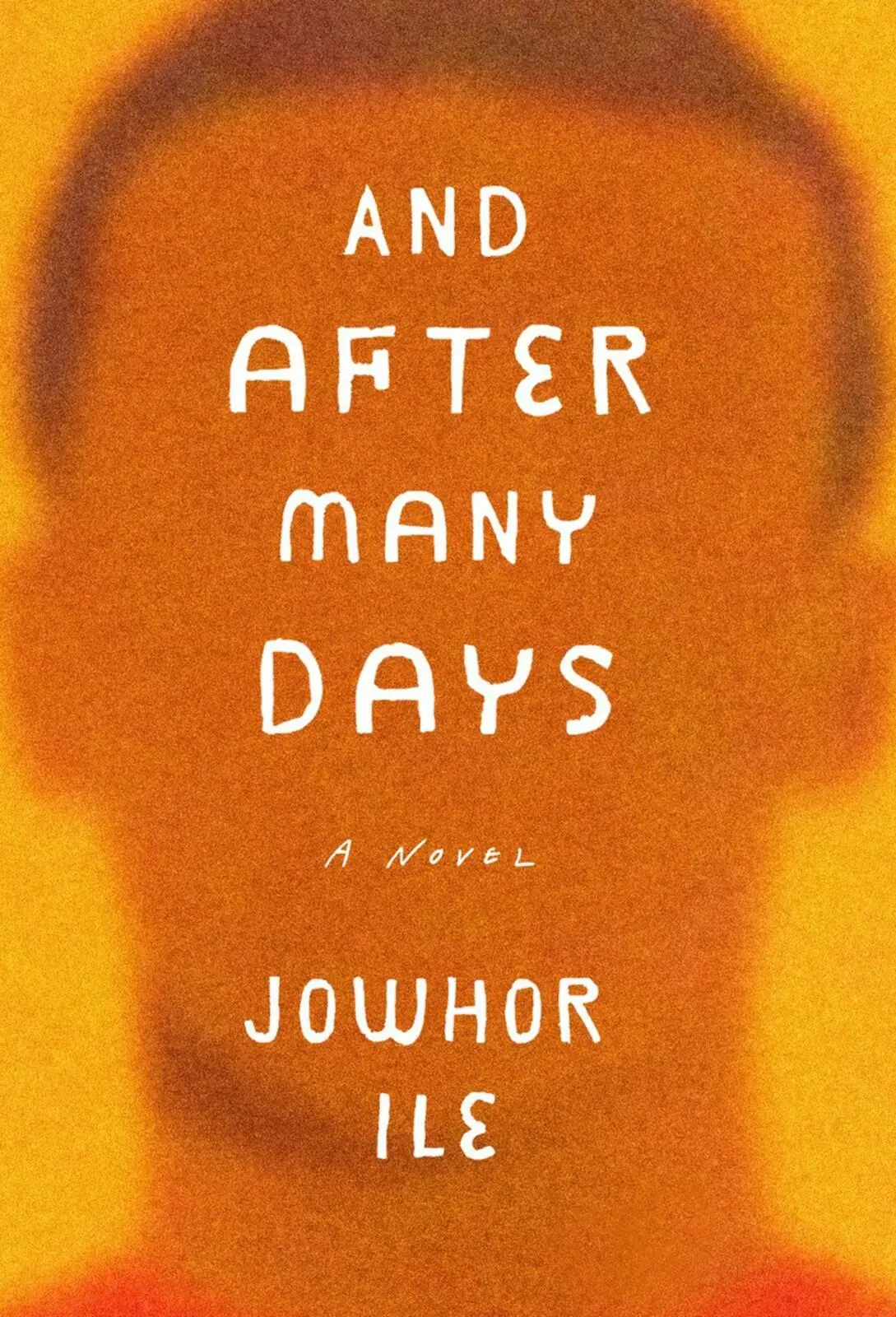
- Название:And After Many Days
- Автор:
- Издательство:Tim Duggan Books
- Жанр:
- Год:2016
- ISBN:нет данных
- Рейтинг книги:3 / 5. Голосов: 1
-
Избранное:Добавить в избранное
- Отзывы:
-
Ваша оценка:
And After Many Days: краткое содержание, описание и аннотация
Предлагаем к чтению аннотацию, описание, краткое содержание или предисловие (зависит от того, что написал сам автор книги «And After Many Days»). Если вы не нашли необходимую информацию о книге — напишите в комментариях, мы постараемся отыскать её.
In a tale that moves seamlessly back and forth through time, Ajie relives a trip to the family's ancestral village where, together, he and his family listen to the myths of how their people settled there, while the villagers argue over the mysterious Company, who found oil on their land and will do anything to guarantee support. As the story builds towards its stunning conclusion, it becomes clear that only once past and present come to a crossroads will Ajie and his family finally find the answers they have been searching for.
And After Many Days
And After Many Days — читать онлайн бесплатно полную книгу (весь текст) целиком
Ниже представлен текст книги, разбитый по страницам. Система сохранения места последней прочитанной страницы, позволяет с удобством читать онлайн бесплатно книгу «And After Many Days», без необходимости каждый раз заново искать на чём Вы остановились. Поставьте закладку, и сможете в любой момент перейти на страницу, на которой закончили чтение.
Интервал:
Закладка:
“He has escaped! He has escaped!” they shout as they run toward the road, and then loud arguments follow.
Three days later, a police van arrives and carries four boys away. The whole village is being accused of violence against police on official duty, and Application Master is wanted for inciting the violence.
—
Bendic slapped his arm and yawned. Mosquitoes made faint noises, and stars had begun to appear in the sky. Ma looked up and said it would be a blessing if it rained tonight. “The heat is too much.”
The tall plantain tree in the corner waved its arms and cast a shadow on the fence. In the moonlight, the shadow looked like a pregnant woman with two children by her side, waiting for a bus by the road. Ajie closed his eyes and opened them and the pregnant woman was still there by the roadside, waiting for a bus, with her two children by her side. A southwesterly wind blew and the tree shadow took the form of boats on water, boats with high masts and swollen sails, like the drawing in Ajie’s Macmillan school reader, a drawing that had underneath it the caption: A fleet of boats .
“We will see what we can do tomorrow,” Bendic said. “Once Marcus comes to work, we will drive together to Ifenwa’s house. His brother knows the commissioner of police.”
Ajie looked toward the gate, but it was buried in the half-dark. He could not make out Ismaila’s small concrete four-cornered shed. He wondered what it would be like if policemen came banging on their gate, asking to see Bendic. Ismaila would assume they were robbers. He would bring out his bow and poisoned arrows and aim at the gate. Then he would order the intruders in that big voice of his to vamoose. That is what he would say: “Vamoose or I shoot! Move or I move you!”
NEPA had a change of mind and restored power. “Light has come,” Bibi squealed.
The adults got up, and the children carried the seats as they all trudged back inside. A new energy was injected into their evening. It was not that late, just a little past nine o’clock. They caught the tail end of the news, which was followed by a government-sponsored program about skills acquisition projects for rural women.
Bendic thought aloud about what he had to do the next day. He had to send for Ifiemi, his secretary, so they could draft letters to different people who could influence things. If this whole business of police in Ogibah were nipped in the bud, the trouble could be stopped from escalating. It could be stalled for a while, but only for a while. At some point the wheels would go a full cycle. More trouble would erupt, and on such a large scale that it would be difficult to predict.
Bendic and Application Master did not know that this was just the beginning. There were no dead boys yet. No girls had been dragged into the bush. Graffiti was yet to appear on the walls of the secondary school saying, “Ogibah, Fear the Nigeria Police and Army.” None of these things had happened yet. For now, some policemen had been assaulted, a few boys had been arrested as a consequence, and Bendic was doing his best to save the situation.
CHAPTER ELEVEN
Ifiemi, Bendic’s secretary, arrived before nine the next morning and immediately converted the dining area into an ad hoc office. She mounted the Imperial 66 typewriter at one end of the oval dining table. An enormous dictionary was set to her left, the covers frail from regular use. A wooden ruler with smooth edges, correction fluid, thinner, pens (black, blue, and red), erasers, and pencils were all set within arm’s reach. Bendic drafted the letters in longhand on foolscap paper, and Ifiemi typed them out on crisp white A4 sheets. Bendic then corrected the typed drafts with a red pen, after which Ifiemi retyped them. By noon they were almost done. Only a few final adjustments needed to be made, polishing the letter for a perfect tone. This time Bendic dictated what should be added, his sentences delivered in an even tempo, like someone reading Scripture aloud in a church.
The children sat on the veranda, and Bibi mimed Bendic’s words, pretending she had glasses balanced on the bridge of her nose that she kept adjusting, looking up every now and then to stare at the camera like newsreaders who spoke with fake voices and shuffled their papers at intervals.
Bendic, however, didn’t need to look up to any camera as he dictated to his secretary — although there was a time when he drifted off midsentence, his brows lifting over the frames of his reading glasses, as if to acknowledge someone waving in a crowd. Ifiemi’s hands waited on the keyboard. An angel in a thundering white gown hurried past and made the kitchen door sigh. “Are you there?” Bendic asked, as if it weren’t he who had drifted off.
Are you there? This was how Bendic sometimes called for attention. When thoughts crowded his mind and he couldn’t call up which name belonged to which child, he simply said, “Are you there? Bring me a glass of water, please.” The children imitated and used it on each other. Paul would say to Ajie, “Are you there? You have forgotten to tie your shoelace.” “Are you there? Try and bring down your voice, you are shouting.” It could be anyone’s name. You poked the person in the side while asleep and called, “Are you there?”
Ajie would later feel this was a presage to Paul’s disappearance, a sort of rehearsal they had been at all along. That each time they said it to Paul, they were alluding to his eventual disappearance. The time indeed would come when they would look over to his empty bed to poke a finger in the mattress, to ask the question with eyes, not words, and still be left with nothing.
Ifiemi, whenever she didn’t follow any of Bendic’s sentences, simply let her fingers hover above the keys, and Bendic, not hearing the click-clack, would look at her and then repeat the last sentence, adding emphasis, although the sentence itself would have changed — in detail, not in essence.
To His Excellency, Colonel Dauda Musa Komo, Military Administrator of Rivers State
REQUEST FOR INTERVENTION IN THE IMPENDING CRISIS IN OGIBAH COMMUNITY
Your Excellency,
Paul had salvaged one of the discarded drafts from the dustbin; he spread it out.
There was also a letter for the Divisional Police Office (DPO) at Ahoada.
This was not the first time Bendic was taking up matters with the authorities. Once he had taken the federal government to court. That was a story his children all knew to its finest details, even though none of them had been born at the time. There had been an explosion in an oil well near the farmlands in Ogibah, which left the area ankle-deep in crude oil, pervaded with the stench of rotten fish floating belly-up in the ponds, so Bendic took the government of the Federal Republic of Nigeria to court.
The Land Use Decree of 1978 that would make all previous landowners mere tenants of the state was still six years away. It would allow you to farm on your ancestral land and bury your dead, but should anything of value be found, your tenancy would lapse and how you were dealt with was entirely up to the government of the day.
In any case, after the explosions in Ogibah, Bendic sued the government, and the case slowly wound through the courts for two years, and then a verdict was delivered. Bendic lost. The story of the court proceedings had become something of a legend in Ogibah. Bendic stood as his own counsel after he fired his lawyer a few hours before the fourth court session, when it became clear that the lawyer had been bribed like the other one before him.
On that day, March 7, 1974, at ten A.M., Benson Ikpe, the counsel representing the federal government, rose in front of the high court to argue the government’s position in the matter of Benedict Awari Utu & Ogibah Community vs. Federal Government of Nigeria .
Читать дальшеИнтервал:
Закладка:
Похожие книги на «And After Many Days»
Представляем Вашему вниманию похожие книги на «And After Many Days» списком для выбора. Мы отобрали схожую по названию и смыслу литературу в надежде предоставить читателям больше вариантов отыскать новые, интересные, ещё непрочитанные произведения.











Обсуждение, отзывы о книге «And After Many Days» и просто собственные мнения читателей. Оставьте ваши комментарии, напишите, что Вы думаете о произведении, его смысле или главных героях. Укажите что конкретно понравилось, а что нет, и почему Вы так считаете.