Carrie Brown - The Stargazer's Sister
Здесь есть возможность читать онлайн «Carrie Brown - The Stargazer's Sister» весь текст электронной книги совершенно бесплатно (целиком полную версию без сокращений). В некоторых случаях можно слушать аудио, скачать через торрент в формате fb2 и присутствует краткое содержание. Год выпуска: 2016, Издательство: Knopf Doubleday Publishing Group, Жанр: Современная проза, на английском языке. Описание произведения, (предисловие) а так же отзывы посетителей доступны на портале библиотеки ЛибКат.
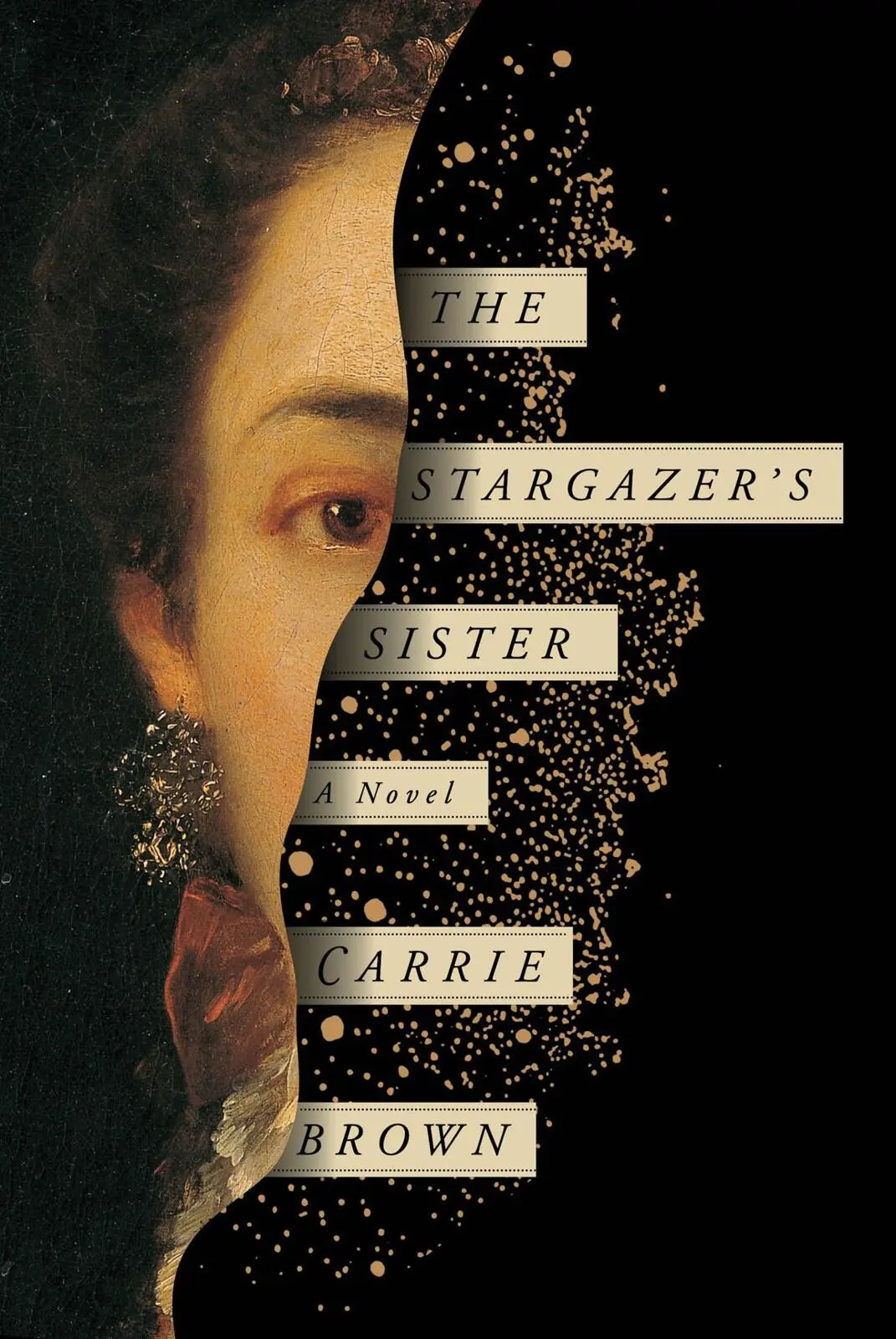
- Название:The Stargazer's Sister
- Автор:
- Издательство:Knopf Doubleday Publishing Group
- Жанр:
- Год:2016
- ISBN:нет данных
- Рейтинг книги:5 / 5. Голосов: 1
-
Избранное:Добавить в избранное
- Отзывы:
-
Ваша оценка:
The Stargazer's Sister: краткое содержание, описание и аннотация
Предлагаем к чтению аннотацию, описание, краткое содержание или предисловие (зависит от того, что написал сам автор книги «The Stargazer's Sister»). Если вы не нашли необходимую информацию о книге — напишите в комментариях, мы постараемся отыскать её.
a beautiful new period novel — a nineteenth-century story of female empowerment before its time — based on the life of Caroline Herschel, sister of the great astronomer William Herschel and an astronomer in her own right. This exquisitely imagined novel opens as the great astronomer and composer William Herschel rescues his sister Caroline from a life of drudgery in Germany and brings her to England and a world of music-making and stargazing. Lina, as Caroline is known, serves as William’s assistant and the captain of his exhilaratingly busy household. William is generous, wise, and charismatic, an obsessive genius whom Lina adores and serves with the fervency of a beloved wife. When William suddenly announces that he will be married, Lina watches as her world collapses.
With her characteristically elegant prose, Brown creates from history a compelling story of familial collaboration and conflict, the sublime beauty of astronomy, and the small but essential place we have within a vast and astonishing cosmos. Through Lina’s trials and successes, we witness the dawning of an early feminist consciousness, of a woman struggling to find her own place among the stars.
The Stargazer's Sister — читать онлайн бесплатно полную книгу (весь текст) целиком
Ниже представлен текст книги, разбитый по страницам. Система сохранения места последней прочитанной страницы, позволяет с удобством читать онлайн бесплатно книгу «The Stargazer's Sister», без необходимости каждый раз заново искать на чём Вы остановились. Поставьте закладку, и сможете в любой момент перейти на страницу, на которой закончили чтение.
Интервал:
Закладка:
The years when Lina was everything to her brother seem to have taken place long ago.
“We never speak of love, you and I,” William says over his playing. “Do you know that?”
Later, she feels his fingertips on her face, the back of his hand brushing her cheek.
In the morning, she thinks she must have dreamed it, her brother’s appearance in her room at some dark hour, the notes of the song, the snow that fell from his coat to her bedclothes when he bent over her. His touch.
Had he said it? “Never could have done any of it without you. Dear one. ”
He had.
“Nonsense,” she had said. “It was all you, William.”
She remembers the music, remembers putting out a hand and touching William’s cold sleeve, his warm fingers closing over hers.
When she puts her bare feet to the floor and stands up that morning, the boards are still wet, where the snow had fallen from his coat and melted.
—
DESPITE EVERYONE’S WORST FEARS, Lina does not lose her sight, though she continues to suffer from the headaches. She resents the way they incapacitate her — there is nothing for it but to sleep, to close her eyes — but eventually she is able to resume her work for William. Still it is her greatest happiness to work alongside him, though there are more pleasures in a day for her than she once had thought possible: Stanley and Sarah and their boys, who tease her, little William now grown and quite able to pick her up and carry her around, though she laughs and protests. She loves her garden, the bees climbing the hollyhocks. She has a violin, and she plays occasionally, alone in her cottage. Her contentment seems complete. She reads some poetry, poor John Keats’s “Endymion:” A thing of beauty is a joy forever: Its loveliness increases; it will never pass into nothingness.
—
SHE IS TAKING NOTES from William when it happens.
The month of August has been still and hot, and William has been confined to bed for a week. His voice is weak, his thoughts often confused.
From her seat at his bedside, she reaches forward from time to time with her handkerchief to touch his face where sweat beads on his skin. Sometimes, shuffling among his papers on the bedclothes, he becomes agitated and asks her to find something in the laundry. In her haste to calm his anxiety, she runs downstairs and snatches up whatever she can find; any piece of paper will do. She returns, sitting back down in the chair beside his bed and holding up as proof whatever paper she picked up.
By then his mind has moved on.
Through the years William has been beset by many curious and admiring visitors, sometimes forty or fifty people gathering at a time — princes and lords and admirals and countesses — who come to see the telescope and the famous man who built it. Sometimes they have heard of her, too, the stargazer’s sister, the great comet huntress.
By now, Lina has found eight comets with her reliable little sweeper.
The crowds keep William outside for hours at night, sometimes for several nights in a row. Despite Mary’s and Lina’s entreaties, he almost always makes an appearance when someone arrives hoping for an audience. He is so pleased by people’s interest that he turns no one away. He is unfailingly generous in that way.
Now, as the hottest days of summer approach, he falls ill. No man could be expected to recover again and again from such assaults upon the body, Lina thinks, even a man as vigorous as William. He is very strong; usually he suffers for a few days — he is deviled by persistent coughs — and then, his energy and spirits apparently restored, he seems himself again, sometimes even undertaking to travel, though he goes nowhere now without Mary.
Arriving at Observatory House from her cottage earlier this summer, Lina had often found him in the barn working on a telescope, for he continues to sell them, despite Mary’s fortune. One day, crossing the meadow, she heard singing — William’s voice like a far-off echo — and only as she approached the telescope did she realize he was inside the tube and scrubbing rust from a spot where moisture had gathered, singing as he worked.
He appeared to be invincible.
But this most recent bout of sickness has weakened him more fully than ever before. They had one fine day in late July, when he seemed better — they walked in the garden and picked and ate raspberries — but every day now since his being ordered to bed by Dr. Onslow, Lina finds him seemingly more fatigued, more distraught.
On this day, she sits by his bedside throughout the morning, writing down whatever he says, even though he makes little sense. It seems difficult for him to finish a thought. It pains her to see in his face the struggle of his great mental effort, his awareness of and humiliation at his confusion. Still, he talks on.
“William, my hand grows tired,” she says at last, “and surely you are fatigued, as well. Why not rest? Why not—”
But he appears not to hear her.
“And I have…on the moon…distinguished a tall building,” he says, and there is wonder in his voice. His eyes close, and then open again. He meets her gaze for a moment — she knows he sees her — but then his eyes slide away.
She begins again to write. Later, the record of his disordered thoughts will be far too painful for her to read.
“—it is perhaps the height of Saint Paul’s Cathedral,” William says. “And soon…I feel…confident that I will provide a full account of its inhabitants. They are…”
His voice pauses.
She has been writing. She looks up.
His head has fallen to the side against the pillow.
She overturns the small table between them on which she has been writing. Ink floods the sheets. His face is warm between her hands, but his chest is unmoving beneath her cheek.
She cries out — William, William , William! — and they all come running, but it is too late.
—
A MONTH AFTER WILLIAM’S DEATH, Lina sits in the chilly dining room at Slough, opening letters. September has come, and with it unceasing days of cool rain. Many letters come each day, offering praise of William and sympathy to Lina and Mary. Mary has returned to her family’s home — at least for a time, she has said — to be in the company of two sisters who still live there. Lina is aware of how in Mary’s absence the rooms at Observatory House have been emptied of much of their warmth. Even as she became a mature woman, Mary’s childlike qualities — her pleasure in comfort, her innocence, a certain fragility — never left her entirely. It did not surprise Lina that Mary fled to her old childhood bedroom after William’s death, though her parents have long since died and are not there to comfort her.
The salutation in Dr. Silva’s letter of condolence to Lina is characteristically hyperbolic.
“He adores a metaphor, your Dr. Silva,” William — amused — had said once of Silva’s beautiful though occasionally absurdly formal English.
Dr. Silva, a Portuguese physician and amateur astronomer, is a great admirer and has written often over the years, corresponding with William but more often with Caroline about her comets, in which he, too, is most interested.
Letter after letter has arrived, as word of William’s death traveled, but she is touched especially by the kindness of Dr. Silva’s concern. She pulls her shawl closer around her shoulders. Stanley has come that morning and built fires for her, but the persistent damp weather and gray skies seem as much inside the house as outside.
Princess of the heavens, this letter begins.
I write to you of my great grief at the news of your brother’s death, for a bright light has indeed left the world. What can be done to comfort you now? I know you to be in the darkest of dark nights. May I extend to you, please, an invitation I most sincerely hope you will accept? Come to Portugal, Miss Herschel. Come to Lisbon. Let the beautiful sunlight of my island heal you. I know the journey to be a long one, but I can make every arrangement for your comfort, and you may work here undisturbed but with my full support. Your good work must go on.
Читать дальшеИнтервал:
Закладка:
Похожие книги на «The Stargazer's Sister»
Представляем Вашему вниманию похожие книги на «The Stargazer's Sister» списком для выбора. Мы отобрали схожую по названию и смыслу литературу в надежде предоставить читателям больше вариантов отыскать новые, интересные, ещё непрочитанные произведения.









Обсуждение, отзывы о книге «The Stargazer's Sister» и просто собственные мнения читателей. Оставьте ваши комментарии, напишите, что Вы думаете о произведении, его смысле или главных героях. Укажите что конкретно понравилось, а что нет, и почему Вы так считаете.