A. Barrett - Blackass
Здесь есть возможность читать онлайн «A. Barrett - Blackass» весь текст электронной книги совершенно бесплатно (целиком полную версию без сокращений). В некоторых случаях можно слушать аудио, скачать через торрент в формате fb2 и присутствует краткое содержание. Год выпуска: 2016, ISBN: 2016, Издательство: Graywolf Press, Жанр: Современная проза, на английском языке. Описание произведения, (предисловие) а так же отзывы посетителей доступны на портале библиотеки ЛибКат.
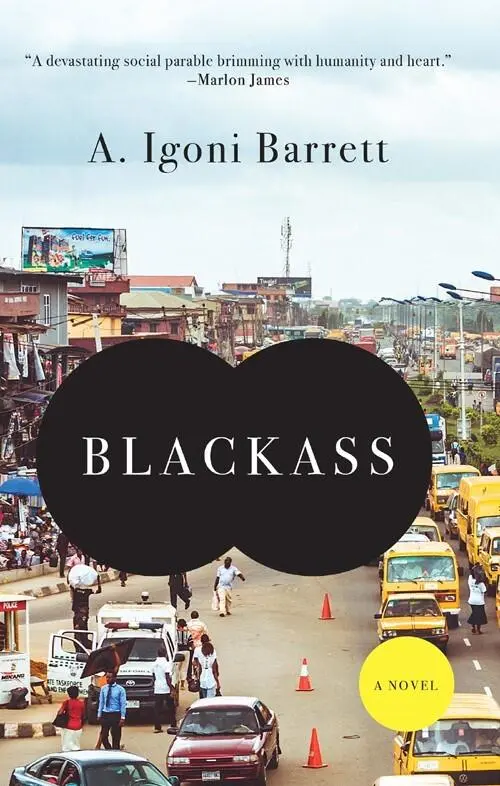
- Название:Blackass
- Автор:
- Издательство:Graywolf Press
- Жанр:
- Год:2016
- ISBN:9781555979263
- Рейтинг книги:4 / 5. Голосов: 1
-
Избранное:Добавить в избранное
- Отзывы:
-
Ваша оценка:
Blackass: краткое содержание, описание и аннотация
Предлагаем к чтению аннотацию, описание, краткое содержание или предисловие (зависит от того, что написал сам автор книги «Blackass»). Если вы не нашли необходимую информацию о книге — напишите в комментариях, мы постараемся отыскать её.
A. Igoni Barrett's
is a fierce comic satire that touches on everything from race to social media while at the same time questioning the values society places on us simply by virtue of the way we look. As he did in
, Barrett brilliantly depicts life in contemporary Nigeria and details the double-dealing and code-switching that are implicit in everyday business. But it's Furo's search for an identity-one deeper than skin-that leads to the final unraveling of his own carefully constructed story.
Blackass — читать онлайн бесплатно полную книгу (весь текст) целиком
Ниже представлен текст книги, разбитый по страницам. Система сохранения места последней прочитанной страницы, позволяет с удобством читать онлайн бесплатно книгу «Blackass», без необходимости каждый раз заново искать на чём Вы остановились. Поставьте закладку, и сможете в любой момент перейти на страницу, на которой закончили чтение.
Интервал:
Закладка:
Their flight was two hours late, and yet Arinze was unbothered by the wait. He reassured Furo by reminding him that the meeting with Yuguda was set for five o’clock, and he disclosed that the only reason they were catching a morning flight for a forty-five minute trip was because he had expected the delay. As he and Furo rose from their seats and joined the surge towards the boarding gate, he said to Furo, ‘Trust our airlines too much and you’ll be late. Fly them long enough and you’ll be dead.’
After the plane landed, as Furo followed the press of bodies down the aisle towards the exit, he passed by a first-class-seated woman in Bob Marley braids who clasped a mixed-race toddler in her arms. The child, on catching sight of Furo, stretched her toy arms in welcome and cried out in a tone of rapture, ‘Dah-dah!’ Furo was startled, but the mother more so. ‘Jeez!’ she exclaimed with a shamed expression, and tightened her grasp on the squirming child.
Even a baby, when surrounded by people of identical skin colour, is prone to the error that one slight difference constitutes an individual.
This was Furo’s first visit to Abuja. Arinze, though, was a recurrent visitor, a frequent flyer to Nnamdi Azikiwe International Airport. This showed in the confidence with which he navigated the domestic terminal and ignored its patches of happy-green synthetic turf scattered with gold-painted stones and forested with mirrored pillars. Holding his gaze away from the funhouse glitz, Furo walked beside Arinze with mimicked poise. Arinze’s regular driver was waiting for them outside the terminal building. On the long drive to their hotel, he indulged the man’s talkativeness, while Furo, alone in the back seat, stared out the taxi’s windows at the broad avenues of the Federal Capital Territory, the brutalist architecture of the government buildings, the unfamiliar Sahel skyline, the swathes of greenery awash in sizzling sunlight, the roadside cameras which the driver pointed out as the latest effort against the machinations of those fanatic murderers who hated books. After the driver ran out of Boko Haram bombings to report, Arinze craned his neck over the seat back and asked Furo what he thought of Abuja.
‘I don’t know,’ Furo responded. ‘It’s different from Lagos.’
‘That’s true,’ Arinze said. ‘Lagos was built from blood and sweat and raw ambition. Abuja was designed as a playground for the rich. I’m sure some will argue that there’s nothing wrong with that, but when the rest of your country is populated with desperate people, your dream city hasn’t much chance of retaining its character. Some of the worst slums in Nigeria can be found on Abuja’s outskirts.’
‘Just like where I live!’ the driver exclaimed. ‘I’ve done taxi business in Port Harcourt and Lagos, and I’ve driven buses in Ghana, in Liberia, but Daki Biu is the worst place I’ve ever lived. They don’t have water anywhere.’
On that topic the taxi driver took off again, as he described his experiences in the fantastical shanty towns of the West African coast — Makoko in Lagos, Rainbow Town in Port Harcourt, Old Fadama in Accra, and West Point in Monrovia, all of which existed by waterways, unlike the dustbowl of Daki Biu — and he didn’t exhaust his nostalgia or empty his windbag of stories until the car drew to a stop at their destination, a multi-storey hotel in the upmarket district of Wuse II. There was no time to dawdle as their meeting at Yuguda’s residence was drawing near, and so Furo and Arinze dropped off their luggage in their rooms, then sat down to a quick lunch with the driver in the hotel restaurant. In Furo’s hurry to finish his outsized meal, he spilled banga soup on his pearl-grey necktie, his favourite, the only one he had brought along on the trip, but Arinze said in response to his muttered apologies, ‘Don’t worry, I’ll wait for you.’ They left the restaurant, Arinze and the driver heading for the car, while Furo ran to the elevator and rode up to his sixth-floor quarters. His equilibrium restored by the wet patch on his tie, he joined them in the car, and they set off for Asokoro just after four. All through the drive Furo faced the open window so the car’s draught would dry his tie.
Yuguda’s residence, from outside the towering fence with its gate of armoured steel, looked like a wartime castle. But once the gate opened, the property took on the splendour of a summer palace frozen in time. Royal palms lined a driveway the length of a small-town main street, and shimmering beyond the trees were landscaped gardens. The terrain climbed from the gate in a natural slope, at the crest of which stood a two-storey Greek-columned house. It was built of marble blocks, floored with marble-chip, and a marble frieze of Arabic script circled the salon that Furo and Arinze were led into by a liveried old man — who told them to wait standing up. An instant after the double doors closed behind him, a lady emerged through a gauzy portière on the far side of the room and padded towards them, her sari swishing. Halting in front of Furo, she exchanged glances with him in mutual appraisal, and his eyes locked on her thin lips as she said, ‘How do you do?’ Her Ivy League accent bore the faintest trace of a Hausa intonation.
‘I’m fine, thank you,’ Furo replied. He waited for her to greet Arinze in turn, but she again addressed her words to him. ‘My father will join you soon. Do you want your assistant to be present at the meeting?’
Furo reddened in embarrassed silence, which he finally broke with the stammered words, ‘He’s not — this — Mr Arinze is my boss.’
‘I see,’ the woman said, her tone unruffled. ‘Please have a seat, both of you.’
The two men sat down, and then Yuguda’s daughter, with no sign of her thoughts on her haughty face, rang an electric bell. It was answered by a boy-child who was clad in the house colours, and after she gave some instructions in Hausa, he left and soon returned carrying a tray bearing two glasses, a bottle of orange juice, and a jug of iced water. Yuguda’s daughter waited till the guests had been served drinks before taking her leave, and as the portière fluttered into place, Furo whirled to face Arinze and started to apologise for the lady’s slight, but Arinze cut him short. ‘Forget about it. We came here for a reason. Let’s focus on that.’
The meeting with Yuguda lasted half an hour; the agenda was hammer-on-nail straightforward. Upon Yuguda’s arrival, he exchanged quick greetings with both men before shooting Furo some questions about his accent and where in Nigeria he was from, and then he switched his attention to Arinze and asked for twenty titles on how to start a business. At a nod from Arinze, Furo pulled out the prepared booklet Arinze had given him the previous day, and holding it steady on his knees, he read out the information in a loud clear voice. The instant he finished, Yuguda said: ‘There are no Nigerian books on that list.’ The truth of this observation startled Furo into uncertainty, but Arinze’s tone was assured as he replied, ‘You’re quite correct. We only sell world-class books. None of the Nigerian titles were good enough to make this list.’ Yuguda riposted with: ‘How are my people supposed to run businesses in this country when all the books you’re putting forward are based on foreign models?’ The combative phrasing of Yuguda’s question convinced Furo the deal was lost, déjà vu Umukoro all over again, and yet his disappointment took nothing away from his admiration for the fighting spirit displayed by Arinze’s answer. ‘I strongly believe, sir, that the best business practices, like the best books, are universal. I have nothing against business books by Nigerians. But until they measure up, my company will never sell them.’ Yuguda’s comeback was swift: ‘Measure up to what — whose standards?’ ‘Yours,’ Arinze said. ‘The Yuguda Group deserves only the best.’
Читать дальшеИнтервал:
Закладка:
Похожие книги на «Blackass»
Представляем Вашему вниманию похожие книги на «Blackass» списком для выбора. Мы отобрали схожую по названию и смыслу литературу в надежде предоставить читателям больше вариантов отыскать новые, интересные, ещё непрочитанные произведения.












Обсуждение, отзывы о книге «Blackass» и просто собственные мнения читателей. Оставьте ваши комментарии, напишите, что Вы думаете о произведении, его смысле или главных героях. Укажите что конкретно понравилось, а что нет, и почему Вы так считаете.