Gerbrand Bakker - June
Здесь есть возможность читать онлайн «Gerbrand Bakker - June» весь текст электронной книги совершенно бесплатно (целиком полную версию без сокращений). В некоторых случаях можно слушать аудио, скачать через торрент в формате fb2 и присутствует краткое содержание. Год выпуска: 2015, Издательство: Scribe Publications, Жанр: Современная проза, на английском языке. Описание произведения, (предисловие) а так же отзывы посетителей доступны на портале библиотеки ЛибКат.
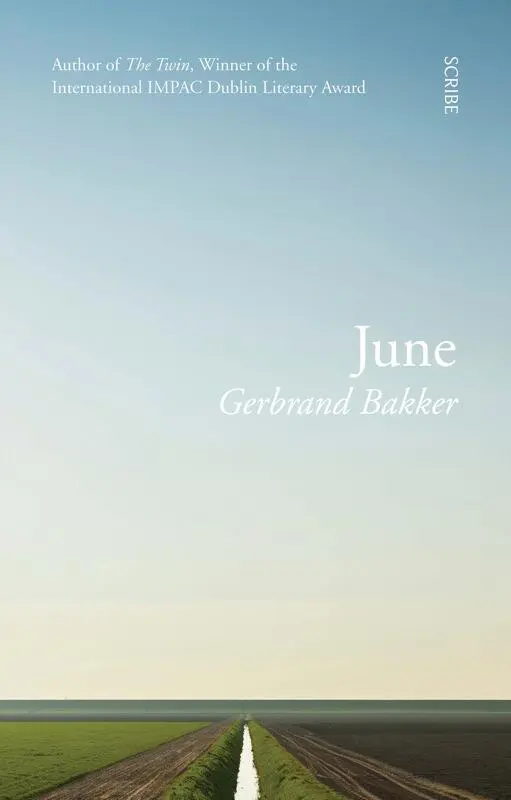
- Название:June
- Автор:
- Издательство:Scribe Publications
- Жанр:
- Год:2015
- ISBN:нет данных
- Рейтинг книги:4 / 5. Голосов: 1
-
Избранное:Добавить в избранное
- Отзывы:
-
Ваша оценка:
June: краткое содержание, описание и аннотация
Предлагаем к чтению аннотацию, описание, краткое содержание или предисловие (зависит от того, что написал сам автор книги «June»). Если вы не нашли необходимую информацию о книге — напишите в комментариях, мы постараемся отыскать её.
It would have been an unforgettable day of celebration if only the baker hadn’t been running late with his deliveries and knocked down Hanne, playing on the roadside, with his brand-new VW van.
Years later, Jan Kaan arrives on a hot day in June in order to tidy his sister’s grave, and is overcome again with grief and silent fury. Isn’t it finally time to get to the bottom of things? Should the permit for the grave be extended? And why won’t anyone explain to his little niece Dieke why grandma has been lying up in the hayloft for a day and a half, nursing a bottle of Advocaat and refusing to see anyone?
June
June — читать онлайн бесплатно полную книгу (весь текст) целиком
Ниже представлен текст книги, разбитый по страницам. Система сохранения места последней прочитанной страницы, позволяет с удобством читать онлайн бесплатно книгу «June», без необходимости каждый раз заново искать на чём Вы остановились. Поставьте закладку, и сможете в любой момент перейти на страницу, на которой закончили чтение.
Интервал:
Закладка:
‘Was it the bogeyman?’ he asked.
‘No, Johan,’ said Anna, ‘it wasn’t the bogeyman.’
Tinus started whimpering. Zeeger grabbed him by the scruff of the neck and dragged him out of the room. They stayed standing there for a while longer. Jan didn’t want to, but he couldn’t help looking at Hanne’s fingers: no plasters, not even any cuts or scratches. The real sun was going down. Behind them the sun was fixed in the same spot and the leaves of the palm trees were still blowing in the same direction.
Later, Klaas, Jan and Johan went to the kitchen, where their four grandparents were sitting round the table. It was quiet; someone had finally turned off the radio. That must have been Grandma Kaan: she didn’t like radio, TV or anything that wasn’t calm and quiet. They were addressing each other by their first names and to the boys that sounded very strange. Grandpa Kooijman saying ‘Neeltje’ to Grandma Kaan and Grandpa Kaan calling Grandma Kooijman ‘Hannie’. Hannie and Neeltje. Hanne. The first girl and both grandmothers’ names covered. Even stranger was the baker coming to visit later that evening, when Jan and Johan were about to go upstairs to bed. The baker, on Wednesday evening, without any bread.
It wasn’t until the following Monday, two days after the funeral, that they went back to school. In no time Jan’s hand was up in the air.
‘Do you have to go to the toilet?’ the teacher asked.
‘No, sir. I want to tell you something.’
‘Yes?’
‘No, sir, just you.’
‘Come to the front.’
Jan stood up and set out for the blackboard. He felt important; everyone was staring at him. He looked at the butcher’s son and the baker’s daughter to make sure they’d noticed him walking up to tell the teacher something very important. The baker’s daughter looked down, which Jan misinterpreted, because even after six days he still didn’t know what exactly had happened. Hanne was playing with Tinus, that was about all they’d been told. He’d show them. Presenting flowers to the Queen, so what! When he got to the front, the teacher looked at him expectantly. Jan gestured for him to come closer. The teacher bent down towards him.
‘My little sister’s dead.’ He whispered conspiratorially, almost proudly. Loudly as well, so the whole class, and especially the two flower-presenters could hear. ‘Did you know that?’
‘Yes, Jan,’ said the teacher. ‘I knew that.’ He laid a hand on top of Jan’s head. ‘And it’s a terrible thing. Go back and sit down again now.’
Jan walked back to his seat, in the last row by the window. Next to an enormous pot plant that hung partly over his desk. It was still quiet in the classroom. On the way, he looked at his classmates and tried to work out what they were thinking. Did he see a gleam in the butcher’s son’s eyes? Was he smiling without raising the corners of his mouth? At least the baker’s daughter was still staring down at the exercise book in front of her. The conspiratorial feeling he’d just had was gone completely. Slipping in behind Peter to sit down again he felt, there’s something wrong here. Peter nudged him. He didn’t feel it.
In the schoolyard the marble craze was already over again. It was almost the summer holidays. Jan and Peter were standing near Klaas, who was telling tall stories about barges making waves in the canal. Peter was talking at him. If only Klaas would say something to him, but no, he blabbed away to his own classmates and made a point of looking in the other direction. Teun was leaning against the wall of the school building. Alone. Staring down at the paving stones under his feet. He glanced up, then looked back down at the grey paving stones, as if there was a lot to see there. It was dry, the drizzle of the previous weekend had blown over. Peter was talking; Jan heard the schoolchildren yelling and running and screeching around him, the clicking of a skipping rope, the wind in the hedge around the schoolyard, and the quivering thumps of the diving board.
On the third day after the funeral, Tuesday again, Jan and Johan did their sixth funeral drawings. Jan finished first and watched Johan add the finishing touches to his. ‘The coffin wasn’t black.’
‘Yes it was.’
‘Grandma Kaan didn’t stand there.’
‘Yes, she did.’
‘Why isn’t Klaas crying? Klaas was crying!’
‘I can’t do tears.’
‘The sun is yellow, not red. Why have you put in the sun? It was raining!’
‘Hey, you can do the “r”!’
Jan didn’t say anything.
‘The sun is red, anyway.’
‘Why don’t you use green? There’s a new green felt tip right here.’
‘What do I need green for?’
‘Are you stupid?’
‘What? What’s green?’
‘Trees are green. Dad’s coat’s green.’
‘Can you do the hands?’
‘OK.’ Jan drew hands on the stick figures that represented people according to Johan. He slid the drawing back over to Johan, who made a futile attempt to change the red sun to yellow by colouring it in again with a yellow felt tip.
In Jan’s drawing there were dripping trees. Big trees with fat drops. And Uncle Piet. Instead of simply standing on the ground, he was on the black ledge that stuck out at the bottom of the Polder House wall. It was a very narrow ledge and Uncle Piet had big feet. Jan had noticed it when they came around the corner behind Hanne’s coffin, which was being carried by four men wearing light-grey hats. A group of wet people were clustered together and Uncle Piet towered over everyone because he was standing on that black ledge. It was impossible. That was why he drew it. The brown shoes stuck out ridiculously far, and to leave no doubt about who it was, he had written UNCLE PIET next to him in big letters.
Both grandmothers had spoken. Grandma Kooijman recited something from the Bible by heart. That went in one ear and out the other for almost everyone. Grandma Kaan read something from a piece of paper that got so wet it fell apart before she’d finished. She paused, then did the rest from memory. She was wearing a light-grey jacket and her dark-grey hair drooped like the paper she was holding. She looked like a heron that could fall over at any minute.
It was a short funeral. The undertaker in charge of proceedings didn’t seem very sure of himself. After Grandma Kaan had rounded off her reading, there was brief, calm confusion. The rain was so light it didn’t make any sound. The undertaker asked if anyone else wanted to speak. He looked around. ‘May I then re —’ he said, and then Aris Breebaart started to cry. Tinie Breebaart took him by the arm and led him away. Grandparents followed, Uncle Piet, the baker. Klaas, Jan and Johan walked off too. Anna and Zeeger stayed behind.
In the evening they ate rice pudding with brown sugar. Something they usually only ate on Saturdays. During tea, a few flies flew into the sticky strip that hung from the fluorescent light over the table. They buzzed and buzzed and beat their wings furiously until their wings were stuck to the strip too. Then they just buzzed. Nobody thought of turning the radio back on.
After Johan discovered that yellow over red doesn’t work, his sixth funeral drawing was finished and the boys went looking for their mother. They couldn’t find her anywhere. Along the way they picked up Tinus, who was whimpering on the other side of the kitchen door. Finally they ended up in the bedroom that was no longer a bedroom, and sat down together on the floor under the cracked window. Tinus jumped up on Hanne’s bed. They stared at the wall hanging with the three Piccaninnies.
‘The sun is red,’ said Johan.
Jan didn’t say anything.
Tinus turned around on the spot a couple of times and, sighing, lay down on the pillow.
Читать дальшеИнтервал:
Закладка:
Похожие книги на «June»
Представляем Вашему вниманию похожие книги на «June» списком для выбора. Мы отобрали схожую по названию и смыслу литературу в надежде предоставить читателям больше вариантов отыскать новые, интересные, ещё непрочитанные произведения.









Обсуждение, отзывы о книге «June» и просто собственные мнения читателей. Оставьте ваши комментарии, напишите, что Вы думаете о произведении, его смысле или главных героях. Укажите что конкретно понравилось, а что нет, и почему Вы так считаете.