Gerbrand Bakker - June
Здесь есть возможность читать онлайн «Gerbrand Bakker - June» весь текст электронной книги совершенно бесплатно (целиком полную версию без сокращений). В некоторых случаях можно слушать аудио, скачать через торрент в формате fb2 и присутствует краткое содержание. Год выпуска: 2015, Издательство: Scribe Publications, Жанр: Современная проза, на английском языке. Описание произведения, (предисловие) а так же отзывы посетителей доступны на портале библиотеки ЛибКат.
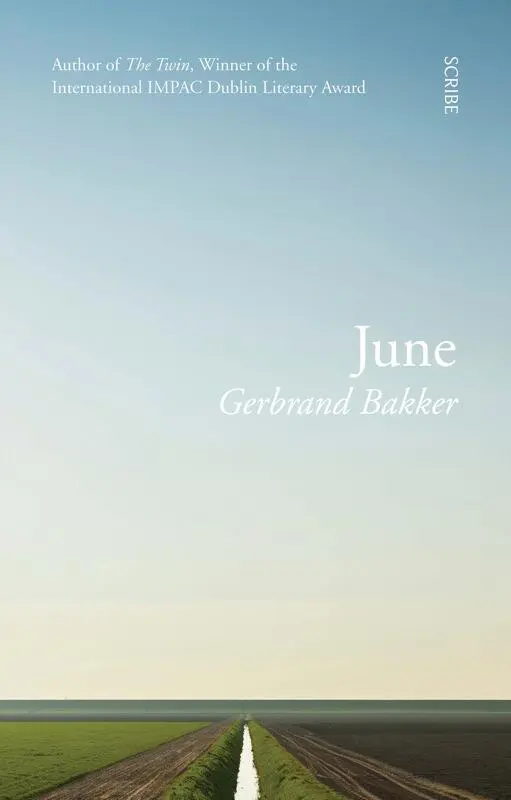
- Название:June
- Автор:
- Издательство:Scribe Publications
- Жанр:
- Год:2015
- ISBN:нет данных
- Рейтинг книги:4 / 5. Голосов: 1
-
Избранное:Добавить в избранное
- Отзывы:
-
Ваша оценка:
June: краткое содержание, описание и аннотация
Предлагаем к чтению аннотацию, описание, краткое содержание или предисловие (зависит от того, что написал сам автор книги «June»). Если вы не нашли необходимую информацию о книге — напишите в комментариях, мы постараемся отыскать её.
It would have been an unforgettable day of celebration if only the baker hadn’t been running late with his deliveries and knocked down Hanne, playing on the roadside, with his brand-new VW van.
Years later, Jan Kaan arrives on a hot day in June in order to tidy his sister’s grave, and is overcome again with grief and silent fury. Isn’t it finally time to get to the bottom of things? Should the permit for the grave be extended? And why won’t anyone explain to his little niece Dieke why grandma has been lying up in the hayloft for a day and a half, nursing a bottle of Advocaat and refusing to see anyone?
June
June — читать онлайн бесплатно полную книгу (весь текст) целиком
Ниже представлен текст книги, разбитый по страницам. Система сохранения места последней прочитанной страницы, позволяет с удобством читать онлайн бесплатно книгу «June», без необходимости каждый раз заново искать на чём Вы остановились. Поставьте закладку, и сможете в любой момент перейти на страницу, на которой закончили чтение.
Интервал:
Закладка:
‘What?’
‘It’s a saying.’ He looks to the west. The hazy air is advancing, the sun no longer quite as bright.
Dieke whispers something.
‘What’d you say, Diek?’
‘I’d like to go home after all.’
‘Then you can come with me in a minute, OK?’
‘OK.’ They walk back together, holding hands. When they reach Jan, Dieke lets go of his hand and carries on to the bench under the linden. She picks up her cup and starts to drink. ‘Phew,’ she says, screwing the lid back on the cup.
‘That cuttlebone…’ Jan says.
‘What about it?’
‘What’s it for?’
‘To get it nice and clean.’
‘It’s useless. The stone’s way too rough.’
‘OK, we know that for next time then.’
Jan pulls the brush back out of the w and looks at him. After a while he says, ‘Yep.’
It’s not always easy, watching your children. They resemble you so much. Sometimes they come so close it’s frightening. Jan especially can get a look in his eye that makes Zeeger Kaan feel quite uncomfortable.
‘There’s an auntie of mine over there,’ Dieke yells from her bench. ‘Under the ground.’
Sometimes their faces merge and he’ll suddenly see Jan in Klaas, or Klaas in Jan, and have to close his eyes to get it right again. At other times he’ll see himself, and that gets stronger as they grow older: bags under their eyes, lines at the sides of their mouths, creases in their foreheads. Not with Johan of course, he’s the exception to every rule. Since the accident he’s developed into the best-looking Kaan by far.
‘Is “Piccaninny black as black” a boy or a girl?’
He looks away, opens his mouth to answer his son, then closes it again and hums until he gets up to ‘ so she put up her umbrella ’. ‘She,’ he says. ‘She’s a girl.’
‘You sure?’
‘Yep.’
‘Hey!’ Dieke yells. ‘Can you hear me?’
‘Sure. Is it warm enough for you?’
‘Warm’s not the right word,’ Jan says.
‘I think it’ll be better tomorrow.’
‘I won’t be here tomorrow.’
‘We’re going fishing tonight!’ Dieke calls.
‘You don’t even have a rod,’ says Zeeger Kaan.
‘ You do!’
‘Careful, that “e” isn’t going right.’
Jan stands up to hand him the brush.
‘No.’
‘Yes. Go ahead.’
‘Don’t start.’
‘Maybe you can do it better yourself.’
‘No.’ He pushes his son’s hand away.
‘What are you doing?’ Dieke calls.
‘My knees hurt.’
Jan lowers himself back down until he’s sitting on the gravel with his legs either side of the raised edges. ‘You asked me to do it. If you go on at me like that, I’ll just stop.’
‘OK,’ says Zeeger Kaan. It’s true, he thinks. I did ask him. He’s the best painter, he does the maintenance on all those holiday homes over on Texel, and he always used to criticise me when I was painting. And rightly so, I loathed all that scraping and sanding. But I never painted full in the sun.
Zeeger Kaan goes for a wander around the ever-shrinking cemetery. He runs a hand over his short hair, he rubs a knee.
‘You going already?’ Dieke screams.
‘No,’ he calls back. ‘Just a little longer.’
‘Don’t forget me, OK?’
Children’s graves are marked with stuffed animals that were once rain-soaked and swollen and are now dry, lumpy and flocky. He looks at the names and years on the headstones. Three mayors buried in a row. All three of them alone, without wives. One of them was mayor when the old Queen came to visit. Knowing him, he probably said something grovelling like, ‘This way if you please, Your Majesty. Lunch will be served here inside,’ before they disappeared into the Polder House. A bunch of daffodils at the foot of the monument to the English airmen is completely withered, just this side of crumbling to dust. He walks on into the older section, behind the Polder House.
‘Are you going?’
‘I’ll be back in a minute, Diek!’
‘Are you in such a hurry to go?’ he hears his son ask.
‘Not really,’ Dieke says.
He stops at his parents’ grave: Jan Kaan and Neeltje Kaan-Helder . A grave that’s much newer than the one Jan’s working on. A grave whose lease, as he now remembers, needs renewing for another ten years sometime soon. Lying next to them are his grandmother and grandfather: Zeeger Kaan and Griet Kaan-van Zandwijk . Always strange to see your own name on a headstone. He never knew his grandfather, who died young. But his grandmother didn’t die until she was ninety-five, on a stormy night in November. Dozens of roof tiles in the yard, fallen trees, no electricity, a big crack in one of the front windows. And early in the morning, a dead grandmother in the three-quarter bed. He stood there, studying her face for a long time, making out what he took for a last trace of resistance. Anna stood next to him, squeezing his hand so hard she was almost crushing it, and he wanted to look at her and smile, but couldn’t tear his eyes away from the dead woman. In the days that followed, his father and mother had a massive clear-out, with virtually everything going onto a huge pile behind the farmhouse that they weren’t able to light for two or three days because of the constant easterly. The old kapok mattress smoked and fizzed for a long time before it finally caught fire, the sansevierias exploded damply.
He walks on quickly to the gravediggers’ shed, where he turns on the tap, cups his hands and splashes water on his face. Then he sees his father, who after clearing the broken tiles from the yard, went directly to his mother’s cabinet and took out his medal. A gold medal, won with the sleigh on Kolhorn harbour one freezing winter. His father was very good with horses. Rubbing the medal on his chest, puffing on it and cleaning it again, while behind him his mother lay dead in her three-quarter bed. The farm was finally his.
He looks in through the window. A shrivelled magpie is hanging on a string. There is a heavy mallet. An old-fashioned bier. Spades and shovels, posts. It must be suffocating in there.
Going back to get Dieke, he realises that there is a whole village under his feet. No, several villages. And still, the older he gets, the smaller and more cramped this place becomes. Will there be space for me? he wonders. Nellie, that was the name of the horse his father won the medal with. Bloody hell, that just popped up out of nowhere.
‘We’re off.’
‘Yes!’ says Dieke. She jumps down onto the ground, grabs her rucksack and heads straight for the gate.
‘We have to say goodbye to Jan first.’
‘Oh, yeah.’
Jan is up to the second e . Zeeger notices how muscular his back is: although he’s bending forward, his backbone is still in a furrow, not sticking out at all. ‘You should take that T-shirt off your head and just put it on.’ A muscular back and thinning hair.
‘Do you know what I thought of this morning, riding past the Polder House?’
‘What?’
‘Uncle Piet, and how he stood on that black ledge.’
‘What do you mean?’
‘At the funeral. He stood on that black ledge without holding on to anything.’
‘Ah, son, come on. That’s not even possible.’
‘Are we going now?’ Dieke asks.
‘It’s still true.’ He’s talking without looking up. He dips the brush into the paint again and puts the tip in the t.
Zeeger Kaan sighs. What an imagination. He takes Dieke’s hand. ‘Come on.’
When they’re seven or eight graves away, Jan calls out to him. ‘Did Mum say anything?’
‘No,’ he lies.
‘Did you try to get her down?’
Читать дальшеИнтервал:
Закладка:
Похожие книги на «June»
Представляем Вашему вниманию похожие книги на «June» списком для выбора. Мы отобрали схожую по названию и смыслу литературу в надежде предоставить читателям больше вариантов отыскать новые, интересные, ещё непрочитанные произведения.








Обсуждение, отзывы о книге «June» и просто собственные мнения читателей. Оставьте ваши комментарии, напишите, что Вы думаете о произведении, его смысле или главных героях. Укажите что конкретно понравилось, а что нет, и почему Вы так считаете.