Ian McGuire - The North Water
Здесь есть возможность читать онлайн «Ian McGuire - The North Water» весь текст электронной книги совершенно бесплатно (целиком полную версию без сокращений). В некоторых случаях можно слушать аудио, скачать через торрент в формате fb2 и присутствует краткое содержание. Год выпуска: 2016, Издательство: Henry Holt and Co., Жанр: Современная проза, на английском языке. Описание произведения, (предисловие) а так же отзывы посетителей доступны на портале библиотеки ЛибКат.
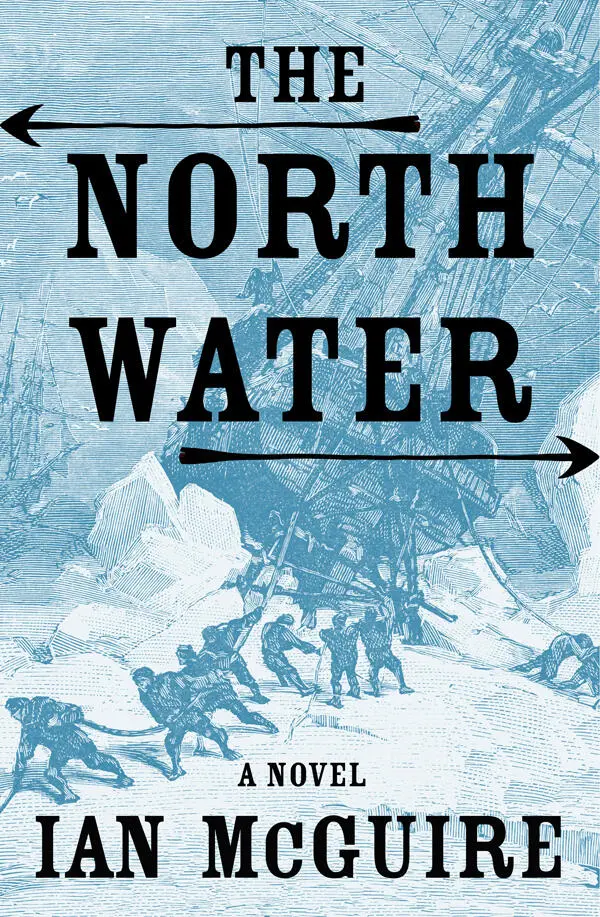
- Название:The North Water
- Автор:
- Издательство:Henry Holt and Co.
- Жанр:
- Год:2016
- ISBN:нет данных
- Рейтинг книги:4 / 5. Голосов: 1
-
Избранное:Добавить в избранное
- Отзывы:
-
Ваша оценка:
The North Water: краткое содержание, описание и аннотация
Предлагаем к чтению аннотацию, описание, краткое содержание или предисловие (зависит от того, что написал сам автор книги «The North Water»). Если вы не нашли необходимую информацию о книге — напишите в комментариях, мы постараемся отыскать её.
“This is a novel that takes us to the limits of flesh and blood. Utterly convincing and compelling, remorselessly vivid, and insidiously witty, The North Water is a startling achievement.” —Martin Amis
A nineteenth-century whaling ship sets sail for the Arctic with a killer aboard in this dark, sharp, and highly original tale that grips like a thriller.
Behold the man: stinking, drunk, and brutal. Henry Drax is a harpooner on the Volunteer, a Yorkshire whaler bound for the rich hunting waters of the arctic circle. Also aboard for the first time is Patrick Sumner, an ex-army surgeon with a shattered reputation, no money, and no better option than to sail as the ship's medic on this violent, filthy, and ill-fated voyage.
In India, during the Siege of Delhi, Sumner thought he had experienced the depths to which man can stoop. He had hoped to find temporary respite on the Volunteer, but rest proves impossible with Drax on board. The discovery of something evil in the hold rouses Sumner to action. And as the confrontation between the two men plays out amid the freezing darkness of an arctic winter, the fateful question arises: who will survive until spring?
With savage, unstoppable momentum and the blackest wit, The North Water weaves a superlative story of humanity under the most extreme conditions.
The North Water — читать онлайн бесплатно полную книгу (весь текст) целиком
Ниже представлен текст книги, разбитый по страницам. Система сохранения места последней прочитанной страницы, позволяет с удобством читать онлайн бесплатно книгу «The North Water», без необходимости каждый раз заново искать на чём Вы остановились. Поставьте закладку, и сможете в любой момент перейти на страницу, на которой закончили чтение.
Интервал:
Закладка:
“Too many mouths to feed already,” he says. “And I int about to ask the men to drag that fucker four miles across the ice. They have enough to haul as it is. Here”—he gives him a rifle—“I’d gladly do it myself except I hear you’ve grown fond of the beast.”
Sumner takes the rifle and crouches down to look into the cask.
“I won’t shoot him when he’s sleeping like that. I’ll take him over yonder and let him wander about a little first.”
“Do it howsoever you like,” Cavendish says. “Just so long as he’s gone by morning.”
Sumner attaches a rope to the metal grille, and, with Otto’s assistance, begins to move the cask. When he estimates they are far enough from the edge of the makeshift camp, they stop and Sumner unhooks the latch, kicks the grille open, and retreats. The bear ambles out onto the ice. He is almost twice as large now as when they caught him. He has grown plump from Sumner’s regular morning feedings, and his previously grubby fur is bright and clean. They watch him ambling about, heavy pawed, phlegmatic, sniffing the cask, then nudging it twice with his snout.
“He can’t survive on his own even if we let him go,” Sumner says to Otto. “I’ve spoiled him with feeding. He wouldn’t know how to hunt.”
“Better to shoot him now,” Otto agrees. “I know a furrier in Hull will give you a fair price for the skin.”
Sumner loads the rifle and takes his aim. The bear stops moving and turns sideways, exposing his broad flank, as if offering himself to Sumner as the easiest possible target.
“Just behind the ear is quickest,” Otto says.
Sumner nods, tightens his grip on the stock, and lines up the shot. The bear turns calmly to look at him. His thick white neck, his garnet eye. Sumner wonders for a moment what the bear must be thinking and immediately wishes he hadn’t. He lowers the rifle and hands it to Otto. Otto nods.
“An animal has no soul,” he says. “But some love is possible nonetheless. Not the highest form of love, but still love.”
“Just fucking shoot him,” Sumner says.
Otto checks the rifle, then lowers onto one knee to set himself. Before he can take aim, however, the bear, as if sensing something important has altered, stiffens suddenly, then wheels heavily around and starts running, his broad columnar legs thudding against the ice and his claws kicking up brief clods of loose snow. Otto fires quickly at his retreating hindquarters but misses, and by the time he reloads the bear has disappeared behind a pressure ridge. The two men chase after him but they cannot match the bear’s speed across the ice. They get to the top of the ridge and fire off another hopeful shot, but the distance is already too large and the bear is moving too rapidly. They stand where they are, with the wreck behind them and the snow-clad cordillera ahead, and watch his galloping, rhythmical, whiteness fade gradually into the broader and more static whiteness of the floe.
That night the wind veers from north to west, and a violent storm blows up. One of the makeshift tents is ripped from its moorings, the framework of spars and booms that holds it up collapses, and the men inside, exposed suddenly to frigid blasts of wind and snow, are forced to chase the loose and cartwheeling canvas out across the ice. Eventually, when it snags on a hummock, they wrestle it down and drag it, writhing and flapping, back to the camp. The gale makes repairs impossible, so instead they secure what they can with ropes and ice anchors, and seek shelter in the second tent. Sumner, who cannot sleep because he has no laudanum, helps them drag inside what remains of their dampened bedding and make space on the floor. The noise outside is enormous. The ice is moving again, and Sumner can hear, below the shrill descant of the wind and the rattling and straining of the canvas, an occasional dull and vast concussion as the pack roves and breaches.
Otto and Cavendish venture out to check the safety of the whaleboats and come back shivering and wreathed in snow. The men wrap themselves in blankets and cluster round the feeble heat of a small iron stove up on bricks in the middle of the tent. Sumner, on the fringes, curls up on himself, pulls his cap down over his eyes, and tries to sleep but can’t. He is sure now that the medicine chest containing his supply of opium has been transferred to the Hastings already, that it was included in error, along with his sea chest, in the supplies carried by the first party. One night without opium, he thinks, is easy enough, but if this storm persists and they are forced to stay on the ice a second night, he will begin to sicken. He curses himself for not paying closer attention to his necessaries, and he curses Jones for not being more careful about what was packed in the boats. He closes his eyes and tries to imagine he is elsewhere, not Delhi this time but Belfast, sitting in Kennedy’s drinking whiskey, rowing on the Lagan, or in the dissecting rooms with Sweeney and Mulcaire, smoking cheap shag and gabbing about the girls. He falls, after a while, into a murky restless kind of drowse, not fully asleep but not awake either. The rest of the men coagulate into a dark and snoring heap beside him, the collective warmth of their pressed-together bodies clinging to them briefly, then dissipating upwards in the chill and swirling air.
After a few more hours, the storm appears to have steadied itself, to have reached an equilibrium which may presage its end, when, with a fearsome crash, the floe itself, the very surface they are sleeping on, jolts upwards. One pole of the tent collapses and the iron stove topples over, sending red-hot coals spilling out and setting blankets and peacoats alight. Sumner, bewildered, chest tight with alarm, pulls on his boots and dashes outside into the gloom. Through a stuttering veil of snow he sees at the floe edge a bluish iceberg, immense, chimneyed, wind-gouged, sliding eastwards like an albinistic butte unmoored from the desert floor. The berg is moving at a brisk walking pace, and as it moves its nearest edge grinds against the floe and spits up house-size rafts of ice like swarf from the jaws of a lathe. The floe shudders beneath Sumner’s feet; twenty yards away a jagged crack appears, and he wonders for a moment if the entire plateau might crumble under the strain and everything, tents, whaleboats, men, be pitched into the sea. No one now remains in the second tent. The men that were inside it are either standing transfixed like Sumner or are busy pushing and dragging the whaleboats farther away from the edge in a desperate effort to keep them safe. Sumner feels, as he watches, that he is seeing something he shouldn’t rightly see, that he is being made an unwilling party to a horrifying but elemental truth-telling.
As quickly as the chaos began, however, it ceases. The berg loses contact with the edge of the ice, and the shuddering cacophony of impact gives way to the remnant howling of the wind and the oaths and curses of the men. Sumner notices for the first time that snow is pelting against the left side of his face and gathering in his beard. He feels for a moment wrapped up, cocooned, made strangely private, by the fierceness of the weather, as if the world beyond, the real world, is separate and forgettable, and he alone inside the whirl of snow exists. Someone tugs his arm and points him backwards. He sees that the second tent is now ablaze. Mattresses, rugs, and sea chests are burning fiercely; what remains of the canvas is whipping about in the high wind and flaming like a tar barrel. The rump of the crew stare aghast, their helpless faces brightened by the high dancing flames. Cavendish, after kicking at the embers and bewailing his ill luck, yells for them to take refuge in the remaining whaleboats. Working rapidly but without method, they empty out the two boats, pack themselves inside like cargo, then pull the tarpaulins taut across the top. The resultant spaces are fetid and coffin-like. The air inside is sparse and pungent, and there is no light at all. Sumner is lying on bare, cold timbers, and the men arrayed around him are talking loudly and bitterly about the incompetence of Cavendish, the astonishing ill luck of Brownlee, and their desire above all and despite everything to get home alive. Exhausted but sleepless, his muscles and inner organs beginning to itch and agitate with the unmet need for opium, he tries again to forget where he is, to imagine he is somewhere better, happier, but he can’t succeed.
Читать дальшеИнтервал:
Закладка:
Похожие книги на «The North Water»
Представляем Вашему вниманию похожие книги на «The North Water» списком для выбора. Мы отобрали схожую по названию и смыслу литературу в надежде предоставить читателям больше вариантов отыскать новые, интересные, ещё непрочитанные произведения.








Обсуждение, отзывы о книге «The North Water» и просто собственные мнения читателей. Оставьте ваши комментарии, напишите, что Вы думаете о произведении, его смысле или главных героях. Укажите что конкретно понравилось, а что нет, и почему Вы так считаете.