Peter Carey - Collected Stories
Здесь есть возможность читать онлайн «Peter Carey - Collected Stories» весь текст электронной книги совершенно бесплатно (целиком полную версию без сокращений). В некоторых случаях можно слушать аудио, скачать через торрент в формате fb2 и присутствует краткое содержание. Год выпуска: 1996, Издательство: Faber and Faber, Жанр: Современная проза, на английском языке. Описание произведения, (предисловие) а так же отзывы посетителей доступны на портале библиотеки ЛибКат.
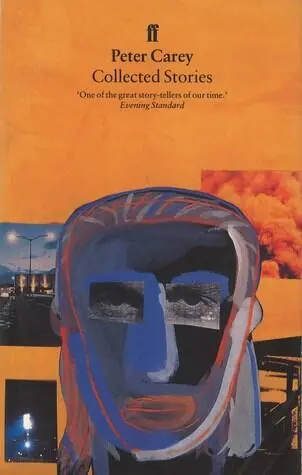
- Название:Collected Stories
- Автор:
- Издательство:Faber and Faber
- Жанр:
- Год:1996
- ISBN:нет данных
- Рейтинг книги:5 / 5. Голосов: 1
-
Избранное:Добавить в избранное
- Отзывы:
-
Ваша оценка:
Collected Stories: краткое содержание, описание и аннотация
Предлагаем к чтению аннотацию, описание, краткое содержание или предисловие (зависит от того, что написал сам автор книги «Collected Stories»). Если вы не нашли необходимую информацию о книге — напишите в комментариях, мы постараемся отыскать её.
Collected Stories — читать онлайн бесплатно полную книгу (весь текст) целиком
Ниже представлен текст книги, разбитый по страницам. Система сохранения места последней прочитанной страницы, позволяет с удобством читать онлайн бесплатно книгу «Collected Stories», без необходимости каждый раз заново искать на чём Вы остановились. Поставьте закладку, и сможете в любой момент перейти на страницу, на которой закончили чтение.
Интервал:
Закладка:
“Yes, most of all …”
“Most of all it is because you’re frightened of pleasure. You can’t have pleasure yourself. You don’t know how. You can’t stand the sight of me having pleasure. You can’t give me pleasure, so you’re damned if anything else is going to.”
The car swung off the road and onto the verge. It skidded in gravel. For a moment, as the wheels locked and the car slid sideways, she thought that it would roll. It turned 180 degrees and faced back the way it had come, its engine silent, red lights burning brightly on the dash.
“You’re saying I’m a lousy fuck.”
“I’m saying you give me no pleasure.”
“You used to make enough noise.”
“I loved you. I wanted to make you happy.”
Mort didn’t say anything for a moment. The silence was a tight pink membrane stretched through pale air.
She looked at the warning lights, thinking the ignition should be turned off.
She was expecting something, but when the blow came she did not know what happened. It felt like an ugly granite lump of hate, not a fist. Her head was hit sideways against the window.
Everything that happened then was slow and fast all at once. She felt wetness on her face and found tears rather than the blood she had expected. At the same time she saw the bird rise from her lap and fly at Mort. She saw Mort cower beneath the steering wheel and saw the bird peck at his head. She saw, like a slow-motion replay, the policeman walk onto the road howling with pain. She quietly picked up the bird in both hands as she had done it a hundred times every day, and quietly wrung its neck.
She held the body on her lap, stroking it.
She watched Mort, whom she did not love, weep across the steering wheel.
9.
They drove in grey silence for there was nothing else to do. It was as if they travelled along the bottom of the ocean floor. If there was sun they didn’t see it. If there were clouds they took no note of their shapes or colours.
If they had come to a motel first it is possible that the ending might have been different but, turning down a road marked A34, they came to their first forest of Kennecott Rock-drill. It grew across the road like a wall. It spread through a shopping complex and across a service station. Water gushed from broken pipes.
When they left the car the smell of gasoline enveloped them and in the service station they saw a huge underground tank pushed up through a tangle of roots and broken concrete, its ruptured skin veiled by an inflammable haze.
Lilly heard a sharp noise, a drumming, and looked to see Mort hammering on the car’s bonnet with clenched fists, drumming like a child in a tantrum. He began screaming. There were no words at first. And then she saw what he had seen. Above their heads the branches of the trees were crowded with the birds, each one as blue and jewel-like as the dead body that lay in the front seat of the car. Through mists of gasoline Lilly saw, or imagined she saw, a curious arrogance in their movements, for all the world like troops who have just accomplished a complicated and elegant victory.
A Schoolboy Prank
1.
It is Monday morning and the prank will not be played until seven o’clock tonight. The backyards are quiet: paling fences, trim grass and gum leaves floating in suburban swimming pools. In the middle of this a man stands crying, gulping in the blue early summer air in huge desperate breaths.
The noise is frightening, like curtains rending in temples, ancient statues falling, the woes of generations in pyres of lace curtains and tinder-dry wood.
A neighbour stands peering from his back steps, standing with the shocked uncertainty of those who witness motor accidents.
Turk Kershaw is weeping.
Turk Kershaw is a large man, hard, gnarled, knurled, lumped like a vine that has been cut and pruned and retained and restrained so that he has grown strong and old against the restrictions placed on him. He has grown around them like a tree grows around fencing wire. He has grown under them and his roots have slid into rock crevices, coarse-armed, fine-haired, searching for soft soil and cool water.
He is red-necked, close-barbered, with a gnome-like forehead, a thick neck and a strong pugnacious chin. The noise he now makes is strange and frightening to him and does not seem to be his. It has erupted from him out of nowhere.
Turk Kershaw is sixty-six years old and his dog, old and worn as a hallway carpet, lies beside his foot, dead.
When Turk wept for the dog he wept for many things. He wept for a man who had died five years before and left his bed cold and empty. He wept for parents who had died twenty years before that. He wept for lost classrooms full of young faces, prayers after meals, the smell of floor polish, blue flowers in a pickle-jar vase. He wept because he was totally alone.
At seven o’clock in the morning Turk Kershaw began digging. The ground was dry and hard, too hard for a spade. He walked slowly back to the house to get a mattock.
2.
It was five o’clock in the afternoon. He waited at the Golden Nugget Bar to see what time had done to his pupils. They had idolized him and wished to please him with their success. He had had meetings like this before and he had always enjoyed the display of their triumphs, achievements as smooth and predictable as hens’ eggs.
But today, in the gaudy darkness of the Golden Nugget amidst the cufflinks and the high-heeled shoes, all he could think was that his dog had died. He took a large gulp of the expensive whisky, gritted his teeth and swallowed hard. He was terrified that he might cry again. It was ridiculous. It would be seen to be ridiculous for him to cry because his dog died. It would not be acceptable to these bright young men who would shortly arrive. Yet he could think of nothing but the emptiness of the house without the dog. There were too many empty things in the house anyway: a bed that was now too large, a pottery kiln that was no longer used, a dining room that had been vacated in favour of the chromium table in the kitchen. And now there was a metal food bowl which the dog had nightly nuzzled into a corner as he had eaten his food. There was an old chipped porcelain bowl still filled with water and, on the kitchen bench, a half-empty packet of dry dog food. He should have thrown them out.
It was ridiculous, it would be seen to be ridiculous. He had loved his dog. A man can love a dog. There was no one to explain this to.
Turk Kershaw was a legend and a character and tears did not form part of his myth.
The waitress who brought him his second Scotch, a Scotch he couldn’t afford, did not treat him as a myth or a legend. She saw only a seedy old man in a tweed sportscoat who might once have been good-looking. He was a large man and his leather-patched sportscoat was a little too small for him. He counted the money for the drink from a small leather purse and as she waited for him to add up the coins she wondered if he was an old queen. Whatever he was, he didn’t belong here and she managed to let him know it, tapping her foot impatiently while he provided her with exactly the right money. No tip. Fuck you, she thought, you’re going to wait a long time for your next drink. She left him disdainfully, an old man with dandruff on his shoulders who ate Lifesavers with his Scotch.
Turk Kershaw barely remembered the students who would meet him today, yet he missed them dreadfully. Somewhere in the midst of the smells of tobacco and perfume he smelt the very distinctive odour of floor polish and he ached for the comforts of boarding school where floor polish was the dominant perfume of innocent romances, crushes and night assignations. He had, of course, not participated in any of this but had enjoyed being amongst them, feeling like an old bull in the midst of nuzzling calves.
Читать дальшеИнтервал:
Закладка:
Похожие книги на «Collected Stories»
Представляем Вашему вниманию похожие книги на «Collected Stories» списком для выбора. Мы отобрали схожую по названию и смыслу литературу в надежде предоставить читателям больше вариантов отыскать новые, интересные, ещё непрочитанные произведения.





Обсуждение, отзывы о книге «Collected Stories» и просто собственные мнения читателей. Оставьте ваши комментарии, напишите, что Вы думаете о произведении, его смысле или главных героях. Укажите что конкретно понравилось, а что нет, и почему Вы так считаете.