Curtis Sittenfeld - Eligible
Здесь есть возможность читать онлайн «Curtis Sittenfeld - Eligible» — ознакомительный отрывок электронной книги совершенно бесплатно, а после прочтения отрывка купить полную версию. В некоторых случаях можно слушать аудио, скачать через торрент в формате fb2 и присутствует краткое содержание. Год выпуска: 2016, Издательство: Random House, Жанр: Современная проза, на английском языке. Описание произведения, (предисловие) а так же отзывы посетителей доступны на портале библиотеки ЛибКат.
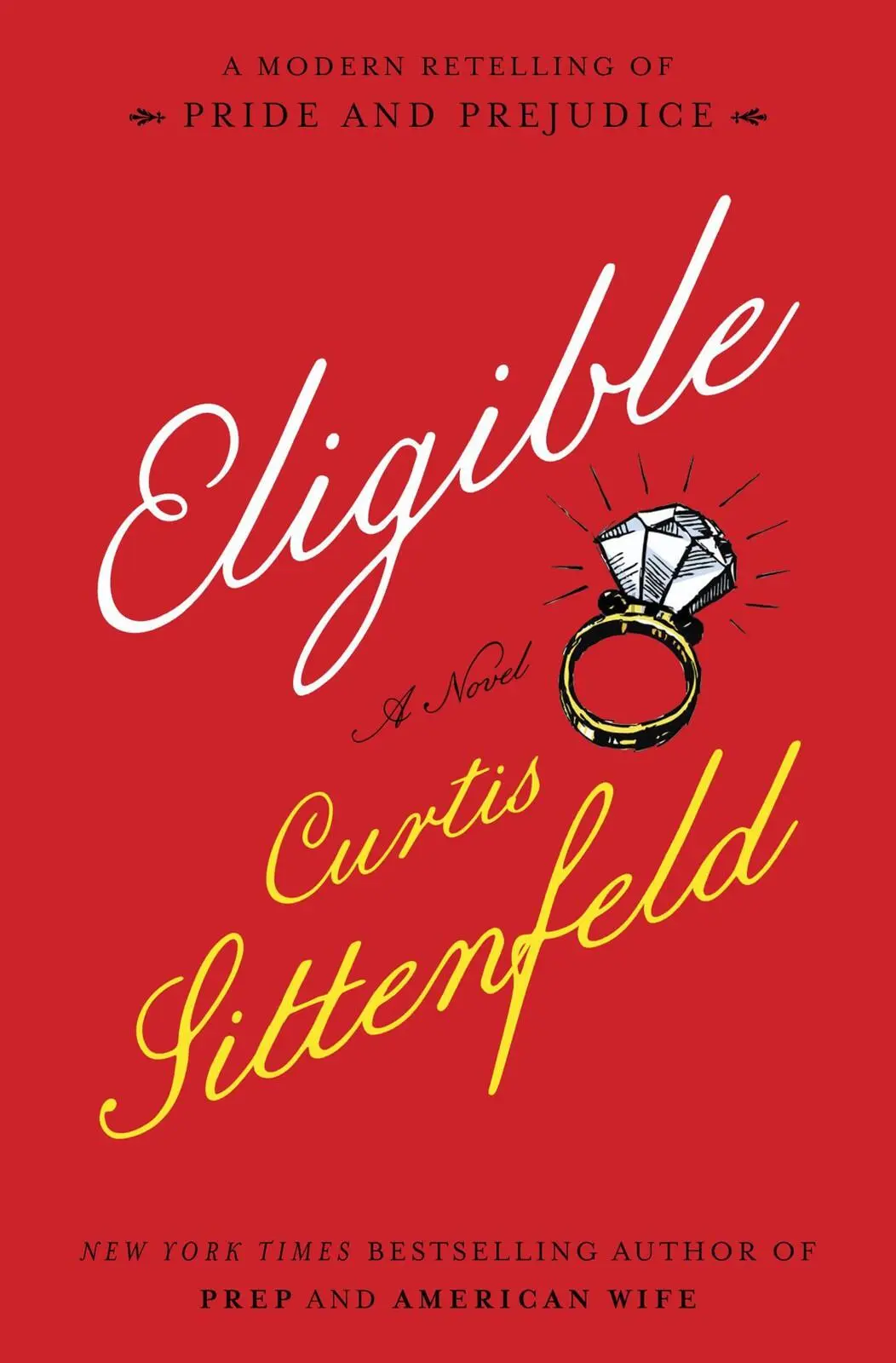
- Название:Eligible
- Автор:
- Издательство:Random House
- Жанр:
- Год:2016
- ISBN:нет данных
- Рейтинг книги:3 / 5. Голосов: 1
-
Избранное:Добавить в избранное
- Отзывы:
-
Ваша оценка:
Eligible: краткое содержание, описание и аннотация
Предлагаем к чтению аннотацию, описание, краткое содержание или предисловие (зависит от того, что написал сам автор книги «Eligible»). Если вы не нашли необходимую информацию о книге — напишите в комментариях, мы постараемся отыскать её.
This version of the Bennet family — and Mr. Darcy — is one that you have and haven’t met before: Liz is a magazine writer in her late thirties who, like her yoga instructor older sister, Jane, lives in New York City. When their father has a health scare, they return to their childhood home in Cincinnati to help — and discover that the sprawling Tudor they grew up in is crumbling and the family is in disarray.
Youngest sisters Kitty and Lydia are too busy with their CrossFit workouts and Paleo diets to get jobs. Mary, the middle sister, is earning her third online master’s degree and barely leaves her room, except for those mysterious Tuesday-night outings she won’t discuss. And Mrs. Bennet has one thing on her mind: how to marry off her daughters, especially as Jane’s fortieth birthday fast approaches.
Enter Chip Bingley, a handsome new-in-town doctor who recently appeared on the juggernaut reality TV dating show Eligible. At a Fourth of July barbecue, Chip takes an immediate interest in Jane, but Chip’s friend neurosurgeon Fitzwilliam Darcy reveals himself to Liz to be much less charming. .
And yet, first impressions can be deceiving.
Wonderfully tender and hilariously funny, Eligible both honors and updates Austen’s beloved tale. Tackling gender, class, courtship, and family, Sittenfeld reaffirms herself as one of the most dazzling authors writing today.
Eligible — читать онлайн ознакомительный отрывок
Ниже представлен текст книги, разбитый по страницам. Система сохранения места последней прочитанной страницы, позволяет с удобством читать онлайн бесплатно книгу «Eligible», без необходимости каждый раз заново искать на чём Вы остановились. Поставьте закладку, и сможете в любой момент перейти на страницу, на которой закончили чтение.
Интервал:
Закладка:
She returned to the Tudor without either laying eyes on him or coming to a conclusion about what her course of action ought to be; and thus, in more than one way, she was deeply frustrated.
Chapter 91
THE NAMES OF the prospective buyers were Jacqueline and Adam Whitman, and they offered the Bennets $915,000 for the Tudor, which offended Mrs. Bennet so keenly that she took to her bed immediately upon hearing the figure. Shane had emailed a scanned copy of the offer to Liz as dinner was concluding, and the amount had left Mrs. Bennet unable even to watch television in the den; she needed to manage her distress from a prone position.
“You’ll end up meeting them somewhere in the middle,” Liz said from the doorway of her mother’s room. “This isn’t the last word.”
“Leave me be,” her mother replied. “You’ve done enough damage.”
Chapter 92
AT MR. BENNET’S appointment with his orthopedist, Dr. Facciano said, “You seem to have regained a full range of motion. Any pain?”
“Only the emotional kind, inflicted by my children,” Mr. Bennet said.
“Does that mean he can drive again?” Liz asked.
“I don’t see why not,” Dr. Facciano said.
“Wow,” Liz said. “Aren’t you thrilled, Dad?”
“I am,” Mr. Bennet said. “Because now your last excuse for not returning to New York has been obviated.”
“I’m staying until Mom’s luncheon,” Liz said, and her father rolled his eyes.
He said, “Then for that, you have no one to blame but yourself.”
Chapter 93
DURING HER EVENING run, which had replaced her morning run, just before Liz turned from Grandin Road onto Madison Road — which was to say not before she’d begun speculating about whether she’d see Darcy but before she’d reasonably expected that she would — there he was: tall and composed and minimally sweaty, presumably thinking supercilious thoughts but looking so unjustly handsome as he did that all her internal organs lurched a little. His real self, his actual physical body before her, as opposed to the tempting yet irritating idea of him, was somehow a surprise. In as blasé a tone as she could manage, she said, “How are people’s brains today?”
“If I’m seeing them, not good.” He was running in place, waiting for Liz to catch up to him, and when she had, he began running next to her.
She said, “You know how everyone says, ‘It’s not brain surgery’—do you and your colleagues say, ‘This is kind of hard, but, hey, it is brain surgery’?” The look on his face prompted her to add, “Am I the millionth person to ask you that?”
“You aren’t the first.” As they continued north on Madison Road, he added, “I’ve been meaning to tell you that my sister is a fan of yours. It turns out she’s subscribed to Mascara for years, and when I told her I’d met someone who works there, she knew immediately who you were.”
“She must have excellent taste.”
“Georgie is very intelligent. She’s a PhD student in history.”
“Do you dare tell me where she goes to school, or will I faint?”
“I knew you’d say something like that. She’s at Stanford.”
Liz pressed the back of one hand to her forehead. “Get my smelling salts!” She glanced at him — he appeared to be only mildly amused, if that — and said, “Seriously, tell her thank you for me. We at Mascara love our smart readers. Is your sister planning to be a professor?”
“If she can find a job out there. She’s a bit of a homebody.”
“Is she younger than you?”
“Significantly — she’s only twenty-six.”
“And does she literally still live at home? Keep in mind that for once I can’t pass judgment, given my own sisters.”
“My parents are deceased. Georgie lives in—”
“I’m sorry,” Liz interrupted, and rather stiffly, Darcy said, “It’s all right.” As they crossed Bedford Avenue, he added, “My father was older than my mother and passed away when I was in high school and Georgie was three. Our mother passed away five years ago. Georgie went to Stanford for undergrad, too, and she was living on campus at that point, which she still is. But she’s never wanted to give up our parents’ house. I don’t think she goes there when I’m not in town, but she’s very attached to it.”
“Do you want to sell it?”
“It’s on twelve acres, and it’s just sitting there. Someone might as well enjoy it.”
“You grew up in the Bay Area, right?” Liz tried to sound casual. Had he really just said twelve acres?
Matter-of-factly, Darcy said, “In Atherton,” and Liz then understood what she previously hadn’t bothered to consider. It wasn’t astonishing that Darcy came from an affluent family — both his education and bearing had provided clues — but it hadn’t occurred to her that his affluence was so extreme. She could hardly guess, in this day and age, at the value of such a property in such a place: Thirty million dollars? Forty? Personality aside, he really was almost freakishly eligible.
She said, “Is there still furniture in the house?”
He nodded. “A couple lives on the grounds in their own cottage, our caretaker, Roger, and his wife. Georgie and I go back a few times a year. It’s really a house for entertaining, so unless we’re having a bunch of guests, it’s kind of depressing. I prefer to sleep on a futon in Georgie’s apartment.”
How had Liz not googled Darcy prior to this moment? And no wonder Caroline Bingley was pursuing him. Not that his fortune made him more appealing to Liz — if it were only money she was after, she might have reciprocated her cousin’s interest. She thought of Darcy’s spare apartment, his fondness for seven-dollar meals at Skyline, and then she thought of having divulged to him her family’s financial troubles. If she’d known more about his background, she might not have; but since she already had, she said, “My parents got an offer on their house yesterday, from the first people who looked at it.”
“Congratulations.”
“Well, it’s low. But my point is that if they had the choice of holding on to that house forever, they would and so would my sisters.”
“You wouldn’t?”
“No, but, as my dad told me, I’m cold-blooded.”
“It sounds suspiciously like you’re bragging.”
“Are you working tonight?” Liz asked.
“I go in at eight.”
“Then should I come back to your apartment now or what?”
At this, Darcy actually laughed, which was a sound Liz had heard so few times that it was jarring. He said, “You certainly should.”
Chapter 94
IN THE DRIVEWAY of the Tudor, the back of Ham’s SUV was open, its interior stuffed with boxes topped by several dresses laid flat, still on their hangers. No one was outside, but as Liz stretched in the grass after her return from Darcy’s apartment, Lydia emerged carrying a stack of Seven Hills yearbooks and an earring rack, followed by Ham carrying a laundry basket full of folded clothes.
“Are you moving out?” Liz asked Lydia.
“Your ability to pick up on very subtle clues is impressive,” Lydia said. “Have you ever thought of being a detective?”
“The way you two bicker,” Ham said. “I’m going out on a limb here, because I’ve never had a sister, but it’s got to be an expression of love.” Without waiting for Lydia or Liz to respond, Ham added, “Liz, once we get Lydia unpacked, we want to have you over to our place for dinner.”
“Great,” Liz said. “And good luck with your new roommate, Ham.”
Ham smiled. “I believe I’m up to the challenge.”
Читать дальшеИнтервал:
Закладка:
Похожие книги на «Eligible»
Представляем Вашему вниманию похожие книги на «Eligible» списком для выбора. Мы отобрали схожую по названию и смыслу литературу в надежде предоставить читателям больше вариантов отыскать новые, интересные, ещё непрочитанные произведения.











Обсуждение, отзывы о книге «Eligible» и просто собственные мнения читателей. Оставьте ваши комментарии, напишите, что Вы думаете о произведении, его смысле или главных героях. Укажите что конкретно понравилось, а что нет, и почему Вы так считаете.