Bruce Wagner - I'll Let You Go
Здесь есть возможность читать онлайн «Bruce Wagner - I'll Let You Go» весь текст электронной книги совершенно бесплатно (целиком полную версию без сокращений). В некоторых случаях можно слушать аудио, скачать через торрент в формате fb2 и присутствует краткое содержание. Год выпуска: 2003, Издательство: Random House Trade, Жанр: Современная проза, на английском языке. Описание произведения, (предисловие) а так же отзывы посетителей доступны на портале библиотеки ЛибКат.
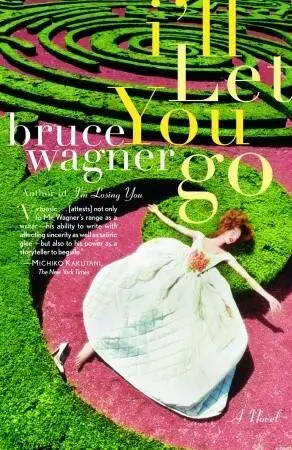
- Название:I'll Let You Go
- Автор:
- Издательство:Random House Trade
- Жанр:
- Год:2003
- ISBN:нет данных
- Рейтинг книги:4 / 5. Голосов: 1
-
Избранное:Добавить в избранное
- Отзывы:
-
Ваша оценка:
I'll Let You Go: краткое содержание, описание и аннотация
Предлагаем к чтению аннотацию, описание, краткое содержание или предисловие (зависит от того, что написал сам автор книги «I'll Let You Go»). Если вы не нашли необходимую информацию о книге — напишите в комментариях, мы постараемся отыскать её.
In this latter-day Thousand and One Nights, a boy seeks his lost father and a woman finds her long-lost love. . while a family of unimaginable wealth learns that its fate is bound up with two fugitives: Amaryllis, a street orphan who aspires to be a saint, and her protector, a homeless schizophrenic, clad in Victorian rags, who is accused of a horrifying crime.
I'll Let You Go — читать онлайн бесплатно полную книгу (весь текст) целиком
Ниже представлен текст книги, разбитый по страницам. Система сохранения места последней прочитанной страницы, позволяет с удобством читать онлайн бесплатно книгу «I'll Let You Go», без необходимости каждый раз заново искать на чём Вы остановились. Поставьте закладку, и сможете в любой момент перейти на страницу, на которой закончили чтение.
Интервал:
Закладка:
Let us address their itinerary. For the reader who tires of such inventories, a solution is at hand: accidental tourists may skip ahead, while the more adventurous (it is hoped, the majority) will be asked to surrender their passports forthwith. The trip will be swift — or perhaps feel swifter than our prefatory remarks — and cover much ground.
We are already in New Orleans; for Edward wished to visit a place where Mardi Gras masks are made. †The atelier outshines Olde CityWalk’s by a long shot. Not that Edward is covetous — it has the opposite effect. He is utterly seduced by all manner of feather, bead and sequin. But the legendary city is oppressively humid, and this does not make anyone happy. A prearranged visit to the home of Anne Rice salves their wounds. The sequestered writer is ill and graciously sends her regrets; an extensive tour of the imposing, atmospheric grounds is offered by her handsome son, also a novelist. Lucy is at once besotted, but cannot compete with Boulder, who already whines that if she’d been old enough she was certain to have been chosen by his mother to “limn” the part Kirsten had played in Interview with a Vampire. She is a snake! thinks Lucy uncharitably of her best friend, who keeps posing and wriggling and “limning,” and the young man seems fairly entranced. Disgusted, Lucy dumps Christopher Rice without him ever having known they were a couple.
England-bound. Cabin lights dimmed in readiness for sleep. The student body lay in flattened, cashmere-upholstered lounges while Tull Trotter, prompted by a certain mischievous cousin, entertains the spellbound Four Winders (and one or two anxious adults, who pretend not to listen) by reading aloud from a book of transcripts containing the blackbox recordings of fatally crashed airplanes. Aside from Tull’s radio-play voice, all one can hear is the drone of engines in the howling void, from which they are separated by a metallic husk of mere inches. Edward — whose king-size head, it may be too painstakingly observed, rested upon a $2,500 oversize Legends eiderdown pillow, its feathers collected by hand from Icelandic nests so as not to harm the ducks — titters devilishly from beneath his 435-thread-count filigreed oyster-colored silk hood, while Lucy, that high-flying authoress, tries to cadge a few moments with her Smythson Blue Maze Mystery journal, sending a scowl or two Tull’s way. Other than Edward, the only person deriving any real pleasure from this theater of cockpit cruelties is Mr. Hookstratten’s consort, the very weedy Reed; Tull’s tasty morsels (particularly monologues that end with pilots screaming for their mothers) elicit a steady, sardonic grin. The man is in his element.
Trinnie had insisted that while in England they visit her mentor — Randoll Coate, maze maker extraordinaire — for a tour in Gloucestershire. The extremely tall, extremely eccentric eightysomething gent was among the most amicable and learned of men (that would include Mr. Emerson Tabori) the Trotter children or for that matter the entire troupe had ever had the pleasure to meet. He spoke a great deal in phrases and whole paragraphs of other languages, and it was not a bore to wait for the enlightened translation, though sometimes the wait was very long indeed; some of the group is waiting still. At first defensive, for he was loath to have the Saint-Cloud maze upstaged, Tull gradually conceded that the Master’s creations were, well, different and, as such, not really competitive with his mom’s (or “mum’s,” as Lucy would have it, for while in England her pronunciation of words had subtly shifted; though to say the newly adopted accent was English would have been too generous). Some of the hedged puzzleboxes were barely three feet in height — Mr. Coate not subscribing to any hard-and-fast rules when it came to grafting his imaginative constructs onto garden or hillock.
As the Four Winders helped feed one of his egg-shaped foliated creatures bonemeal, he glanced up to ask — first in Italian, then in English—“What’s the difference between a book and a labyrinth? Nothing! There is no difference.” (He was full of koans, beans and majesty.) Lucy flushed at the revelation and instantly put pen to Smythson, certain that Merlin had just solved the Mystery of the Blue Maze. But Edward knew that Borges had said it first.
He led them deeper through a breathtaking lunar puzzle while recounting the minotaur’s tale. For the children, it was like hearing it afresh; such was Randoll’s art, they could almost smell the flatulence of that hairy, mythic beast. When he said “labyrinth” was thought to derive from the Minoan labrys , or “double-headed ax,” Edward, in the tireless arms of his carrier, cursorily added (and much to their host’s enchantment) that the item was most accurately defined “as a unicursal spiral to the center whereas a maze is a multicursal route: junctions and deceptions.”
“Choices,” added Randoll sunnily.
The old fabulist did not dawdle; like young Theseuses, they followed the thread of his erudition as best they could and in a short while found themselves within a “see-through” maze of espaliered apple and pear trees. Finally, five hundred yards farther, they traipsed amid the whimsical “Imprint of Man,” an enormous boxwood footprint, the great toe of which resided on a specially created Coatesian island of an adjacent river. Ms. Keaton nearly expired with delight; it was she, with Dexter at one hand and the intoxicated Lucille Rose at the other (for, at least while on the larger Isle, that is what the braided girl demanded to be called), who spearheaded the successful search-and-rescue of a disoriented and embarrassed Mr. Hookstratten — his verdant explorations of Randoll’s more complex outgrowths having been more labyrinthine than expected.
They were all put up at Leaf House, the marquess of Went’s little spread in the country. It was a lovely sight to see at dusk the caravan of children and caretakers moving swiftly over roads of packed gravel on bicycles retrieved from the belly of the Boeing, vintage Schwinns and Trussardi Classics, the latter trimmed in Napa leather. †Edward took over the bathroom suite. Tended by a host of country elves, he soaked to heart’s content in the marquess’s $42,000 hand-crafted Archeo copper tub while Lucy fork-fed him grilled white peaches sprinkled with cardamom and sugar. For dinner, there were hamburgers and Black Sphinx dates; fresh sheep’s-milk ricotta with warmed lemon-lime marmalade; french fries and fragile fraises des bois dipped in crème fraîche.
The next few days were occupied with incursions to sundry frescoed palazzi and Palladian villas along the Riviera del Brenta, between Padua and Venice. A canal side trip to the deserted fourteenth-century private chapels of Abruzzo, Ovid’s birthplace, provided the occasion for a filibuster by their very own medievalist on the subject of architecture, Marcus Vitruvius Pollio and “The First House — Myth, Paradigm and the Task of Architecture,” to be more exacting. Half those present nearly fainted from boredom.
But we wouldn’t wish such doldrums to overtake us here; for time is precious and must be moved along, and there are pressing concerns in the County Los Angeles.
To summarize, these are the places the silver BBJ bullet alit, though not necessarily in the order presented: the Temple of the Tooth in Sri Lanka (resting place of the sacred molar of Buddha, snatched from the flames of his funeral pyre in 483 B.C.); the Londolozi game preserve in South Africa (where children sat on pearwood-and-leather folding chairs from Hermès under Missoni maharajah’s tents, drinking Diet Pepsi from Asprey steel flasks while adults, engorged with satiny Bresse chicken, truffles en gelée and lavender sorbet, lazily confined themselves to Henry Beguelin chaises on faux Aubusson rugs); the Old City of Jerusalem (where Boulder, within a stone’s throw of the Wailing Wall, was actually asked to sign autographs — prompting Tull to make a crack on the Via Dolorosa about the “Shroud of Tourists” which so convulsed the First Cousin that his anxious handlers began plotting routes to the nearest hospital); two sprawling villas in Marrakesh (one of which, informed Mr. Hookstratten, happened to be built by the descendants of Tolstoy; Mr. Giorgio Armani and his party had decamped only the night before), the base from which they sallied forth to souks, Berber villages and desert camelback excursions in the shadow of the Atlas Mountains — though Edward, hard at work weaving a “bespoke djellaba,” spent most of his time sipping blood-orange juice and soaking in the tadelakt bath — returning late in the afternoon, where, surrounded by palm groves, yellow roses, periwinkles and plum trees, all sat on the terrace of a place called Orchard of the Shooting Star, and partook of partridge soup and swathed jellies on cloth-covered dough that had baked all night buried in sand. †(One evening they ate in the heart of the medina, scant tables away from King Mohamed VI.)
Читать дальшеИнтервал:
Закладка:
Похожие книги на «I'll Let You Go»
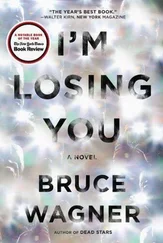
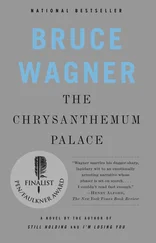
Представляем Вашему вниманию похожие книги на «I'll Let You Go» списком для выбора. Мы отобрали схожую по названию и смыслу литературу в надежде предоставить читателям больше вариантов отыскать новые, интересные, ещё непрочитанные произведения.







Обсуждение, отзывы о книге «I'll Let You Go» и просто собственные мнения читателей. Оставьте ваши комментарии, напишите, что Вы думаете о произведении, его смысле или главных героях. Укажите что конкретно понравилось, а что нет, и почему Вы так считаете.