Bruce Wagner - Memorial
Здесь есть возможность читать онлайн «Bruce Wagner - Memorial» весь текст электронной книги совершенно бесплатно (целиком полную версию без сокращений). В некоторых случаях можно слушать аудио, скачать через торрент в формате fb2 и присутствует краткое содержание. Год выпуска: 2006, Издательство: Simon & Schuster, Жанр: Современная проза, на английском языке. Описание произведения, (предисловие) а так же отзывы посетителей доступны на портале библиотеки ЛибКат.
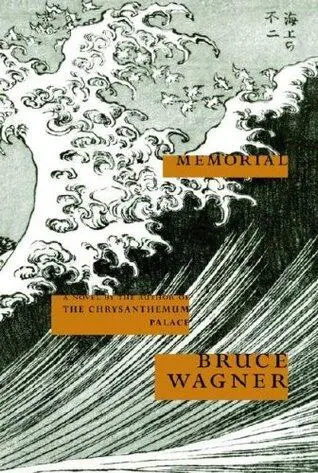
- Название:Memorial
- Автор:
- Издательство:Simon & Schuster
- Жанр:
- Год:2006
- ISBN:нет данных
- Рейтинг книги:3 / 5. Голосов: 1
-
Избранное:Добавить в избранное
- Отзывы:
-
Ваша оценка:
Memorial: краткое содержание, описание и аннотация
Предлагаем к чтению аннотацию, описание, краткое содержание или предисловие (зависит от того, что написал сам автор книги «Memorial»). Если вы не нашли необходимую информацию о книге — напишите в комментариях, мы постараемся отыскать её.
Virtually abandoned by her family, the indomitable Marjorie Herlihy — mother, widow, and dreamer — falls prey to a confidence scheme dizzying in its sadism and complexity. And unbeknownst to Marj and her children, the father who disappeared decades ago is alive and well nearby, recently in the local news for reasons that will prove to be both his redemption and his undoing. Spiraling toward catastrophe, separate lives collide as family members make a valiant attempt to reunite and create an enduring legacy. To rewrite a ruined American dream.
Deeply compassionate and violently irreverent, "Memorial" is a testament to faith and forgiveness, and a luminous tribute to spirituality in the twenty-first century. With an unflagging eye on a society ruptured by naturaland unnatural disaster, and an insatiable love for humanity, Wagner delivers a masterpiece.
Memorial — читать онлайн бесплатно полную книгу (весь текст) целиком
Ниже представлен текст книги, разбитый по страницам. Система сохранения места последней прочитанной страницы, позволяет с удобством читать онлайн бесплатно книгу «Memorial», без необходимости каждый раз заново искать на чём Вы остановились. Поставьте закладку, и сможете в любой момент перейти на страницу, на которой закончили чтение.
Интервал:
Закладка:
SUDDENLY Marj was driving south on Robertson, without any memory of having gotten in the car. She was lightheaded but seemed to have her wits about her. She resolved to call Joanie in the morning; her daughter would help sort things out. She felt something was “off” but wouldn’t allow herself to believe she’d been done wrong. No, that could not be. She would get to the bottom of it in the morning but for now it was important to just get home and get to the bathroom (she was cramping badly from holding it in), take a tub, and climb into bed. She’d just leave her luggage in the trunk, where the valets had transferred it, and snatch back the note from Cora’s mailbox. Maybe there were messages from Lucas on her answering machine or cell. She didn’t know how to retrieve messages from the cell.
When she turned the corner onto her block, a car with dimly flashing white lights was parked in front of the house.
She pulled into the drive and got out.
A man approached.
“Mrs Herlihy?”
“Yes. What is it? What’s happened?”
“I’m Federal Agent Marone, from the antifraud division. I’d like to speak with you about a person who goes by the name of Lucas Weyerhauser. I know it’s a late hour, Mrs Herlihy, but — may I come in?”
LVII.Joan
THEY made love and he cooked for them, but Joan didn’t think she’d stay over. She was worried about Mom. Maybe she would “camp” with her a few days, at the house in Beverlywood.
She told Pradeep she wasn’t sure if it was age or loneliness, but there was something she couldn’t put her finger on, a difference in the way her mother had been acting. She mentioned Marj wanting to take her to see the Taj Mahal (Pradeep enthused, “You should go! You should do it!” just like she thought he would), adding with a smile that Mom was more interested, “to put it mildly,” in the Taj Mahal hotel than the monument in Agra. Pradeep laughed, informing that the Tata family — who owned the Taj Mahal Palace and Towers in Mumbai — were in talks to take over the management and renovation of the Pierre in New York. He was a fount of that sort of trivia. It was kind of his job.
Then a strange thing happened.
“You’re a Rausch, right? Isn’t that your birth name?”
“Why?”
“Before you were adopted.” She nodded, perplexed. “And isn’t your biological father’s name Raymond?”
Pradeep knew all about Joan’s family tree; perhaps it was his diplomatic nature, or a lover’s genuine interest, that made him inquisitive of personal histories, which he was, to a fault. He retained names and dates as well, also part of his well-honed professional acumen, no doubt. From her end, she never asked about Manonamani and the kids — it didn’t feel appropriate, and the truth of it was she hadn’t much interest. But Pradeep was solicitous when it came to her own family members, listening with charmed, rapt attention, as if she were reading tales aloud from a storybook. Something about his earnest, guileless curiosity actually moved her to share things she wouldn’t have with anyone else.
He fished out an article from the LA Times. An old guy had gotten a settlement for having his door mistakenly broke down by the police. She read the article.
A Mr Raymond Rausch (sans photo) lived on Mercantile Road in the City of Industry with a dog named Friar Tuck, who took a bullet during the break-in. He was 76 years old — same her dad would have been — and had suffered a heart attack. Joan wouldn’t have given it much heed, if not for the coincidence of Chester recently bringing up his fantasy of progenitorship; seemed a bit eerie. And the fact that Pradeep was the one to call it to Joan’s attention lent a certain gravitas.
She put it aside for now. Whatever “it” was.
Pradeep had actually done a sneaky thing. He suddenly announced that his consular term was ending earlier than he thought, and he’d soon be returning to Delhi. She vaguely knew this was coming, that commissions were recycled every 4 years, but the timing of his disclosure was canny — ever the diplomat, Pradeep softened the blow by deflecting, or deferring, to the mystery of her own family matters. He wanted Joan to have something else to focus on, beyond the trauma of his imminent departure. It was the part of him she resented and the part she found irresistibly compelling too, this nomadic yet grounded man, at once calmly present and peripatetic in the absolute, responsive, and responsible to so many. Sex with Pradeep was always intense because she knew he was “on his way,” a moving target that appealed to her own emotionally itinerant nature; she felt like a consort at a consular feast, the pretend Devi of a pretend Siva. Nothing could touch them because they were divine gypsies, abrim with the jittery ambrosia of adolescence which they’d managed to catch in a bottle, hormonally undistilled — they were built for speed and tender abandonments. She could never stay mad at Pradeep for long because she knew he’d be long gone, yet there for her, forever. What other man could she say that of? He insisted she call him, in any time zone, for any reason, no matter what he was doing, or who he was with — wife, child, head of state — he’d escape to terrace or anteroom and give her all the time in the world. Pradeep was like a brother that way, a colonial with the cologne of incest.
She stuffed the article in her purse and left the suite without showering. He would return to San Francisco on Monday morning to begin packing up. Manonamani and the kids had already left; in 10 days, he’d be gone. They pretended they would somehow see each other before his departure — that they’d make the effort. (Moving targets.) He told Joan that if she came to India with her mother, they must spend part of the time in Delhi. He would feed them diamond-shaped almond burfi and deep-fried pretzels, kathi rolls with pomegranate syrup, carry Marj on a palanquin for a sirodhara treatment in Kerala, visit goldsmiths at Calcutta’s tea stalls on Ganguly Road — why, they’d even make a pilgrimage to the Taj Mahal! Wasn’t that your mother’s dream? (He laughed as he said it, knowing the backstory.) It is quite warm in Agra, he said, but Marjorie will adore the peacocks and trishaws, the dancing monkeys and bears. Joan knew he was dead serious, albeit in that urbane, diplomatically manic fashion.
THE model of the Freiberg Mem was done. She had given her creation — for it was Joan who was captain, and to Joan that her partner ceded the last word theoretically, in all ways — the unofficial title of the Pollock painting, Full Fathom Five. Barbet (who still preferred The Lost Coast ) debated whether they should attach a name, finally intuiting the touch to be nicely dramatic, at least for the presentation. The superstitious compromise being that he would inform Lew that Full Fathom Five and The Lost Coast were “conceptual titles,” without Joan having to broach them. The billionaire would either like them or not. Wouldn’t be a dealbreaker.
He could tell she was a little down. They went to an early dinner at Locanda Portofino then took in a Chinese movie at the Aero. She nudged him halfway through and said, “Let’s go to bed.” He was surprised.
Barbet lived in a leafy, asymmetrical house in Rustic Canyon, bought with an inheritance from his father. She waited until they settled into the living room with their drinks before telling him that Lew Freiberg had knocked her up. He laughed. She said she was serious. She looked downcast and ethereal. He said, “OK.” He asked if she was sure it was Lew’s. She said yes. She hadn’t yet gotten the paternity test, that was coming, but yeah, she was sure. “Then you’re going to keep it.” Half question, half declarative. Yes. “He knows about it.” Half question, half declarative. Yes. He asked if Freiberg (that’s what he was calling him for this conversation) knew she was planning to have it. Yes. He asked if they’d spoken since she’d told him and Joan said no. Oh boy, he said, without any real vibe. Just, Oh boy. A suitable response. Then he sipped his drink and took some breaths and readjusted himself on the couch before saying he thought it was “actually pretty great.” He said he’d been reading a lot of Indian philosophy — research related to the tsunami, of course — and there was something called Advaita, a school of thought promoting the idea that things just happened, without rhyme or reason, it was all beyond one’s control, there wasn’t even cause and effect, and though most of the time we had the idea of free will, free will was really just a fallacy, an illusion, the details of our lives had been predetermined, right down to our moods and illnesses and the color shirt we buy, everything was a happening and everything had already “happened,” following a cosmic plan that included our genes and social conditioning — and that it was useless to feel guilty or egotistical about anything that transpired. My interpretation anyway, he said. That didn’t mean you couldn’t feel bad or glad or fucked up about something but the minute you accepted that the event had to have happened, “and that you were not you,” a weight lifted off, removing it from the realm of whatever egotism Westerners (Easterners too for that matter) had grown so accustomed. She told him he was full of shit and he roared with laughter. That was one of the things she found irresistible about Barbet —both these men, Pradeep and Barbet, were defiantly, uniquely irresistible — he knew he was full of shit, yet it was a quality in which he managed to take resigned delight. Naturally, he tortured himself like everyone else, but he was a hedonist at heart, and Joan wished she had the same “predetermined” backhanded joie de vivre.
Читать дальшеИнтервал:
Закладка:
Похожие книги на «Memorial»
Представляем Вашему вниманию похожие книги на «Memorial» списком для выбора. Мы отобрали схожую по названию и смыслу литературу в надежде предоставить читателям больше вариантов отыскать новые, интересные, ещё непрочитанные произведения.






Обсуждение, отзывы о книге «Memorial» и просто собственные мнения читателей. Оставьте ваши комментарии, напишите, что Вы думаете о произведении, его смысле или главных героях. Укажите что конкретно понравилось, а что нет, и почему Вы так считаете.