Lydia Millet - Sweet Lamb of Heaven
Здесь есть возможность читать онлайн «Lydia Millet - Sweet Lamb of Heaven» весь текст электронной книги совершенно бесплатно (целиком полную версию без сокращений). В некоторых случаях можно слушать аудио, скачать через торрент в формате fb2 и присутствует краткое содержание. Год выпуска: 2016, Издательство: W. W. Norton & Company, Жанр: Современная проза, Триллер, на английском языке. Описание произведения, (предисловие) а так же отзывы посетителей доступны на портале библиотеки ЛибКат.
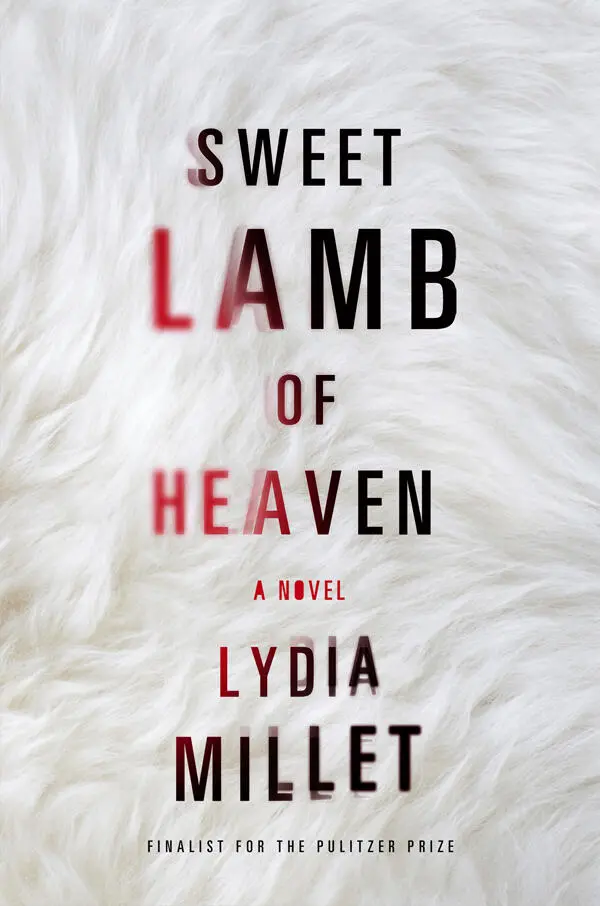
- Название:Sweet Lamb of Heaven
- Автор:
- Издательство:W. W. Norton & Company
- Жанр:
- Год:2016
- ISBN:нет данных
- Рейтинг книги:4 / 5. Голосов: 1
-
Избранное:Добавить в избранное
- Отзывы:
-
Ваша оценка:
Sweet Lamb of Heaven: краткое содержание, описание и аннотация
Предлагаем к чтению аннотацию, описание, краткое содержание или предисловие (зависит от того, что написал сам автор книги «Sweet Lamb of Heaven»). Если вы не нашли необходимую информацию о книге — напишите в комментариях, мы постараемся отыскать её.
Lydia Millet’s chilling new novel is the first-person account of a young mother, Anna, escaping her cold and unfaithful husband, a businessman who’s just launched his first campaign for political office. When Ned chases Anna and their six-year-old daughter from Alaska to Maine, the two go into hiding in a run-down motel on the coast. But the longer they stay, the less the guests in the dingy motel look like typical tourists — and the less Ned resembles a typical candidate. As his pursuit of Anna and their child moves from threatening to criminal, Ned begins to alter his wife’s world in ways she never could have imagined.
A double-edged and satisfying story with a strong female protagonist, a thrilling plot, and a creeping sense of the apocalyptic,
builds to a shattering ending with profound implications for its characters — and for all of us.
Sweet Lamb of Heaven — читать онлайн бесплатно полную книгу (весь текст) целиком
Ниже представлен текст книги, разбитый по страницам. Система сохранения места последней прочитанной страницы, позволяет с удобством читать онлайн бесплатно книгу «Sweet Lamb of Heaven», без необходимости каждый раз заново искать на чём Вы остановились. Поставьте закладку, и сможете в любой момент перейти на страницу, на которой закончили чтение.
Интервал:
Закладка:
Then the librarian said yes, and I was grateful to the girl from high school.
STILL, THOUGH, EVEN if the bogus exposés and hair-sprayed New Age gurus hawking their bestselling books about past lives had a point, there was no explanation I could find for my having heard the voice. There was no reason I should have had to hear anything at all, if little Lena had contained a reborn soul.
It wasn’t as though she herself had spoken, like the little boy with his encyclopedic knowledge of Mosquitos and Messerschmitts. She’d painted no old-fashioned watercolors depicting orphanage memories from 1934.
“I’VE BEEN WONDERING,” I said to Don as he drove me back to the motel, his backseat a neat row of paper grocery bags. “I was thinking this place would be quiet over the winter. I don’t get the draw for all these people in the off-season. I thought you only ever had a full house in the summer, but now it’s almost Christmas. Did you — I mean, just out of — were you planning on all of them arriving?”
Don was silent for a few moments as we ascended the long, slow road that leads up to the bluffs, changing from pavement to gravel as it goes. He reached out a gloved finger and scratched the side of his nose, shrugging lightly as he spun the steering wheel with the other hand.
“I’m trying to help them out,” he said.
On the expanse of ground beside the parking lot Lena was playing, wearing her hot-pink earmuffs. She appeared to be piling the previous day’s graying snow onto a grim effigy vaguely suggestive of a snowman. Around the dumpy figure was a large impact crater where she’d scraped snow off the dead grass.
Main Linda watched her from the doorway to her room, her hands around a steaming mug, ensconced in a parka with a fur-lined hood like she was Peary at the North Pole.
I realized the light was leaving: a long, knife-thin shadow was falling toward the sea from the dirty pillar of the snowman, which had frayed sticks for hands, pieces of trash stuck on its torso for decoration and what appeared to be a rusty zipper for a mouth.
I didn’t like the look of it.
She ran to greet me when I stepped out of Don’s car, her nose red and running profusely above her scarf, bundled-up arms flung wide. She’s always excited to see me again — though if I’m being honest, as long as she has someone else to talk to, she’s almost equally excited to watch me go.
Though the U.S. is an overwhelmingly Christian country. . 24 % of the public overall and 22 % of Christians say they believe in reincarnation — that people will be reborn in this world again and again. —Pew Research/www.pewforum.org
AT DINNER in the motel café I took a census of the guests. Lena was making the rounds; having lost interest in her food quickly — for her, food is never the point of a meal — she was stopping at every table, talking to each guest, leaving me alone to watch her progress and consider the obliqueness of Don’s answer.
There were Burke and Gabe; there were the Lindas, Main and Big. There was Kay, eating at a table with the angry young mogul who, less shaven every day, was leaning across the table to talk to her confidingly. Before long he’d be sporting a full mountain-man beard. There was Don’s father, sharing a large table with Faneesha while Don cooked and the waitress served, and there were the newest guests of all, an arty couple from New York, maybe in their early forties, who had the room right next to Lena’s and mine at the far end of the row. They dressed tastefully and didn’t seem to talk to anyone.
And then there were the regulars from town, including a woman who dressed in multiple shades of blue and always ordered the chicken pot pie and an old man who, before Don opened the café, had eaten only frozen meals since his wife died, Lena said. But I was interested in the motel guests, the motel guests only and why they were here.
Don couldn’t have meant to imply his help consisted of letting friends stay for free — the young mogul needed no such help and the chic couple had arrived in two separate gleaming cars, each of which had to have cost six figures. So that couldn’t have been what he meant.
On the other hand Kay was distressed, Burke was distressed, the young mogul was distressed too.
Maybe Don offered some other form of assistance.
IT TOOK ME till this morning to ask the Lindas. I asked while Main Linda was driving me to the auto shop; I asked her with no subterfuge.
“So why are you guys here?”
“My cousin took early retirement after some work-related stress,” she said briskly. “Down in Orlando, where she lives. She’s on her own, mostly, her ex-husband lives in Vancouver, the sons have grown up and left the nest. I get a long winter break. The two of us have been close since we were ten. I brought her up to make her take a breather.”
“But why here ?” I asked. “Specifically?”
Main Linda cocked her head.
“Our family used to have a house in the area. Not on the beach, inland. Came up every summer. We shared the place with the cousins. There was a candy store, we walked there every Saturday. Jawbreakers. Gobstoppers. You remember those? Giant round hard candies you could barely fit in your mouth, started out black and you went through all the colors as they shrank? Disgusting actually, kids taking the things out of their mouths all the time to look at the different rainbow hues, then sticking them in again. Filthy. Dyed tongues. Saliva. Yeah, we loved it though. Also, there were those Atomic Fireballs.”
“We had those.”
“Naming a candy after a nuclear mushroom cloud. Only in America, right?”
“Yeah. What I meant, though, was how did you choose this particular motel?”
“Liked Don from the beginning. And heck, the price was right,” said Main Linda. “I’m cheap as crap. Always have been, always will be.”
“Good to know,” I said, but I was disappointed in my weak powers of detection. People revealed little to me, and I couldn’t even tell whether they meant to be evasive or were just uninterested in detail.
Maybe Don opened up his motel to those in need. But why disguise it?
I was at a dead end, I realized, falling silent as I sat in Main Linda’s heated passenger seat, and how did you get out of a dead end? You had no choice. All you could do was give up, turn around and drive the other way, drive back where you’d come from.
I mean I don’t want to leave the motel or the town, I want to keep my date with the librarian, for instance, a prospect that pleases me out of keeping with its likely outcome. But the sense I have of failing to understand the motel’s gathering has started to disrupt my sleep: I lie awake nights distracted by my ongoing failure to grasp why these people are here. Maybe there’s nothing to fathom in the first place but maybe there is, and the uncertainty doesn’t sit well with me.
And I’m not so sure anymore I need to be hiding us. Increasingly my past interpretations strike me as arbitrary and I pick through them, second-guessing.
There’s a chance I could stand up to Ned, I thought, sitting in the car, a chance he couldn’t make Lena and me do anything we didn’t want to do. Maybe I’m just a coward, I thought, hunkering here, as I was a coward about divorcing him. The line between cowardice and caution was blurred to me.
For a moment, Ned started to look less like a threat than an inconvenience and the future seemed almost simple.
Sitting in Main Linda’s car I lapsed into a daydream of peaceful retreat — retreat to my parents’ house, their quiet street where snow fell in pristine layers over the lawns. Only the few residents of the block drove down that street in winter, only the neighbors’ footsteps marred the sidewalk; the snow lay pure and gently curved on the bushes and old trees of the neat gardens. There would be no cold cement catwalk stretching between the bedroom and dining room, as there was here — no questions to speak of, either, beyond the mundane questions of the design and order of days.
Читать дальшеИнтервал:
Закладка:
Похожие книги на «Sweet Lamb of Heaven»
Представляем Вашему вниманию похожие книги на «Sweet Lamb of Heaven» списком для выбора. Мы отобрали схожую по названию и смыслу литературу в надежде предоставить читателям больше вариантов отыскать новые, интересные, ещё непрочитанные произведения.










Обсуждение, отзывы о книге «Sweet Lamb of Heaven» и просто собственные мнения читателей. Оставьте ваши комментарии, напишите, что Вы думаете о произведении, его смысле или главных героях. Укажите что конкретно понравилось, а что нет, и почему Вы так считаете.