Rupert Thomson - Divided Kingdom
Здесь есть возможность читать онлайн «Rupert Thomson - Divided Kingdom» весь текст электронной книги совершенно бесплатно (целиком полную версию без сокращений). В некоторых случаях можно слушать аудио, скачать через торрент в формате fb2 и присутствует краткое содержание. Год выпуска: 2012, Издательство: Bloomsbury UK, Жанр: Современная проза, Фантастика и фэнтези, на английском языке. Описание произведения, (предисловие) а так же отзывы посетителей доступны на портале библиотеки ЛибКат.
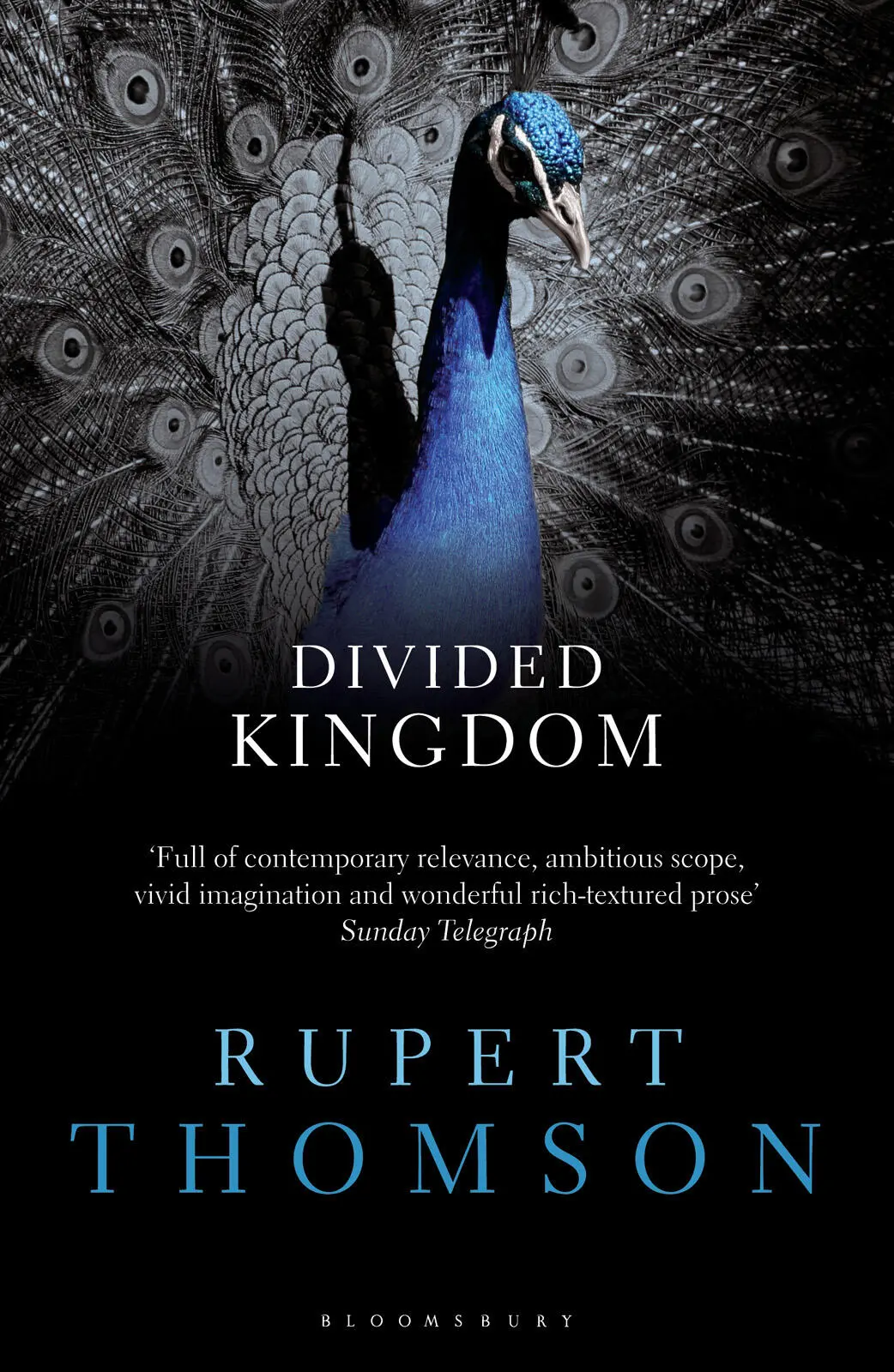
- Название:Divided Kingdom
- Автор:
- Издательство:Bloomsbury UK
- Жанр:
- Год:2012
- ISBN:нет данных
- Рейтинг книги:5 / 5. Голосов: 1
-
Избранное:Добавить в избранное
- Отзывы:
-
Ваша оценка:
Divided Kingdom: краткое содержание, описание и аннотация
Предлагаем к чтению аннотацию, описание, краткое содержание или предисловие (зависит от того, что написал сам автор книги «Divided Kingdom»). Если вы не нашли необходимую информацию о книге — напишите в комментариях, мы постараемся отыскать её.
Divided Kingdom — читать онлайн бесплатно полную книгу (весь текст) целиком
Ниже представлен текст книги, разбитый по страницам. Система сохранения места последней прочитанной страницы, позволяет с удобством читать онлайн бесплатно книгу «Divided Kingdom», без необходимости каждый раз заново искать на чём Вы остановились. Поставьте закладку, и сможете в любой момент перейти на страницу, на которой закончили чтение.
Интервал:
Закладка:
‘We have gathered here tonight, as you know,’ Owen began, ‘to honour an unexpected guest —’
A ripple of amusement washed around the room.
‘Unexpected, but certainly not unwelcome. In fact’ — and here he couldn’t resist a smile — ‘it might have been nice if he had come a little sooner.’
Loud laughter greeted this.
‘It has been a troubled year for all of us, but now, thanks to the man standing beside me, I think I can honestly say that we feel better in ourselves. Now, thanks to him, our life can go on.’
The hall erupted in cheers and whistles.
Owen lifted his hands in an appeal for quiet. ‘Let’s raise our glasses to this long-awaited messenger — our saviour, you might even say — Thomas Parry!’
I smiled as I started up the hill. Although I had felt humbled by the reception, fraudulent too, in some respects, I had thought it only polite to respond to Owen’s speech with a few words of my own.
‘Thank you.’ I cleared my throat. ‘I’m afraid I don’t know very much about your community. I’m not even sure I share your beliefs. To be perfectly honest, I don’t know where I am at the moment —’ My opening remarks had created a slightly awkward silence, but now I heard laughter swooping through the room, the exaggerated laughter that often accompanies a release of tension. ‘But I do want to say one thing,’ I went on. ‘You took me in and showed me kindness, and, in my situation, that was more than I could ever have expected, and I simply want to thank you for that.’ My voice had begun to shake, which surprised me, and I found myself adding, ‘Really I’m just happy to be alive.’
A standing ovation followed. Embarrassed, I looked away.
Owen approached me again, and I thought I saw both fondness and compassion in the smile he gave me. I had surprised him too, perhaps. In a gesture I scarcely recognised, I took his right hand in mine and placed my left hand over it. It wasn’t a handshake so much as a way of demonstrating the sincerity of what I’d said.
I came out on to the brow of the ridge and set off along a path that led to the sea. In half an hour I had reached the cliffs. Far below, the waves threw themselves languidly against a strip of mud-coloured sand. There was an eerie quiet down there, a sense of lassitude, and even though the sun still shone I had the impression that something had leaked out of the day. Whatever had been easy-going and benign was gone.
I found I was thinking about John Fernandez — the speed with which he had arranged a passage for me, his apparent familiarity with procedures which, to many, would have seemed baffling, not to say perilous. And he had mentioned bribing customs officers as well. He worked for the transport union, of course, but still … I had read enough relocation files to know that smugglers operated up and down the coast, trafficking in human beings. There were always people who wanted to cross illegally from one country to another. They just had to pay the going rate. Did Fernandez run a business like that? Had I turned, unwittingly, to one of the few who could actually get me out? He hadn’t asked for any money, though. When I arrived outside his house, he’d been standing in the darkened hall, behind the door. Was I something Fernandez had been waiting for, or even dreading? Was I his day of reckoning? In which case he’d got off lightly, maybe.
Then I remembered the voices I thought I’d heard, and it occurred to me that there might have been stowaways in some of the other containers. Unable to unbolt their doors, they had been calling out for help, their cries muffled by the metal walls and by the rush of water through the hold. No, no. Surely someone would have mentioned it. That docker in the overalls — or Fernandez himself…
I stepped back from the cliff-edge, took the dank air into my lungs. It seemed difficult in this place even to breathe. Perhaps it had been a mistake to come down to the sea. I would head east along the coastal path, then circle back towards the house. It was almost midday now, and Owen had asked me to join him for lunch.
When I knocked on the library door, I was greeted by the shaven-headed man from the night before. He was Owen’s personal assistant, he told me. Unfortunately, Owen had been called away unexpectedly. He was very sorry. I was shown to a table by the window. There was a plate of freshly cut sandwiches for me and a jug of lemon barley water. If I needed anything else, the man said, he would be in the next room.
After I had eaten, I wandered into the conservatory where I found Rhiannon sitting in a wicker chair, doing needlepoint. She was working on an image of a woman and a small boy. Dressed in sandals and brightly coloured robes, they were walking hand in hand along an unpaved road. There were olive trees behind them, and stark white hills.
‘I don’t know if I’d have the patience for that kind of thing,’ I said.
She looked up and smiled. ‘It’s Epicurus and his mother. She was a fortune-teller. He used to travel from house to house with her when he was young.’ She reached into her bag for a new ball of wool. ‘It’s for Owen’s birthday.’
She had reminded me of something that had been bothering me. ‘You know, I still don’t understand why you were looking for a sign,’ I said.
She laid her needlepoint aside and ran a hand slowly through her hair.
‘In January,’ she said, ‘one of our members committed suicide. He had only been with us for a month. We thought we could help him, but he was too unstable. He would have been better cared for somewhere else — a hospital …’ She sighed, then leaned forwards in her chair. ‘Well, anyway, after Kieran’s death — that was his name — a shadow fell over the community. It was as if something had been lost. An innocence, perhaps. Nothing bad had ever happened here before …
‘The sign was Owen’s idea. If we were going to change the atmosphere, he told us, we would have to look outside ourselves. Something special was needed — some symbolic event or ruling. We were quite prepared to abide by it too. If the sign had gone against us, we would all have had to leave.’ She stared out across the garden. ‘I don’t know where we would’ve gone, though.’
I followed her gaze. Two girls were playing badminton on the lawn, laughing whenever they swung at the shuttlecock and missed.
‘How did all this begin?’ I said.
She had never heard the whole story, she said, but she would tell me what she knew. When Owen was in his twenties, he had owned several factories that made pre-cast concrete. He had been wealthy even then, apparently. But the Rearrangement had turned him into a multimillionaire. He won a contract to act as sole supplier to the governments of all four countries. Uniformity of product was vital. Every wall that was erected had to look the same.
‘A concrete millionaire?’ I said. ‘I’d never have guessed.’
Rhiannon shook her head, as though she too found it hard to believe.
The authorities were always telling Owen that he was helping to create a better world, she said, that his name would go down in history, and so on, but he soon began to feel uncomfortable. He must have noticed how much misery was being caused, and he must also have realised that, for large sections of the population, the most powerful symbol of that misery was the concrete that he had himself supplied. He stopped going in to work, hoping the business would collapse, but it had become so established that it more or less ran itself. There was only one course of action left. He sold everything — the factories, his town house, the lot — and moved to the coast. He went from being a dynamic, glamorous industrialist to a man who grew tomatoes and read books about comparative religion. He still enjoyed company, though. Friends came to stay. Then friends of those friends came. One day he looked around and saw that he was living in a community. It hadn’t been planned, or even thought about. It had happened organically. And, purely by chance, their way of life was perfectly in tune with the phlegmatic temperament. They understood the need for sanctuary, they rejected materialism without being puritanical, and with their emphasis on gratitude and celebration they were able to channel or harness all manner of emotion. People heard about the community, and it spoke to them, and they began to arrive on the doorstep.
Читать дальшеИнтервал:
Закладка:
Похожие книги на «Divided Kingdom»
Представляем Вашему вниманию похожие книги на «Divided Kingdom» списком для выбора. Мы отобрали схожую по названию и смыслу литературу в надежде предоставить читателям больше вариантов отыскать новые, интересные, ещё непрочитанные произведения.



Обсуждение, отзывы о книге «Divided Kingdom» и просто собственные мнения читателей. Оставьте ваши комментарии, напишите, что Вы думаете о произведении, его смысле или главных героях. Укажите что конкретно понравилось, а что нет, и почему Вы так считаете.