Rupert Thomson - Divided Kingdom
Здесь есть возможность читать онлайн «Rupert Thomson - Divided Kingdom» весь текст электронной книги совершенно бесплатно (целиком полную версию без сокращений). В некоторых случаях можно слушать аудио, скачать через торрент в формате fb2 и присутствует краткое содержание. Год выпуска: 2012, Издательство: Bloomsbury UK, Жанр: Современная проза, Фантастика и фэнтези, на английском языке. Описание произведения, (предисловие) а так же отзывы посетителей доступны на портале библиотеки ЛибКат.
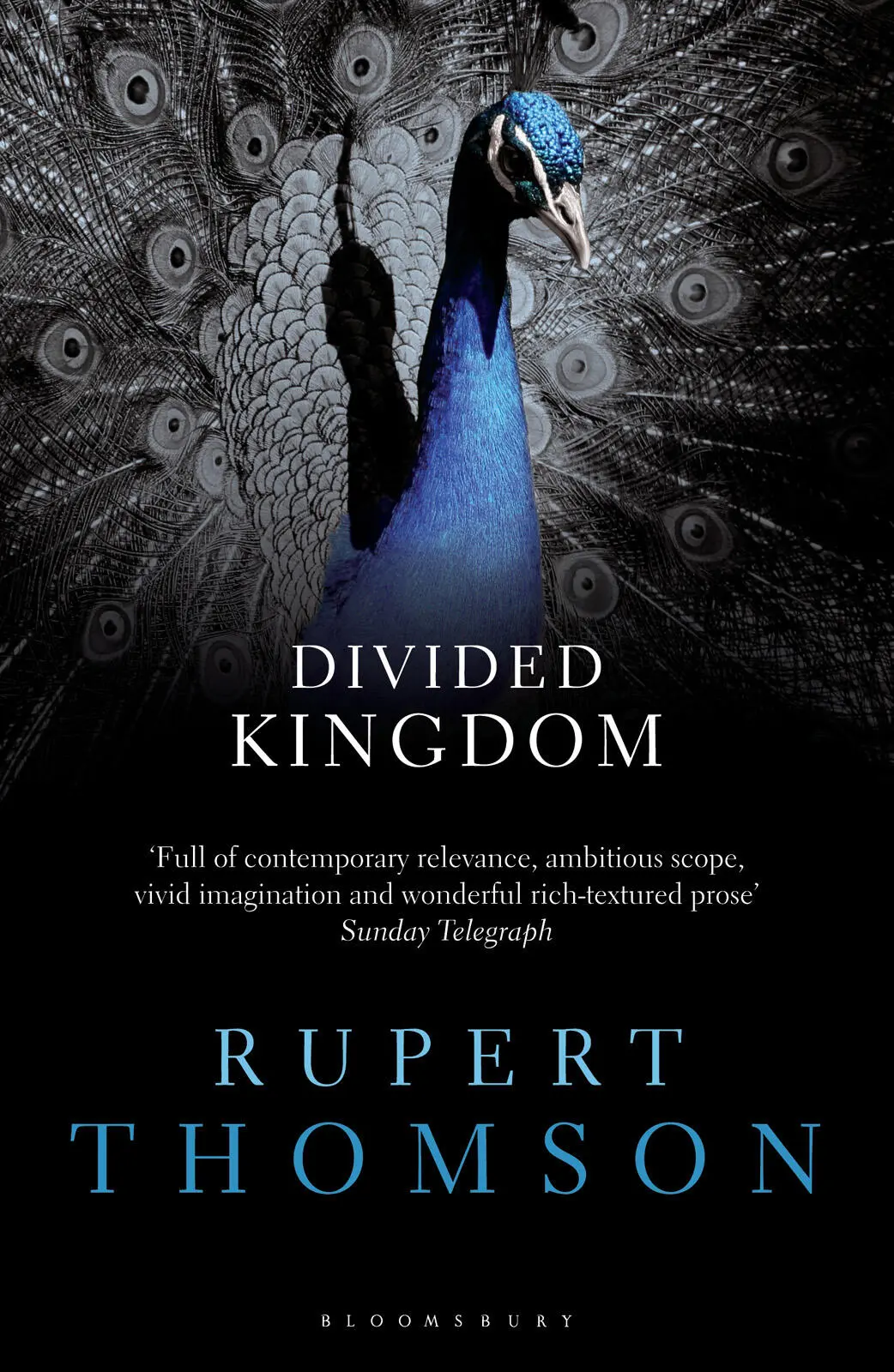
- Название:Divided Kingdom
- Автор:
- Издательство:Bloomsbury UK
- Жанр:
- Год:2012
- ISBN:нет данных
- Рейтинг книги:5 / 5. Голосов: 1
-
Избранное:Добавить в избранное
- Отзывы:
-
Ваша оценка:
Divided Kingdom: краткое содержание, описание и аннотация
Предлагаем к чтению аннотацию, описание, краткое содержание или предисловие (зависит от того, что написал сам автор книги «Divided Kingdom»). Если вы не нашли необходимую информацию о книге — напишите в комментариях, мы постараемся отыскать её.
Divided Kingdom — читать онлайн бесплатно полную книгу (весь текст) целиком
Ниже представлен текст книги, разбитый по страницам. Система сохранения места последней прочитанной страницы, позволяет с удобством читать онлайн бесплатно книгу «Divided Kingdom», без необходимости каждый раз заново искать на чём Вы остановились. Поставьте закладку, и сможете в любой момент перейти на страницу, на которой закончили чтение.
Интервал:
Закладка:
By now the two men were fighting on the tarmac in front of the pub, their struggle rendered more dramatic by the car headlights trained on them. I saw a third man with banknotes folded lengthways between his fingers like pieces of a dismantled fan. Bets were being placed on the outcome. Meanwhile, in the bar, a fair-haired man had stood up on a table and begun to sing. The tune was that of a traditional ballad, but the words belonged to a protest song. All people were different, he sang, but if one looked beneath those differences, all people were the same. We had to be allowed to live together, to complement one another. That was where true freedom lay. A subversive idea, of course, if not a kind of treason, and it was then that I realised exactly how far I had travelled in the last eighteen hours or so. The room almost burst apart as everybody joined in with the chorus, which demanded that we overthrow the current leadership. Even before the song had ended, though, there was a surge towards the door. When I asked Hugo what was happening, he looked at me over his shoulder, and his eyes had opened wide.
‘The animals are coming,’ he cried.
It was a sight I would never forget. On arriving at the pub that afternoon, the road outside had been deserted, even desolate, but people were now overflowing on to the verges and into the ditches, and judging by the lights that jumped and flickered in the distance, a good number were making their way across the fields. Fay Mackenzie came and stood at my shoulder. Four local communities took part in the festival every year, she told me. Each community was held responsible not only for the building of an animal, which had to be carried out in secret, but also for its delivery to the site that had been set aside for the burning. Her next words were drowned by the shrill cacophony of whistling and hissing that greeted the procession as it rounded a bend in the road just below us. All four creatures were made of papier mâché and lit from within, and the size of them astounded me. A rabbit took the lead. Despite squatting on its haunches, the rabbit must have stood at least fifteen feet tall, its head and body ghost-white with black patches, its ears laid flat against its back as if it had already learned of its impending fate. Its beady eyes looked frightened, blind. After the rabbit came a sea horse, which was even taller, its neat sculptured head on a level with the eaves of houses. Though it had been painted a delicate shade of lilac, the sea horse also seemed filled with a sense of foreboding. It was there in the recalcitrant curve of its body, and in the pouting of its coral lips. A peacock appeared next, its breast a deep enamelled blue. Its tail was on full display, dozens of eyes afloat on a glinting mass of turquoise, green and gold. To my surprise, I felt not even the slightest twinge of loyalty or pride. Taking up the rear — and here the whistles and hisses almost deafened me — was the salamander I had seen earlier. Up close, it was a terrifying vision, its long tongue lolling between toothless jaws, its short scaly legs grasping at the air. As it lurched past, people from the pub joined the procession, some carrying bottles, others holding torches. I followed, yet another glass of brandy in my hand.
Not far from the top of the pass, the crowd streamed left on to a narrow track that led down into a sort of rift or depression in the land. With steep grass slopes on three sides and a sheer dark wall of rock at the back, the site had all the qualities of a natural amphitheatre. Wooden platforms had been erected at the bottom, each with stacks of kindling underneath. The people gathered down there were singing the song I’d just heard in the bar. When they reached the end of it, they simply returned to the beginning again, the volume seeming to build with each rendition. By the time I completed my descent, I, too, knew all the words.
I pushed into the middle of the arena. The animals had already been hoisted up on to their respective platforms. Seen from below, they resembled the hideous creatures that appear in cautionary tales. I suspected that the children who attended the burning would have dreams about them afterwards. Or nightmares. If you didn’t do as you were told, the salamander would come after you, its blunt jaws snapping at your heels. Or the ghostly rabbit with its blind pink eyes. These were the ogres in this part of the world. These were the bogeymen.
Sensing a shift in the crowd, I turned in time to see it parting. A dark-haired man strode towards the clearing, flanked by armed civilians in balaclavas. He was dressed in black tatters, as though he had just been pulled from a burning house; wisps of smoke rose from his clothes, and a trail of ashes glowed in the grass behind him. He began to mount a flight of wooden steps. On the ground below, his escorts formed a line, facing outwards, their semi-automatic weapons held diagonally across their chests. A hush had fallen. Just murmurs now. The man kept his back turned as he climbed. Only when he was standing beneath the salamander’s fearsome jaws did he swing round. A loud gasp escaped from the crowd. A child began to cry. The man’s face and hands were black, so black that I couldn’t distinguish them at first. He opened his mouth as if to speak, but flames and smoke came out instead. Everything about him was black. The whites of his eyes, his teeth. Even his tongue. A wind sprang up. His charred rags stirred.
‘I am the Master of the Conflagration,’ he said slowly, his voice so deep and guttural that I imagined that his larynx too had been fire-damaged.
‘Welcome,’ the crowd said, sounding, by contrast, almost shy.
The Master paused for a moment, then he spoke again. ‘If people tell us what to believe, do we believe?’
‘No,’ the crowd said, louder this time.
‘If people tell us what we are, do we listen?’
The crowd shouted, ‘No!’
I glanced over my shoulder. The field was full, right up to the top of the path. I could see heads silhouetted against the sky, and every face was turned in the direction of the Master.
‘We know what we are,’ he was saying, ‘and we know what we are not.’
The crowd murmured in agreement.
‘And what we are not,’ he went on, ‘we shall now, ceremonially, destroy.’
His right arm swept out sideways, then his left, and lighted coals flew in quick, bright arcs from both his sleeves. The crowd cried out with one voice, a voice in which I heard both rapture and alarm, then it burst into spontaneous applause. The coals had landed among the kindling, and the stacked wood beneath the animals had started to burn. But the Master of the Conflagration was gone. Though he didn’t appear to have climbed down off the platform, he could no longer be seen. His bodyguards were leaving by a rough track that led up to the neck of the pass. Their dark clothes soon merged with the darkness of the field. Above me, the salamander began to creak and fidget as flames reached for its belly.
I turned to the man standing beside me. In the light of the blaze his face seemed to glisten. ‘Where did he go?’ I asked.
The man didn’t take his eyes off the burning animals. ‘This must be your first time.’
‘Yes.’
The peacock’s tail flared with a vicious crackle.
‘Some say he’s the leader of the Black Square,’ the man said. ‘Others say he’s just a travelling magician.’ The man turned to me, and the shadow of his nose lengthened across his cheek so suddenly, so markedly, that I flinched. The man grinned. ‘You’ll just have to make up your own mind.’
‘It’s you,’ I said.
The man’s grin widened. ‘Is it?’
People scattered, screaming, as the salamander’s head parted with its body and floated into the air, swept upwards by a blast of heat and held there for a moment, as if tethered. It swayed in the dark sky, leering at our upturned faces, then it was consumed by flames, its long tongue curling, shrivelling, blackening, and with one final lurch, in which it appeared to cast a poignant glance over its shoulder, recalling, perhaps, the journey it had undertaken earlier that evening, it crashed to the ground in a shower of sparks, leaving nothing but a heap of burnt paper and a scorched wire frame. I watched as several children ran over and poked at the corpse with sticks. Then, like many others, I turned and started back towards the road.
Читать дальшеИнтервал:
Закладка:
Похожие книги на «Divided Kingdom»
Представляем Вашему вниманию похожие книги на «Divided Kingdom» списком для выбора. Мы отобрали схожую по названию и смыслу литературу в надежде предоставить читателям больше вариантов отыскать новые, интересные, ещё непрочитанные произведения.
Обсуждение, отзывы о книге «Divided Kingdom» и просто собственные мнения читателей. Оставьте ваши комментарии, напишите, что Вы думаете о произведении, его смысле или главных героях. Укажите что конкретно понравилось, а что нет, и почему Вы так считаете.